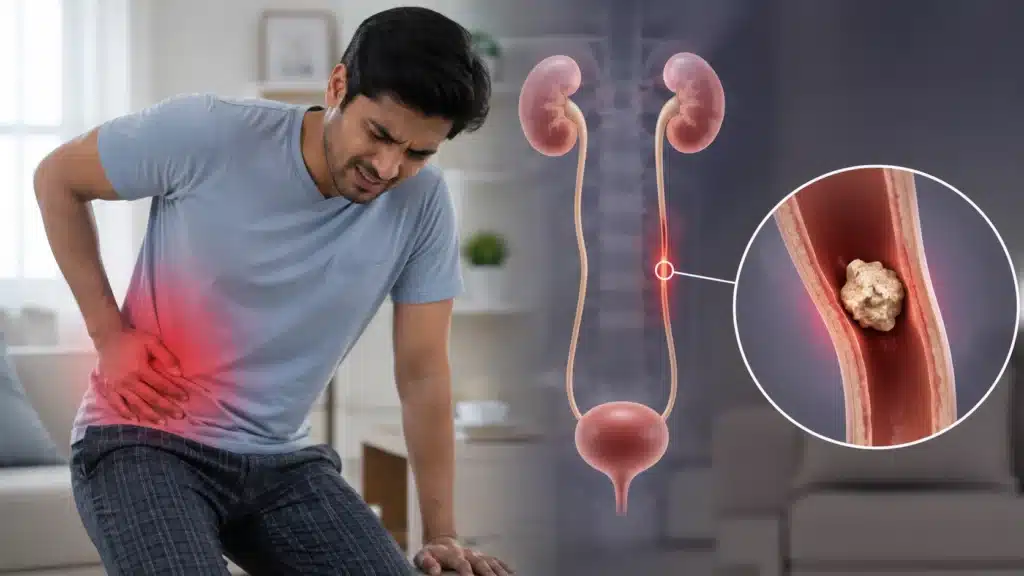
Jaundice that appears overnight. A dull, persistent ache beneath the ribcage. Urine that turns dark like strong tea while stools become pale and clay-colored. These are the signs that something is blocking the flow of bile, and it needs to be investigated and treated without delay.
In many cases, the culprit is a stone in the bile duct, a stricture, a tumor, or another obstruction in the biliary or pancreatic system. And the treatment doesn’t always mean major surgery.
ERCP, endoscopic retrograde cholangiopancreatography, is one of the most sophisticated and versatile procedures in modern gastroenterology. Using a specialized flexible camera called a “duodenoscope,” a trained endoscopist navigates through the mouth, down the esophagus, through the stomach, and into the small intestine, accessing the bile duct and pancreatic duct from the inside, without a single incision.
It is both a diagnostic tool and a therapeutic procedure, capable of identifying problems in the biliary and pancreatic systems and treating many of them in the same session. Stones removed. Strictures opened. Stents placed. Biopsies taken. All without open surgery.
What is ERCP?
ERCP stands for Endoscopic Retrograde Cholangiopancreatography, a procedure that combines endoscopy (a flexible camera) with fluoroscopy (real-time X-ray) to examine and treat the bile ducts, gallbladder, and pancreatic duct.
Breaking it down simply:
- Endoscopic: using a flexible camera (endoscope) passed through the mouth.
- Retrograde: working backwards, going upstream into the ducts from their opening in the small intestine.
- Cholangio: relating to the bile ducts.
- Pancreato: relating to the pancreatic duct.
- Graphy: imaging/examination.
Here’s what happens:
- A thin, flexible duodenoscope is passed through your mouth, down the esophagus, through the stomach, and into the duodenum (the first part of the small intestine).
- The scope locates the ampulla of Vater, the tiny opening where the bile duct and pancreatic duct drain into the intestine.
- A thin cannula (tube) is passed through the scope and into this opening
- Contrast dye is injected into the ducts, and X-ray fluoroscopy is used to visualize the entire biliary and pancreatic duct system.
- Once the problem is identified, a stone, stricture, or blockage, it is treated in the same session using instruments passed through the scope.
The result: Diagnosis and treatment of bile duct and pancreatic conditions, without any external incisions.
Conditions treated with ERCP
ERCP is one of the most versatile procedures in gastroenterology, used both to diagnose and treat a wide range of biliary and pancreatic conditions.
Bile duct stones (Choledocholithiasis)
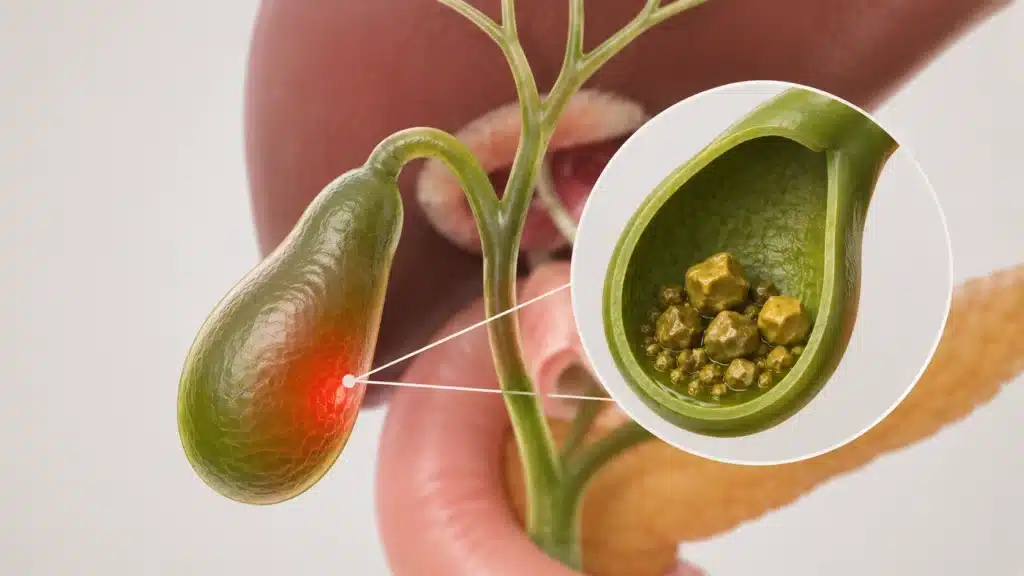
The most common indication for ERCP. Gallstones can migrate from the gallbladder into the common bile duct, causing obstruction, jaundice, infection, and pain.
- ERCP with sphincterotomy (cutting the sphincter muscle at the bile duct opening) allows stones to be captured with a balloon or basket and removed.
- Usually followed by laparoscopic cholecystectomy to remove the gallbladder and prevent further stones.
- Highly effective, single-session clearance rates are excellent for most bile duct stones.
Cholangitis (Bile Duct Infection)
When a bile duct stone or stricture causes complete obstruction, bile becomes infected, a dangerous condition called cholangitis requiring urgent biliary drainage.
- Charcot’s triad: fever, jaundice, and right upper abdominal pain are the classic presentation.
- ERCP with biliary drainage is the most important urgent intervention, decompressing the infected bile duct rapidly.
- A biliary stent is placed to keep the duct open while the infection settles, followed by definitive stone removal.
Obstructive Jaundice
Jaundice caused by blockage of the bile duct, from stones, strictures, or tumors, can be relieved by ERCP.
- A biliary stent is placed through the obstruction to restore bile flow and relieve jaundice.
- Can be used as a bridge to surgery (relieving obstruction before a planned operation) or as palliative treatment in inoperable cancer.
Bile duct strictures
Narrowing of the common bile duct from previous surgery, chronic pancreatitis, primary sclerosing cholangitis (PSC), or malignancy.
- ERCP allows direct visualization and treatment of strictures.
- Balloon dilation opens the narrowing.
- Biliary stenting (plastic or self-expanding metal stents) keeps the duct open.
- Brush cytology or forceps biopsy through the scope helps determine whether the stricture is benign or malignant.
Pancreatic duct stones
Stones forming within the pancreatic duct, typically in patients with chronic pancreatitis, cause severe pain and recurrent pancreatitis.
- ERCP with pancreatic sphincterotomy and stone extraction can relieve ductal obstruction.
- Often combined with ESWL (shock wave lithotripsy) to first fragment large pancreatic stones before ERCP removal.
Chronic pancreatitis complications
Chronic pancreatitis causes progressive scarring of the pancreas with multiple potential complications manageable through ERCP:
- Pancreatic duct strictures: dilated and stented to relieve pressure and pain.
- Pancreatic pseudocysts: fluid collections that can be drained into the stomach or intestine through endoscopic cystogastrostomy (a related procedure).
- Pancreatic duct leaks: stented to allow healing.
Biliary leaks
Bile leaking from the cystic duct stump or bile duct, typically after laparoscopic cholecystectomy or liver surgery, can be managed with ERCP.
- A biliary stent placed across the leak reduces pressure in the bile duct and allows the leak to heal naturally in most cases.
- Avoids the need for reoperation in many patients.
Ampullary tumors
Tumors at the ampulla of Vater, the junction of the bile duct and duodenum, can cause biliary obstruction, jaundice, and pain.
- ERCP allows direct visualization, biopsy, and, in selected early cases, endoscopic ampullectomy (resection of the ampullary tumor through the scope).
- Provides palliation through biliary stenting in patients with inoperable disease.
Primary sclerosing cholangitis (PSC)
A chronic inflammatory condition causing progressive bile duct scarring and stricturing.
- ERCP provides periodic dilation of dominant strictures that develop, relieving obstruction and improving liver function.
- Allows brush cytology to screen for cholangiocarcinoma (bile duct cancer), which is a known complication of PSC.
Choledochal cysts (Diagnosis and Assessment)
Congenital cystic dilatations of the bile duct can be assessed with ERCP before surgical management.
Sphincter of Oddi Dysfunction
Dysfunction of the muscular valve controlling bile and pancreatic juice flow into the duodenum, causing recurrent biliary-type pain despite no stones on imaging.
- ERCP with the sphincter of Oddi manometry measures pressures in the sphincter.
- Endoscopic sphincterotomy can relieve the obstruction and improve symptoms.
Malignant biliary obstruction (Palliation)
Cancers of the pancreas, bile duct (cholangiocarcinoma), gallbladder, or liver causing bile duct obstruction.
- ERCP with metal or plastic stent placement relieves jaundice, improves quality of life, and allows patients to undergo chemotherapy.
- When ERCP is not possible due to tumor anatomy, percutaneous transhepatic cholangiography (PTC) or EUS-guided biliary drainage are alternatives.
Who needs ERCP?
ERCP is a specialized procedure recommended for specific biliary and pancreatic conditions, not as a routine investigation.
You may need ERCP if you have the following:
- Bile duct stones causing blockage or seen on scans.
- Cholangitis (infected bile duct) causing fever, jaundice, and abdominal pain.
- Obstructive jaundice due to blockage of bile flow.
- Bile leak after gallbladder or liver surgery.
- Narrowing of the bile duct (stricture) causing blockage.
- Pancreatic duct stones causing pain or repeated pancreatitis.
- Chronic pancreatitis complications affecting the pancreatic duct.
- Ampullary tumors requiring biopsy or treatment.
- Gallstone pancreatitis with ongoing bile duct blockage.
- Sphincter of Oddi dysfunction causing recurrent bile duct pain.
ERCP is generally not the right investigation for:
- General abdominal pain without signs of gallbladder or bile duct disease.
- Diagnosing gallstones, an ultrasound is usually enough.
- Routine health checks without a specific medical reason.
- When only a diagnosis is needed, MRCP should be done before ERCP.
- Cases where a non-invasive MRI scan (MRCP) can provide the required information.
- When there is no need for immediate treatment or intervention.
Diagnosis: investigations before ERCP
ERCP is not the first investigation for most biliary and pancreatic conditions; it is reserved for cases where therapeutic intervention is needed. A careful pre-procedural workup is essential.
Imaging investigations
Ultrasound Abdomen (First Test)
- Usually the first test is used to check gallbladder and bile duct problems.
- Detects gallstones, bile duct widening, and gallbladder inflammation.
- A bile duct wider than 8 mm may indicate a blockage.
- Cannot clearly confirm bile duct stones.
MRCP (Magnetic Resonance Cholangiopancreatography)
- A non-invasive MRI scan of the bile and pancreatic ducts.
- Helps detect stones, narrowing, or tumors in the ducts.
- Often performed before ERCP to plan treatment.
- May avoid unnecessary ERCP if no blockage is found.
CT Scan: Abdomen & Pelvis
- Provides detailed images of the liver, pancreas, and bile ducts.
- Helps identify the cause and location of a blockage.
- Useful when pancreatitis or cancer is suspected.
- Assesses surrounding organs and complications.
EUS (Endoscopic Ultrasound)
- Uses an ultrasound probe attached to an endoscope.
- Detects small bile duct stones that other scans may miss.
- Provides detailed images of the pancreas and bile ducts.
- Can collect tissue samples (biopsy) if needed.
- Sometimes performed just before ERCP in the same procedure.
Laboratory investigations
- Liver Function Tests (LFTs): Check for jaundice, bile duct blockage, and liver damage.
- Full Blood Count (FBC): Helps detect infection, inflammation, or anemia.
- Serum Amylase & Lipase: Elevated levels may indicate pancreatitis.
- CRP (C-Reactive Protein): Shows the presence and severity of infection or inflammation.
- Coagulation Profile (PT, INR, APTT): Assesses blood clotting before procedures like ERCP.
- CA 19-9 & CEA: Tumor markers that may suggest pancreatic or bile duct cancer.
- Serum IgG4: Helps identify autoimmune pancreatitis, which can resemble pancreatic cancer.
The ERCP procedure: step by step
At Rama Hospital, ERCP is performed by highly trained therapeutic endoscopists in a dedicated fluoroscopy-equipped endoscopy suite. Here is a detailed walkthrough:
Before the procedure
- Blood tests and scans are reviewed before the procedure.
- An anesthesia assessment is done to ensure safety.
- You will need to fast for 6–8 hours before ERCP.
- Any existing infection is treated with antibiotics beforehand.
- Blood-thinning medicines may need to be stopped temporarily.
- The doctor explains the procedure, benefits, and risks.
- Sedation or anesthesia is given to keep you comfortable.
- You will lie on your side or stomach during the procedure.
During the procedure
Step 1: Scope Insertion
- A thin flexible endoscope is passed through the mouth into the small intestine.
Step 2: Finding the Duct Opening
- The doctor locates the opening where the bile and pancreatic ducts drain.
Step 3: Cannulation
- A small tube is gently inserted into the bile or pancreatic duct.
Step 4: Contrast Dye & X-Ray
- Contrast dye is injected into the ducts.
- Real-time X-rays help identify stones, blockages, or narrowing.
- The ducts are examined before treatment begins.
Therapeutic interventions during ERCP
Endoscopic Sphincterotomy
- A small cut is made to widen the bile duct opening.
- Helps remove stones and allows treatment instruments to pass easily.
Stone Extraction
- A balloon is used to push stones out of the bile duct.
- A basket device can capture and remove stones.
- Multiple stones can often be removed in one procedure.
- Large stones may be broken into smaller pieces before removal.
Biliary Stent Placement
- A stent is inserted to keep a blocked bile duct open.
- Plastic stents are temporary and need periodic replacement.
- Metal stents provide longer-lasting drainage for certain blockages.
Balloon Dilation of Strictures
- A special balloon is used to widen narrowed bile ducts.
- Often combined with stent placement for long-term relief.
Tissue Sampling (Biopsy & Brush Cytology)
- Cells or tissue samples are collected from suspicious areas.
- Helps diagnose infections, inflammation, or cancer.
Nasobiliary Drain Placement
- A temporary tube is placed to drain infected bile externally.
- Commonly used in severe bile duct infections.
Pancreatic Duct Interventions
- Opens narrowed pancreatic ducts to improve drainage.
- Stents may be placed to treat duct narrowing or leaks.
- Pancreatic duct stones can be removed after fragmentation.
After the procedure
- Recovery is monitored for 2–4 hours after the procedure.
- Blood tests may be done to check for pancreatitis.
- Most patients can go home the same day.
- Some patients may need to stay in the hospital for 1–3 days.
- Discharge instructions are provided for diet, medicines, and activity.
- Patients are advised about warning signs to watch for after going home.
- Clear instructions on diet, activity, medications, and warning signs are provided before discharge
Benefits of ERCP
- No cuts or external incisions are needed.
- Diagnosis and treatment can be done in the same procedure.
- Provides quick relief from jaundice, pain, and bile duct blockage.
- Helps avoid major surgery in many cases.
- Highly effective for removing bile duct stones.
- Allows biopsy and tissue sampling during the procedure.
- Relieves symptoms in patients with advanced bile duct or pancreatic cancer.
- Most patients can go home the same day.
- Recovery is faster compared to surgery.
- Can be life-saving in emergency bile duct infections.
- The procedure can be repeated if further treatment is needed.
Risks and Complications of ERCP
ERCP is generally a safe procedure when performed by experienced specialists. However, like any medical procedure, it carries some risks.
Common risks
- Pancreatitis (pancreas inflammation): The most common complication after ERCP.
- Bleeding: Can occur after certain treatments performed during ERCP.
- Infection (Cholangitis): May develop if bile drainage is incomplete.
- Perforation: A rare tear in the intestine or bile duct wall.
- Allergic Reaction: Rare reaction to the contrast dye used during the procedure.
- Stent Problems: Stents may become blocked, infected, or move from their position.
- Incomplete Stone Removal: Some large stones may require additional treatment sessions.
Rare but serious risks
- Severe Pancreatitis: Rare but may require intensive medical care.
- Bile Duct Injury: An uncommon complication during the procedure.
- Sedation-Related Complications: Rare breathing or heart-related problems during sedation.
Tips for better recovery after ERCP
Most patients recover quickly after an uncomplicated ERCP.
Immediately after the procedure
- Rest for the rest of the day.
- Do not drive for 24 hours after sedation.
- Arrange someone to take you home.
- Start with clear fluids, then eat light foods as tolerated.
- A mild sore throat is normal and usually improves within 1–2 days.
Watch for warning signs
Contact your doctor if you have:
- Severe or worsening abdominal pain.
- Fever above 38°C.
- Persistent vomiting.
- Black stools or vomiting blood.
- Worsening jaundice (yellowing of the skin or eyes).
Diet after ERCP
- Start with light, easy-to-digest foods.
- Avoid oily, spicy, or fatty foods for a few days.
- Drink plenty of water to stay hydrated.
Important precautions
- Avoid alcohol for at least 48 hours.
- Do not take painkillers like ibuprofen or diclofenac unless advised by your doctor.
If a Stent was placed
- Attend all follow-up appointments.
- Stents may need to be removed or replaced after a few months.
- Never ignore a scheduled stent check-up.
Returning to normal activities
- Most patients resume daily activities within 1–3 days.
- Desk work can usually be resumed in 2–3 days.
- Physically demanding work may require a few extra days of rest.
Why choose Rama Hospital for ERCP?
- Experienced ERCP specialists – Our experts have successfully performed thousands of ERCP procedures, including complex cases.
- Advanced ERCP technology – Equipped with modern fluoroscopy and advanced endoscopy systems for precise treatment.
- Expert team approach – Gastroenterologists, surgeons, radiologists, and cancer specialists work together for comprehensive care.
- Focus on patient safety – We follow proven protocols to reduce the risk of ERCP-related complications.
- Complete bile duct & pancreas care – From stone removal to stenting and tissue sampling, all treatments are available under one roof.
- Coordinated surgical care – Seamless planning of ERCP and gallbladder surgery when both procedures are needed.
When should you see a Doctor?
- Yellowing of the skin or eyes (jaundice)
- Dark urine or pale-colored stools
- Persistent pain in the upper right side of the abdomen
- Swelling or blockage in the bile duct seen on an ultrasound
- Abnormal liver function test results
- Gallstones with new symptoms like fever or jaundice
- Chronic pancreatitis with worsening pain
- Pancreatic or bile duct cancer requiring bile drainage or stenting
Don’t ignore these symptoms; early evaluation can help prevent serious complications.
Frequently Asked Questions (FAQs)
Is ERCP a surgery?
No, ERCP is not a surgery. It is an endoscopic procedure performed through the mouth using a flexible camera, without any external incisions. However, it is performed under sedation or general anesthesia and is more complex and carries higher risks than standard diagnostic endoscopy.
Is ERCP painful?
The procedure itself is performed under sedation or anesthesia; you are comfortable and largely unaware during it. Afterwards, mild abdominal discomfort, bloating, and a sore throat are common for 24 to 48 hours. Most patients manage this comfortably with simple pain relief.
How long does ERCP take?
A straightforward ERCP for bile duct stone extraction typically takes 30 to 60 minutes. Complex procedures, multiple stones, difficult anatomy, metal stent placement, or combined pancreatic interventions can take 60 to 90 minutes or longer.
How long will I be in the hospital after ERCP?
For uncomplicated ERCP, such as straightforward bile duct stone clearance, most patients are observed for 2 to 4 hours and discharged the same day. Patients with cholangitis, pancreatitis, or complex procedures are typically admitted for 1 to 3 days.
What is the success rate of ERCP for bile duct stones?
In experienced hands, ERCP achieves complete bile duct clearance in over 90% of cases for standard bile duct stones. Very large stones may require mechanical lithotripsy or a staged approach.
Can ERCP be repeated if needed?
Yes, ERCP can be repeated as many times as clinically necessary. Plastic biliary stents need to be exchanged every 3 to 6 months. Follow-up ERCP is commonly performed for residual stones, stent exchange, or reassessment of a stricture.
What is the difference between ERCP and MRCP?
MRCP (Magnetic Resonance Cholangiopancreatography) is a non-invasive MRI scan that images the bile and pancreatic ducts; it is purely diagnostic and involves no risk or intervention. ERCP is an invasive endoscopic procedure that provides both imaging and treatment.
I’ve had a gastric bypass; can I still have ERCP?
Standard ERCP may not be technically possible after certain bariatric surgeries (like Roux-en-Y gastric bypass) because the altered anatomy means the duodenoscope cannot reach the ampulla.
What happens if ERCP fails?
If ERCP is technically unsuccessful due to difficult anatomy, failed cannulation, or very large stones, alternative approaches include the following:
- Repeat ERCP: A second attempt may be performed by an expert.
- EUS-Guided Drainage: Accessing the bile duct through the stomach.
- PTC: Reaching the bile duct through the liver.
- Laparoscopic Exploration: Removing stones through keyhole surgery.
After ERCP for bile duct stones, do I still need my gallbladder removed?
In most cases, yes. ERCP clears stones from the bile duct but does not remove the gallbladder, the source of the stones. Without Laparoscopic Cholecystectomy, further stones will continue to migrate from the gallbladder into the bile duct, causing recurrent episodes.
Conclusion
ERCP is one of the most powerful tools in modern gastroenterology, capable of diagnosing and treating conditions of the bile duct, gallbladder connections, and pancreatic duct that once required major open surgery. From bile duct stone removal and cholangitis drainage to biliary stenting for cancer and pancreatic duct interventions, all achieved through the mouth, without a single incision.
But the power of ERCP comes with real technical demands and meaningful procedural risks, which is why the experience and expertise of the team performing it matters enormously.
At Rama Hospital, our therapeutic endoscopy and gastroenterology team brings together deep procedural expertise, advanced endoscopy technology, and a fully integrated multidisciplinary approach to biliary and pancreatic disease. We perform ERCP across the full spectrum from straightforward bile duct stone clearance to urgent cholangitis decompression and complex malignant biliary stenting, with the consistent goal of safe, effective, patient-centred care.
Whether you have been diagnosed with a bile duct stone, are experiencing jaundice, or have a complex biliary or pancreatic condition that needs specialist attention, Rama Hospital’s team is here to help.
Book your consultation with our gastroenterology specialists today. Because the right expertise makes all the difference.