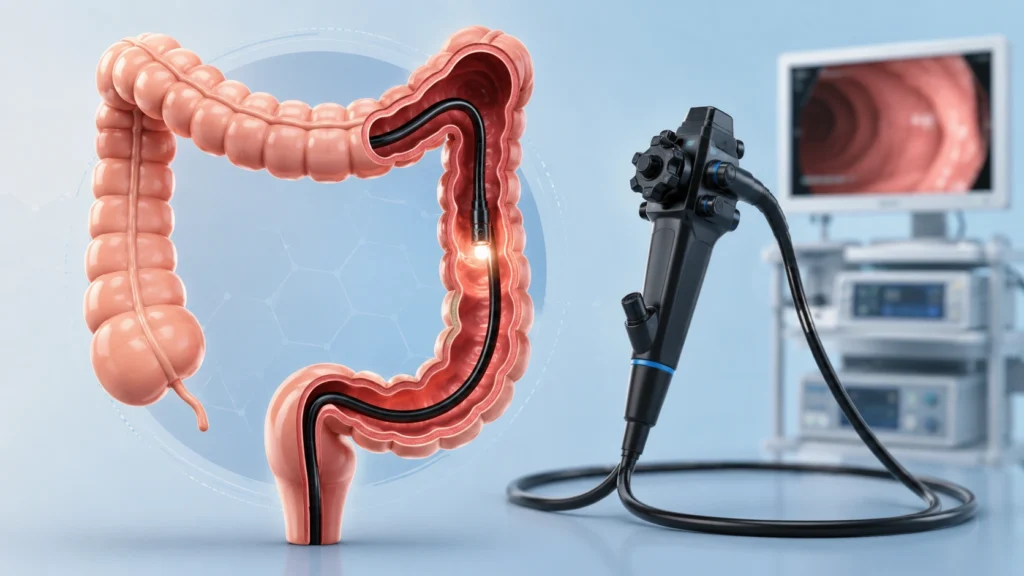
Colonoscopy and sigmoidoscopy are important tests used to examine the inside of the large intestine, also called the colon and rectum. These procedures help doctors detect problems such as polyps, inflammation, bleeding, ulcers, and early signs of cancer. They are among the most reliable tools for preventing and diagnosing colorectal diseases.
A colonoscopy examines the entire colon, from the rectum to the beginning of the large intestine. A sigmoidoscopy examines only the lower part of the colon, called the sigmoid colon and rectum. Both procedures use a thin, flexible tube with a camera and light at the end, called an endoscope. The doctor can view images on a screen and take small tissue samples or remove polyps if needed.
What is Colonoscopy?
Colonoscopy is a medical procedure that allows a doctor to examine the entire lining of the colon and rectum. It is done using a long, flexible tube called a colonoscope, which has a tiny camera and light at the tip. The camera sends images to a monitor, allowing the doctor to see the inside of the bowel clearly.
During colonoscopy, the doctor can:
- Look for inflammation, ulcers, or abnormal growths.
- Take small tissue samples, called biopsies, for testing.
- Remove polyps, which are small growths that can sometimes turn into cancer.
- Identify sources of bleeding in the colon.
- Evaluate chronic diarrhea, constipation, or abdominal pain.
Colonoscopy is commonly used for colorectal cancer screening, especially in adults over a certain age or those with a family history of colon cancer. It is also used to investigate symptoms such as blood in stool, unexplained weight loss, persistent change in bowel habits, or chronic abdominal discomfort.
What is Sigmoidoscopy?
Sigmoidoscopy is similar to colonoscopy but examines only the lower part of the colon, called the sigmoid colon, and the rectum. It uses a shorter, flexible tube called a sigmoidoscope.
Sigmoidoscopy is often used when the doctor suspects a problem in the lower bowel. It requires less preparation than colonoscopy and usually takes less time. However, it does not examine the entire colon, so it may miss problems in the upper parts.
Sigmoidoscopy may be recommended for:
- Evaluating rectal bleeding.
- Investigating changes in bowel habits.
- Assessing inflammation in the lower colon.
- Screening in selected patients when full colonoscopy is not immediately required.
Why are Colonoscopy and Sigmoidoscopy Done?
These procedures are done for both diagnostic and preventive reasons.
Common reasons for colonoscopy
- Screening for colorectal cancer in adults at average or high risk.
- Investigating blood in stool or black stools.
- Evaluating persistent diarrhea or constipation.
- Assessing unexplained abdominal pain.
- Checking for polyps or growths in the colon.
- Monitoring patients with a history of polyps or colon cancer.
- Evaluating inflammatory bowel disease such as ulcerative colitis or Crohn’s disease.
- Investigating unexplained anemia or weight loss.
Common reasons for sigmoidoscopy
- Evaluating rectal bleeding or mucus in stool.
- Assessing symptoms limited to the lower bowel.
- Screening in selected patients.
- Follow-up of known lower bowel conditions.
Preventive importance: Colonoscopy is one of the most effective ways to prevent colorectal cancer. Polyps can be removed before they turn into cancer. Early detection of cancer or precancerous changes greatly improves treatment outcomes.
Who Should Consider Colonoscopy or Sigmoidoscopy?
Not everyone needs these tests, but certain groups benefit strongly from them.
People who may need colonoscopy
- Adults above a certain age for routine cancer screening, as advised by their doctor.
- People with a family history of colon cancer or polyps.
- Patients with blood in stool or black stools.
- Individuals with persistent change in bowel habits.
- Patients with chronic abdominal pain and altered bowel movements.
- People with unexplained anemia or weight loss.
- Patients with known inflammatory bowel disease.
- Individuals with a previous history of polyps.
People who may need sigmoidoscopy
- Patients with symptoms suggesting lower bowel problems.
- Individuals with rectal bleeding.
- Patients being evaluated for lower colon inflammation.
- Selected patients for limited screening when full colonoscopy is not immediately required.
Who may need earlier or more frequent testing
- People with a strong family history of colon cancer.
- Patients with genetic conditions affecting colon cancer risk.
- Individuals with long-standing inflammatory bowel disease.
- Patients with previous polyps or colon cancer.
Preparation for Colonoscopy and Sigmoidoscopy
Proper preparation is essential for a clear and safe examination. The bowel must be clean so the doctor can see the lining properly.
General preparation steps
- Follow the diet instructions given by the doctor.
- Take the prescribed bowel preparation solution as directed.
- Drink plenty of clear fluids unless advised otherwise.
- Avoid solid food for the recommended period before the test.
- Inform the doctor about all medicines, especially blood thinners, diabetes medicines, or heart medicines.
- Arrange for someone to accompany you, as sedation may be used.
Diet before the procedure
- A low-fiber diet may be advised for a day or two before.
- Clear liquids are usually allowed the day before.
- Avoid red or purple colored drinks that can look like blood.
- Do not eat solid food for the time specified by the doctor.
Bowel preparation
- A laxative solution is given to clean the bowel.
- It causes frequent loose motions until the bowel is empty.
- It is important to drink the full amount as instructed.
- Incomplete preparation can reduce the quality of the examination.
Medicine adjustments
- Blood thinners may need to be paused or adjusted.
- Diabetes medicines may need dose changes due to fasting.
- Iron supplements may need to be stopped before the test.
- Always follow the doctor’s specific instructions.
What Happens During the Procedure?
Both colonoscopy and sigmoidoscopy are done in a procedure room or endoscopy suite.
Before the procedure
- Vital signs such as blood pressure and pulse are checked.
- An IV line may be started for fluids and medicines.
- Sedation or pain relief may be given to keep the patient comfortable.
- The patient is positioned on their side on the examination table.
During colonoscopy
- The doctor gently inserts the colonoscope through the rectum.
- Air or carbon dioxide is passed to expand the colon for better viewing.
- The camera sends images to a monitor.
- The doctor examines the entire colon carefully.
- Polyps may be removed using small tools passed through the scope.
- Tissue samples may be taken if needed.
- The procedure usually takes thirty to sixty minutes.
During sigmoidoscopy
- The sigmoidoscope is inserted through the rectum.
- Only the lower part of the colon is examined.
- The procedure is usually shorter, often fifteen to thirty minutes.
- Sedation may or may not be used, depending on the case.
After the procedure
- The patient is moved to a recovery area.
- Vital signs are monitored until sedation wears off.
- Some bloating or gas is common due to air passed during the test.
- The doctor discusses initial findings with the patient or family.
Recovery After Colonoscopy and Sigmoidoscopy
Most people recover quickly after these procedures.
Immediate recovery
- Patients may feel sleepy or groggy for a few hours due to sedation.
- Driving or operating machinery is not allowed on the same day.
- Mild cramping or bloating is common and usually improves within a day.
- Passing gas helps relieve discomfort.
Diet after the procedure
- Start with light food and fluids.
- Avoid heavy, spicy, or very oily food on the first day.
- Return to normal diet as tolerated.
- Drink enough water to stay hydrated.
Activity after the procedure
- Rest for the remainder of the day.
- Avoid strenuous activity for twenty-four hours.
- Most people can return to normal routine the next day.
- Follow any specific advice given by the doctor.
When results are available
- Initial findings are often discussed immediately.
- Biopsy results may take a few days.
- The doctor will explain the next steps based on findings.
Benefits of Colonoscopy and Sigmoidoscopy
These procedures offer several important benefits for digestive health.
Diagnostic benefits
- Direct visualization of the colon lining.
- Accurate detection of polyps, ulcers, inflammation, or tumors.
- Ability to take tissue samples for confirmation.
- Identification of bleeding sources.
Preventive benefits
- Removal of polyps before they become cancerous.
- Early detection of colorectal cancer.
- Better treatment outcomes when disease is found early.
- Peace of mind for patients with concerning symptoms.
Therapeutic benefits
- Polyp removal during the same procedure.
- Control of some bleeding sites.
- Dilation of narrow areas in selected cases.
- Placement of stents in some advanced cases.
Possible Risks and Complications
Colonoscopy and sigmoidoscopy are generally safe, but like any medical procedure, they carry some risks.
- Bloating or gas.
- Mild cramping.
- Temporary discomfort in the rectal area.
- Drowsiness from sedation.
Less common risks
- Bleeding, especially after polyp removal.
- Reaction to sedation medicines.
- Drop in blood pressure during the procedure.
- Incomplete examination due to poor preparation or anatomical factors.
Rare but serious risks
- Perforation, which is a tear in the colon wall.
- Severe bleeding requiring treatment.
- Infection.
- Complications related to heart or lung conditions in high-risk patients.
Colonoscopy and Sigmoidoscopy in Special Situations
These procedures may need special consideration in certain groups.
In older adults
- May have more medical conditions requiring careful planning.
- Sedation is adjusted based on overall health.
- Benefits of cancer screening remain important.
In patients with heart or lung disease
- Pre-procedure evaluation is important.
- Sedation and monitoring are carefully managed.
- Risks and benefits are discussed in detail.
In patients on blood thinners
- Medicines may need to be paused or adjusted.
- Risk of bleeding is considered.
- Decisions are made jointly by the treating doctors.
In pregnancy
- These procedures are usually avoided unless absolutely necessary.
- If needed, they are done with special precautions.
- The timing and safety are carefully evaluated.
Why Choose Rama Hospital for Colonoscopy and Sigmoidoscopy?
Colonoscopy and sigmoidoscopy require skilled gastroenterologists, proper equipment, and safe sedation practices. A hospital setting ensures that any rare complications can be managed immediately.
- Experienced gastroenterology specialists.
- Modern endoscopy equipment for clear imaging.
- Safe sedation and monitoring during the procedure.
- Ability to manage complications if they occur.
- Proper infection control and sterilization practices.
- Coordinated care with pathology for biopsy results.
Frequently Asked Questions (FAQs)
1. What is the difference between colonoscopy and sigmoidoscopy?
Colonoscopy examines the entire colon, while sigmoidoscopy examines only the lower part of the colon and rectum. Colonoscopy is more comprehensive and is preferred for full colorectal cancer screening.
2. Is colonoscopy painful?
Most patients do not find it painful because sedation or pain relief is given. Some bloating or cramping may be felt during or after the procedure, but it usually improves quickly.
3. How long does the procedure take?
Colonoscopy usually takes thirty to sixty minutes, while sigmoidoscopy takes about fifteen to thirty minutes. Total time at the hospital may be longer due to preparation and recovery.
4. Do I need to take leave from work?
Most people need rest for the remainder of the day due to sedation. Many can return to work the next day, depending on how they feel and the nature of their job.
5. Can polyps be removed during colonoscopy?
Yes, polyps can usually be removed during the same procedure using small tools passed through the colonoscope. This helps prevent them from turning into cancer.
6. How often should colonoscopy be done?
The frequency depends on age, risk factors, and previous findings. Average-risk adults may need it every ten years, while high-risk patients may need it more often as advised by their doctor.
7. What if the bowel preparation is not complete?
Incomplete preparation can make the examination difficult or incomplete. The doctor may advise repeating the preparation or rescheduling the procedure for better results.
8. Can I drive after colonoscopy?
No, driving is not allowed on the same day if sedation is used. A family member or friend should accompany the patient to and from the hospital.
Conclusion
Colonoscopy and sigmoidoscopy are valuable procedures for examining the colon and rectum. They help detect polyps, inflammation, bleeding, and early signs of cancer. With proper preparation, skilled doctors, and safe sedation, these tests are generally well-tolerated and highly informative.
For patients with rectal bleeding, change in bowel habits, abdominal pain, or those needing cancer screening, these procedures can provide clear answers and guide treatment. Early detection and polyp removal can prevent serious disease and improve long-term outcomes.
Rama Hospital can provide expert colonoscopy and sigmoidoscopy services with experienced gastroenterologists, modern equipment, safe sedation, and complete follow-up care. Patients receive clear guidance on preparation, procedure, and recovery, ensuring a smooth and comfortable experience.