A baby is born every minute with a heart that isn’t quite right.
Congenital heart disease, or CHD, is the most common birth defect in the world, affecting nearly 1 in every 100 newborns. In India alone, an estimated 1.8 to 2 lakh babies are born with a congenital heart condition every year. Yet, most families receive the diagnosis without truly understanding what it means, what options exist, or what life ahead looks like.
Congenital heart disease is not one condition. It is an umbrella term for a wide range of structural problems in the heart that are present from birth, some minor enough to resolve on their own, others life-threatening if left untreated.
The reassuring truth is this: with advances in cardiac surgery, interventional cardiology, and long-term management, most children born with congenital heart disease today can live full, active, and meaningful lives. The key is early detection, accurate diagnosis, and the right treatment plan.
What is congenital heart disease?
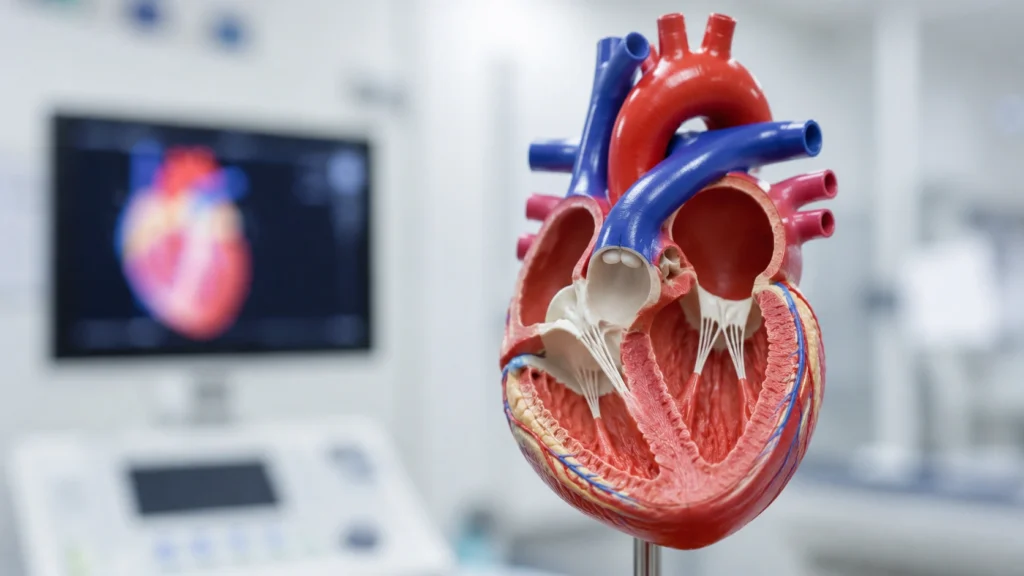
Congenital heart disease refers to structural abnormalities of the heart or major blood vessels that develop during fetal growth, before birth.
The word “congenital” simply means “present at birth.” These defects can affect:
- The walls of the heart (chambers).
- The valves that control blood flow.
- The arteries and veins that carry blood to and from the heart.
Some congenital heart diseases are mild, like a small hole that may close on its own. Others are complex, involving multiple structures and requiring surgery within days of birth.
What makes congenital heart disease particularly important is that the heart’s job is to pump oxygen-rich blood to every part of the body. When that system is structurally compromised from birth, every organ is affected. Early identification and treatment are not optional; they are essential.
Types of congenital heart disease
CHD encompasses dozens of distinct conditions. Understanding the most common ones helps families and patients ask better questions and make more informed decisions.
Simple CHDs involve a single defect and are often correctable with one procedure.
Complex CHDs involve multiple structural problems, sometimes requiring staged surgeries over several years.
|
Type of CHD
|
Description |
Severity
|
| Ventricular Septal Defect (VSD) |
Hole between the lower chambers of the heart |
Mild to Severe |
| Atrial Septal Defect (ASD) |
Hole between the upper chambers of the heart |
Mild to Moderate |
| Patent Ductus Arteriosus (PDA) |
Blood vessel that fails to close after birth |
Mild to Moderate |
| Tetralogy of Fallot |
Combination of 4 defects causing low oxygen |
Severe |
| Transposition of Great Arteries |
The aorta and pulmonary artery are switched |
Critical |
| Coarctation of the Aorta |
Narrowing of the main artery leaving the heart |
Moderate to Severe |
| Pulmonary Stenosis |
Narrowing of the pulmonary valve |
Mild to Severe |
| Hypoplastic Left Heart Syndrome (HLHS) |
The left side of the heart is severely underdeveloped |
Critical |
| Tricuspid Atresia |
The tricuspid valve is absent or abnormal |
Severe |
| Total Anomalous Pulmonary Venous Return (TAPVR) |
Pulmonary veins connect to wrong location |
Severe |
Who is the ideal candidate for congenital heart disease treatment?
Congenital heart disease affects people across all age groups. Treatment eligibility depends on the type of defect, its severity, overall health, and timing of diagnosis.
Newborns and Infants:
- Diagnosed before or shortly after birth.
- Critical defects requiring emergency or early surgical intervention.
- Babies showing cyanosis (blue discoloration), difficulty feeding, or rapid breathing.
Children (Ages 1–12):
- Moderate defects identified during routine checkups or cardiac screening.
- Children with delayed growth, exercise intolerance, or frequent respiratory infections.
- Those requiring elective surgical repair or catheter-based intervention.
Adolescents and Teenagers:
- Previously treated CHD patients requiring follow-up procedures or valve repairs.
- Late-diagnosed defects discovered during puberty or sports participation.
Adults with CHD (ACHD):
- Approximately 90% of children with CHD now survive into adulthood.
- Adults with repaired CHD requiring lifelong monitoring and re-intervention.
- Adults with undiagnosed mild CHD presenting with symptoms like breathlessness or palpitations.
The important message: CHD is not only a childhood condition. It requires lifelong cardiac care.
What causes congenital heart disease?
The heart develops in the first 8 weeks of pregnancy. Any disruption during this period can lead to a structural defect.
In many cases, no single clear cause is identified. However, research has established several well-recognized risk factors:
Genetic Factors:
- Chromosomal abnormalities: Down syndrome (Trisomy 21), Turner syndrome, and DiGeorge syndrome carry significantly higher CHD risks.
- Family history of congenital heart defects increases likelihood in subsequent pregnancies.
- Specific gene mutations linked to heart development.
Maternal Health During Pregnancy:
- Uncontrolled diabetes (pre-gestational diabetes carries a 3–5x higher risk).
- Rubella (German measles) infection in the first trimester.
- Phenylketonuria (PKU), a metabolic disorder in the mother.
- Lupus or other autoimmune conditions.
Medication and Substance Exposure:
- Certain prescription medications: ACE inhibitors, lithium, thalidomide, some anticonvulsants.
- Alcohol consumption during pregnancy.
- Recreational drug use: cocaine is strongly associated with cardiac defects.
- Excessive vitamin A supplementation.
Environmental Factors:
- Exposure to organic solvents, pesticides, or heavy metals during early pregnancy.
- Air pollution: Emerging evidence links particulate matter exposure to higher CHD incidence.
Idiopathic (Unknown Cause):
- In over 60–70% of CHD cases, no specific cause is ever identified.
Knowing the cause doesn’t change the diagnosis, but it informs genetic counseling for families planning future pregnancies.
Common symptoms of congenital heart disease
Symptoms vary dramatically based on the type of defect and whether it causes low oxygen delivery, heart failure, or abnormal pressure in the heart.
In Newborns and Infants:
- Bluish tint to lips, skin, or fingernails (cyanosis), often called “blue baby syndrome.”
- Rapid breathing or difficulty breathing.
- Poor feeding, tiring quickly during feeds.
- Low birth weight and poor weight gain.
- Swollen legs, abdomen, or around the eyes.
- Persistent heart murmur detected on stethoscope exam.
In Older Children:
- Easy fatigue during physical activity or play.
- Shortness of breath with minimal exertion.
- Frequent respiratory infections or pneumonia.
- Delayed physical development compared to peers.
- Heart palpitations or irregular heartbeat.
In Adults with CHD:
- Unexplained breathlessness during routine activities.
- Chest pain or pressure.
- Dizziness, fainting, or near-fainting episodes.
- Swelling in the ankles and feet.
- Irregular heart rhythm (arrhythmia).
- Reduced exercise tolerance.
Important: Some CHDs, particularly small ASDs or mild pulmonary stenosis, may produce no symptoms at all and are discovered incidentally during a routine health checkup.
How is congenital heart disease diagnosed?
Early and accurate diagnosis is the foundation of effective CHD management. Modern medicine offers several powerful tools.
Prenatal Diagnosis (Before Birth):
- Fetal Echocardiography: a specialized ultrasound performed between 18–24 weeks of pregnancy to examine the structure and function of the fetal heart. Recommended for mothers with risk factors.
- Amniocentesis or Chorionic Villus Sampling (CVS): to detect chromosomal abnormalities associated with congenital heart disease.
Postnatal Diagnosis (After Birth):
- Pulse Oximetry Screening: A painless, non-invasive test measuring oxygen levels in the blood. Now standard in many hospitals for all newborns within 24–48 hours of birth.
- Chest X-Ray: Assesses heart size, shape, and lung vascularity.
- Electrocardiogram (ECG/EKG): records electrical activity of the heart; identifies rhythm abnormalities.
- Echocardiogram (Echo): the gold standard for CHD diagnosis. Provides real-time images of heart structure, valve function, and blood flow.
- Cardiac MRI (CMR): provides highly detailed images of complex heart structures, particularly useful for complex CHDs.
- Cardiac CT Angiography: maps coronary arteries and major vessels with precision.
- Cardiac Catheterization: an invasive procedure where a thin tube is inserted into the heart via blood vessels. Used for both diagnosis and certain treatments. Measures pressures within heart chambers and vessels.
- Genetic Testing: recommended when a chromosomal syndrome is suspected.
Treatment options for congenital heart disease
This is where the most significant progress in modern medicine has occurred. CHD treatment today is no longer limited to surgery. A comprehensive range of options exists, chosen based on the type and severity of the defect, the patient’s age, and overall health.
1. Watchful Waiting (Observation)
Not all CHDs require immediate intervention.
- Small VSDs and small ASDs often close on their own within the first 2–3 years of life.
- Regular echo monitoring every 6–12 months tracks progress.
- If the defect closes spontaneously, no further treatment is needed.
- Recommended only when the defect is not causing symptoms, growth problems, or heart strain.
2. Medications
Medicines do not repair the structural defect but manage symptoms and protect the heart.
Commonly used medications in CHD:
- Diuretics: reduce fluid retention and ease breathing.
- Digoxin: strengthens the heart’s pumping action.
- ACE Inhibitors / ARBs: reduce the heart’s workload.
- Beta-blockers: control heart rate and manage arrhythmias.
- Prostaglandins (PGE1): keep the ductus arteriosus open in critical cyanotic defects until surgery.
- Anticoagulants: prevent blood clots, especially in complex CHD or post-surgical patients.
- Pulmonary Vasodilators: medications like sildenafil used for pulmonary arterial hypertension associated with CHD.
Medications are often part of long-term management even after surgical repair.
3. Cardiac Catheterization Procedures (Interventional Cardiology)
A revolutionary advance in CHD treatment, many defects that once required open-heart surgery can now be treated through thin tubes (catheters) inserted through blood vessels. No chest incision required.
Common catheter-based procedures:
- ASD Device Closure: an Amplatzer device or similar occluder is delivered via catheter to seal the hole between upper chambers.
- VSD Device Closure: similar technique to close the hole between lower chambers (selected cases).
- PDA Device Closure: coils or plugs close the patent ductus arteriosus.
- Balloon Valvuloplasty: a balloon-tipped catheter dilates narrowed valves (pulmonary stenosis, aortic stenosis).
- Balloon Angioplasty + Stenting: opens narrowed arteries, including coarctation of the aorta.
- Transcatheter Pulmonary Valve Replacement (TPVR): replaces the pulmonary valve without open surgery.
- Coil Embolization: blocks abnormal blood vessel connections.
Benefits: shorter hospital stay, faster recovery, no surgical scar, suitable for high-risk patients.
4. Open-Heart Surgery
For complex CHDs, open-heart surgery remains the definitive treatment.
The heart is temporarily stopped, and a heart-lung bypass machine (cardiopulmonary bypass) takes over circulation while the surgeon repairs the defect.
Common surgical procedures:
- VSD / ASD / AVSD Repair: direct closure using sutures or a patch.
- Total Correction of Tetralogy of Fallot: VSD closure + relief of right ventricular outflow obstruction.
- Arterial Switch Operation: for Transposition of Great Arteries, the aorta and pulmonary artery are repositioned.
- Norwood Procedure / Glenn / Fontan Operations: a staged surgical approach over 3 procedures for hypoplastic left heart syndrome and single-ventricle defects.
- Ross Procedure: the patient’s own pulmonary valve replaces the diseased aortic valve.
- Coarctation Repair: removal of the narrowed aortic segment and reconstruction.
- Valve Repair or Replacement: for severely diseased heart valves.
5. Minimally Invasive Heart Surgery (MICS)
An increasingly preferred alternative to traditional open-heart surgery.
- Smaller incisions, often between the ribs or through a small chest opening.
- Performed with specialised instruments and video-assisted techniques.
- Significant reduction in blood loss, pain, scarring, and recovery time.
- Suitable for selected ASD repairs, valve surgeries, and VSD closures.
6. Hybrid Procedures
A combination of surgical and catheter-based approaches performed simultaneously.
- Used for complex cases where neither approach alone is sufficient.
- Example: Hybrid Norwood Procedure for HLHS, stenting the ductus arteriosus via catheter while banding pulmonary arteries surgically.
- Requires a specialised hybrid operating room with both cardiac surgical and interventional capabilities.
7. Heart Transplantation
Reserved for the most severe, end-stage CHD cases where other treatments are no longer viable.
Considered when:
- Multiple failed surgical repairs.
- Severely impaired heart function with no reconstructive options.
- Progressive heart failure unresponsive to maximum medical therapy.
- Complex single-ventricle disease with deteriorating Fontan circulation.
What it involves:
- Patient is placed on a national transplant waiting list.
- A matched donor heart is implanted after removing the diseased heart.
- Requires lifelong immunosuppressive medication to prevent rejection.
- Regular follow-up with echocardiograms, biopsies, and medication monitoring.
Survival rates after heart transplantation have improved significantly; median survival post-transplant in experienced centers exceeds 12–15 years.
8. Palliative Procedures (For Complex, Non-Correctable CHDs)
Some CHDs cannot be fully corrected but can be managed to improve quality and length of life.
- Blalock-Taussig (BT) Shunt: creates a connection between a systemic artery and the pulmonary artery to increase blood flow to the lungs in cyanotic defects.
- Pulmonary Artery Banding: reduces excessive blood flow to the lungs to protect them from damage.
- Fontan Circulation: redirects venous blood to the lungs without a pumping chamber in single-ventricle hearts.
Benefits of treating congenital heart disease
Treating CHD is not just about survival. It is about the quality of life, developmental outcomes, and long-term health.
- Normal growth and development: corrected CHD allows adequate oxygen delivery to support physical and neurological development.
- Improved exercise capacity: patients lead active, physically capable lives.
- Prevention of complications: untreated CHD leads to pulmonary hypertension, Eisenmenger syndrome, heart failure, and stroke.
- Longer lifespan: surgical advances have transformed CHD from a fatal childhood condition to a manageable chronic condition.
- Emotional and psychological well-being: children who receive timely care experience fewer developmental delays and better school performance.
- Reduced hospitalization burden: treated patients require fewer emergency admissions over their lifetime.
Can congenital heart disease be managed without surgery?
Yes, in select cases.
Mild defects like small ASDs, small VSDs, and mild pulmonary stenosis may not require surgery at all.
Management without surgery includes the following:
- Regular cardiac monitoring with echocardiograms.
- Medication to control symptoms and reduce heart workload.
- Activity modification if required.
- Catheter-based device closure for eligible holes (not technically “surgery” but a procedure).
- Lifestyle adjustments, diet, hydration, and avoiding high altitudes or extreme exertion in specific cases.
However, moderate-to-severe defects almost universally require some form of intervention, either catheter-based or surgical. Delaying necessary treatment increases the risk of irreversible complications.
When should you see a cardiologist for congenital heart disease?
See a doctor immediately if:
- Your newborn has a bluish tint to the lips, skin, or nails.
- Your baby is breathing rapidly or struggling to feed.
- Your child faints, collapses, or has chest pain during activity.
- A heart murmur is detected during a routine checkup.
Schedule a cardiac evaluation if:
- Your child shows unexplained fatigue, poor growth, or recurrent lung infections.
- You have a family history of CHD or chromosomal conditions.
- You are pregnant and have uncontrolled diabetes or lupus or took medications in early pregnancy.
- An adult family member has been newly diagnosed with unexplained breathlessness, arrhythmia, or heart failure.
Adults with previously treated CHD should see a specialist if:
- They experience new or worsening breathlessness.
- They develop palpitations or irregular heartbeat.
- They are planning pregnancy (CHD and pregnancy carry specific risks requiring specialist management).
- It has been more than 12 months since their last cardiac review.
What happens if congenital heart disease is left untreated?
Untreated CHD does not simply remain stable. Over time, it causes progressive and often irreversible damage.
Early treatment prevents all of these outcomes. The window for intervention matters enormously.
- Pulmonary Hypertension: increased pressure in the lungs due to excess blood flow from heart defects that can become permanent.
- Eisenmenger Syndrome: a severe, irreversible complication where blood flow reverses direction through a defect, causing severe cyanosis and heart failure; makes surgical repair no longer possible.
- Heart Failure: the heart becomes too strained to pump adequately.
- Stroke and Blood Clots: abnormal blood flow patterns increase clot risk.
- Infective Endocarditis: bacteria can infect structurally abnormal heart tissue.
- Arrhythmias: abnormal heart rhythms, some life-threatening.
- Sudden Cardiac Death: in severe unrepaired defects, particularly in adults with unknown CHD.
Why choose rama hospital for congenital heart disease treatment?
Every child who walks through our doors carries a family’s hope. We treat that with the seriousness it deserves. At Rama Hospital, the Pediatric and Adult Congenital Heart Program is built on three pillars: clinical excellence, compassionate care, and advanced technology.
- Expert Multidisciplinary Team: pediatric cardiologists, congenital heart surgeons, interventional cardiologists, neonatologists, cardiac anesthesiologists, and dedicated CHD nurses working together.
- Full Spectrum of Treatment: from fetal echocardiography and cardiac catheterization to complex open-heart surgery and heart transplantation.
- Advanced Hybrid Cardiac Suite: equipped for simultaneous surgical and catheter-based procedures.
- Dedicated Pediatric Cardiac ICU (PCICU): specialised post-operative monitoring and critical care for newborns and children.
- Adult CHD Program: specialist follow-up for adults living with repaired or unrepaired congenital heart conditions.
Frequently Asked Questions (FAQs)
Q1. Can CHD be detected before birth?
Yes. Fetal echocardiography between 18–24 weeks of pregnancy can identify most significant structural heart defects before birth, allowing the care team to plan delivery and intervention accordingly.
Q2. Will my child need multiple surgeries?
It depends on the type of CHD. Simple defects like ASD or VSD often require a single procedure. Complex CHDs, such as hypoplastic left heart syndrome or Tetralogy of Fallot with associated anomalies, may require staged surgical procedures over several years.
Q3. Can children with CHD play sports?
Many children with repaired CHD can participate in physical activity and sports. However, specific recommendations depend on the type of defect, the repair performed, and residual heart function. A cardiologist will provide a personalized activity guideline.
Q4. Is CHD hereditary?
CHD is not strictly inherited in the Mendelian sense for most cases. However, if a parent or sibling has CHD, the risk in subsequent pregnancies rises to approximately 3–5%, compared to 1% in the general population. Genetic counseling is recommended.
Q5. What is the long-term outlook for someone with CHD?
With appropriate treatment, most people with CHD live full and productive lives. However, CHD is a lifelong condition, it requires ongoing cardiac monitoring, medication in some cases, and periodic re-intervention as patients age.
Q6. Is heart transplant the only option for severe CHD?
No. Transplant is reserved for a small subset of patients where reconstruction is no longer possible. Many severe CHDs, including hypoplastic left heart syndrome, are managed through staged surgical palliative procedures that allow patients to grow into adulthood.
Q7. Can adults suddenly be diagnosed with CHD they never knew they had?
Yes. Mild defects such as small ASDs or bicuspid aortic valves are sometimes discovered for the first time in adults during investigations for breathlessness, arrhythmia, or routine cardiac screening. Adult CHD specialists are trained to manage these cases.
Conclusion
Congenital heart disease is complex, but it is not hopeless.
From a small hole that closes on its own to a completely reconstructed heart, modern cardiac medicine has transformed what’s possible. Children who would not have survived infancy a generation ago are now running, studying, working, and raising families of their own.
The journey begins with awareness: knowing the signs, understanding the options, and connecting with the right team at the right time.
If you or someone you love has been diagnosed with CHD, or if you are expecting and concerned about your baby’s heart, don’t wait. Early evaluation, accurate diagnosis, and personalized treatment planning make all the difference.