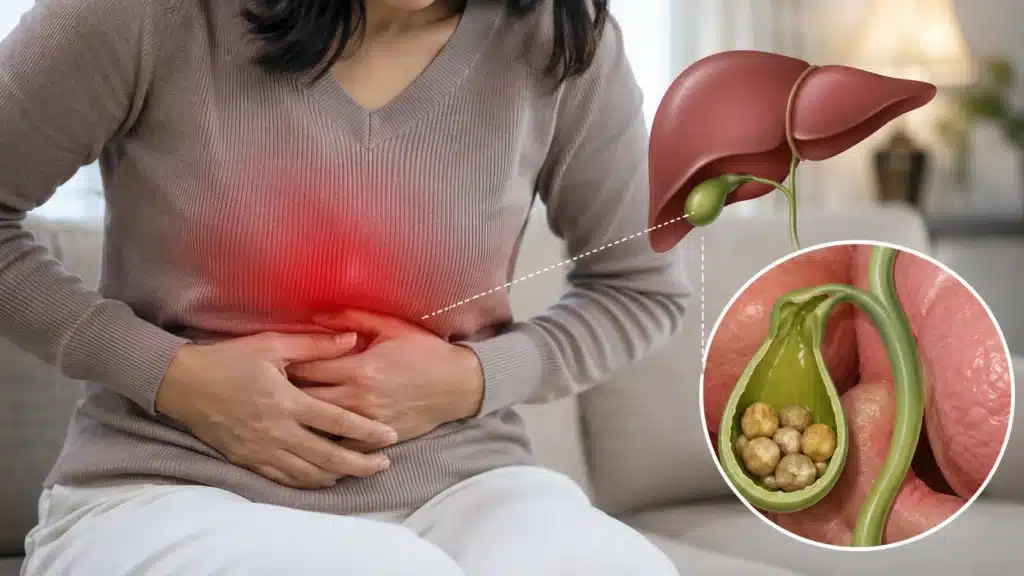
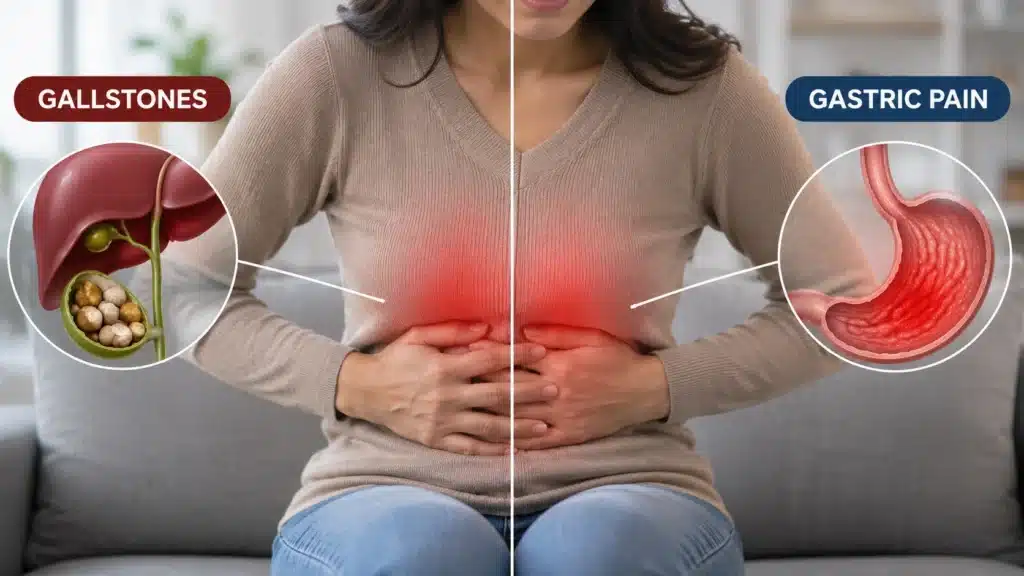
You’ve been told you have a stone, not just in the gallbladder, but in the bile duct. And suddenly, it feels a lot more serious.
That’s because it is.
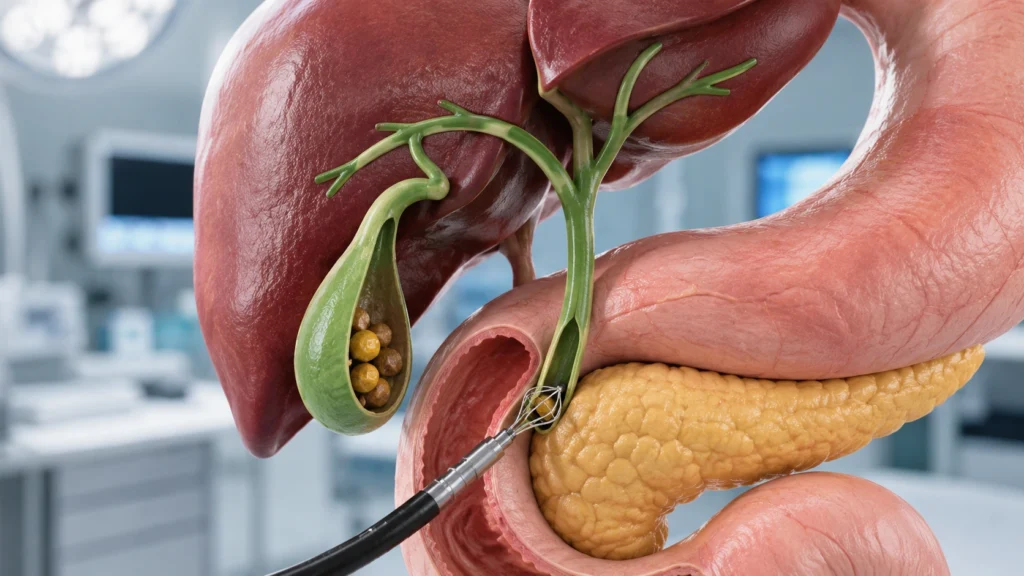
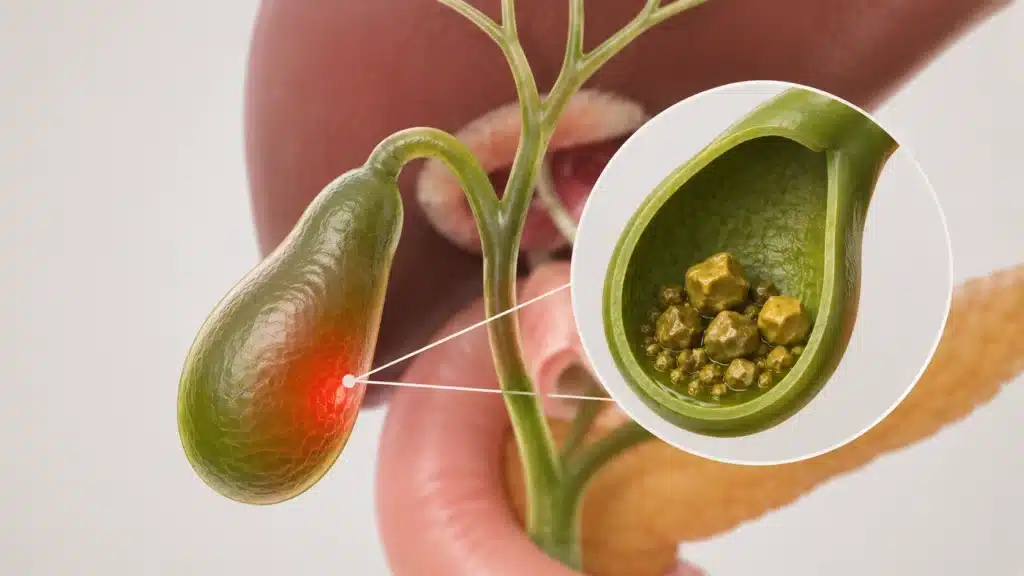
A stone stuck in the common bile duct (CBD) is different from a regular gallbladder stone. It blocks the flow of bile from the liver to the intestine, causing jaundice, severe abdominal pain, fever, and, in serious cases, life-threatening infection of the bile duct or pancreas.
Common Bile Duct Exploration is the surgical procedure that directly accesses the common bile duct, removes the stone or obstruction, and restores normal bile flow safely and effectively.
At Rama Hospital, our experienced hepatobiliary surgical team performs Common Bile Duct Exploration using both laparoscopic (keyhole) and open surgical approaches, choosing the safest and most effective option for each patient’s specific condition.
What is CBD exploration (common bile duct exploration)?
Common Bile Duct Exploration (CBDE) is a surgical procedure to directly open, inspect, and clear the common bile duct, the tube that carries bile from the liver and gallbladder into the small intestine.
Think of it this way:
- The bile duct is a narrow tube, about the diameter of a pencil.
- When a stone, tumor, or stricture blocks this tube, bile has nowhere to go.
- It backs up into the liver, causing jaundice, infection, and organ damage.
- Common Bile Duct Exploration opens the duct, removes the blockage, and restores normal bile flow.
Two main approaches are used:
| Approach |
What It Means |
| Laparoscopic CBDE |
Keyhole surgery: 3 to 4 small incisions; faster recovery |
| Open CBDE |
Traditional open surgery: used for complex cases |
What happens during CBDE:
- The surgeon accesses the common bile duct directly.
- The duct is opened (choledochotomy).
- Stones are removed using instruments, a choledochoscope (a tiny camera inside the duct), or a Holmium laser.
- The duct is carefully inspected to ensure complete clearance.
- The duct is then closed, either over a T-tube drain or with a primary closure.
- In some cases, a biliary drainage procedure (like choledochoduodenostomy) is created to allow future bile drainage.
What conditions can be treated with common bile duct exploration?
CBDE is most commonly performed for bile duct stones, but several other biliary conditions are also treated through this approach.
- Common Bile Duct Stones (Choledocholithiasis) – Stones present in the bile duct causing blockage and pain.
- Gallstones with Bile Duct Stones – Stones in both the gallbladder and bile duct treated during the same surgery.
- Acute Cholangitis – Serious bile duct infection caused by a blocked bile duct.
- Recurrent Bile Duct Infections – Repeated infections leading to recurring stone formation.
- Bile Duct Strictures – Narrowing of the bile duct that affects normal bile flow.
- Biliary Tumors – Certain bile duct or nearby tumors requiring surgical evaluation.
- Failed ERCP Stone Removal – When endoscopic treatment cannot remove bile duct stones.
- Choledochal Cysts – Congenital bile duct cysts that may cause stones or infection.
Who needs common bile duct exploration?
- You have bile duct stones confirmed on imaging (CT scan, MRCP, or ultrasound).
- You have jaundice (yellowing of skin and eyes) caused by a blocked bile duct.
- You have acute cholangitis, fever, jaundice, and upper abdominal pain together (Charcot’s Triad).
- You have gallstones, and imaging suggests stones may also be in the common bile duct.
- ERCP has failed to clear your bile duct stones.
- You have recurrent bile duct infections from multiple stones.
- Your bile duct is significantly dilated on imaging, suggesting obstruction.
- You have elevated liver enzymes and bilirubin, suggesting biliary obstruction.
- You have a known bile duct stricture causing obstruction and symptoms.
Diagnosis for common bile duct exploration
Before common bile duct exploration, your doctor at Rama Hospital will confirm the diagnosis and plan the procedure using the following:
Blood Tests
- Liver Function Tests (LFTs): Check for bile duct blockage and liver health.
- Liver Enzymes (AST, ALT): Detect liver irritation or damage.
- Complete Blood Count (CBC): Helps identify infection.
- Clotting Profile: Assesses blood clotting before surgery.
- Serum Amylase/Lipase: Checks for gallstone-related pancreatitis.
Imaging Tests
Ultrasound Abdomen
- First test used to detect gallstones and bile duct blockage.
- Can identify enlarged bile ducts and gallbladder stones.
MRCP
- Best non-invasive scan for detecting bile duct stones.
- Shows the size, number, and location of stones clearly.
CT Scan of the Abdomen
- Helps detect stones and related complications.
- Useful for ruling out tumors and other conditions.
ERCP
- Can both diagnose and remove bile duct stones.
- Often used before surgery when needed.
Intraoperative Cholangiogram
- Special X-ray performed during surgery.
- Confirms stone location and bile duct anatomy.
Choledochoscopy
- Tiny camera used inside the bile duct during surgery.
- Ensures all stones have been completely removed.
Treatment procedure: How is common bile duct exploration done?
At Rama Hospital, CBD Exploration is performed by our experienced hepatobiliary surgical team. Here is a clear, step-by-step explanation:
Before the Procedure
- Blood tests, scans, and anesthesia evaluation are completed.
- Any infection is treated before surgery.
- Blood clotting issues are corrected if needed.
- Nutritional health is assessed and improved if required.
- The surgeon explains the procedure, benefits, and risks.
- Surgery is performed under general anesthesia.
During Laparoscopic common bile duct exploration
- Small keyhole incisions are made in the abdomen.
- A camera is inserted to view the bile duct and gallbladder.
- Dye imaging helps locate the bile duct stones.
- A small opening is made in the bile duct.
- Stones are removed using specialized instruments or laser technology.
- The bile duct is checked to ensure all stones are cleared.
- The bile duct is closed or temporarily drained, depending on the findings.
- The gallbladder is usually removed during the same surgery.
- Additional drainage procedures may be performed if needed.
Open common bile duct exploration (If Required)
- A larger incision is made to access the bile duct directly.
- Used for complex cases or very large stones.
- Allows safe removal of difficult or multiple stones.
After the Procedure
- Recovery is closely monitored, and pain is controlled.
- A temporary drainage tube may be placed if required.
- Follow-up imaging confirms complete stone clearance.
- Most patients stay 3–5 days after laparoscopic surgery.
- Open surgery may require a 5–7 day hospital stay.
- Discharge instructions include diet, activity, and follow-up care.
Benefits of common bile duct exploration
For patients with bile duct stones and biliary obstruction, CBD exploration offers outcomes that are often life-changing:
- Removes all bile duct stones, including large and difficult stones.
- Provides quick relief from jaundice and pain.
- Treats the gallbladder and bile duct in a single surgery.
- Ensures no stones are left behind.
- Reduces the risk of serious complications.
- Laparoscopic surgery offers smaller cuts and faster recovery.
- Can repair the bile duct during the same procedure if needed.
- Helps prevent future stone-related problems.
- Effective when ERCP is unsuccessful or not suitable.
- A safe and reliable option for complex cases.
Risks and complications common bile duct exploration
Common bile duct exploration is a safe, well-established surgical procedure, but like all surgeries, it carries some degree of risk. At Rama Hospital, our team takes every precaution to minimize these.
Common (Usually Temporary)
- Mild pain after surgery, controlled with medications.
- Temporary discomfort from the T-tube, if placed.
- Small amount of bile leakage from the tube site that usually settles on its own.
- Feeling tired or weak for a few days after surgery.
Less Common
- Bile leakage that may need monitoring or drainage.
- Wound infection treated with antibiotics.
- A stone may remain behind and require additional treatment.
- Inflammation of the pancreas (pancreatitis), which is usually treated with medicines.
Rare but Serious
- Significant bleeding during or after surgery.
- Injury to the bile duct.
- Infection in the bile ducts (cholangitis).
- Liver failure in patients with severe pre-existing liver disease.
Possible risks & complications of CBD stone surgery
Recovery after common bile duct exploration is smooth for most patients when the right steps are followed:
First Week
- Get plenty of rest and avoid overexertion.
- Take all medicines exactly as prescribed.
- Eat light, low-fat meals and avoid oily or spicy foods.
- If you have a T-tube, keep the area clean and monitor drainage.
Week 2 Onwards
- Start short walks and gradually increase activity.
- Avoid heavy lifting for 4–6 weeks.
- Drink 2–2.5 liters of water daily.
- Continue a healthy, low-fat diet.
- Contact your doctor if you develop fever, pain, jaundice, or wound leakage.
Long-Term Care
- Attend all follow-up appointments.
- Maintain a healthy weight.
- Avoid crash dieting or rapid weight loss.
- Eat regular, balanced meals.
- Report any recurring symptoms immediately.
Why choose Rama Hospital for common bile duct exploration?
Bile duct surgery demands surgical expertise, precise anatomical knowledge, and the ability to manage complex intraoperative findings. Here’s why patients trust Rama Hospital:
- Experienced Specialists – Skilled surgeons with expertise in treating simple and complex bile duct conditions.
- Minimally Invasive Surgery – Advanced laparoscopic procedures for faster recovery and less discomfort.
- Complete Stone Removal – Intraoperative choledochoscopy helps ensure no stones are left behind.
- Advanced Laser Technology – Effective treatment for large or difficult bile duct stones.
- Comprehensive Biliary Care – ERCP, PTBD, gallbladder surgery, and bile duct surgery available under one roof.
- Multidisciplinary Expertise – Coordinated care from surgeons, gastroenterologists, and other specialists.
- Patient-First Approach – Clear explanations, honest guidance, and personalized treatment plans.
- Modern Infrastructure – Advanced technology and facilities for safe, high-quality care.
- Faster Recovery Focus – Treatment plans designed to reduce hospital stay and support quicker healing.
- Trusted Surgical Outcomes – Proven expertise in managing complex biliary disorders.
When should you see a doctor?
- Yellow skin or eyes (jaundice).
- Dark urine or pale-colored stools.
- Pain in the upper right side of the abdomen.
- Fever along with abdominal pain.
- Nausea or vomiting.
- Gallstones with newly developed jaundice.
- Unexplained itching of the skin.
- Persistent digestive discomfort after meals.
- Sudden worsening of abdominal symptoms.
- Any signs of jaundice should be checked by a doctor promptly.
Frequently Asked Questions (FAQs)
What is the difference between ERCP and common bile duct exploration?
ERCP is an endoscopic procedure, done through the mouth using a flexible camera, that can remove small to medium bile duct stones without surgery. CBD exploration is a surgical procedure, laparoscopic or open, that directly accesses and opens the bile duct to remove stones.
Can CBD stones come back after surgery?
Yes, recurrence is possible, particularly if the gallbladder was not removed (it remains a source of new stones migrating into the duct) or if an underlying condition like biliary stricture or biliary infection is not addressed.
Is laparoscopic common bile duct exploration as effective as open surgery?
Yes, in experienced hands, laparoscopic CBD exploration achieves equivalent stone clearance rates to open surgery, with the added benefits of smaller incisions, less pain, a shorter hospital stay, and faster recovery.
What is a T-tube and why might I need one?
A T-tube is a small, T-shaped drainage tube placed inside the bile duct at the end of surgery, with the tail exiting through the skin. It allows bile to drain externally while the bile duct heals and is used to confirm complete stone clearance via a T-tube cholangiogram before removal.
How long will I be in the hospital after a common bile duct exploration?
For laparoscopic CBD exploration, a hospital stay is typically 3 to 5 days. For open common bile duct exploration, the stay is usually 5 to 7 days. Recovery at home continues for 2 to 4 weeks before returning to normal activities.
Is common bile duct exploration safe for elderly patients?
Yes, with proper pre-operative optimization and experienced surgical and anesthetic teams, common bile duct exploration can be safely performed in elderly patients. The laparoscopic approach is particularly beneficial for older patients, as it reduces physical stress and shortens recovery.
What happens if a CBD stone is left untreated?
Untreated CBD stones cause progressive and serious complications, acute cholangitis (bile duct infection), liver abscess, pancreatitis, secondary biliary cirrhosis, and, in severe cases, sepsis and multi-organ failure.
Will I need to change my diet permanently after common bile duct exploration?
Most patients can return to a normal, balanced diet after full recovery. In the weeks immediately after surgery, a low-fat, easily digestible diet is recommended.
Conclusion
A blocked or stone-filled common bile duct is not a condition to wait on. Left untreated, it escalates, from pain and jaundice to dangerous infection and organ damage. But with the right surgical team and the right procedure, it is absolutely treatable.
Common bile duct explorationat Rama Hospital offers patients with bile duct stones, biliary obstruction, and complex biliary conditions a safe, effective, and, where possible, minimally invasive solution. Our experienced hepatobiliary surgical team, advanced laparoscopic capability, intraoperative choledochoscopy, and integrated biliary care pathway ensure that every patient receives complete treatment, not just stone removal but the full resolution of their biliary problem.
If you have been diagnosed with bile duct stones, are experiencing jaundice or biliary pain, or have been told that ERCP has failed to clear your duct, please don’t wait.