

A noticeable drop in urine output may seem like a small change, especially if you have been busy, sweating more than usual, or drinking less water. But when the change happens suddenly and continues, it can sometimes signal that your kidneys are not working as they should.
One possible cause is acute kidney injury (AKI), a sudden decrease in kidney function that can develop over hours or days. AKI prevents the kidneys from filtering waste and maintaining the body’s normal balance of fluids and electrolytes.
Low urine output is known medically as oliguria. It is one of the common signs of AKI, although not everyone with AKI develops noticeable symptoms. In some people, the condition is discovered through blood tests before they feel unwell.
The important point is this: a sudden change in how much you urinate should not automatically be blamed on dehydration. If it persists or occurs with swelling, breathlessness, weakness, confusion, vomiting, or other concerning symptoms, medical evaluation is important.
What Is Acute Kidney Injury?
Acute kidney injury occurs when the kidneys suddenly become less able to filter waste products from the blood.
Your kidneys normally remove waste and excess fluid while helping maintain the right balance of minerals and fluids in your body. When kidney function suddenly declines, waste products and excess fluid can build up. Electrolyte levels can also become abnormal.
AKI can range from mild to severe. In many cases, kidney function can improve when the underlying cause is identified and treated promptly. However, severe or untreated AKI can lead to serious complications.
What counts as low urine output?
Doctors may use urine volume along with blood tests and other findings to assess kidney function. Oliguria is commonly described as urine output below about 400 mL in 24 hours in adults, although clinical assessment depends on factors such as body size and the situation.
You don’t need to measure every drop of urine to recognise that something has changed. A sudden, persistent reduction from your usual pattern is worth paying attention to.
7 Warning Signs of Acute Kidney Injury
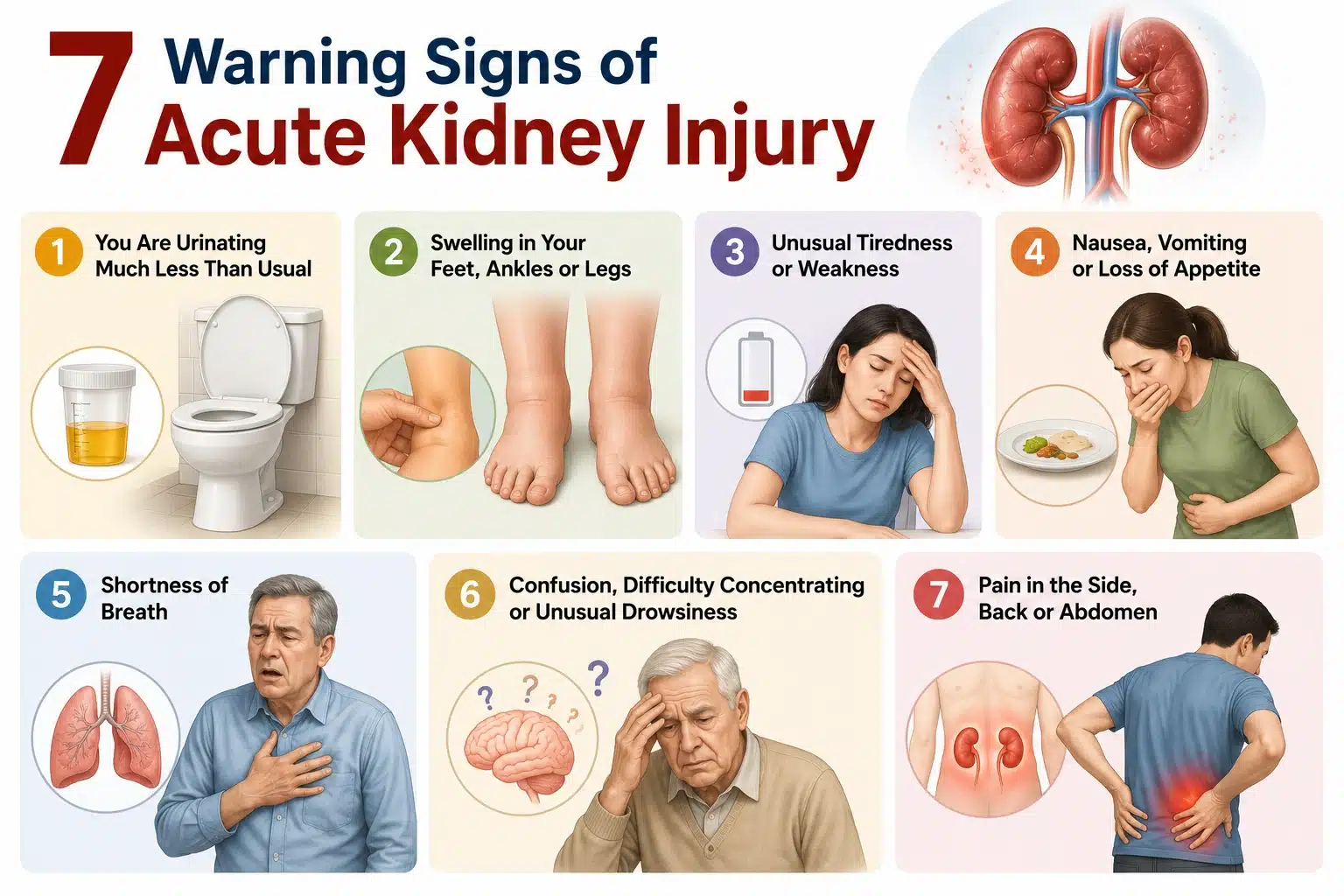
Reduced urine output is often the first noticeable change, but AKI can affect the whole body. Watch for these warning signs.
1. You Are Urinating Much Less Than Usual
This is one of the most important signs.
You may notice that you are going to the bathroom less often or passing significantly less urine each time. In some cases, urine output can become very low.
Low urine output does not always mean AKI. Dehydration, urinary obstruction and certain medicines can also reduce urination. But when the change is sudden or persistent, the underlying cause needs to be identified.
2. Swelling in Your Feet, Ankles or Legs
Healthy kidneys help remove excess fluid from the body. When kidney function falls, the body may retain more salt and water.
This can cause swelling, particularly around the:
- Feet
- Ankles
- Lower legs
- Hands
Fluid can also accumulate in the lungs in more severe cases, potentially causing breathing difficulties.
If swelling appears along with a sudden decrease in urine output, don’t ignore it.
3. Unusual Tiredness or Weakness
A sudden decline in kidney function can lead to the buildup of waste products and disturbances in the body’s chemical balance.
You may feel unusually tired, weak or lacking in energy. These symptoms are not specific to AKI and can occur with many other conditions, but they become more concerning when they appear alongside reduced urine output or other kidney-related symptoms.
4. Nausea, Vomiting or Loss of Appetite
When kidney function drops, waste products can accumulate in the bloodstream.
Some people may experience:
- Nausea
- Vomiting
- Reduced appetite
- A general feeling of being unwell
Persistent vomiting can also worsen dehydration, potentially creating another problem for already stressed kidneys.
5. Shortness of Breath
A sudden decrease in urine output can sometimes be accompanied by fluid retention.
If excess fluid builds up, it can affect the lungs and make breathing difficult. Shortness of breath with swelling and significantly reduced urine output is a reason to seek urgent medical assessment.
Do not assume that breathlessness is simply due to tiredness or a minor infection when it appears suddenly.
6. Confusion, Difficulty Concentrating or Unusual Drowsiness
AKI can cause changes in mental alertness, particularly when kidney dysfunction becomes significant.
You may notice:
- Difficulty concentrating
- Confusion
- Unusual sleepiness
- Feeling mentally “foggy”
Confusion can have many causes and may represent a medical emergency. When it occurs with reduced urine output, weakness or other serious symptoms, prompt medical evaluation is important.
7. Pain in the Side, Back or Abdomen
Some people with AKI experience pain around the side or below the ribs. Pain can also occur when a urinary blockage, such as a kidney stone, is contributing to reduced urine flow.
Pain by itself does not confirm AKI. But sudden pain accompanied by significantly reduced urine output should be evaluated, particularly if you also have fever, vomiting or difficulty passing urine.
7 Warning Signs at a Glance
| Warning sign | What you may notice |
| Reduced urine output | Passing much less urine than usual |
| Swelling | Puffy feet, ankles, legs or hands |
| Fatigue | Unusual weakness or low energy |
| Nausea or vomiting | Feeling sick, vomiting or reduced appetite |
| Shortness of breath | Difficulty breathing, especially with fluid retention |
| Confusion | Trouble concentrating, unusual drowsiness or confusion |
| Side or abdominal pain | Pain around the back, side or abdomen |
These symptoms can have several causes, so they should not be used to diagnose AKI on their own. Diagnosis usually requires medical assessment and testing.
Warning Signs of Acute Kidney Injury?
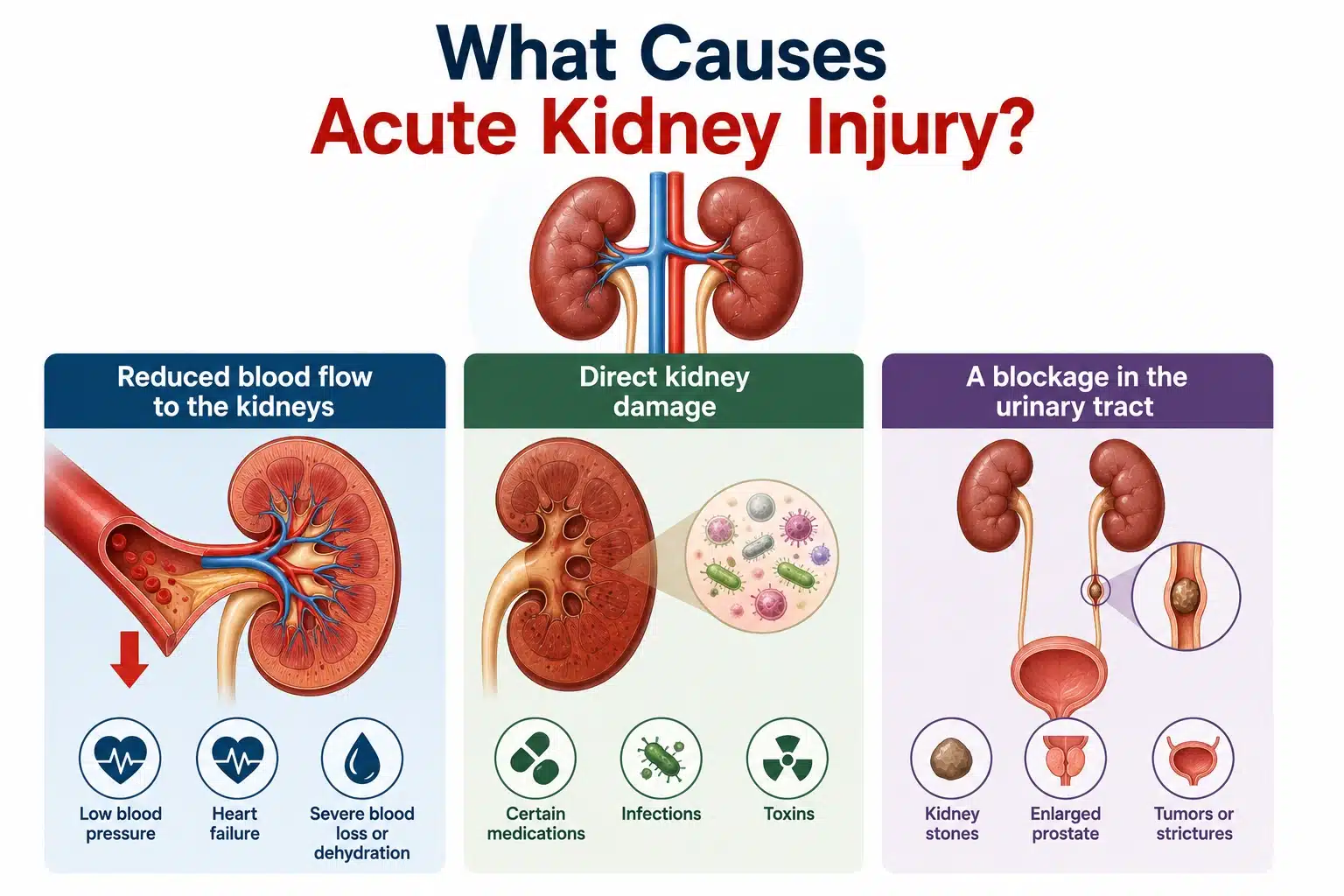
AKI usually happens because another condition or event suddenly affects kidney function.
Doctors generally consider three broad mechanisms:
Reduced blood flow to the kidneys
If the kidneys don’t receive enough blood, their ability to filter waste can decrease.
Possible causes include:
- Severe dehydration
- Significant blood or fluid loss
- Very low blood pressure
- Severe infection or sepsis
- Heart attack
- Heart failure
- Severe burns
Direct kidney damage
Sometimes the kidney itself is injured.
This can occur with certain infections, inflammatory kidney conditions, some medicines or other substances that can damage kidney tissue. Certain chemotherapy medicines, antibiotics and contrast agents used during some imaging procedures can also contribute in susceptible patients.
A blockage in the urinary tract
Urine needs to drain from the kidneys through the urinary tract. If that pathway becomes blocked, urine may not leave the kidneys normally.
Possible causes include:
- Kidney stones
- Enlarged prostate
- Blood clots
- Certain tumours or cancers
- Other conditions that compress or obstruct the urinary tract
Who Is More at Risk of Acute Kidney Injury?
AKI can happen to anyone, but certain people have a higher risk.
| Risk factor | Why it matters |
| Chronic kidney disease | Reduced kidney reserve can make the kidneys more vulnerable |
| Diabetes | Long-term uncontrolled blood sugar can affect kidney health |
| High blood pressure | Can contribute to kidney damage |
| Heart failure or heart disease | May affect blood flow to the kidneys |
| Severe infection | Sepsis and low blood pressure can reduce kidney perfusion |
| Older age | Risk increases with age, particularly alongside other illnesses |
| Certain medicines | Some medicines can affect kidney function, especially in vulnerable people |
| Recent major surgery or hospitalisation | Serious illness, fluid changes and medications may increase risk |
Having one of these risk factors does not mean you will develop AKI. It simply means that a sudden change in urine output deserves closer attention.
Can Dehydration Cause Low Urine Output?
Yes.
When you lose more fluid than you take in, your body tries to conserve water. This can reduce urine production. Severe dehydration can also reduce blood flow to the kidneys and contribute to AKI.
Dehydration may occur because of:
- Heavy sweating
- Persistent vomiting
- Severe diarrhoea
- Fever
- Not drinking enough fluids
- Significant blood or fluid loss
However, it is important not to assume that every episode of low urine output is simply dehydration. If you are drinking normally but still producing much less urine, or if other warning signs are present, consult a healthcare professional.
How Is Acute Kidney Injury Diagnosed?
A doctor will usually begin by asking when the change in urine output started and whether you have recently experienced dehydration, infection, illness, surgery, medication changes or urinary symptoms.
Testing may include:
Blood tests
Blood tests can check levels such as:
- Creatinine
- Urea/BUN
- Electrolytes
- Other markers relevant to kidney function
A rising creatinine level can indicate a decline in kidney function.
Urine tests
A urine sample can provide clues about what may be affecting the kidneys.
Doctors may look for abnormalities that could point toward infection, inflammation, blood or other kidney problems.
Imaging
An ultrasound or other imaging may be recommended when doctors need to assess the kidneys or look for a urinary obstruction.
In selected cases, additional tests, including a kidney biopsy, may be considered.
How Is Acute Kidney Injury Treated?
There isn’t one single treatment for AKI because the treatment depends on what caused the kidney injury.
If dehydration is responsible, treatment may focus on restoring fluid balance. If an infection is involved, appropriate treatment for the infection may be needed. If a medicine is contributing to kidney injury, a doctor may review or change the medication. If a urinary obstruction is responsible, treatment may focus on restoring urine drainage.
Doctors may also manage complications such as abnormal potassium levels or excess fluid.
What about dialysis?
Severe acute kidney injury can sometimes cause waste products, excess fluid or electrolytes such as potassium to build up to dangerous levels.
In such situations, temporary dialysis may be needed to support the body while the kidneys recover. Dialysis does not necessarily mean that kidney function is permanently lost. Some people can stop dialysis once their kidneys recover sufficiently.
Is Acute Kidney Injury Reversible?
Often, yes, particularly when the underlying cause is identified and treated promptly.
Recovery depends on factors such as:
- The cause of AKI
- How severe the kidney injury is
- How quickly treatment begins
- Whether kidney disease was already present
- The person’s overall health
Mild cases may improve relatively quickly, while more severe AKI can take longer and may require close monitoring or temporary dialysis. Some people can be left with lasting kidney damage.
That is why early evaluation matters.
When Should You Seek Medical Care?
A sudden and persistent decrease in urine output deserves medical attention, especially if you are drinking enough fluids but are still urinating much less than normal.
Seek urgent medical care if reduced urine output occurs with:
- Shortness of breath
- Significant swelling
- Chest pain
- Confusion
- Severe weakness
- Persistent vomiting
- Severe abdominal, back or side pain
- Very low blood pressure or fainting
Conclusion
A sudden drop in urine output is not something you should automatically ignore.
Sometimes the cause is as simple as temporary dehydration. But it can also be a sign of acute kidney injury, urinary obstruction, infection, reduced blood flow to the kidneys or another medical problem.
Pay particular attention if reduced urination is accompanied by swelling, unusual weakness, nausea, confusion, breathlessness or pain.
The earlier the underlying problem is identified, the sooner appropriate treatment can begin, and in many cases of AKI, timely treatment can help the kidneys recover.
Frequently Asked Questions
1. Is sudden low urine output always a sign of acute kidney injury?
No. Low urine output can happen because of dehydration, urinary obstruction, certain medicines and several other conditions. However, a sudden or persistent decrease should be evaluated, particularly when other symptoms are present.
2. Can acute kidney injury happen suddenly?
Yes. By definition, acute kidney injury develops suddenly and can occur over hours or days. It may result from reduced blood flow to the kidneys, direct kidney damage or a blockage that prevents urine from draining normally.
3. Can acute kidney injury be cured?
AKI can often improve when its underlying cause is identified and treated promptly. Recovery depends on the severity of the injury, the cause and the person’s existing kidney health.
4. Does acute kidney injury always require dialysis?
No. Many people with AKI do not need dialysis. Temporary dialysis may be considered when severe kidney dysfunction causes dangerous buildup of waste, excess fluid or electrolytes that cannot be adequately controlled otherwise.
5. When should I see a doctor for reduced urine output?
You should seek medical advice if you are urinating significantly less than usual, especially if the change persists despite normal fluid intake. Urgent assessment is particularly important if low urine output occurs with swelling, breathlessness, confusion, chest pain, severe weakness or significant pain.