

Hydronephrosis can sound alarming when you first see it on an ultrasound or scan. After all, the word describes swelling of the kidney, and it is natural to wonder whether your kidney is in danger.
The good news is that hydronephrosis does not always mean permanent kidney damage. Mild cases may improve once the underlying problem is treated, and some cases only need monitoring. But hydronephrosis should not be ignored either. If urine remains trapped in the kidney because of a blockage or another problem, pressure can build up and, over time, affect how well the kidney works.
So, is hydronephrosis serious? It can be, particularly when it is severe, lasts for a long time, affects both kidneys, or occurs alongside an infection or significant urinary blockage.
The important question is not simply whether the kidney is swollen. It is why it is swollen, how severe the swelling is, and whether urine is still able to drain properly.
What Is Hydronephrosis?
Hydronephrosis is swelling or enlargement of one or both kidneys caused by urine not draining normally.
Normally, urine made by the kidneys travels through narrow tubes called ureters into the bladder. It is then stored in the bladder until you urinate. When something blocks or interferes with this flow, urine can back up toward the kidney.
That buildup increases pressure inside the urinary system and can cause the kidney to swell. It may affect only one kidney, known as unilateral hydronephrosis, or both kidneys, known as bilateral hydronephrosis.
This condition itself is usually a sign of another underlying problem rather than a disease on its own. Finding and treating that underlying cause is the key to protecting kidney function.
Is Hydronephrosis Always Serious?
No. The seriousness of hydronephrosis can vary considerably.
A mild case caused by a temporary problem may resolve after the urine flow returns to normal. In some situations, doctors may recommend observation and follow-up imaging rather than immediate intervention.
However, severe or untreated hydronephrosis can become serious. Continued pressure from backed-up urine may damage kidney tissue and reduce kidney function. In rare severe cases, significant kidney damage can eventually contribute to kidney failure.
How serious can hydronephrosis be?
| Situation | What it may mean |
| Mild hydronephrosis | May improve after the underlying cause resolves |
| Moderate or severe hydronephrosis | Usually requires closer evaluation and treatment of the cause |
| Hydronephrosis with a blockage | Urine drainage may need to be restored |
| Hydronephrosis with infection | Requires prompt medical attention because infection can become serious |
| Hydronephrosis affecting both kidneys | May have a greater impact on overall kidney function |
| Long-standing untreated hydronephrosis | Can cause permanent kidney damage in some cases |
The scan finding alone does not tell the whole story. Your doctor will consider the degree of swelling, symptoms, kidney function, urine flow and the underlying cause.
What Causes Hydronephrosis?
Anything that blocks or significantly interferes with urine flow can potentially cause hydronephrosis.
One of the most common causes is a kidney stone or ureter stone. A stone can become lodged in the ureter and prevent urine from passing normally from the kidney to the bladder.
Other possible causes include:
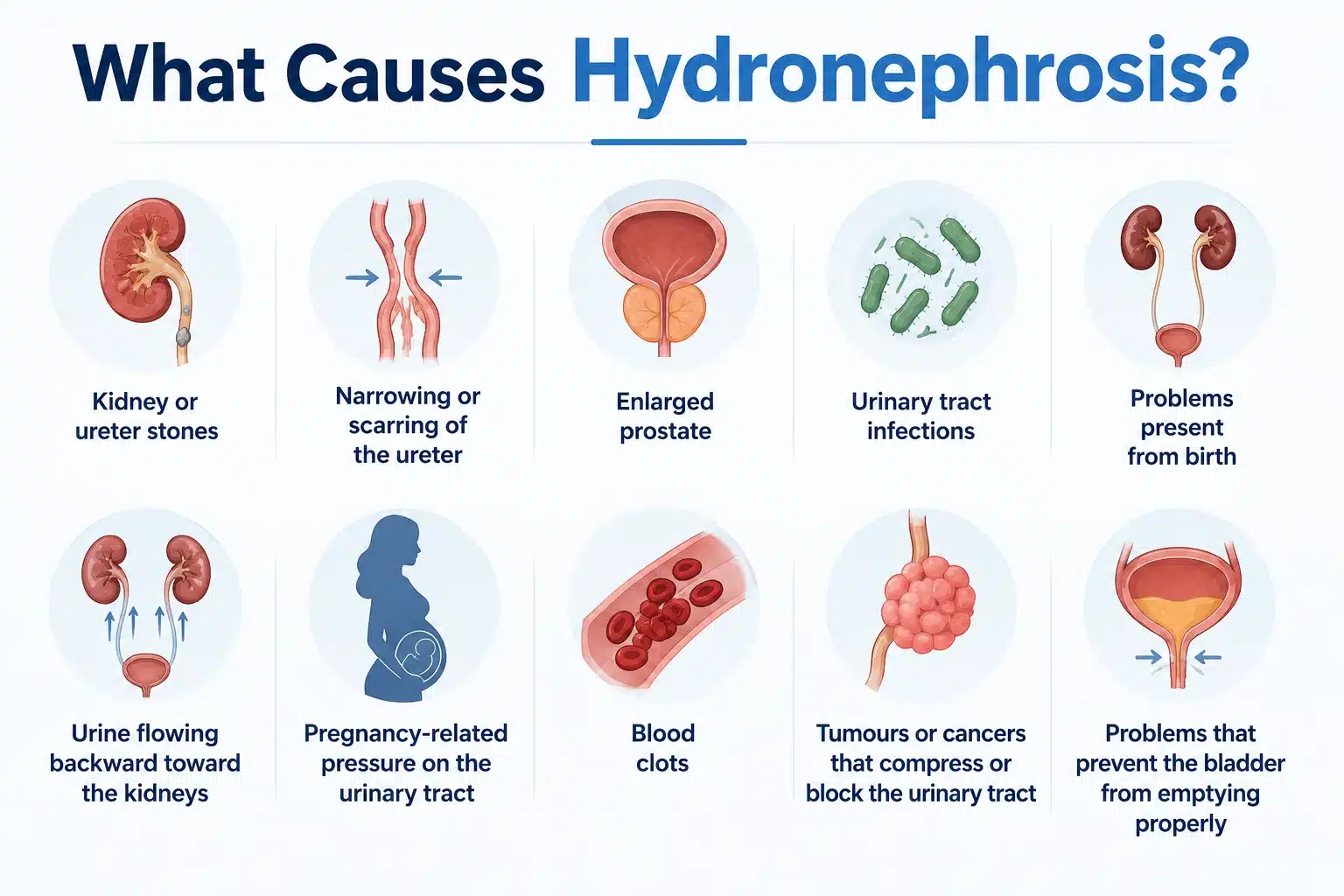
- Kidney or ureter stones
- Narrowing or scarring of the ureter
- Enlarged prostate
- Urinary tract infections
- Problems present from birth
- Urine flowing backward toward the kidneys
- Pregnancy-related pressure on the urinary tract
- Blood clots
- Tumours or cancers that compress or block the urinary tract
- Problems that prevent the bladder from emptying properly
The treatment therefore depends heavily on what is causing the blockage or poor drainage.
Hydronephrosis signs and symptoms
Interestingly, hydronephrosis does not always cause noticeable symptoms. Some people discover it accidentally during an ultrasound or CT scan performed for another reason.
When symptoms do occur, they may include:
- Pain in the side, back or abdomen
- Pain that may spread toward the groin
- Pain or burning while urinating
- A frequent or urgent need to urinate
- Nausea or vomiting
- Blood in the urine
- Changes in how much urine you pass
- Difficulty completely emptying the bladder
- Fever or chills, particularly when infection is present
The symptoms can also depend on the condition causing hydronephrosis. For example, a person with a ureter stone may experience sudden, severe flank pain, while someone with a slower-growing obstruction may have few symptoms.
When Should You Worry About Hydronephrosis?

Not every case requires an emergency, but certain symptoms should not be brushed aside.
1. You have severe or sudden pain
Sudden or intense pain in the side, back or abdomen can indicate a significant obstruction, particularly when a stone is involved.
If the pain is severe, persistent or accompanied by vomiting, seek medical evaluation rather than waiting for it to settle on its own.
2. You develop a fever or chills
This is particularly important.
A blockage can prevent urine from draining properly and may increase the risk of infection. When an infected urinary system is also obstructed, the situation can become serious and needs prompt treatment.
3. Your urine output suddenly changes
Passing much less urine than usual, having difficulty urinating, or being unable to empty your bladder can indicate a significant urinary obstruction.
This deserves medical assessment, especially if hydronephrosis has already been identified.
4. You have blood in your urine
Blood in the urine can occur with kidney stones and several other urinary tract conditions. It should not automatically be attributed to hydronephrosis without finding the underlying cause.
5. Both kidneys are affected
Hydronephrosis affecting both kidneys deserves particular attention because problems with urine drainage on both sides can have a greater effect on overall kidney function.
6. Your kidney function tests are abnormal
Blood tests such as creatinine and estimated glomerular filtration rate (eGFR) can help doctors assess how well your kidneys are functioning. If kidney function is declining alongside hydronephrosis, the underlying obstruction needs to be evaluated promptly.
Hydronephrosis Warning Signs: When to Seek Medical Care
| Warning sign | Why it matters |
| Severe or sudden flank/back pain | May indicate an acute obstruction |
| Fever or chills | Can suggest a urinary or kidney infection |
| Repeated vomiting | Can occur with severe obstruction or pain |
| Blood in urine | May indicate stones or another urinary tract problem |
| Very little or no urine | May indicate significant urinary obstruction |
| Burning or painful urination | Can occur with urinary infection |
| Hydronephrosis in both kidneys | Can have a greater effect on kidney function |
| Worsening kidney function tests | May indicate that kidney function is being affected |
If severe pain occurs together with fever, chills, vomiting or difficulty passing urine, do not delay medical assessment.
How Is Hydronephrosis Diagnosed?
Doctors usually start by asking about your symptoms and medical history and performing a physical examination. The next step is often imaging to understand how much the kidney is swollen and where the urinary flow may be blocked.
Ultrasound
A kidney and urinary tract ultrasound is commonly used to identify swelling and can often show hydronephrosis without exposing you to radiation.
CT scan
A CT scan may be recommended when doctors need more detailed information about the urinary tract or suspect a kidney or ureter stone. It can help identify the location and possible cause of an obstruction.
Blood tests
Blood tests can help assess kidney function, including measurements such as creatinine and eGFR.
Urine tests
A urine test can help look for signs of infection, blood or other clues that may point toward the underlying cause.
Depending on the situation, additional imaging or specialised tests may be needed to assess urine drainage and kidney function.
How Is Hydronephrosis Treated?
There is no single treatment for hydronephrosis because the treatment is directed at the cause of the obstruction or impaired drainage.
For mild cases, particularly when the underlying problem is temporary and kidney function is not threatened, doctors may recommend observation and follow-up tests.
If a blockage needs to be relieved, treatment may include:
Treating a kidney or ureter stone
Depending on the stone’s size and location, treatment may involve medication, shock wave treatment, ureteroscopy or another procedure to remove or break the stone.
Ureteral stent
A ureteral stent is a small flexible tube placed inside the ureter to help urine pass from the kidney to the bladder when drainage is blocked.
Nephrostomy
In some situations, particularly when urine needs to be drained urgently, a nephrostomy tube may be placed through the skin into the kidney to allow urine to drain externally.
Treating an enlarged prostate
If prostate enlargement is preventing the bladder from emptying properly and contributing to hydronephrosis, treatment may focus on improving bladder emptying and relieving the obstruction.
Treating infection
If a urinary or kidney infection is present, appropriate antibiotics may be needed. When infection occurs alongside significant obstruction, doctors may also need to restore urine drainage promptly.
The goal is simple: restore urine flow, reduce pressure on the kidney and prevent further kidney damage.
Can Hydronephrosis Damage the Kidneys?
It can, but the outcome depends on the severity and duration of the obstruction.
When urine continues to build up, pressure can increase within the kidney. If this continues for too long, kidney tissue can become damaged and kidney function can decline. Severe untreated cases can lead to permanent loss of kidney function.
The encouraging part is that early diagnosis and appropriate treatment can often prevent long-term complications. Many people recover well once the underlying problem is identified and urine drainage is restored.
This is why an ultrasound report showing hydronephrosis should not be ignored, even if you feel relatively well.
Can Mild Hydronephrosis Go Away on Its Own?
Sometimes, yes.
Mild hydronephrosis may improve when the underlying problem resolves. For example, temporary urinary tract changes during pregnancy may improve after delivery, and some mild cases may simply require monitoring.
But “mild” does not mean you should assume no follow-up is necessary.
Your doctor may recommend repeat imaging or kidney function tests to make sure the swelling is improving and urine is draining normally.
What Happens If Hydronephrosis Is Left Untreated?
The consequences depend on the cause and how long the urinary obstruction remains.
A short-lived, mild obstruction may resolve without permanent damage. A severe or prolonged obstruction, however, can place ongoing pressure on the kidney and potentially reduce its ability to function normally.
An untreated obstruction can also increase the risk of urinary infections because urine may become trapped in the urinary system.
In other words, the biggest risk is not the swelling itself. The concern is what is causing the swelling and whether the problem continues untreated.
Is Hydronephrosis an Emergency?
Hydronephrosis by itself is not always an emergency.
However, hydronephrosis with severe pain, fever, chills, vomiting, very low urine output or signs of infection needs urgent medical evaluation. These symptoms may indicate an obstructed urinary system or infection that requires prompt treatment.
If hydronephrosis was discovered incidentally and you have no concerning symptoms, your doctor may have time to investigate the cause and plan treatment without emergency intervention.
The important thing is not to ignore the finding.
When Should You See a Urologist?
You may need to see a urologist if hydronephrosis has been detected on an ultrasound or CT scan, particularly when the cause is unclear or symptoms are present.
A urologist can evaluate whether the problem is related to:
- A kidney or ureter stone
- Urinary tract narrowing
- Prostate enlargement
- Recurrent urinary infections
- Problems with bladder emptying
- A structural abnormality
- Another form of urinary obstruction
If you are searching for hydronephrosis treatment in Noida, the right evaluation should focus on identifying the underlying cause rather than simply treating the kidney swelling.
Conclusion
Hydronephrosis can be serious, but a diagnosis does not automatically mean your kidney is permanently damaged.
Mild cases may improve with monitoring or treatment of the underlying problem. More severe or prolonged obstruction can damage the kidney, especially when both kidneys are affected or when infection occurs.
The most important thing is to find out why urine is not draining normally.
If you have severe flank pain, fever, chills, vomiting, blood in your urine or a significant change in urine output, seek medical attention promptly. Early evaluation can help doctors restore urine flow and protect kidney function.
If hydronephrosis has already appeared on your scan, don’t panic, but don’t ignore it either. A timely evaluation in the best hospital of Noida can help determine whether you need monitoring, medication, a procedure or treatment for the underlying cause.
Frequently Asked Questions
1. Is hydronephrosis dangerous?
Hydronephrosis can become dangerous when severe or left untreated for a long time. Persistent urine buildup can damage kidney tissue and reduce kidney function, although many cases are successfully treated before permanent damage occurs.
2. Can mild hydronephrosis go away on its own?
Yes, some mild cases can improve when the underlying cause resolves. However, follow-up may still be needed to make sure the swelling is decreasing and kidney function remains healthy.
3. What is the most common cause of hydronephrosis in adults?
A blockage in the urinary tract is a common cause, and kidney or ureter stones are an important example. Other causes include an enlarged prostate, ureter narrowing, infections, pregnancy-related changes and tumours.
4. When should hydronephrosis be treated urgently?
Severe pain accompanied by fever, chills, vomiting, very low urine output or other signs of infection warrants prompt medical attention. An infected and obstructed urinary system can become a serious complication.
5. Can hydronephrosis cause kidney failure?
Severe, prolonged hydronephrosis can cause permanent kidney damage and, in rare cases, contribute to kidney failure. Early diagnosis and treatment of the underlying obstruction can significantly reduce this risk.