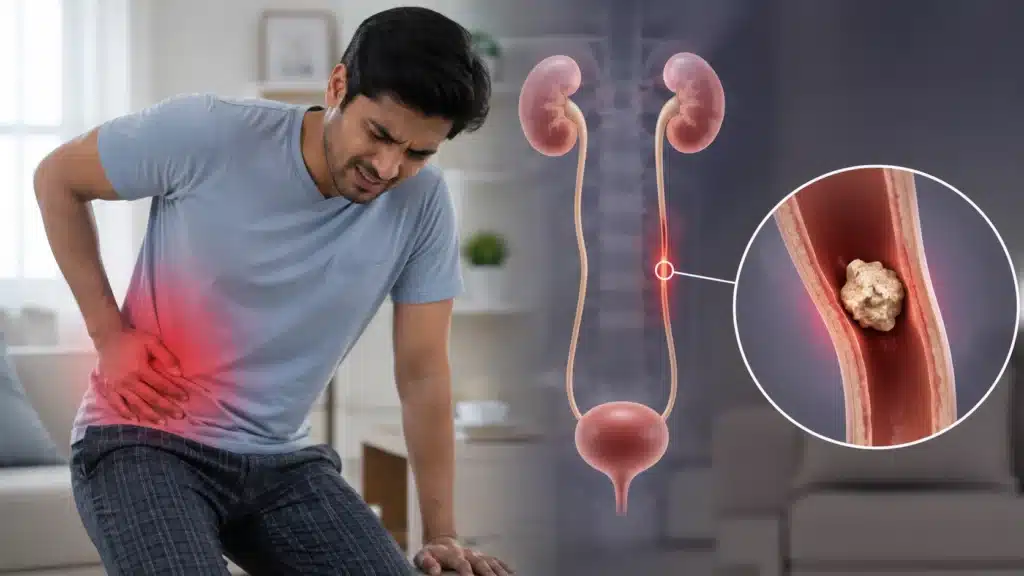
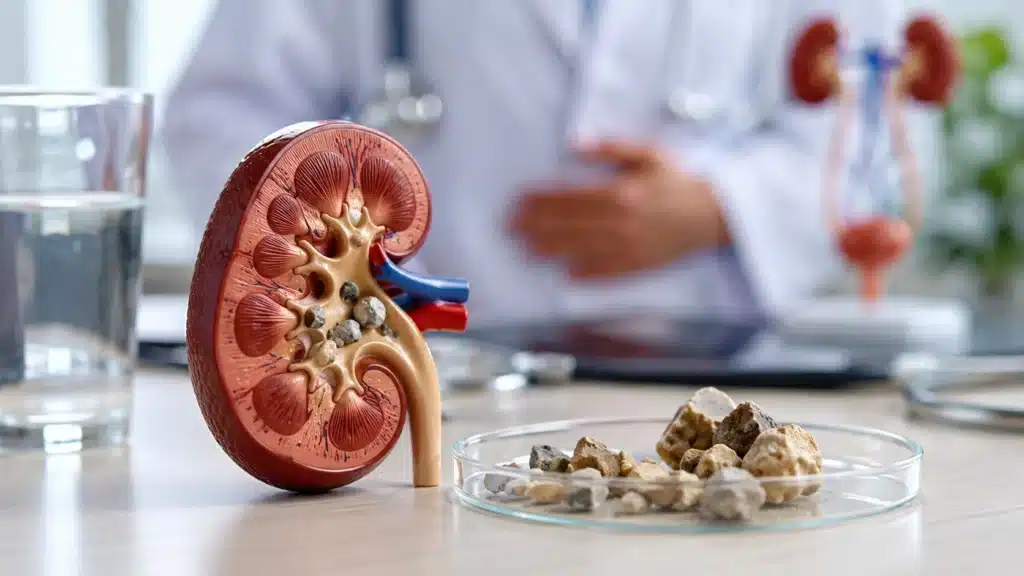
What if you could treat a kidney stone without a single cut, without going into an operation theater, and without spending days in the hospital?
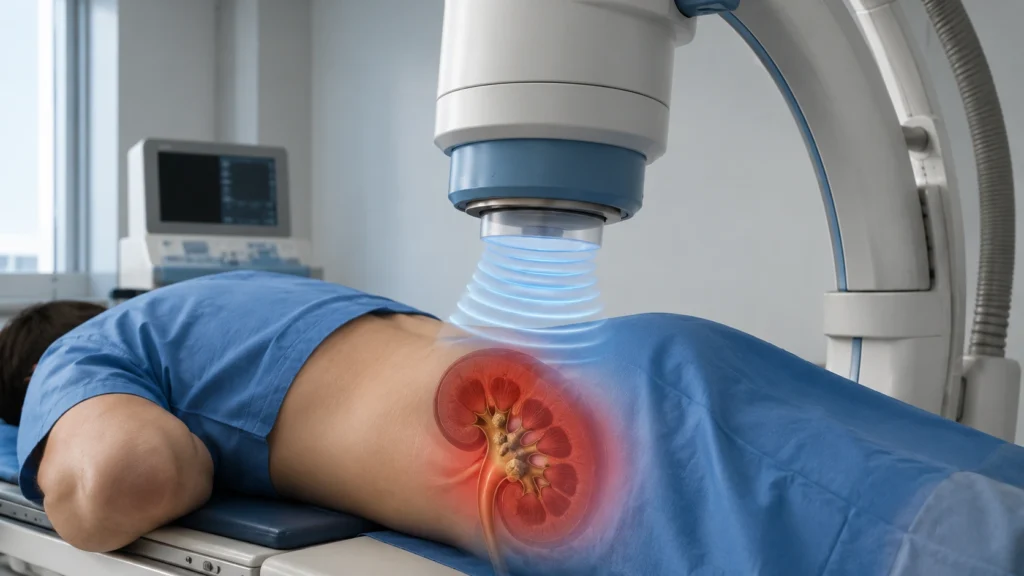
ESWL is one of the most patient-friendly treatments in modern urology. It uses precisely focused shock waves generated from outside the body to break a stone inside the kidney or ureter into tiny fragments, small enough to pass naturally through urine over the following days and weeks. No incisions. No scopes. No general anesthesia in most cases. You walk in, have the treatment, and go home the same day.
It sounds almost too good to be true, but ESWL has been successfully treating kidney and ureter stones for over four decades, with a strong safety record and millions of patients treated worldwide.
What is ESWL (Extracorporeal Shock Wave Lithotripsy)?
ESWL is a non-invasive kidney stone treatment that uses sound waves to break stones into small pieces so they can pass naturally in urine. There are no cuts, no scopes, and no surgery involved.
During the procedure, shock waves are focused on the stone using X-ray or ultrasound guidance. These waves pass through the body and break the stone from outside to inside into fine fragments, which are later passed out naturally.
- No surgery or cuts (completely non-invasive).
- Daycare procedure: The patient usually goes home the same day.
- Done using shock waves targeted at the stone.
- Stone breaks into small fragments or “sand-like” particles.
- Fragments pass naturally through urine over days or weeks.
- Works best for small to medium stones (usually up to 1.5–2 cm).
- May require more than one session for complete clearance.
- Not suitable for all stones (depends on size, hardness, and location).
What conditions can be treated with ESWL?
ESWL (Extracorporeal Shock Wave Lithotripsy) is best known for treating kidney stones, but it can also be used in other conditions where stones or calcium deposits can be broken using focused shock waves. It is a non-invasive treatment that helps avoid surgery in selected cases.
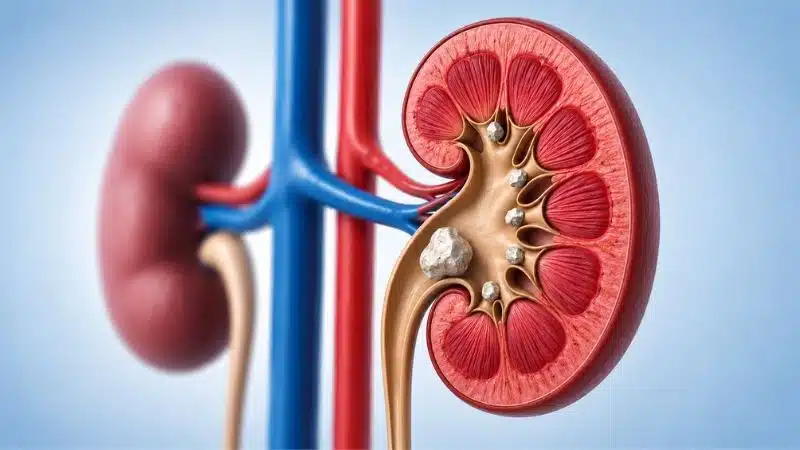
Kidney Stones (Most Common Use)
- Primary and most common use of ESWL.
- Best for stones up to 1.5–2 cm.
- Works best in upper or mid kidney stones.
- More effective for softer stones (uric acid, calcium oxalate dihydrate, calcium phosphate).
- Fragments pass naturally through urine with good hydration.
Ureter Stones
- Used for stones in upper and mid ureter.
- Best for small stones (around up to 1 cm).
- Lower ureter stones are usually treated better with ureteroscopy.
- May be used when stones do not pass naturally.
Salivary Gland Stones
- Treats stones in salivary glands (especially the submandibular gland).
- Helps reduce pain and swelling during eating.
- Breaks stones so they pass through salivary ducts.
- Can avoid surgical removal in many cases.
- Sometimes combined with sialendoscopy.
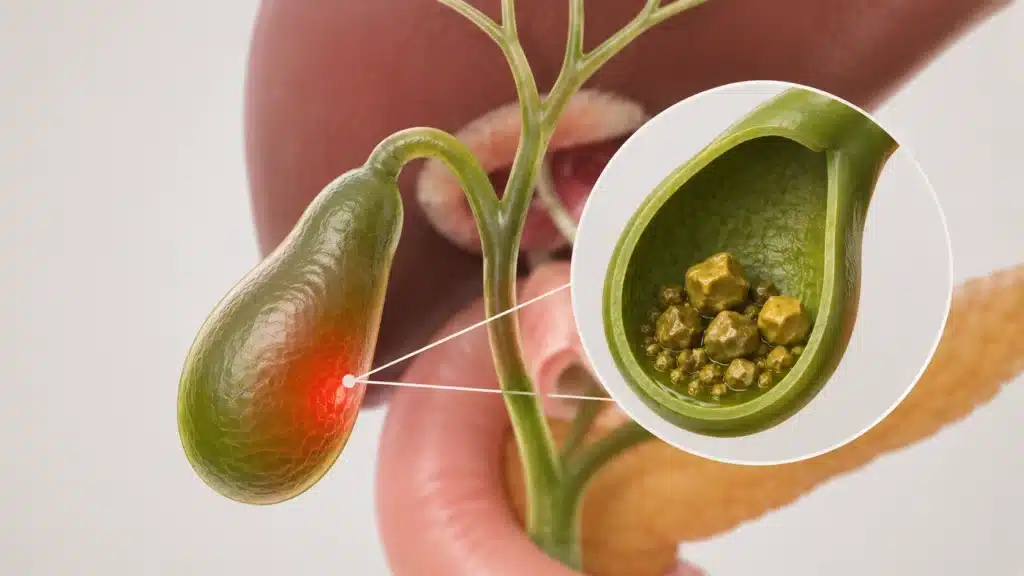
Bile Duct & Gallbladder Stones (Selected Cases)
- Used in difficult bile duct stones when endoscopy is not enough.
- Rarely used for gallbladder stones today.
- Mostly replaced by modern laparoscopic surgery.
- Sometimes combined with dissolution therapy.
Pancreatic Duct Stones
- Used in chronic pancreatitis cases.
- Breaks pancreatic duct stones causing pain and blockage.
- Often combined with endoscopic removal.
- Done in coordination with gastroenterology teams.
Calcific Tendinitis (Shoulder)
- Breaks calcium deposits in shoulder tendons.
- Reduces pain and improves shoulder movement.
- Non-surgical alternative for many patients.
- Promotes natural healing of tissue.
Other Tendon Conditions (ESWT)
- Plantar fasciitis (heel pain).
- Tennis elbow.
- Achilles tendon pain.
- Patellar tendon pain (jumper’s knee).
- Helps reduce chronic pain and improve function when other treatments fail.
Who Needs ESWL Treatment?
ESWL works best when the stone is small to medium, clearly visible on imaging, and likely to break easily with shock waves. It is ideal for patients who want a noninvasive, day-care treatment.
You may be suitable for ESWL if:
- Kidney stones are 5 mm to 2 cm in size.
- A stone is in the upper or mid part of the kidney.
- A ureter stone is up to 1 cm (upper or mid-ureter).
- Stone is made of softer material (uric acid, calcium phosphate, calcium oxalate dihydrate).
- CT shows low stone density (generally < 1000 HU).
- A stone is clearly visible on X-ray or ultrasound.
- You prefer a non-surgical, non-invasive option.
- You have salivary gland stones causing pain and swelling.
- You have pancreatic duct stones (in selected cases).
- You have calcific tendinitis or chronic tendon pain not improving with physiotherapy.
When ESWL is not recommended:
- The stone is larger than 2 cm.
- Stone is in lower pole of kidney (poor fragment clearance).
- Hard stones (density > 1000 HU).
- Pregnancy.
- Blood clotting problems or blood thinner use.
- Active urinary tract infection.
- Blockage below the stone (urine cannot pass).
- Kidney artery aneurysm near treatment area.
- Severe kidney function damage in the affected kidney.
- Cardiac pacemaker or implantable device (in some cases).
What are the causes and risk factors?
ESWL removes existing stones, but new stones can form if the underlying causes are not corrected. Understanding these factors is key to preventing recurrence.
Common Causes of Kidney & Ureter Stones
- Low water intake (dehydration): Most common cause; concentrated urine allows crystals to form.
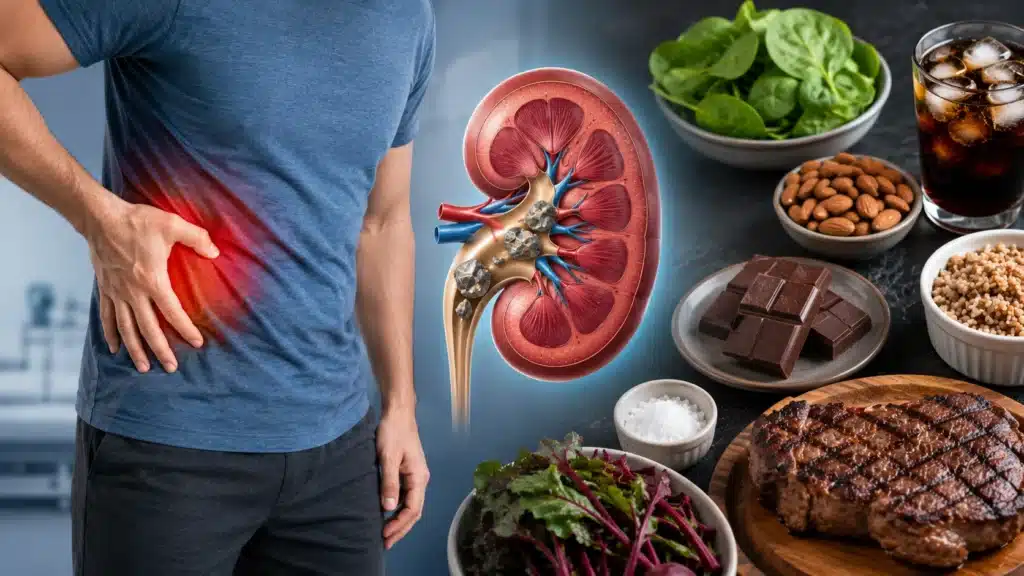
- Diet imbalance: High salt, animal protein, sugar, and oxalate-rich foods (spinach, nuts, tea, and chocolate) increase risk.
- Metabolic disorders: High calcium, uric acid, or oxalate levels in urine.
- Urinary infections: Certain bacteria can trigger struvite stone formation.
- Urine flow blockage: Conditions like UPJ obstruction or diverticula cause urine stagnation.
- Low citrate levels: Less natural protection against stone formation.
Causes of Salivary Gland Stones
- Reduced saliva flow due to dehydration.
- High calcium content in saliva.
- Narrow salivary ducts causing blockage.
- Poor oral hygiene.
Causes of Pancreatic Duct Stones
- Chronic pancreatitis (often alcohol-related or genetic).
- Narrowed ducts leading to fluid stagnation.
- Protein deposits that harden into stones over time.
Key Risk Factors for Kidney Stones
- Not drinking enough water daily.
- Family history of kidney stones.
- Previous stone episodes (highest recurrence risk).
- Obesity and metabolic imbalance.
- Hot climate with excessive sweating.
- High-salt, high-protein diet.
- Conditions like gout, hyperparathyroidism, Crohn’s disease.
- Sedentary lifestyle.
- More common in men (though rising in women too).
Diagnosis before ESWL
Before recommending ESWL, your doctor at Rama Hospital performs a detailed evaluation to confirm the stone diagnosis, understand its exact characteristics, and ensure ESWL is the right and safest option for you.
Imaging Tests
Non-Contrast CT KUB (Gold Standard)
- Most accurate test for kidney and ureter stones.
- Shows exact stone size, number, location, and density.
- Hounsfield Unit (HU) helps assess stone hardness.
- < 500 HU → very good ESWL response
- 500–1000 HU → moderate response
- 1000 HU → hard stones, ESWL less effective (RIRS/PCNL preferred)
- Measures skin-to-stone distance (higher distance reduces ESWL success).
- Identifies lower pole stones (naturally lower clearance rate).
Ultrasound KUB
- Radiation-free, safe first-line test.
- Detects kidney stones and swelling (hydronephrosis).
- Can guide ESWL targeting in real time in selected cases.
X-Ray KUB
- Detects calcium (radio-opaque) stones.
- Used for ESWL targeting and monitoring fragmentation.
- Cannot detect uric acid stones (CT required).
Salivary Gland Ultrasound
- Locates salivary duct stones.
- Shows duct blockage or swelling.
- Helps plan ESWL for salivary stones.
MRCP / ERCP (Pancreatic Stones)
- Detailed imaging of pancreatic and bile ducts.
- Confirms stone location and duct structure before ESWL.
Shoulder Imaging (Calcific Tendinitis)
- X-ray shows calcium deposits.
- Ultrasound guides precise shock wave targeting.
Lab Investigations
- Urine test & culture: ensures no active infection.
- Blood tests: kidney function, CBC, clotting profile.
- Serum calcium & uric acid: detect metabolic causes.
- Pregnancy test: ESWL is not safe in pregnancy.
- Clotting assessment: important if on blood thinners.
Treatment procedure: how is ESWL done?
ESWL is performed in a dedicated, advanced treatment room by an experienced urology team using modern lithotripsy technology. The entire process is designed to be precise, safe, and minimally uncomfortable.
Before the Procedure
- Detailed review of CT scan, X-ray, blood tests, and urine culture.
- Any urinary infection is fully treated before ESWL.
- Blood clotting status is checked (blood thinners may be paused if needed).
- Fasting for 4–6 hours if sedation is planned.
- Pain control options explained: local gel, oral pain relief, IV sedation, or light anaesthesia.
- In selected cases, a ureteral stent may be placed to help safe passage of fragments.
During the Procedure
1. Positioning
- You lie on the ESWL table.
- A shock wave generator is placed against your body using a water cushion or gel pad.
- No water bath is needed in modern machines.
2. Stone Targeting
- A stone is located using real-time X-ray or ultrasound.
- The machine is aligned so shock waves focus precisely on the stone.
- Accurate targeting ensures maximum effectiveness.
3. Shock Wave Delivery
- Focused shock waves are delivered directly to the stone.
- Around 1,500 to 3,500 shock waves per session.
- Energy is gradually increased for comfort and effectiveness.
- You may feel mild tapping or discomfort during treatment.
- Target is adjusted during the session if the stone moves.
4. Monitoring
- Heart rate, blood pressure, and oxygen levels are continuously monitored.
- Imaging helps assess stone break-up in real time when possible.
5. Completion
- Procedure lasts about 45–60 minutes.
- Short recovery observation for 1–2 hours.
- Most patients go home the same day.
After the Procedure
- Drink plenty of water to help flush stone fragments.
- Pass small stone pieces, or “grit,” over days to weeks.
- Mild blood in urine and flank discomfort is normal initially.
- A follow-up scan (X-ray or ultrasound) in 4–6 weeks confirms results.
- 1–3 sessions may be needed depending on stone response.
What are the benefits of ESWL?
ESWL is best described as a gentle, non-invasive stone-breaking treatment that offers comfort, safety, and convenience when used on the right patient.
- Completely non-invasive: no cuts, no scopes, no incisions.
- Usually no general anesthesia is required.
- Day-care procedure: go home within a few hours.
- No hospital stay needed in most cases.
- Quick recovery: return to routine in 1–2 days.
- No surgical wounds, stitches, or drains.
- Repeatable, additional sessions can be done if needed.
- Well-established and safe, decades of global use and proven results.
- Effective for suitable stone types (softer stones respond best).
- Good option for patients unfit for surgery or anesthesia.
- Can treat other conditions like salivary stones and calcific tendinitis.
- Less stressful for many patients compared to surgical procedures.
What are the risks and complications of ESWL?
Overall, ESWL remains a low-risk, highly controlled procedure, with most side effects being mild, short-term, and self-limiting.
Common and temporary effects
- Blood in urine (haematuria): very common for 1–3 days, settles on its own.
- Mild flank pain or soreness: usually lasts a few days, controlled with simple pain medicines.
- Skin bruising: mild and temporary at the treatment site.
- Passing stone fragments: may cause temporary discomfort as pieces pass in urine.
Less common effects
- Renal colic: pain as fragments move through the ureter; may need pain relief.
- Steinstrasse (“stone street”): multiple fragments blocking the ureter temporarily; usually resolves, sometimes needs ureteroscopy.
- Urinary tract infection: rare if infection is treated before ESWL.
- Incomplete stone breakage: may require a repeat ESWL session or alternative treatment (RIRS/PCNL).
- Temporary rise in blood pressure: monitored and usually short-lived.
Rare but important risks
- Perinephric hematoma: bleeding around the kidney; usually resolves without treatment.
- Temporary kidney bruising: minimized with modern machines and safe energy settings.
- Cardiac rhythm disturbance: very rare; modern ESWL systems synchronize with heartbeat.
- Incomplete stone clearance: sometimes ESWL alone is not enough, especially for harder or larger stones.
Tips for better recovery after ESWL
Most patients recover quickly and return to normal life within a few days, with gradual passage of stone fragments over the following weeks.
What to do after ESWL
- Drink plenty of water (around 3 litres daily): helps flush out stone fragments and prevents new stones.
- Stay active and walk regularly: movement helps fragments pass naturally.
- Strain your urine for 1–2 weeks: collect stone pieces for analysis.
- Take prescribed pain relief: helps manage discomfort as fragments pass.
- Expect mild blood in urine: usually pink/red for a few days, then clears.
- Follow dietary advice: reduce salt, animal protein, and oxalate-rich foods.
Important precautions
- Avoid heavy exercise for at least 48 hours.
- Watch for severe pain, difficulty urinating, or fever (may indicate blockage or infection).
- Contact your doctor immediately if symptoms worsen.
Follow-Up Care
- Imaging (X-ray or ultrasound) after 4–6 weeks to check stone clearance.
- Stent removal (if placed) usually within 2–4 weeks.
- A further ESWL session may be needed if fragments remain.
- Follow the long-term stone prevention plan from your doctor.
Why choose Rama Hospital for ESWL?
Rama Hospital provides advanced ESWL and complete urological stone care with modern technology and experienced specialists. Patients across India trust us for safe, accurate treatment and honest guidance for the right stone management option.
- Advanced electromagnetic lithotripter with dual imaging (X-ray + ultrasound) for precise targeting.
- High-precision shock wave delivery for better stone fragmentation and safety.
- Experienced urology team with thousands of successful kidney and ureter stone treatments.
- Personalized treatment planning based on CT scan, stone size, location, and density.
- Honest recommendations: ESWL is advised only when it is truly the best option.
- Full-day care ESWL suite with safe, comfortable same-day discharge.
- Complete stone management, including prevention and metabolic evaluation.
- All treatment options available in one place (ESWL, RIRS, PCNL, ureteroscopy, medical care).
- Seamless care pathway with no need for referrals to other hospitals.
- Focus on long-term prevention to reduce the risk of stone recurrence.
- Patient-friendly approach with clear communication and full support throughout treatment.
When should you see a doctor for ESWL treatment?
- You have a kidney stone and want a non-invasive treatment option.
- You experience severe flank or back pain that comes in waves or radiates to the groin.
- You notice blood in your urine, even without pain.
- You have nausea or vomiting along with side or back pain.
- A stone has already been detected on imaging and needs treatment planning.
- You have recurrent salivary gland pain and swelling, especially during meals.
- You have persistent shoulder pain from calcific tendinitis not improving with medicines or physiotherapy.
- You have ongoing chronic pancreatitis pain where pancreatic duct stones may be involved.
Frequently Asked Questions (FAQs)
Is ESWL painful?
Most patients describe ESWL as a tapping or stinging sensation on the skin, like a rubber band snapping against the body repeatedly. It is not painless, but it is very manageable. The level of discomfort depends on stone location and individual sensitivity. Appropriate sedation, oral analgesia, or local anesthesia is given beforehand, and the energy level is adjusted throughout to keep you as comfortable as possible.
How long does an ESWL session take?
A typical ESWL treatment session lasts 45 to 60 minutes. After the procedure, you rest in the recovery area for 1 to 2 hours before going home. The entire visit to Rama Hospital is usually 3 to 4 hours.
How many ESWL sessions will I need?
This depends on the stone’s size, hardness, and location. Many patients achieve adequate fragmentation with one or two sessions. Harder or larger stones may require up to three sessions, typically spaced 1 to 2 weeks apart. Your doctor at Rama Hospital will assess the response after each session with follow-up imaging.
How long does it take to pass stone fragments after ESWL?
Stone fragments typically begin passing within days to weeks after ESWL. Very fine sand-like fragments may pass quickly and without much discomfort. Larger pieces may take longer and can cause some temporary ureteric colic as they pass. Drinking large amounts of water speeds this process significantly.
What are the success rates of ESWL?
ESWL stone-free rates depend heavily on stone characteristics. For ideal candidates with soft stones up to 1.5 cm in the upper or mid kidney, stone-free rates are approximately 70 to 85% after one to two sessions. For harder stones, lower pole stones, or larger stones, success rates are lower, and RIRS or PCNL is likely a better choice. Your doctor will give you a realistic expectation based on your specific stone.
Can ESWL damage my kidney?
When performed correctly with appropriate energy levels and proper patient selection, ESWL is very safe for the kidney. Temporary bruising of kidney tissue (perinephric hematoma) is an uncommon risk, usually self-limiting. Modern lithotripters are designed to deliver the minimum energy needed to fragment the stone, protecting surrounding tissue. Long-term kidney damage from appropriately performed ESWL is very rare.
Why does ESWL not work well for lower-pole kidney stones?
After ESWL fragments a lower-pole stone, the pieces need to travel uphill against gravity to reach the ureter and pass out of the body; the kidney’s drainage angle in the lower pole makes this difficult. Many fragments remain pooled in the lower pole. This is why RIRS, which directly removes fragments regardless of location, is preferred for lower-pole kidney stones.
Can ESWL be used if I have a cardiac pacemaker?
ESWL in patients with cardiac pacemakers requires very careful assessment. Shock waves can potentially interfere with pacemaker function. In some cases, ESWL can be performed safely with appropriate precautions and cardiology input. In others, it may be safer to choose an alternative treatment like RIRS. Your doctor at Rama Hospital will assess this carefully for your specific situation.
What is the difference between ESWL and laser lithotripsy (RIRS)?
ESWL is entirely non-invasive; shock waves are delivered from outside the body with no instruments inserted. Laser lithotripsy (RIRS) uses a flexible scope passed through the natural urinary passage with a laser fiber to fragment stones from inside the kidney. ESWL is less invasive but has lower stone-free rates and works best on smaller, softer, well-positioned stones. RIRS achieves higher single-session stone-free rates and works on all stone types and locations but requires a scope insertion and anesthesia. Your doctor will recommend the right option based on your stone.
How do I prevent kidney stones from coming back after ESWL?
Preventing recurrence is a critical part of care at Rama Hospital. Key steps include:
- Drink 2.5 to 3 liters of water daily, permanently.
- Reduce dietary salt, animal protein, and oxalate-rich foods.
- Undergo 24-hour urine metabolic evaluation to identify your stone-forming tendency.
- Follow personalized dietary or medical recommendations based on stone composition analysis.
- Attend regular follow-up imaging to catch any new stones early before they grow large.
Conclusion
For the right patient and the right stone, ESWL (extracorporeal shock wave lithotripsy) offers a simple, non-invasive way to break stones using energy delivered from outside the body, without cuts, scopes, or hospital surgery.
At Rama Hospital, ESWL is performed using advanced lithotripsy systems with precise imaging guidance and detailed CT-based stone assessment to ensure safe, effective, and personalized treatment. If ESWL is suitable for your condition, our team ensures accurate care with complete backup options when needed.
Whether it is a kidney stone, ureteric stone, salivary gland stone, or calcific tendinitis, you receive a structured, expert-led approach focused on fast recovery and long-term relief.