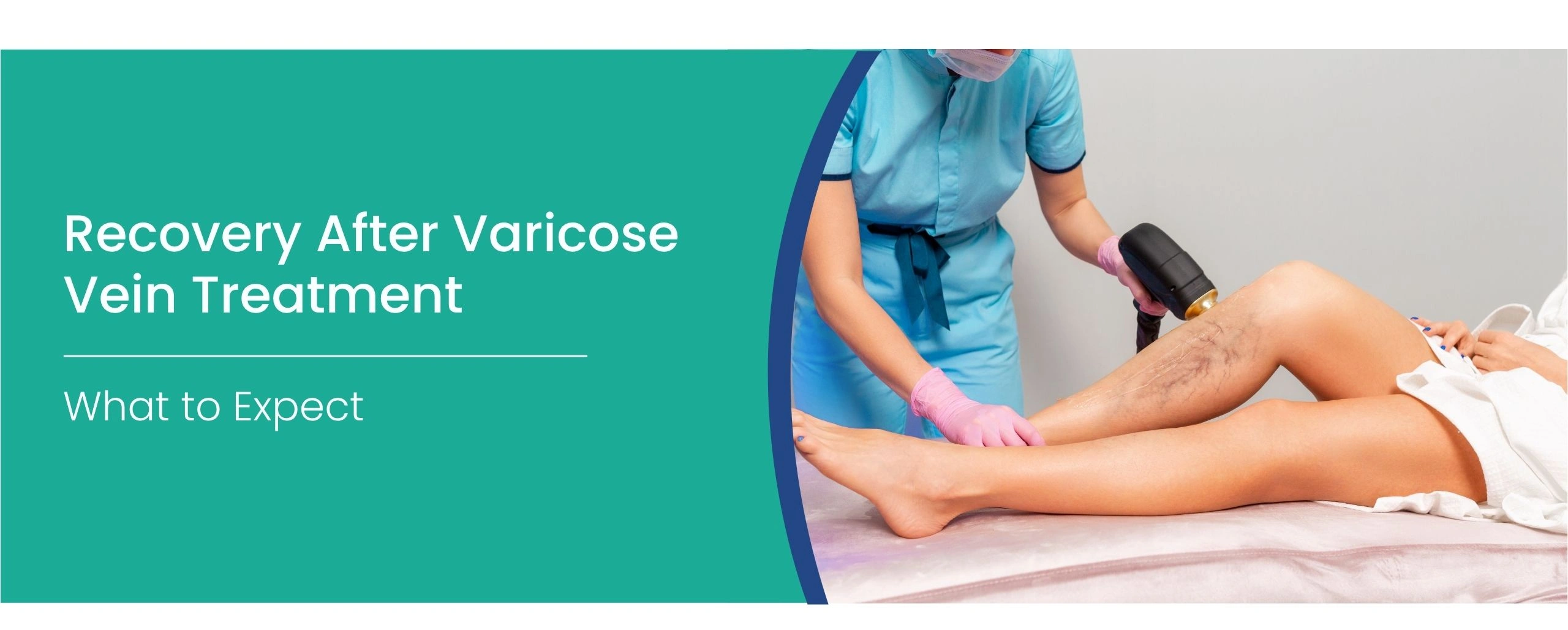
If you recently had varicose vein treatment, or you’re about to, one question stays on your mind: What happens next?
Varicose vein treatment recovery is not complicated, but it is specific. What you do in the first 48 hours, the first week, and the first month matters more than most patients realize. The right care speeds healing. The wrong habits slow it down or cause complications.
This guide walks you through everything, week by week, symptom by symptom, do by do, and don’t by don’t.
What happens to your body after varicose vein treatment?
Before we get into the recovery timeline, it helps to understand what actually changes inside your leg after the procedure.
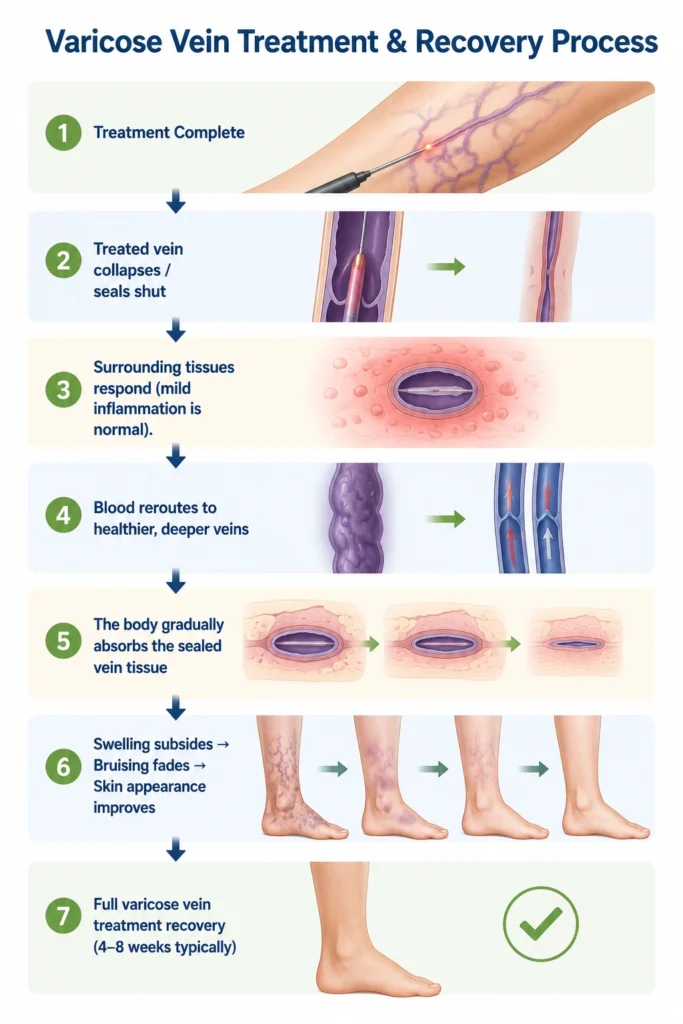
Varicose vein treatment recovery begins the moment the procedure ends. Whether you had laser treatment (EVLA), radiofrequency ablation (RFA), sclerotherapy, or surgical stripping, the core process is the same: the treated vein is sealed, collapsed, or removed. Your body then begins absorbing or bypassing it.
This process is gradual. Healing after varicose vein treatment is not instant, and that’s not a sign something is wrong; it’s the body working exactly as expected. Here’s a simplified view of what happens internally:
Types of varicose vein treatments and their recovery differences
Patients seeking varicose vein treatment in Noida at the best hospital in Noida increasingly opt for laser or RFA procedures because they offer faster varicose vein treatment recovery, fewer complications, and no general anesthesia in most cases.
Not every procedure has the same recovery profile. Here’s a quick comparison:
| Treatment Type | Procedure Time | Recovery Time | Hospital Stay | Pain Level |
| Laser Ablation (EVLA) | 30–60 mins | 1–2 weeks | Day care | Mild to moderate |
| Radiofrequency Ablation (RFA) | 30–60 mins | 1–2 weeks | Day care | Mild |
| Sclerotherapy (foam/liquid) | 15–30 mins | 3–7 days | OPD | Minimal |
| Surgical Stripping | 1–2 hours | 2–4 weeks | 1–2 days | Moderate |
| Ambulatory Phlebectomy | 30–60 mins | 1–2 weeks | Day care | Mild |
The week-by-week varicose vein treatment recovery timeline
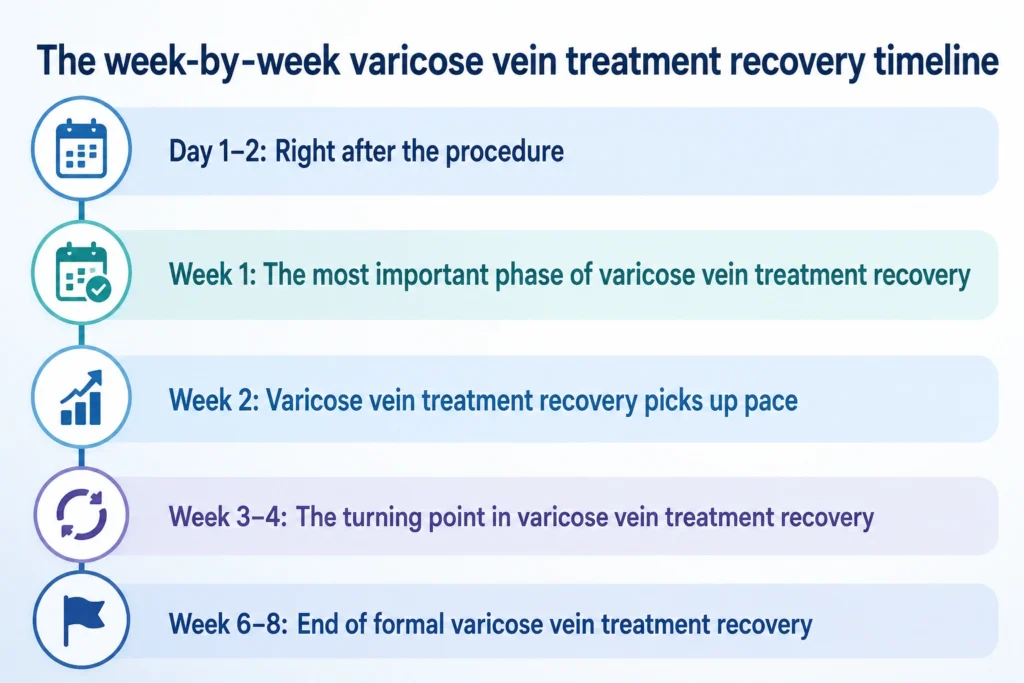
Day 1–2: Right after the procedure
Varicose vein treatment recovery starts immediately. Here’s what to expect:
- The leg may feel tight, tender, or slightly numb, all normal.
- Mild bruising begins to appear along the treated vein.
- Compression stockings are applied in the clinic and must stay on.
- You are usually walking within hours of the procedure.
- Driving is not recommended on day one.
What to do:
- Walk slowly for 15–20 minutes several times a day.
- Keep the leg elevated when resting.
- Avoid hot baths, saunas, or direct sun on the treated area.
- Take prescribed medications on time.
Week 1: The most important phase of varicose vein treatment recovery
This week sets the tone for the rest of your varicose vein treatment recovery. Patients who follow this advice during week one tend to have noticeably smoother varicose vein treatment recovery in the weeks that follow.
What you’ll see:
- Bruising deepens in color before it starts fading; this is normal.
- Some swelling, especially around the ankle and lower leg.
- Mild aching or heaviness after prolonged standing.
- Small, firm lumps under the skin (thrombosed vein segments), usually temporary.
What to do:
- Wear compression stockings consistently (typically 8–16 hours a day).
- Keep walking; short, regular walks prevent blood clots.
- Elevate legs for 20–30 minutes, 2–3 times daily.
- Avoid standing or sitting for more than 30–40 minutes at a stretch.
- Avoid heavy lifting, strenuous exercise, and long flights.
What to avoid:
- Gym workouts, running, cycling.
- Hot baths or steam rooms (heat dilates veins and slows healing).
- Alcohol increases inflammation.
Week 2: Varicose vein treatment recovery picks up pace
You are still in active healing after varicose vein treatment; don’t rush back to strenuous activity just because you feel better. By week two, most patients feel significantly better.
- Bruising begins to fade (yellow-green tones appear, a good sign).
- Swelling reduces, especially with compression use.
- Walking becomes more comfortable.
- Most people return to light office work by day 7–10.
- The treated area may still feel firm or rope-like to the touch.
Varicose vein treatment recovery at this stage allows most patients to
- Return to desk jobs and light daily activities.
- Walk for 30–45 minutes at a comfortable pace.
- Drive short distances (confirm with your surgeon first).
Week 3–4: The turning point in varicose vein treatment recovery
Varicose vein treatment recovery at the one-month mark is largely complete for minimally invasive procedures. Surgical stripping may still have some residual healing ongoing. Most patients notice visible improvement in leg appearance by now.
- Visible veins begin to fade or flatten.
- Skin color normalizes over the treated area.
- Heaviness and aching dramatically reduce.
- Residual firmness under the skin continues to soften.
- Energy levels return to normal.
This is often when patients resume:
- Light exercise (walking, swimming, yoga).
- Longer working hours.
- Normal daily activities without restriction.
Week 6–8: End of formal varicose vein treatment recovery
Healing after varicose vein treatment is considered complete for most patients by this point. The best vascular surgeons in Noida typically schedule a 6-week review specifically to confirm outcomes and clear patients for full activity
By 6–8 weeks:
- Final skin appearance is close to its settled state.
- Any residual bruising, pigmentation, or skin discoloration should be fading.
- Full physical activity, including gym, running, and sports, is typically cleared.
- Follow-up ultrasound may be scheduled to confirm vein closure.
Warning signs to watch during varicose vein treatment recovery
Most patients recover without any significant complications. But knowing the warning signs matters.
These symptoms are rare, but they are real. Patients being treated at Rama Hospital or any other best hospital in Noida typically have direct access to their surgical team for exactly these situations.
See your doctor promptly if you notice:
- Severe, worsening pain that is not responding to painkillers.
- Redness, warmth, and hardness spreading along the leg.
- High fever (above 38.5°C).
- Significant swelling in one leg that is visibly larger than the other.
- Calf pain with swelling (possible DVT, blood clot).
- Sudden shortness of breath or chest pain (seek emergency care immediately).
Long-term recovery: what happens after the first 8 weeks?
Varicose vein treatment is highly effective, but it is not a lifetime guarantee. New veins can develop over time. Regular review at Rama Hospital or the best hospital in Noida ensures early detection and easy management if that happens.
Varicose vein treatment recovery does not end at 8 weeks; it evolves.
Months 2–6:
- Treated areas continue to improve cosmetically.
- Any residual skin pigmentation gradually lightens.
- Ultrasound confirmation of vein closure (if not done earlier).
- Return to full sports, travel, and physical activity.
Beyond 6 months:
- Lifestyle adjustments become the focus, these prevent new varicose veins.
- Regular walking remains important.
- Avoid prolonged standing or sitting for hours.
- Maintain a healthy weight.
- Wear compression stockings during long flights.
Frequently Asked Questions (FAQs)
Q: How much pain should I expect after varicose vein treatment?
Most patients describe it as mild to moderate, a tight, achy sensation rather than sharp pain. Over-the-counter pain relief is typically enough. If pain is severe or worsening, call your surgeon.
Q: When can I go back to work after varicose vein treatment?
For desk jobs, most patients return in 5–7 days. If your work involves standing for hours or heavy physical activity, expect 2–3 weeks before returning.
Q: My leg looks worse with bruising; did something go wrong
Almost certainly not. Bruising is a normal, expected part of varicose vein treatment recovery. It typically deepens before fading, and most patients see significant improvement by week 2–3.
Q: Do I really need to wear compression stockings the whole time?
Yes. Especially in the first two weeks. Compression is the most effective thing you can do to ensure clean healing after varicose vein treatment. It reduces swelling, supports vein closure, and lowers DVT risk.
Q: When will my leg actually look better?
Visible improvement in skin and vein appearance typically starts around week 3–4. Final results are usually visible by 2–3 months.
Q: Can varicose veins come back after treatment?
The treated veins do not return. However, new varicose veins can develop over time, especially if lifestyle factors like prolonged standing or weight gain are present.
Q: Is it safe to fly after varicose vein treatment?
Most surgeons advise avoiding long-haul flights for at least 4–6 weeks post-procedure. Short domestic flights may be permitted earlier, with compression stockings mandatory. Always confirm with your surgeon.
Q: I feel a hard lump under my skin at the treatment site. Is that normal?
Yes, this is very common. It is trapped blood (phlebitis) in the treated vein segment. It usually softens and resolves on its own within 4–8 weeks. Warm compresses and anti-inflammatory medication help.
Q: What happens at my follow-up appointment after varicose vein treatment?
Your surgeon will examine the treated area, assess bruising and swelling, and may order a follow-up ultrasound to confirm the vein has closed successfully. It’s also when you can ask about resuming exercise and other activities.
Conclusion
Varicose vein treatment recovery is well-defined, manageable, and, with the right guidance, largely uncomplicated.
Healing after varicose vein treatment takes a few weeks. Most patients look back and say it was far easier than they expected.
If you are considering varicose vein treatment or are already in your recovery phase, the team at Rama Hospital, with the best vascular surgeon in Noida, is available to answer every question, guide every step, and ensure your varicose vein treatment recovery goes exactly as it should.
Varicose vein treatment in Noida has never been more accessible, more precise, or more patient-centered. Your legs deserve that level of care.