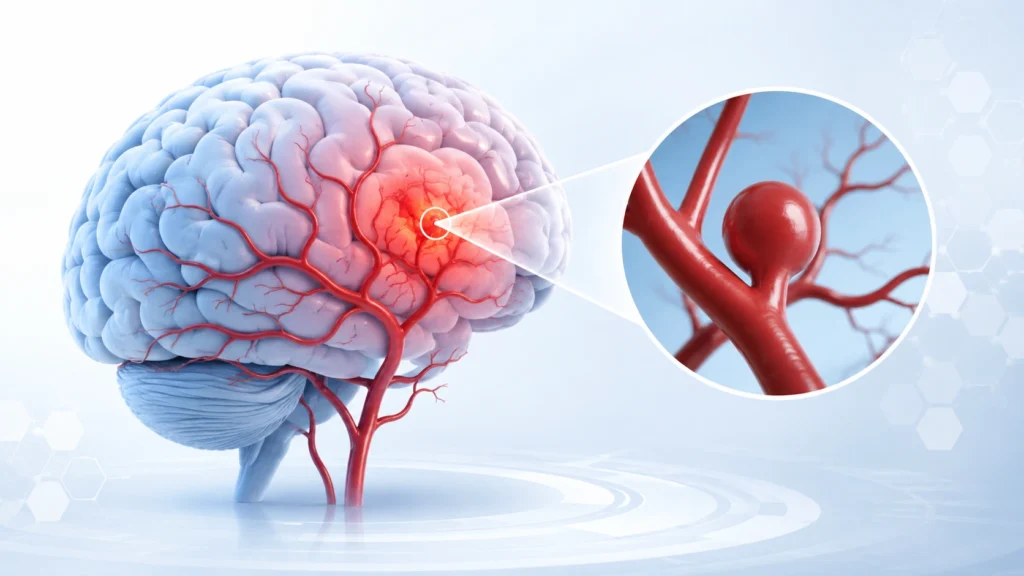
A brain aneurysm is a serious condition that affects the blood vessels in the brain. It happens when a weak spot in a blood vessel wall bulges out and forms a small sac-like swelling. This swelling can grow over time and, in some cases, may rupture. When a brain aneurysm ruptures, it causes bleeding inside the brain, which is a life-threatening emergency. Many people call this a type of stroke or brain hemorrhage.
The most important thing to understand is that not all brain aneurysms cause symptoms. Some people have a small aneurysm and never know about it. Others may experience headaches, vision changes, or other neurological symptoms depending on the size and location of the aneurysm. When an aneurysm ruptures, it leads to sudden severe headache, confusion, loss of consciousness, vomiting, weakness, or seizures.
A brain aneurysm, also called a cerebral aneurysm or intracranial aneurysm, is a bulging or ballooning of a weak area in a blood vessel in the brain. The walls of blood vessels are normally strong and flexible. When part of the wall becomes weak, pressure from blood flow can push that area outward, forming a small sac.
The size of an aneurysm can vary. Some are very small and cause no problems. Others may grow larger and press on nearby brain structures. The most serious risk is rupture, which leads to bleeding in or around the brain.
A brain aneurysm can happen at any age, but it is more common in adults over thirty. It may remain silent for years before being discovered, sometimes during tests for other conditions. In some cases, it is found only after it ruptures.
Brain aneurysms can be classified in different ways based on their shape, size, location, and whether they have ruptured.
Based on shape
Based on size
Based on rupture status
Based on location
The exact cause of brain aneurysm is not always clear. It often results from a combination of weak blood vessel walls, high blood pressure, and other risk factors.
Common causes and contributing factors
Why the vessel wall weakens: The inner layer of the blood vessel can become thin over time. Constant pressure from blood flow, especially in people with high blood pressure, can push on that weak area. This causes the outer layers to bulge outward. As the bulge grows, the wall becomes thinner and more likely to rupture.
Some people are more likely to develop a brain aneurysm than others.
Higher-risk groups
Why risk increases in these groups
Symptoms depend on whether the aneurysm is unruptured or ruptured, and on its size and location.
Symptoms of unruptured aneurysm
Symptoms of ruptured aneurysm
Emergency warning signs
Brain aneurysm can affect people of different ages, but the pattern and risk may vary.
In younger adults
In middle-aged adults
In older adults
Diagnosis is based on symptoms, neurological examination, and imaging tests. Since many people have no symptoms, aneurysms are sometimes found by chance during tests for other problems.
Diagnostic steps
Common tests that may be done
Why diagnosis matters: Early diagnosis of an unruptured aneurysm can help prevent rupture through monitoring or treatment. Ruptured aneurysm requires immediate emergency diagnosis and treatment to reduce brain damage and save life.
Treatment depends on whether the aneurysm is ruptured or unruptured, its size, location, and the patient’s overall health.
1. Surgical clipping
This is an open surgery where a neurosurgeon places a small metal clip at the base of the aneurysm. This stops blood flow into the aneurysm and prevents rupture or re-bleeding.
2. Endovascular coiling
This is a minimally invasive procedure where a thin tube is passed through a blood vessel in the leg or arm up to the brain. Soft coils are placed inside the aneurysm to block blood flow.
3. Flow diversion
This is a newer technique where a special stent is placed in the blood vessel to redirect blood flow away from the aneurysm. Over time, the aneurysm closes off.
4. Supportive care
For patients with ruptured aneurysm, intensive care is often needed.
Recovery depends on whether the aneurysm was ruptured or unruptured, the type of treatment, and the patient’s overall health.
Recovery after treatment for unruptured aneurysm
Recovery after treatment for ruptured aneurysm
Rehabilitation support
Brain aneurysm, especially when ruptured, can lead to serious complications.
Complications of unruptured aneurysm
Complications of ruptured aneurysm
Why complications happen: When an aneurysm ruptures, blood leaks into the space around the brain. This increases pressure, damages brain tissue, and reduces oxygen supply. The brain is very sensitive to bleeding and pressure changes, which is why complications can be severe.
Medical evaluation is important for people with risk factors or symptoms that suggest an aneurysm.
While not all brain aneurysms can be prevented, adopting a healthy lifestyle and managing certain medical conditions can significantly reduce the risk of developing an aneurysm or prevent an existing one from growing or rupturing. Regular health check-ups and early management of risk factors play an important role in protecting your brain and blood vessels.
For people with family history
Brain aneurysm is a complex condition that requires expert neurosurgical care, advanced imaging, and intensive support. A hospital with experienced neurosurgeons, neurologists, and critical care teams can make a major difference in outcomes.
A brain aneurysm is a weak, bulging area in a blood vessel in the brain. It can grow over time and may rupture, causing bleeding in or around the brain. Some aneurysms cause no symptoms until they rupture.
A ruptured brain aneurysm can cause a type of stroke called hemorrhagic stroke due to bleeding in the brain. Not all strokes are caused by aneurysms, but an aneurysm rupture is a medical emergency similar to stroke.
Many aneurysms can be treated effectively with surgery or endovascular procedures. Treatment aims to prevent rupture or re-bleeding. Recovery depends on the size, location, and whether the aneurysm has already ruptured.
Warning signs may include severe headache, vision changes, drooping eyelid, weakness, or seizures. Many people have no symptoms before rupture. Sudden severe headache is the most common sign of a ruptured aneurysm.
Diagnosis is done using CT scan, MRI, CT angiography, MR angiography, or cerebral angiography. These tests help visualize the aneurysm and assess its size, location, and risk of rupture.
Yes, there can be a genetic link. People with a family history of aneurysms or certain genetic conditions may be at higher risk. Screening may be considered in such cases.
Treatment may include surgical clipping, endovascular coiling, or flow diversion. Unruptured aneurysms may be monitored or treated based on risk. Ruptured aneurysms require emergency care and surgery.
Many people recover well and return to normal life after treatment, especially if the aneurysm was unruptured. Recovery after rupture depends on the extent of brain damage and the complications.
A brain aneurysm is a serious condition that affects the blood vessels in the brain and can lead to life-threatening bleeding if it ruptures. Many people have no symptoms until the aneurysm becomes large or ruptures.
The good news is that early diagnosis and timely treatment can significantly reduce the risk of complications. Knowing the warning signs, understanding the risk factors, and seeking medical attention without delay are essential for protecting your brain health. If you experience sudden, severe headaches or any unusual neurological symptoms, don’t ignore them, prompt medical care can make a life-saving difference.

A brain (cerebral) aneurysm is a bulge in a weak area of a blood vessel in or around your brain. Most aneurysms are small and don’t cause issues.
No rows found.