
If you have been told that one or more of your heart arteries are blocked, you may suddenly hear two terms that can feel confusing: angioplasty and bypass surgery.
Both treatments are used to improve blood flow to the heart. But they do it in very different ways.
Angioplasty, usually performed with a stent, opens the narrowed part of an artery from the inside. Bypass surgery, also called coronary artery bypass grafting (CABG), creates a new route for blood to flow around a blocked or narrowed artery.
There is no single answer that applies to everyone. The right treatment depends on factors such as where the blockage is, how many arteries are affected, how severe the disease is, your symptoms, heart function, other health conditions and whether the procedure is being performed during an emergency such as a heart attack.
Angioplasty vs. Bypass Surgery: What Is the Difference?
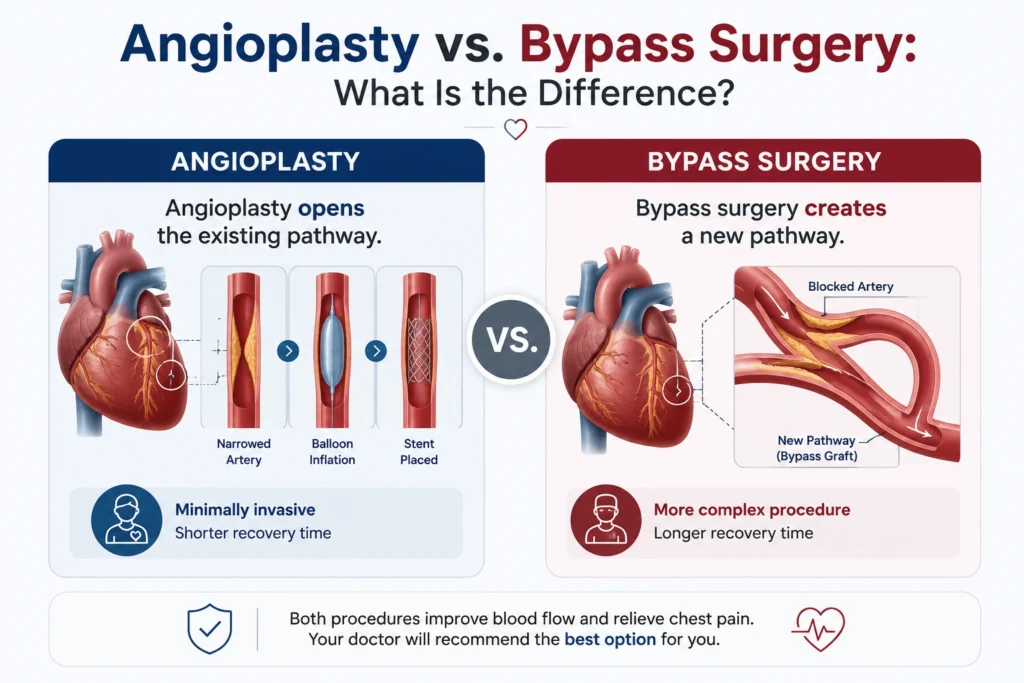
The simplest way to understand the two procedures is to think about how they restore blood flow.
Angioplasty opens the existing pathway.
Bypass surgery creates a new pathway.
During angioplasty, a cardiologist guides a thin catheter through a blood vessel to the blocked coronary artery. A small balloon is inflated to widen the narrowed area. In most coronary angioplasty procedures, a small mesh tube called a stent is placed to help keep the artery open.
During CABG, a surgeon uses a healthy blood vessel from another part of the body, such as the chest, arm or leg, to create a new route around the blocked section. This allows blood to reach the heart muscle without passing through the severely narrowed area.
Neither procedure is automatically “better.” The question is which approach is more appropriate for your particular pattern of coronary artery disease.
Why Do You Need One of These Procedures?
Angioplasty and CABG are generally considered when coronary artery disease has reduced blood flow to the heart and medication and lifestyle measures alone aren’t enough, or when urgent restoration of blood flow is needed.
Coronary artery disease usually develops when fatty deposits called plaque build up inside the coronary arteries. Over time, the arteries can become narrowed, reducing the amount of oxygen-rich blood reaching the heart muscle.
In some situations, a sudden blockage can cause a heart attack. Angioplasty can be used as an emergency treatment to restore blood flow during certain heart attacks.
This can lead to symptoms such as:
- Chest pain or pressure
- Shortness of breath
- Unusual tiredness
- Pain that may spread to the arm, shoulder, neck or jaw
- Reduced ability to exercise
When Is Angioplasty Usually Considered?
Angioplasty, also called percutaneous coronary intervention (PCI), is minimally invasive. It can often restore blood flow without the need for open-heart surgery.
Your cardiologist may consider angioplasty when the blockage can be safely and effectively treated with a catheter and stent.
In emergency heart attack situations, angioplasty can be especially important because restoring blood flow quickly can limit damage to the heart muscle.
It may be particularly useful when:
- There is a suitable blockage in one or a limited number of coronary arteries.
- A blocked artery needs to be opened quickly.
- You are having an acute heart attack.
- Angina continues despite appropriate medical treatment.
- The location and characteristics of the blockage make PCI a reasonable option.
What Happens During Angioplasty?
You are usually awake during the procedure, although medication may be given to help you relax.
The procedure is considerably less invasive than traditional bypass surgery.
A cardiologist generally:
- Inserts a catheter through an artery, often through the wrist or groin.
- Guides it toward the coronary arteries.
- Uses imaging to identify the blockage.
- Inflates a small balloon to widen the narrowed section.
- Places a stent when appropriate.
- Withdraws the catheter after blood flow has been restored.
When Is Bypass Surgery (CABG) Usually Considered?
CABG may be recommended when coronary artery disease is more extensive or complex and a stent may not provide the best long-term solution.
Bypass surgery may be considered when there are:
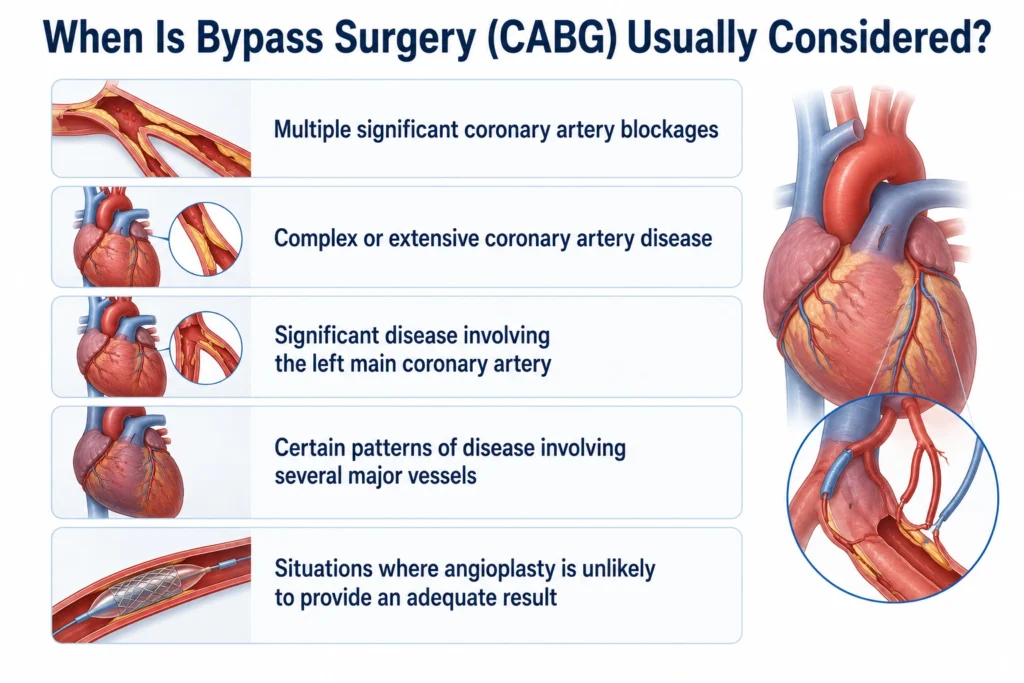
- Multiple significant coronary artery blockages
- Complex or extensive coronary artery disease
- Significant disease involving the left main coronary artery
- Certain patterns of disease involving several major vessels
- Situations where angioplasty is unlikely to provide an adequate result
People with diabetes and extensive multivessel coronary artery disease may also be among those for whom CABG is strongly considered, depending on the overall clinical picture.
However, the number of blockages alone does not determine whether someone needs bypass surgery. The location, severity and complexity of the blockages matter just as much.
What Happens During Bypass Surgery?
CABG is a major surgical procedure performed under general anesthesia. These terms describe the number of bypass grafts created during the operation.
During surgery, the surgeon uses a healthy blood vessel from another part of your body to create a route around the blocked coronary artery. Depending on how many vessels require bypassing, you may hear terms such as:
- Single bypass
- Double bypass
- Triple bypass
- Quadruple bypass
Angioplasty or Bypass: Which Is Better?
| Factor | Angioplasty | Bypass Surgery (CABG) |
| Number of blocked arteries | Often suitable for a single or limited number of suitable blockages. | May be preferred when several coronary arteries have significant disease. |
| Location of blockage | May be suitable when the blockage can be safely reached and treated with a stent. | May be considered for complex locations, including certain cases involving the left main coronary artery. |
| Complexity of blockage | Often used for blockages that can be effectively treated with a stent. | May be more appropriate for heavily calcified, difficult-to-treat or extensive blockages. |
| Diabetes | Can be considered depending on the patient’s overall condition and coronary anatomy. | May be preferred in some patients with diabetes and significant disease affecting multiple coronary arteries. |
| Heart function | Heart pumping function is considered before treatment. | Heart function and overall cardiac health help determine whether surgery is appropriate. |
| Overall health | May be preferred when avoiding major surgery offers a significant advantage. | Age, kidney function, lung health, previous procedures and other conditions are considered before surgery. |
| Recovery | Generally less invasive with a shorter recovery period. | Major surgery with a longer recovery period. |
| Final decision | Depends on the blockage pattern, symptoms and overall health. | Depends on the blockage pattern, symptoms, surgical risk and expected long-term benefit. |
Angioplasty vs. CABG: Recovery Time
Recovery is another major difference between the two procedures.
After angioplasty
Because angioplasty is minimally invasive, recovery is generally faster.
Some patients may leave the hospital the same day or after a short observation period, depending on their condition and why the procedure was performed. People undergoing nonemergency angioplasty may often return to normal activities relatively quickly.
However, a stent does not mean that heart disease has been permanently cured. You still need medication, follow-up care and lifestyle changes to reduce future cardiovascular risk.
After bypass surgery
CABG requires a longer recovery because it is major surgery.
Hospitalisation is generally longer, followed by several weeks of recovery at home. Full recovery may take around 6 to 12 weeks, although the exact timeline varies from person to person.
Cardiac rehabilitation may also form an important part of recovery.
What Are the Risks?
Both angioplasty and bypass surgery can be effective treatments, but neither is completely risk-free.
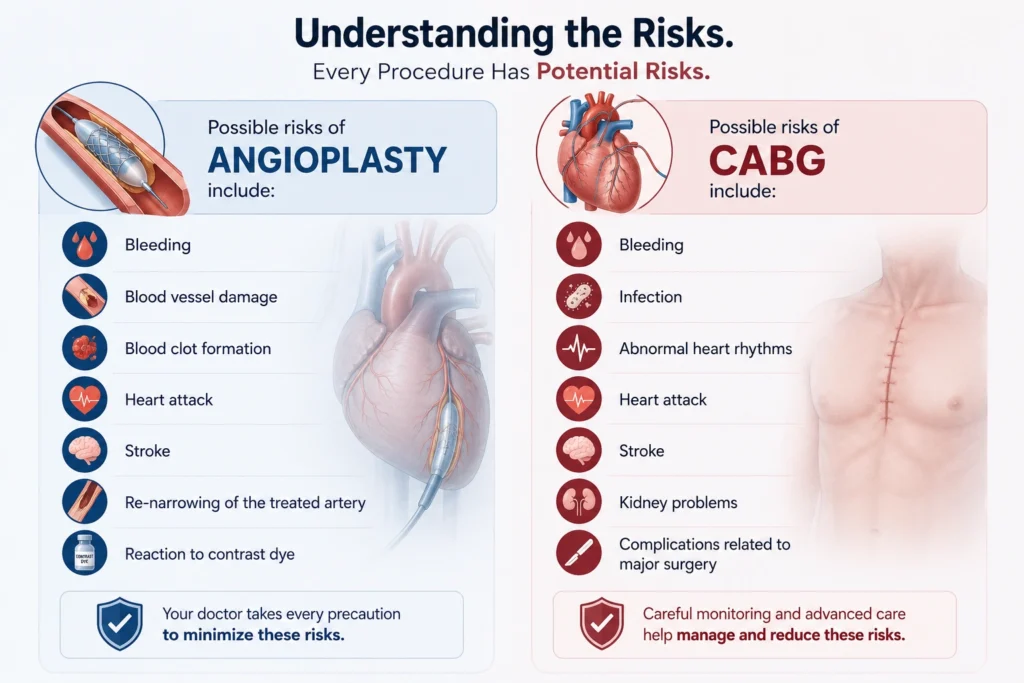
Possible risks of angioplasty include:
- Bleeding
- Blood vessel damage
- Blood clot formation
- Heart attack
- Stroke
- Re-narrowing of the treated artery
- Reaction to contrast dye
Stents can also develop narrowing or blockage in some cases, which is why prescribed medications and follow-up are important.
Possible risks of CABG include:
- Bleeding
- Infection
- Abnormal heart rhythms
- Heart attack
- Stroke
- Kidney problems
- Complications related to major surgery
The individual risk depends on factors such as age, overall health, heart function and the complexity of the coronary artery disease.
Your doctor should explain the potential benefits and risks before recommending either procedure.
Can Medicines Be Used Instead?
Sometimes, yes.
Not every coronary artery blockage requires immediate angioplasty or bypass surgery. For some people with coronary artery disease, medication and lifestyle changes can be an important part of treatment. For others, a procedure may be necessary to restore blood flow.
Depending on the severity and clinical significance of the disease, treatment may include:
- Cholesterol-lowering medicines
- Medicines for blood pressure
- Medicines that reduce the risk of blood clots
- Medicines to control angina
- Regular physical activity as advised
- A heart-healthy diet
- Smoking cessation
- Weight management
Can You Have Angioplasty Instead of Bypass Surgery?
Sometimes.
But choosing angioplasty simply because it is less invasive is not always the right approach.
If the pattern of coronary artery disease is extensive or complex, CABG may provide a more appropriate revascularization strategy. On the other hand, if the anatomy is suitable for PCI, angioplasty may avoid the need for major surgery.
This is why your angiogram is so important. It helps the cardiology team understand where the blockages are, how severe they are and how they are affecting blood flow.
In some cases, a multidisciplinary team involving an interventional cardiologist and cardiac surgeon may discuss the options before recommending the most suitable treatment.
Does Angioplasty Mean You Won’t Need Bypass Surgery Later?
Not necessarily.
Angioplasty can successfully open a blocked artery, but coronary artery disease is a long-term condition.
A person who has received a stent can still develop new blockages in other arteries or, in some cases, narrowing in a previously treated area.
That is why treatment does not end when the procedure is over.
Taking prescribed medicines, controlling cholesterol and blood pressure, managing diabetes, avoiding tobacco, staying physically active and following a heart-healthy lifestyle remain important.
So, Which One Do You Actually Need?
There isn’t a simple rule such as “angioplasty is better” or “bypass surgery is better.”
For many people with a suitable blockage, angioplasty can restore blood flow without major surgery and usually involves a shorter recovery.
For people with extensive, complex or multivessel coronary artery disease, CABG may be the more appropriate option. In certain patterns of disease, including some cases involving the left main coronary artery or multiple vessels, bypass surgery may offer important advantages.
The decision should be based on your coronary anatomy, symptoms, heart function, other medical conditions, procedural risks and long-term treatment goals.
Most importantly, don’t choose a procedure simply because one sounds less invasive. The best treatment is the one that provides the right balance of safety, effectiveness and long-term benefit for your specific heart condition.
If you have been diagnosed with coronary artery disease or have been advised to undergo angioplasty or bypass surgery, discuss your angiogram findings and treatment options with an experienced cardiology team.
Frequently Asked Questions (FAQs)
Is angioplasty safer than bypass surgery?
Angioplasty is less invasive than CABG and generally has a shorter recovery period. However, safety depends on the individual’s heart disease, overall health and the complexity of the blockage.
Is bypass surgery better than angioplasty for multiple blockages?
Not necessarily in every case. However, CABG is often considered for patients with extensive or complex disease involving multiple coronary arteries. The location and severity of the blockages, along with other health conditions, help determine the best approach.
How long does it take to recover from angioplasty?
Recovery after uncomplicated angioplasty is generally much faster than after bypass surgery. Some patients can return to normal activities within days, although the exact timeline depends on their condition and the reason for treatment.
How long does it take to recover from bypass surgery?
Recovery after CABG takes longer because it is major surgery. Many people need several weeks to recover, with full recovery often taking around 6 to 12 weeks.
Can a person with diabetes have angioplasty?
Yes. People with diabetes can undergo angioplasty, but diabetes is an important factor when deciding between PCI and CABG, particularly when several coronary arteries are significantly affected.
Can lifestyle changes remove a heart blockage?
Lifestyle changes can help manage coronary artery disease and reduce cardiovascular risk, but they should not be considered a substitute for urgent medical treatment when a significant blockage requires revascularization.
When should I seek emergency help for chest pain?
Sudden or severe chest pain, especially when accompanied by shortness of breath, sweating, nausea, fainting or pain spreading to the arm, shoulder, jaw or back, can be a sign of a heart attack.
Conclusion
Angioplasty and bypass surgery both aim to improve blood flow to the heart, but they are designed for different clinical situations.
Angioplasty opens a narrowed artery using a balloon and usually a stent. CABG creates a new route around the blocked artery.
If you’re facing this decision, the most useful question isn’t simply, “Which procedure is better?”
It’s: “Which treatment is safest and most effective for my specific heart condition?”
That is the decision your cardiology team can help you make.