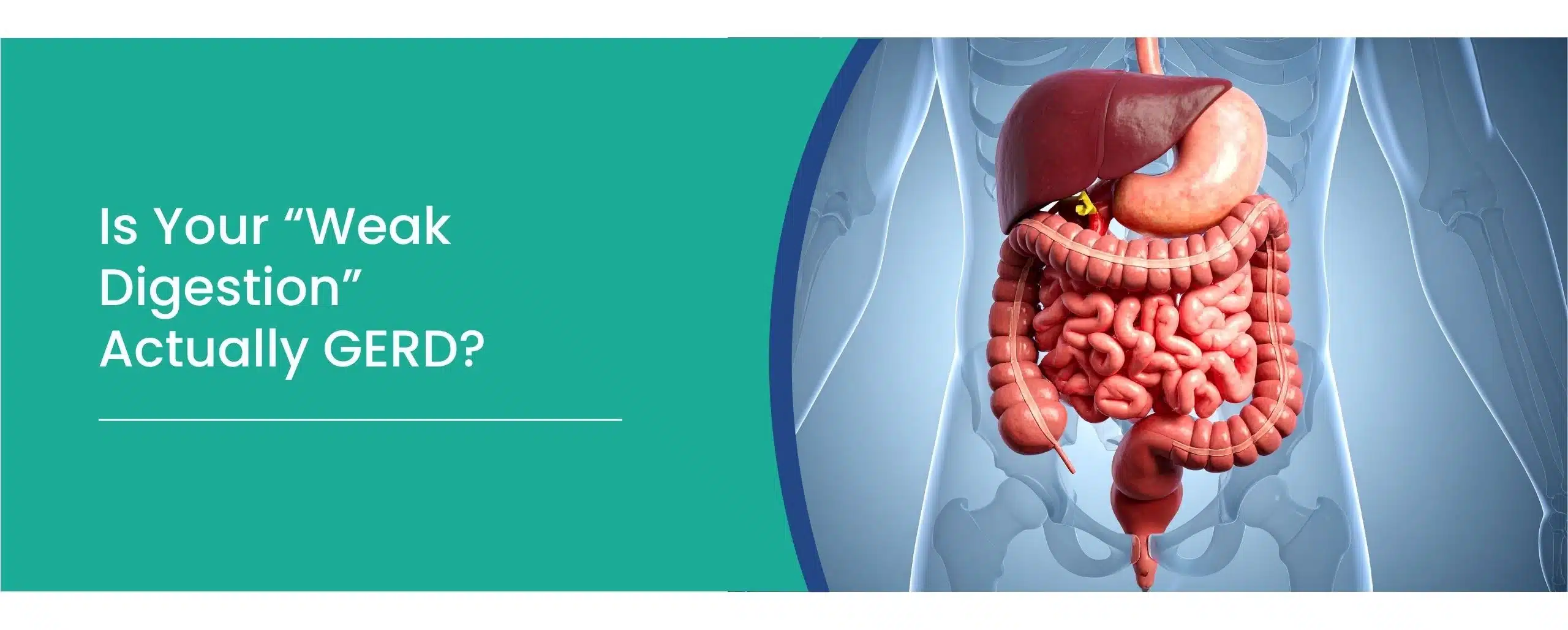
You eat a meal and suddenly feel uncomfortable. Maybe your stomach feels heavy, you are burping more than usual, or there is a burning sensation in your chest. Sometimes, you may notice a sour taste in your mouth or feel as though food is coming back up.
It is easy to call all of this “weak digestion.”
But recurring digestive discomfort may not simply mean that your digestion is weak. In some people, these symptoms can be related to gastroesophageal reflux disease (GERD), a condition in which stomach contents repeatedly flow back into the esophagus.
Occasional acid reflux is common. GERD is different because reflux symptoms become frequent or persistent and can affect your daily life.
So, how can you tell the difference between ordinary indigestion and GERD?
Let’s look at the signs.
What Is GERD?
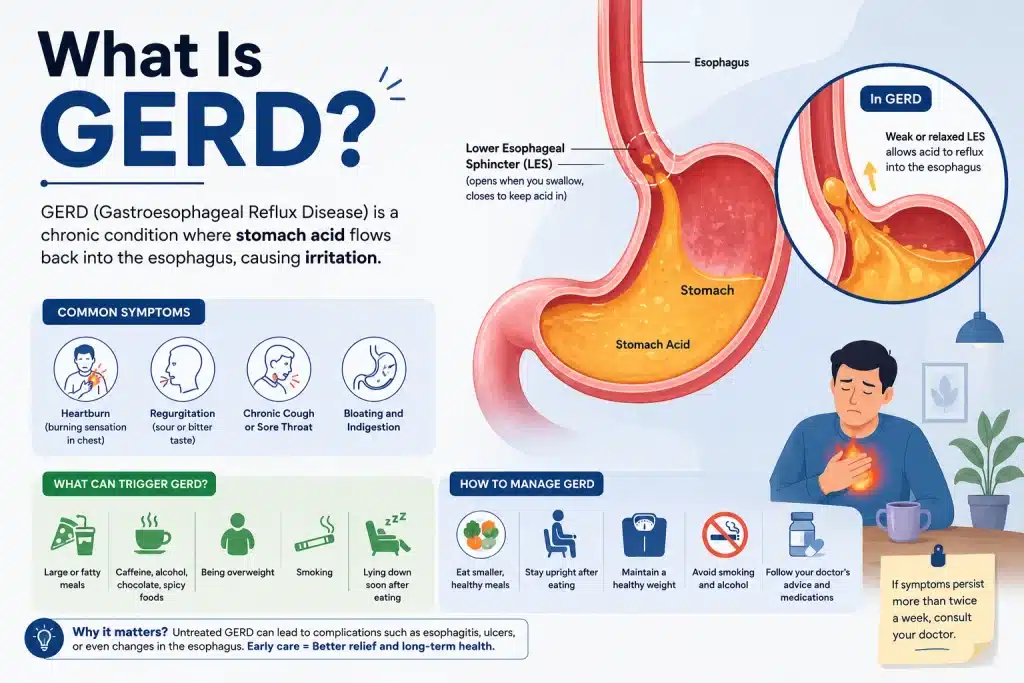
GERD, or gastroesophageal reflux disease, occurs when stomach contents repeatedly move upward into the esophagus, the tube that carries food from your mouth to your stomach.
Normally, a muscular ring called the lower esophageal sphincter (LES) opens to let food enter the stomach and then closes. If this muscle becomes weak or relaxes when it should not, stomach acid and other stomach contents can move back into the esophagus.
Because the esophageal lining is not designed to handle frequent exposure to stomach acid, repeated reflux can cause irritation and inflammation.
GERD does not always feel like classic heartburn. Some people mainly experience regurgitation, throat irritation, coughing, bloating or discomfort after meals.
That is one reason why it can be mistaken for “poor digestion.”
Is “Weak Digestion” the Same as GERD?
Not necessarily.
“Weak digestion” is a common way of describing symptoms such as bloating, heaviness, gas, belching, nausea or discomfort after eating. These symptoms can have many possible causes.
Indigestion, also called dyspepsia, primarily causes discomfort in the upper abdomen. GERD, on the other hand, is specifically related to the backward flow of stomach contents into the esophagus.
The important point is that symptoms alone cannot confirm GERD. Persistent or recurring symptoms should be assessed by a healthcare professional.
The two can overlap, though. A person with GERD can also experience indigestion-like symptoms.
| Symptom | Commonly linked with indigestion | More suggestive of GERD |
| Bloating | Common | Can occur |
| Feeling overly full | Common | Can occur |
| Upper abdominal discomfort | Common | Can occur |
| Burning behind the breastbone | Less typical | Common |
| Sour or bitter taste | Less typical | Common |
| Food or liquid coming back up | Less typical | Common |
| Symptoms worse after lying down | Possible | Common |
| Chronic cough or throat irritation | Uncommon | Can occur |
| Difficulty swallowing | Not typical | May occur |
7 Signs Your “Digestion Problem” Could Actually Be GERD
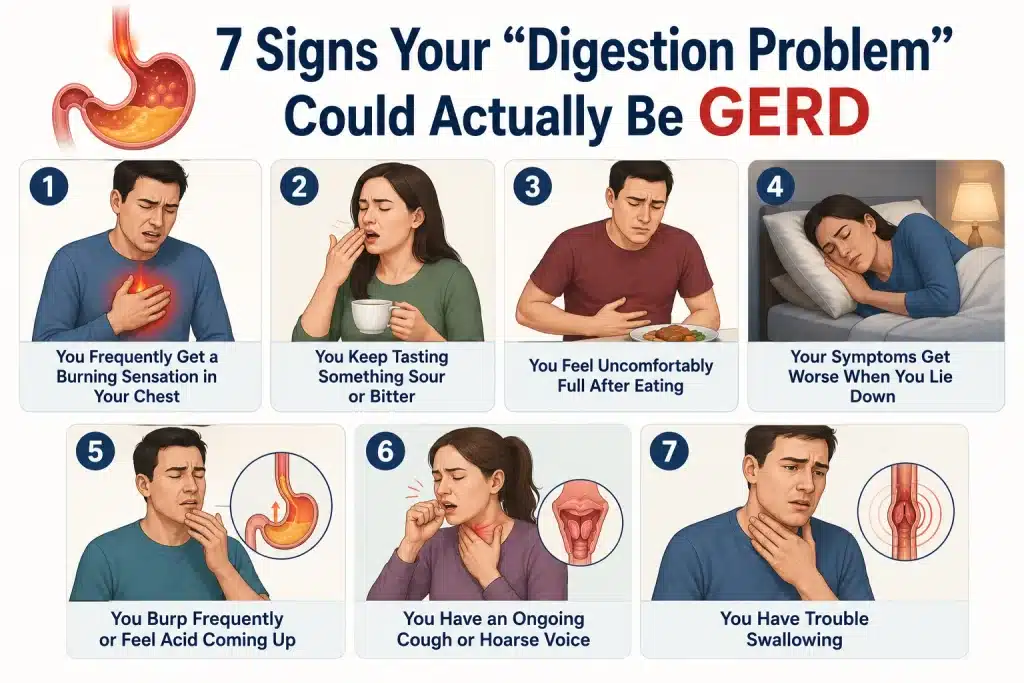
If digestive symptoms keep returning, pay attention to the pattern rather than just the discomfort.
1. You Frequently Get a Burning Sensation in Your Chest
Heartburn is one of the most recognisable symptoms of acid reflux.
It usually feels like a burning sensation behind the breastbone and may move upward toward the throat. It can become more noticeable after eating or when lying down.
Despite its name, heartburn does not originate from the heart. However, chest pain should never automatically be assumed to be heartburn.
If chest pain is severe or occurs with shortness of breath, pain in the jaw or arm, or other concerning symptoms, seek urgent medical attention.
2. You Keep Tasting Something Sour or Bitter
Ever feel a sour or bitter liquid rise into your throat?
That may be regurgitation, another common symptom of GERD.
It happens when stomach contents travel back up through the esophagus and sometimes reach the throat or mouth.
You may notice it particularly after a large meal, bending over or lying down.
3. You Feel Uncomfortably Full After Eating
Feeling full after eating is normal.
But if you regularly feel excessively full, bloated or uncomfortable after relatively small meals, it is worth paying attention to the pattern.
Indigestion has several possible causes, and GERD can sometimes overlap with these symptoms. That means persistent fullness should not automatically be labelled as “weak digestion.”
4. Your Symptoms Get Worse When You Lie Down
This is an important clue.
Some people notice reflux symptoms after going to bed, especially if they have eaten shortly beforehand. Lying down can make it easier for stomach contents to move back toward the esophagus.
Nighttime reflux may also be associated with coughing, throat irritation or sleep disruption.
5. You Burp Frequently or Feel Acid Coming Up
Occasional burping is normal.
Frequent belching combined with a sour taste, burning sensation or food coming back up may point toward reflux rather than simply “slow digestion.”
The combination of symptoms matters more than any single symptom.
6. You Have an Ongoing Cough or Hoarse Voice
GERD does not always stay confined to the digestive system.
Reflux can sometimes irritate the throat and contribute to symptoms such as a persistent cough, hoarseness or throat discomfort, particularly when reflux occurs at night.
This can be confusing because you may not experience obvious heartburn at all.
7. You Have Trouble Swallowing
A feeling that food is sticking or difficulty swallowing should not simply be dismissed as indigestion.
Difficulty swallowing, known medically as dysphagia, can occur with GERD and may also have other causes. It deserves medical evaluation, particularly if it is persistent or worsening.
What Can Trigger or Worsen GERD?
GERD does not have one single trigger.
Certain foods, eating patterns and lifestyle factors may make reflux symptoms worse in some people.
Not every trigger affects every person. Instead of avoiding a long list of foods unnecessarily, it can be more useful to notice which foods consistently make your symptoms worse.
Common factors include:
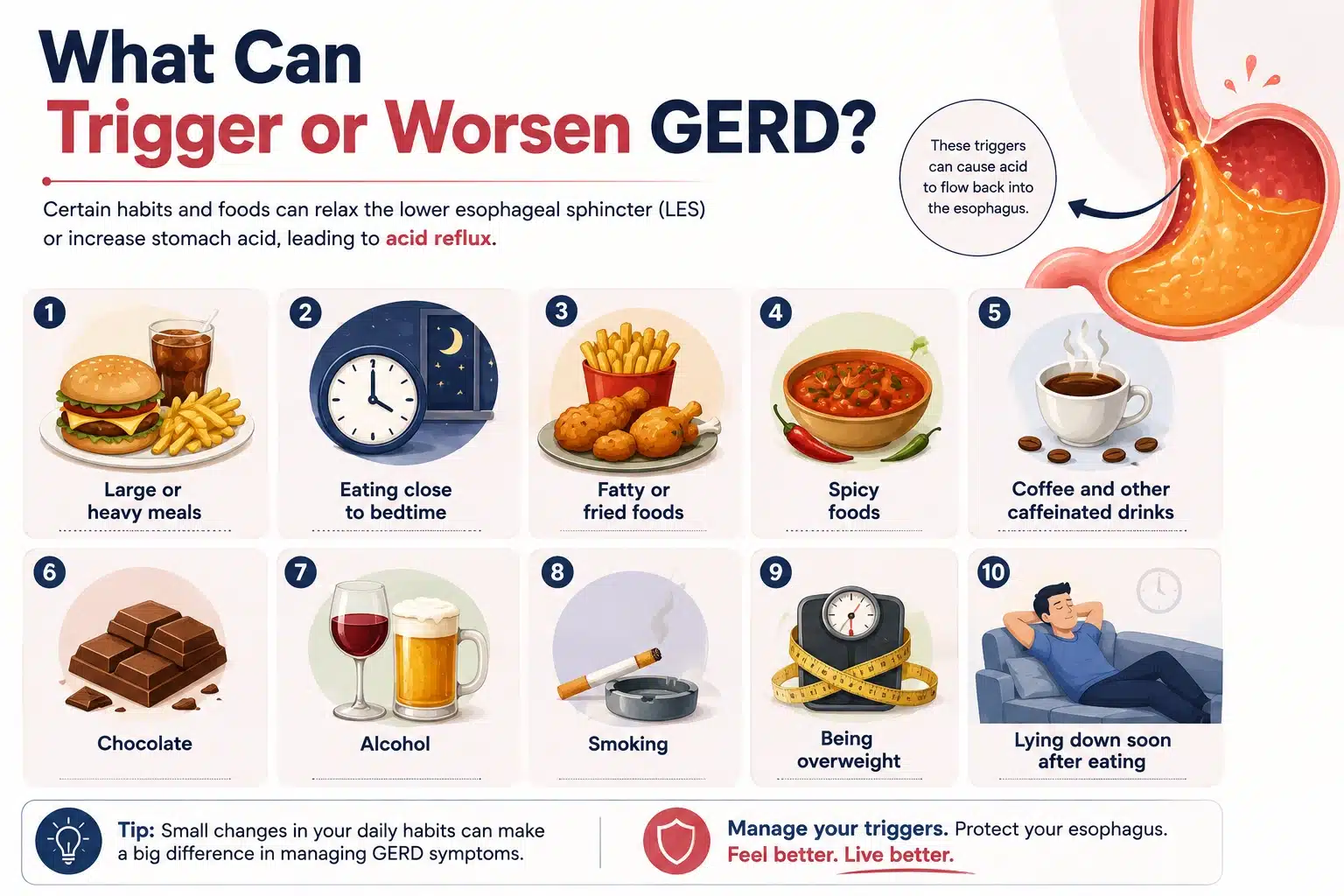
- Large or heavy meals
- Eating close to bedtime
- Fatty or fried foods
- Spicy foods
- Coffee and other caffeinated drinks
- Chocolate
- Alcohol
- Smoking
- Being overweight
- Lying down soon after eating
GERD vs. Indigestion: How Are They Different?
The symptoms can overlap, but the underlying problem is different.
It is also possible to have both indigestion and GERD. That is why trying to diagnose yourself based on one symptom can be misleading.
| Feature | Indigestion | GERD |
| Medical term | Dyspepsia | Gastroesophageal reflux disease |
| Main area affected | Usually upper abdomen | Esophagus, chest and throat |
| Common symptoms | Fullness, bloating, upper abdominal discomfort, belching | Heartburn, regurgitation, sour taste, chest discomfort |
| Typical trigger | Large meals, eating quickly, certain foods and other digestive conditions | Reflux of stomach contents into the esophagus |
| Worse when lying down | Sometimes | Common |
| Chronic cough/hoarseness | Less typical | Can occur |
| Difficulty swallowing | Not typical | Can occur |
| Long-term concern | Depends on underlying cause | Persistent GERD can cause esophageal complications |
How Is GERD Diagnosed?
A doctor will usually start by asking about your symptoms, how often they occur, what triggers them and whether they are affecting your sleep or daily routine.
For many people, the pattern of symptoms provides important clues.
Depending on your symptoms and medical history, your doctor may recommend further evaluation. This can include tests such as:
- Upper gastrointestinal endoscopy
- Esophageal pH monitoring
- Esophageal manometry
- Other tests when needed
An endoscopy can allow a doctor to examine the esophagus and stomach and look for inflammation or other abnormalities.
Not everyone with reflux symptoms needs every test. The appropriate evaluation depends on the individual.
What Can You Do to Reduce GERD Symptoms?
Small changes in eating and daily habits may help reduce reflux symptoms.
- Try smaller meals: Large meals can put more pressure on the stomach and may worsen reflux.
- Give yourself time before lying down: Avoid going to bed immediately after eating. Allowing time between your last meal and lying down may help reduce nighttime symptoms.
- Identify your personal triggers: Spicy foods, fatty meals, coffee, chocolate, alcohol and other foods may trigger symptoms in some people. You do not necessarily need to eliminate everything. Focus on identifying your own pattern.
- Maintain a healthy weight if advised: Excess body weight can increase the likelihood of GERD symptoms in some people. If weight management is appropriate for you, discuss a sustainable approach with a healthcare professional.
- Avoid smoking: Smoking can contribute to reflux and is also harmful to overall digestive and cardiovascular health.
- Pay attention to nighttime symptoms: If reflux repeatedly wakes you up, causes coughing or leaves a sour taste in your mouth, mention it to your doctor.
When Should You See a Doctor?
Occasional heartburn after a large meal may not mean you have GERD.But recurring symptoms deserve attention.
Consider speaking with a doctor if:
- Heartburn happens frequently.
- Symptoms interfere with sleep or daily activities.
- You regularly need over-the-counter medicines for heartburn.
- Food feels difficult or painful to swallow.
- You have persistent nausea or vomiting.
- You are losing weight without trying.
- Symptoms continue despite lifestyle changes.
Don’t Ignore Chest Pain
Chest pain should not automatically be blamed on acidity or GERD.
If chest pain is severe, especially when accompanied by shortness of breath or pain spreading to the arm or jaw, seek urgent medical care because these can be signs of a heart attack.
Can GERD Be Treated?
Yes. Treatment depends on the severity and frequency of symptoms and whether complications are present.
For some people, lifestyle changes may be enough to reduce symptoms. Others may need medicines that reduce or control stomach acid.
Doctors may recommend medicines such as:
- Antacids for occasional symptoms
- H2 receptor blockers
- Proton pump inhibitors (PPIs)
Medication should be used appropriately and according to medical advice, particularly when symptoms are frequent or persistent.
In selected people whose symptoms do not improve adequately with other treatments, procedures or surgery may be considered.
Why You Shouldn’t Keep Treating Frequent Acidity on Your Own?
It is easy to reach for an antacid whenever your stomach burns.
The problem is that frequent symptoms may be telling you something more important.
Long-standing GERD can cause inflammation of the esophagus. In some people, repeated damage can contribute to complications such as esophageal narrowing or Barrett’s esophagus.
That does not mean occasional heartburn will automatically lead to serious disease.
It means persistent symptoms deserve the right diagnosis and management rather than being repeatedly dismissed as “weak digestion.”
Conclusion
“Weak digestion” is not a medical diagnosis. Bloating, gas, fullness and indigestion can have many causes, while symptoms such as frequent heartburn, sour-tasting reflux, food coming back up and nighttime symptoms may point toward GERD.
The key is to notice how often the symptoms occur, what triggers them and whether they are affecting your everyday life.
If digestive discomfort keeps coming back despite changes in your diet and routine, talk to a doctor rather than continuing to self-treat indefinitely. Getting the right diagnosis is the first step toward finding the right treatment.
Frequently Asked Questions
1. Can weak digestion be a sign of GERD?
“Weak digestion” is not a specific medical diagnosis, and digestive symptoms can have many causes. If indigestion occurs along with frequent heartburn, sour taste, regurgitation or symptoms that worsen when lying down, GERD may be one possible cause.
2. How do I know if my acidity is GERD?
Frequent or persistent acid reflux, especially when accompanied by heartburn, regurgitation, nighttime symptoms or difficulty swallowing, may suggest GERD. A doctor can assess your symptoms and determine whether further testing or treatment is needed.
3. Can GERD cause bloating and gas?
GERD primarily involves reflux of stomach contents into the esophagus, but some people may also experience bloating, belching or indigestion-like symptoms. Because these symptoms have many possible causes, persistent bloating should not automatically be attributed to GERD.
4. Is GERD completely curable?
GERD can often be effectively managed with lifestyle changes, medicines and, in selected cases, procedures or surgery. The appropriate treatment depends on the severity and frequency of symptoms and whether complications are present.
5. When should I see a doctor for acidity?
See a doctor if acidity or heartburn keeps returning, interferes with sleep or daily life, or requires frequent use of nonprescription medicines. Difficulty swallowing, persistent vomiting, unexplained weight loss or severe chest pain requires prompt medical attention.