Acne can feel like something you should have left behind with your teenage years. But for many people, breakouts continue well into adulthood, and they may seem to appear at the same time every month, around the chin and jawline, or whenever hormone levels change.
This pattern is often associated with hormonal acne.
Hormonal acne develops when changes in hormone activity affect the skin’s oil glands, leading to increased oil production and clogged pores. It can cause blackheads, whiteheads, inflamed pimples, and deeper, painful cysts or nodules. Hormonal fluctuations related to menstruation, pregnancy, menopause, certain medications, and conditions such as polycystic ovary syndrome (PCOS) may contribute to breakouts.
The good news is that hormonal acne can usually be managed. The right treatment depends on what is causing the breakouts, how severe they are, your age, overall health, and whether you have other symptoms.
What Is Hormonal Acne?
Hormonal acne is acne that is influenced by changes in hormone levels or by how sensitive your skin is to certain hormones, particularly androgens.
Androgens, which include testosterone, can stimulate the sebaceous glands in the skin. These glands produce sebum, an oily substance that helps keep your skin from drying out. When there is too much sebum, it can mix with dead skin cells and clog hair follicles. Inflammation and bacteria can then contribute to acne lesions.
Hormonal acne is particularly common around puberty, but it can also affect adults. In adults, it is often associated with breakouts around the lower face, including the chin and jawline.
However, the location of acne alone cannot confirm that it is hormonal acne. A dermatologist usually considers your symptoms, timing of breakouts, medical history, medications, menstrual pattern and other factors before determining the likely cause.
What Causes Hormonal Acne?
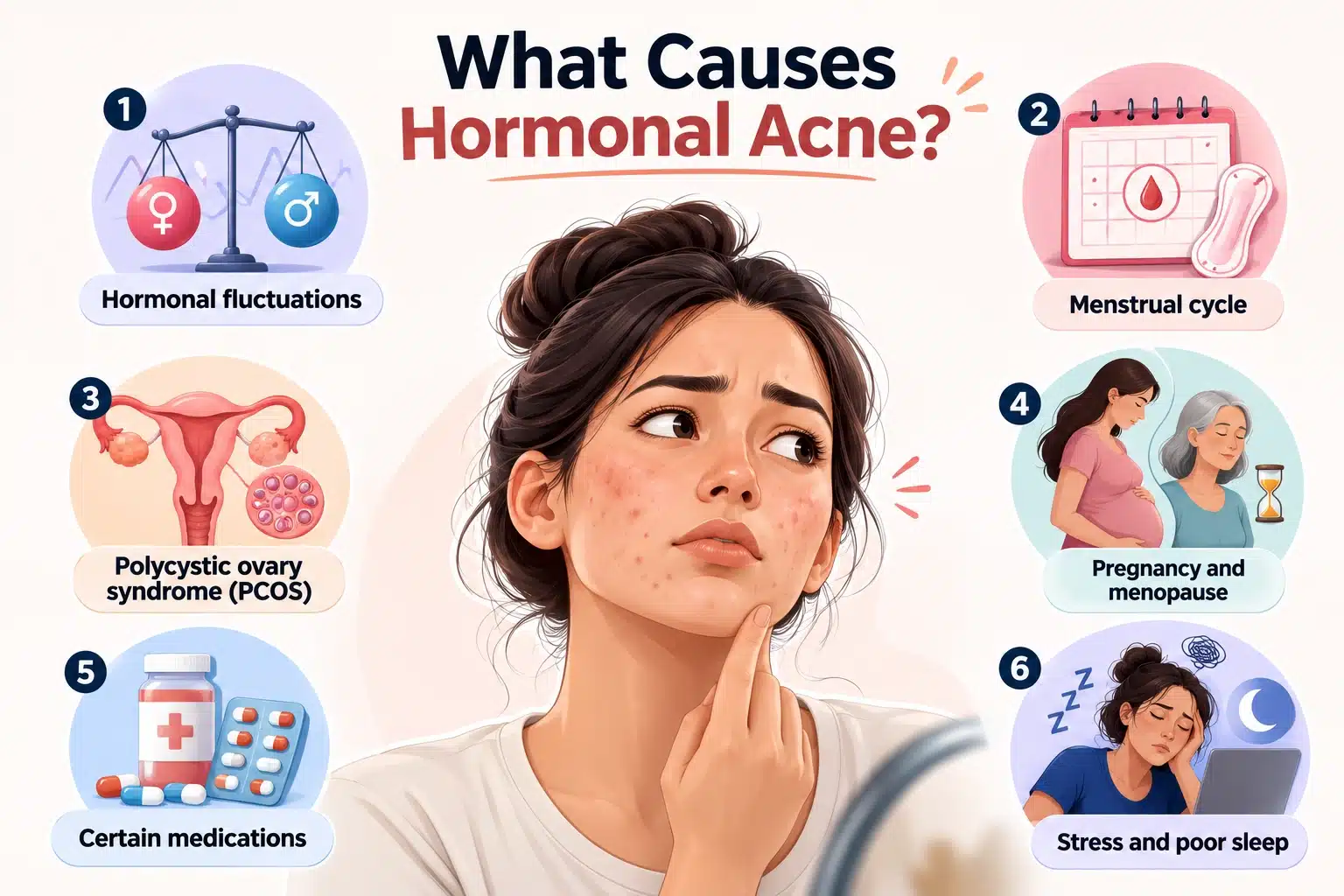
Hormonal acne is not caused by one single hormone or one single trigger. Instead, several factors can contribute to the development or worsening of acne.
1. Hormonal fluctuations
Hormone levels naturally change throughout life. Puberty is one of the most obvious examples, but hormonal changes can also occur during the menstrual cycle, pregnancy and menopause.
For some people, these changes increase oil production or make the skin more sensitive to androgen activity. The result can be recurring breakouts.
2. Menstrual cycle
Some people notice that acne becomes worse in the days leading up to their period.
Hormonal changes during this part of the menstrual cycle can affect sebum production and inflammation. This is why some people experience a predictable pattern of pimples every month, particularly around the chin, jawline or lower face.
3. Polycystic ovary syndrome (PCOS)
Hormonal acne can sometimes occur alongside conditions that affect hormone levels, including PCOS.
If acne develops along with irregular periods, increased facial or body hair, scalp hair thinning or other hormonal symptoms, it is worth discussing these changes with a healthcare professional.
Not everyone with hormonal acne has PCOS, and acne by itself does not mean you have a hormonal disorder.
4. Pregnancy and menopause
Pregnancy can bring significant hormonal changes, and some people experience new or worsening acne during this time.
Similarly, hormonal changes during perimenopause and menopause may contribute to adult acne.
Because some acne medications are not appropriate during pregnancy, anyone who is pregnant, planning pregnancy or breastfeeding should discuss treatment options with their doctor before starting medication.
5. Certain medications
Some medications can contribute to acne or make existing acne worse. These may include corticosteroids and testosterone-related medications.
If your acne started after beginning a new medication, do not stop the medication on your own. Instead, speak with the doctor who prescribed it.
6. Stress and poor sleep
Stress does not necessarily cause acne by itself, but it can make existing acne worse. Poor sleep and ongoing stress may also affect routines, skin care habits and other factors associated with breakouts.
Managing stress and getting adequate sleep can therefore be useful parts of an overall acne-management plan.
What Does Hormonal Acne Look Like?
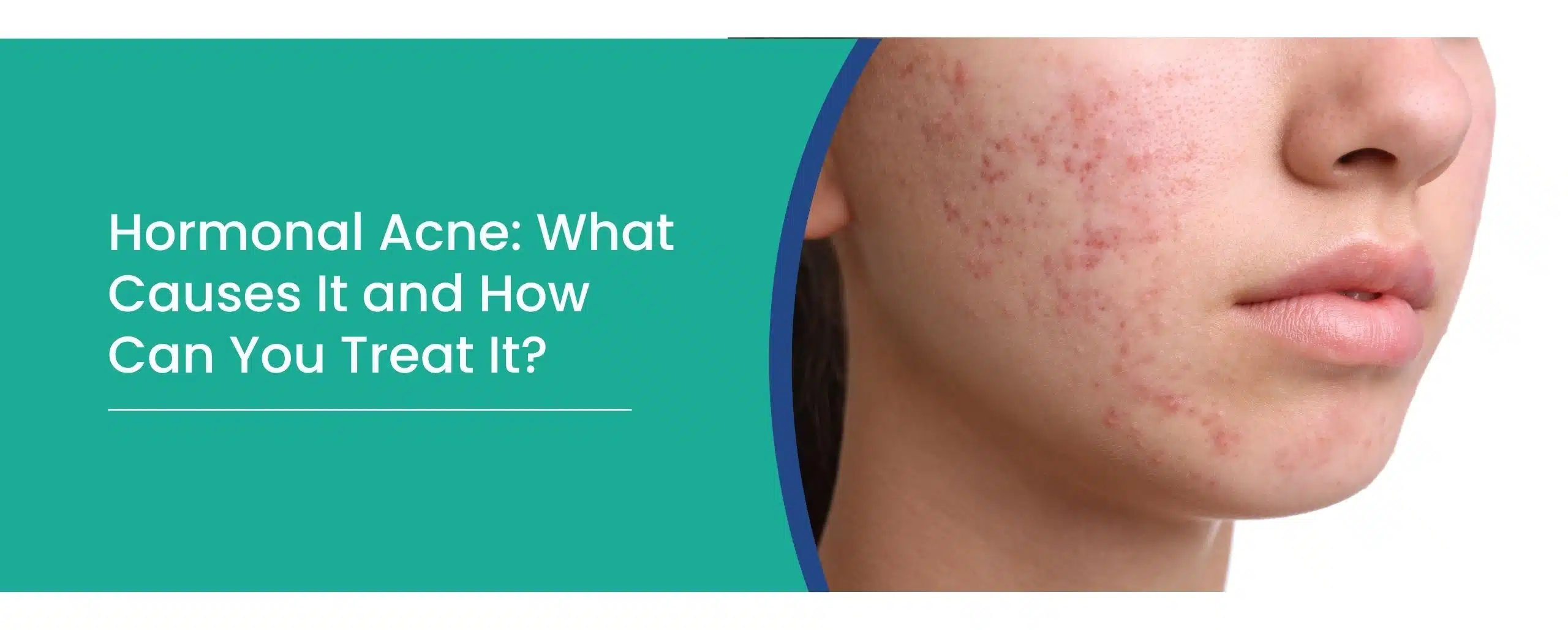
Hormonal acne can look different from one person to another. It may include ordinary pimples, blackheads and whiteheads, or deeper and more painful lesions.
Hormonal acne is often associated with the lower face, particularly the chin and jawline, although acne can occur on other parts of the face, chest, shoulders and back as well.
| Type of acne | What it may look or feel like |
| Blackheads | Small dark spots caused by clogged pores exposed to air |
| Whiteheads | Small, closed, flesh-coloured or white bumps |
| Papules | Small, red and inflamed bumps |
| Nodules | Large, firm and painful lumps deeper under the skin |
| Cysts | Deep, painful, pus-filled lesions that may increase the risk of scarring |
How Can You Tell If Your Acne Is Hormonal?
There is no single test that can tell you whether a particular pimple is hormonal acne.
Instead, a dermatologist looks for patterns. However, these signs are not enough to diagnose a hormonal condition. A dermatologist may ask about your menstrual cycle, medications, skincare products, stress, family history and other symptoms. If there are signs of an underlying hormonal problem, additional evaluation may be recommended.
Your acne may be influenced by hormones if you notice:
- Breakouts that repeatedly appear around your menstrual cycle
- Acne concentrated around the chin or jawline
- Deep, painful or recurring pimples
- Adult acne that appeared after years of relatively clear skin
- Breakouts associated with other hormonal changes
- Acne that continues despite a consistent basic skincare routine
Hormonal Acne Treatment: What Works?
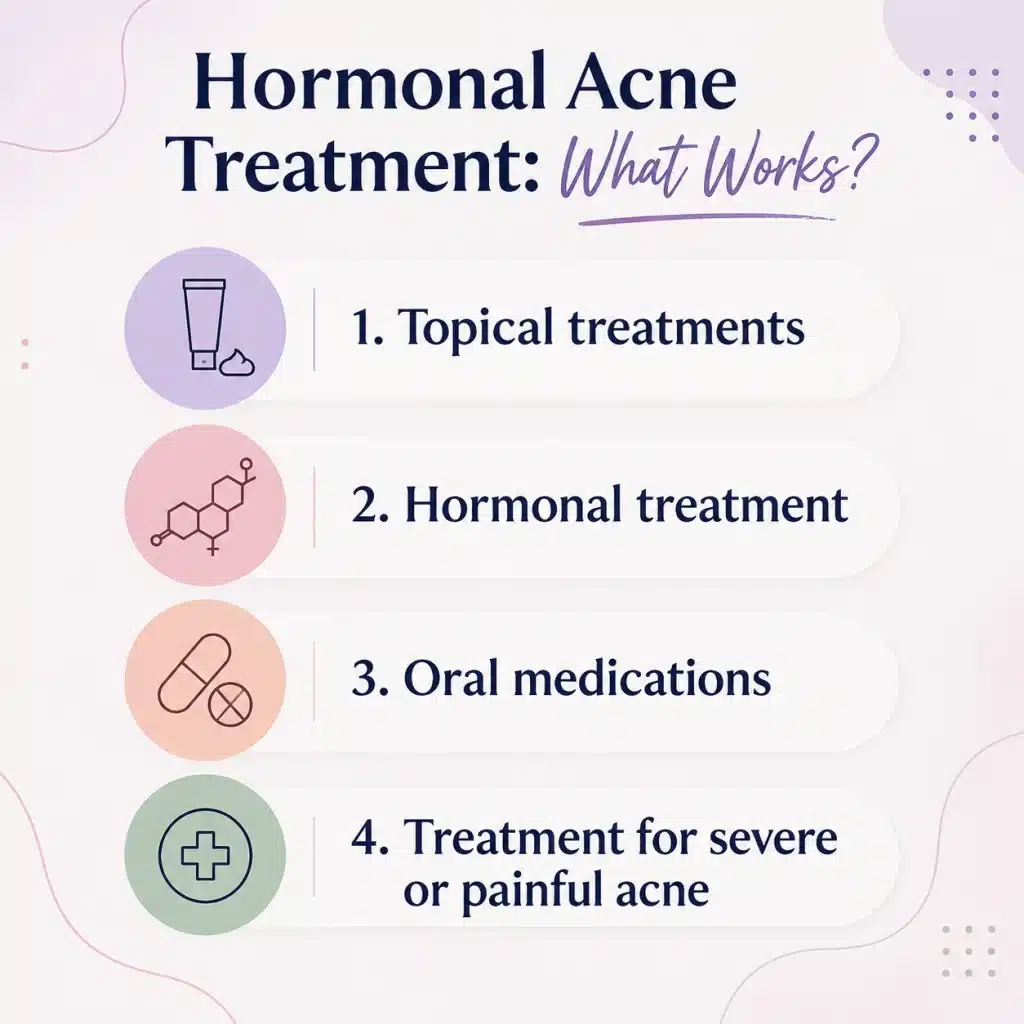
There is no single best treatment for everyone with hormonal acne.
Treatment depends on whether your acne is mild, moderate or severe, whether it is leaving scars, how long you’ve had it and whether an underlying hormonal condition may be contributing.
1. Topical treatments
For mild to moderate acne, topical treatments are often an important part of treatment.
Depending on your skin and the type of acne you have, a dermatologist may recommend ingredients such as:
- Retinoids
- Benzoyl peroxide
- Salicylic acid
- Topical antibiotics
Topical retinoids can help prevent clogged pores, while benzoyl peroxide can help reduce acne-causing bacteria and inflammation. The appropriate product and strength depend on your individual skin and acne severity.
These products can cause dryness or irritation when first introduced, so using them correctly matters.
2. Hormonal treatment
For some people, particularly women whose acne follows a hormonal pattern, a doctor may consider hormonal treatment.
Depending on the individual’s medical history, options may include certain combined oral contraceptives or anti-androgen medications such as spironolactone. These treatments work differently and are not suitable for everyone.
Hormonal medication should only be used under medical guidance. Your doctor will consider factors such as your medical history, other medications, pregnancy plans and potential risks.
3. Oral medications
Moderate or severe acne may require prescription oral medication.
Depending on the type and severity of acne, a dermatologist may prescribe oral antibiotics or other medications. Severe acne that does not respond to other treatments may sometimes require isotretinoin.
These medications can have important side effects and monitoring requirements, so they should never be started without professional advice.
4. Treatment for severe or painful acne
Deep nodules and cysts can be painful and may leave permanent scars.
In selected cases, dermatologists may use treatments such as corticosteroid injections to reduce inflammation in particularly large or painful lesions. Other procedures may also be considered depending on the patient’s acne and whether scarring is present.
The earlier severe acne is treated, the better the chance of reducing ongoing inflammation and preventing additional scarring.
Hormonal Acne Treatment at a Glance
| Treatment | Common role | Important consideration |
| Topical retinoids | Help prevent clogged pores and treat mild to moderate acne | May cause initial dryness or irritation |
| Benzoyl peroxide | Helps reduce acne-causing bacteria and inflammation | Can irritate sensitive skin |
| Salicylic acid | Helps unclog pores | May be drying when overused |
| Oral antibiotics | May be used for some inflammatory acne | Usually prescribed for a limited period |
| Combined oral contraceptives | May help some women with hormonally influenced acne | Not suitable for everyone |
| Spironolactone | May reduce androgen-related acne in some women | Requires medical assessment |
| Isotretinoin | Used for selected severe or persistent acne | Requires careful medical supervision |
Can You Treat Hormonal Acne Naturally?
You may come across many home remedies claiming to “balance your hormones” and clear acne. Some lifestyle changes can support healthier skin, but they should not replace evidence-based treatment when acne is persistent or severe.
A simple routine can help:
Keep your skincare routine gentle
Wash your face gently rather than scrubbing aggressively. Harsh cleansing can irritate the skin and potentially make breakouts appear worse. Acne is not caused by having “dirty” skin.
Choose non-comedogenic products
Look for skincare and cosmetic products labelled non-comedogenic, meaning they are less likely to clog pores.
Avoid picking your acne
Squeezing or picking pimples can increase inflammation and raise the risk of scarring and post-inflammatory skin changes.
Pay attention to your diet
Some research suggests that high-glycemic foods and certain dairy products may be associated with acne in some people. However, there is no universal “acne diet,” and more research is needed before recommending strict dietary restrictions.
A balanced diet with plenty of vegetables, fruits, whole foods and adequate protein is a better long-term approach than eliminating large food groups without medical guidance.
Manage stress and prioritise sleep
Stress management and adequate sleep may not eliminate hormonal acne, but they can support overall health and may help reduce factors that worsen existing breakouts.
How Long Does Hormonal Acne Take to Improve?
One of the most frustrating things about acne treatment is that results are rarely immediate.
Depending on the treatment, it may take several weeks before you begin to notice improvement. Healthline notes that a new hormonal acne treatment plan may take around 8 to 16 weeks to show its full effect, while Cleveland Clinic notes that some improvement may become noticeable within several weeks.
This does not mean you should keep using a treatment that is severely irritating your skin. If you are experiencing significant dryness, burning, swelling or other concerning reactions, speak with your dermatologist.
Consistency is usually more useful than constantly switching between products.
Conclusion
Hormonal acne can be frustrating, especially when breakouts continue long after your teenage years or seem to follow a predictable pattern.
Hormonal changes can increase oil production and contribute to clogged pores and inflammation, but hormones are not always the only factor involved. Your genetics, skincare routine, medications, stress and other health conditions can also influence acne.
The good news is that hormonal acne is treatable. Depending on your symptoms, treatment may include topical medicines, prescription medications, hormonal therapy or a combination of approaches in best hospital in Noida.
If your acne is persistent, painful or leaving scars, don’t wait for it to disappear on its own. A dermatologist can help identify the underlying pattern and build a treatment plan designed for your skin.
Frequently Asked Questions (FAQs)
1. What is the main cause of hormonal acne?
Hormonal acne is commonly linked to changes in hormone activity, particularly androgens, which can increase oil production and contribute to clogged pores. Menstrual changes, puberty, pregnancy, menopause and some hormonal conditions can influence breakouts.
2. Where does hormonal acne usually appear?
Hormonal acne often affects the lower face, especially the chin and jawline, although it can also appear elsewhere on the face, chest, shoulders and back. The location alone cannot confirm that acne is hormonal.
3. Can hormonal acne go away on its own?
It can improve when hormone fluctuations settle, but recurring hormonal acne may continue for months or years without appropriate management. Persistent acne can also increase the risk of scarring, so treatment may be worthwhile.
4. What is the best treatment for hormonal acne?
There is no single treatment that works for everyone. Depending on severity, treatment may include topical retinoids, benzoyl peroxide, prescription medicines or, for some women, hormonal treatments such as oral contraceptives or spironolactone.
5. When should I see a dermatologist for hormonal acne?
See a dermatologist if acne is painful, persistent, worsening, leaving scars or not responding to basic skincare. You should also seek medical advice if acne occurs alongside irregular periods or other symptoms that could indicate an underlying hormonal condition.