
Your kidneys work silently. Every single day, they filter about 200 litres of blood, remove waste, balance fluids, and keep your body running. The problem? When they start failing, they do that silently too.
Most people with chronic kidney disease don’t feel anything for years. By the time symptoms show up, the damage is often serious. Knowing the signs your kidneys are failing early can change everything, including whether you need dialysis or not.
What happens when the kidneys begin to fail?
The kidneys don’t shut down overnight. Kidney failure is usually a gradual process. Doctors measure it using GFR (glomerular filtration rate) the percentage of kidney function you have left.
- GFR above 90: Normal kidney function
- GFR 60–89: Mildly reduced; early CKD
- GFR 30–59: Moderate damage; symptoms may begin
- GFR 15–29: Severe; close monitoring needed
- GFR below 15: Kidney failure; dialysis or transplant often required
As kidney function drops, waste products like creatinine and urea build up in the blood. Fluid retention increases. Blood pressure rises. The body slowly stops managing itself.
Recognising the signs your kidneys are failing at an early GFR stage gives you the best chance to slow progression and delay or even avoid dialysis.
10 signs your kidneys are failing
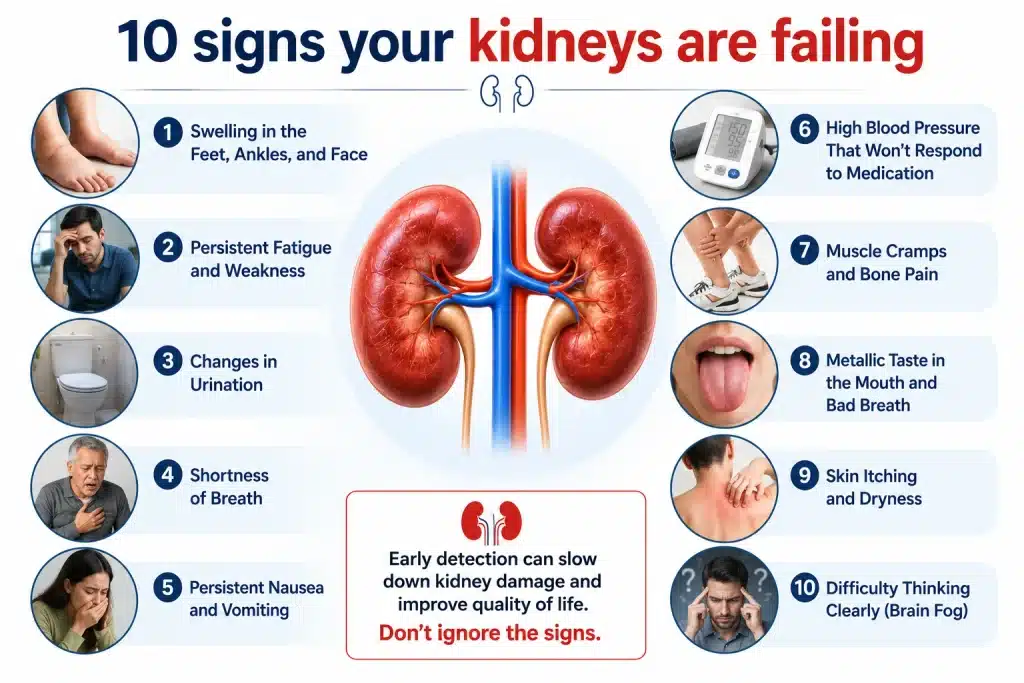
These are the kidney failure warning signs you should never dismiss. Some are obvious. Many get misattributed to aging, stress, or lifestyle. That’s the danger.
1. Swelling in the Feet, Ankles, and Face
One of the earliest and most visible signs your kidneys are failing is swelling. When kidneys can’t remove excess fluid, it builds up in the tissues.
- Puffiness around the eyes in the morning
- Swollen ankles and feet by evening
- Bloated feeling even without eating much
This is called oedema and it’s a classic symptom of failing kidneys. Do not ignore it.
2. Persistent Fatigue and Weakness
Healthy kidneys produce a hormone called erythropoietin that signals the body to make red blood cells. Signs your kidneys are failing, this hormone drops. The result is anaemia.
- Constant tiredness even after rest
- Difficulty concentrating
- Feeling weak without physical exertion
These symptoms of failing kidneys are often dismissed as overwork. They’re not.
3. Changes in Urination
Changes in how you urinate are among the most direct signs your kidneys are failing.
- Urinating more frequently, especially at night (nocturia)
- Dark, foamy, or bloody urine
- Reduced urine output
- Burning sensation or unusual colour
Foamy urine often signals proteinuria, protein leaking into urine, which is a key marker of signs your kidneys are failing.
4. Shortness of Breath
Breathlessness without exertion is a serious kidney failure symptom for two reasons.
- Fluid buildup in the lungs (pulmonary oedema)
- Anaemia reducing oxygen-carrying capacity
If you find yourself breathless climbing stairs or lying flat, get your kidneys checked immediately that can be signs your kidneys are failing.
5. Persistent Nausea and Vomiting
When kidneys fail, waste accumulates in the blood, a condition called uraemia. This directly affects the digestive system.
- Constant nausea, especially in the morning
- Frequent vomiting without obvious cause
- Loss of appetite and rapid, unexplained weight loss
These are classic end stage kidney disease symptoms that often push patients toward seeking medical help.
6. High Blood Pressure That Won’t Respond to Medication
Kidneys regulate blood pressure through fluid balance and hormone production. When they’re damaged, blood pressure rises, and stays elevated.
Equally important: uncontrolled hypertension is also one of the leading causes of CKD. It’s a two-way cycle that destroys kidney tissue over time.
If your BP isn’t responding to medication, ask your doctor whether chronic kidney disease symptoms could be the underlying cause can be the signs your kidneys are failing.
7. Muscle Cramps and Bone Pain
Failing kidneys struggle to balance minerals like calcium, phosphorus, and potassium.
- Painful nighttime leg cramps
- Bone aches, especially in the lower back
- Restless legs syndrome
Electrolyte imbalance is among the less-discussed but significant advanced kidney disease signs. When potassium rises dangerously, it can even cause cardiac arrhythmia.
8. Metallic Taste in the Mouth and Bad Breath
Uraemia, the buildup of urea and other waste in blood, produces a distinct metallic taste and a smell often described as “fishy” or ammonia-like.
- Loss of interest in eating, especially protein-rich foods
- Altered taste perception
- Persistent bad breath that doesn’t respond to dental hygiene
This is one of the more unmistakable signs your kidneys are failing in later stages.
9. Skin Itching and Dryness
The kidneys help filter phosphorus out of the blood. When they fail, phosphorus builds up. High phosphorus causes calcium to deposit in the skin, leading to:
- Severe, persistent itching (often all over the body)
- Dry, discoloured skin
- Darkening of skin tone
This symptom, called uraemic pruritus, is a well-recognised sign in kidney disease warning signs literature and points toward significant kidney damage.
10. Difficulty Thinking Clearly (Brain Fog)
Waste accumulation affects the brain.
- Difficulty concentrating
- Memory lapses
- Confusion or feeling “foggy” throughout the day
This is less commonly associated with kidney problems by patients, but it’s a documented kidney failure symptom, particularly in advanced CKD stages. It’s one of the signs your kidneys are failing that often brings caregivers, not the patient, to the nephrologist.
Kidney failure symptoms that should never be ignored
Some symptoms demand urgent medical attention. These kidney failure warning signs mean you need evaluation today, not next week.
- Blood in urine.
- Sudden, dramatic swelling.
- Severe breathlessness while at rest.
- Chest pain with fluid retention.
- Confusion or altered consciousness.
- Urine output dropping suddenly to near zero.
If you or someone you know is experiencing these signs your kidneys are failing, visit a nephrologist or emergency department immediately.
Tests used to determine kidney function
If you’re experiencing even a few of the above kidney damage symptoms, your doctor will recommend:
- Serum Creatinine and Blood Urea Nitrogen (BUN): Primary blood markers of kidney function.
- eGFR Calculation: Estimates actual filtration capacity.
- Urine Albumin-to-Creatinine Ratio (UACR): Detects protein in urine.
- Kidney Ultrasound: Checks for structural damage or obstruction.
- 24-Hour Urine Test: Measures how much waste the kidneys are clearing.
- Renal Biopsy: For cases requiring definitive diagnosis.
If you’re in Noida, the best nephrologist in Noida can guide you through the right test sequence based on your symptoms.
When do doctors recommend dialysis?
Not everyone with CKD needs dialysis. The recommendation depends on GFR levels, symptoms, and how the body is coping with waste buildup.
Doctors generally consider dialysis when:
- GFR falls below 10–15, especially with symptoms.
- Fluid overload cannot be managed with medication.
- Dangerous potassium levels risk cardiac events.
- Severe uraemic symptoms nausea, confusion, bleeding.
- Blood pressure can no longer be controlled medically.
Many patients show clear signs your kidneys are failing long before dialysis becomes necessary. Catching and managing CKD early is always the goal. But when kidney function is too low to sustain life, dialysis is not optional, it is life-saving.
For expert evaluation and access to a world-class dialysis center in Noida, consult a nephrologist early rather than waiting for a crisis.
Can dialysis be prevented?
For many patients, yes, or at least delayed significantly. The signs your kidneys are failing don’t automatically mean dialysis is inevitable.
Preventable or manageable factors include:
- Controlling diabetes: Diabetic nephropathy is India’s leading cause of CKD.
- Managing blood pressure aggressively: Even modest BP reductions slow CKD progression.
- Avoiding nephrotoxic medications: NSAIDs, certain antibiotics, and contrast dyes damage kidneys.
- Eating right: A low-sodium, low-protein (in advanced stages), low-potassium diet reduces kidney workload.
- Staying hydrated appropriately: Not too much, not too little.
- Stopping smoking Smoking accelerates kidney damage in diabetic patients.
- Early referral to a nephrologist: Most patients are referred too late.
If you’re managing diabetes or hypertension in Noida, CKD treatment in Noida is available. Consistent monitoring can genuinely slow progression and reduce the likelihood of dialysis.
Treatment options for advanced kidney disease
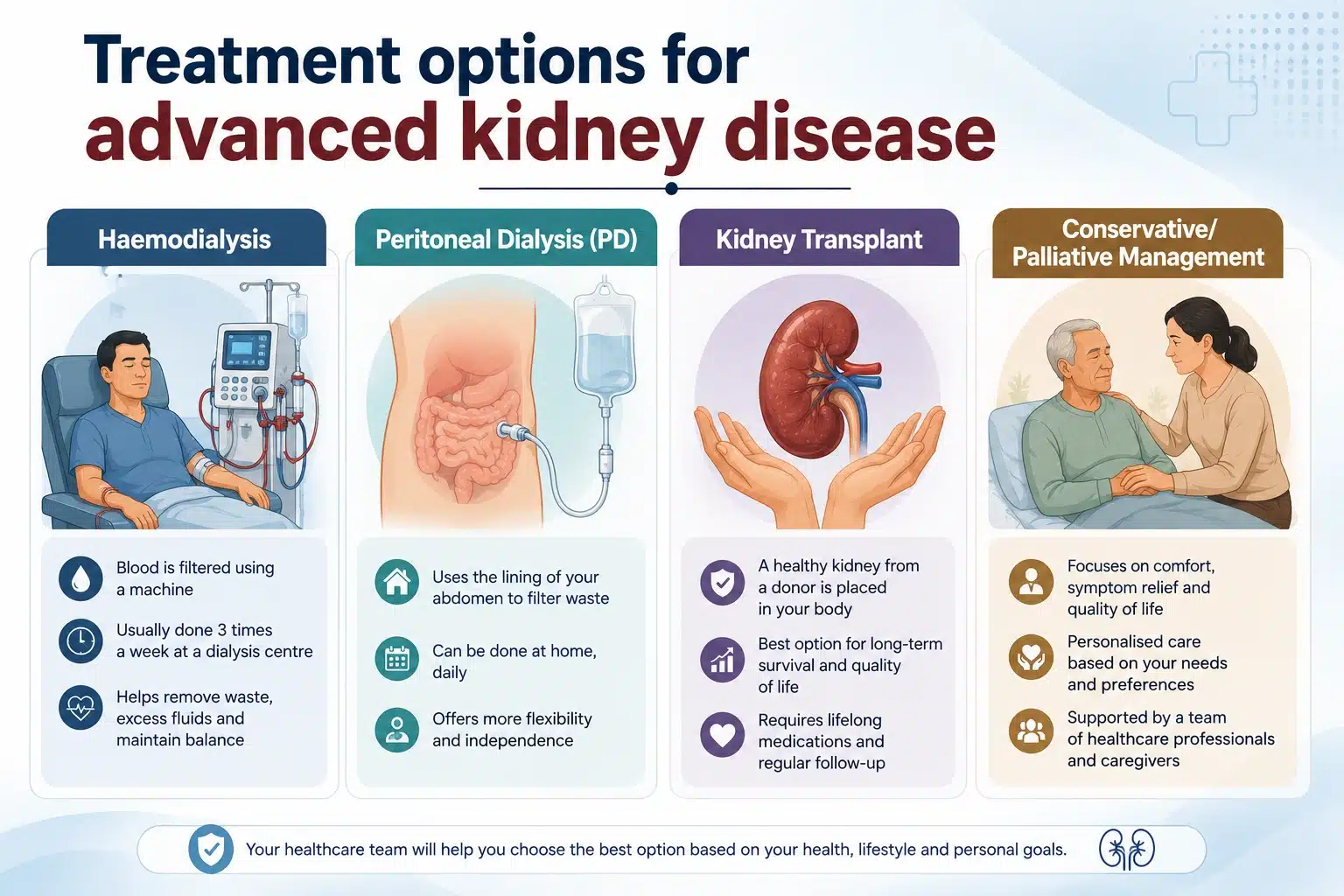
When end stage kidney disease symptoms are confirmed and kidney function is critically low, the treatment options are:
- Haemodialysis: Blood is filtered through a machine, typically three times a week, four hours per session. This is the most common form of dialysis available at a dialysis center in Noida and across India.
- Peritoneal Dialysis (PD): Uses the lining of the abdomen as a natural filter. Can often be done at home. Offers more flexibility for patients who are otherwise stable.
- Kidney Transplant: The most effective long-term solution for end stage kidney disease. A healthy donor kidney takes over full filtration function. Patients with a successful transplant often return to near-normal life.
- Conservative/Palliative Management: For elderly patients or those who cannot tolerate dialysis, symptom management and quality-of-life care may be prioritised over aggressive treatment.
The right path depends on your age, overall health, support system, and the severity of your kidney failure symptoms. A kidney failure treatment in Noida specialist can help map the right course for your situation.
Frequently Asked Questions (FAQs)
What are the signs that dialysis is needed?
Dialysis is typically needed when GFR drops below 10–15, along with uncontrolled fluid retention, dangerous potassium levels, or severe uraemic symptoms like confusion, breathlessness, or uncontrollable nausea. These are among the most critical signs your kidneys are failing.
Can kidney failure be treated without dialysis?
In early and moderate stages, yes. Medication, dietary changes, BP control, and diabetes management can slow progression significantly. However, once GFR drops critically low, dialysis or a transplant becomes necessary.
Is dialysis permanent?
Not always. If kidney failure is caused by a reversible condition (like severe dehydration or a medication reaction), kidney function may recover. In chronic kidney disease, however, dialysis is typically long-term unless a transplant is pursued.
How often is dialysis required?
Haemodialysis is usually performed three times per week, roughly four hours per session. Peritoneal dialysis may be done daily, often overnight. Your nephrologist will determine the schedule based on residual kidney function.
What is the life expectancy on dialysis?
This varies widely. Younger patients without other major illnesses can live 20–30 years on dialysis. Elderly patients with multiple comorbidities may have a shorter prognosis. Transplant recipients generally live longer than long-term dialysis patients.
Can kidney function improve after dialysis?
In acute kidney injury cases, yes. In chronic kidney disease, kidney function rarely improves significantly. However, some patients with residual function benefit from dietary and medical management even while on dialysis.
Conclusion
Kidney disease is called a silent killer for a reason. It causes enormous damage before most people feel anything. By the time fatigue, swelling, breathlessness, and nausea arrive together, you may already be at an advanced stage.
The signs your kidneys are failing listed here are not meant to create panic. They’re meant to create awareness. Because the patients who do best with CKD, including those who avoid dialysis altogether, are the ones who caught it early and took action.
If you recognise even two or three of these symptoms in yourself or someone close to you, don’t wait.