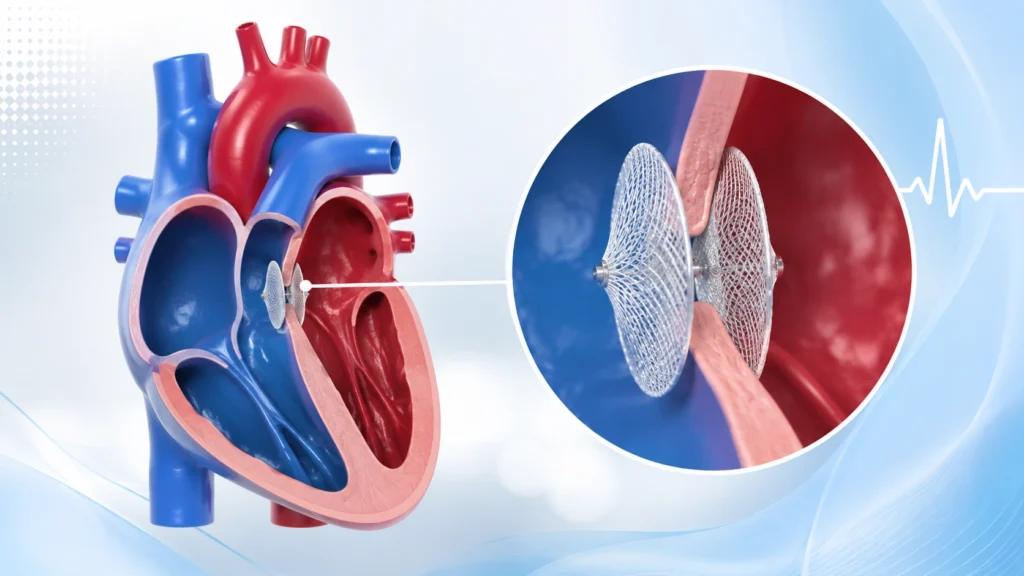
Some babies are born with a small opening between the chambers of the heart. In many cases, small holes may close on their own. But in some patients, the hole remains open, allowing blood to flow in the wrong direction. Over time, this extra flow can put pressure on the heart and lungs.
ASD and VSD are among the most common congenital heart defects. ASD is a hole in the wall between the right and left atria. VSD is a hole in the wall between the right and left ventricles. Both may cause symptoms such as tiredness, breathlessness, poor growth in children, frequent chest infections, or reduced exercise capacity.
In the past, many septal defects were treated only with open-heart surgery. Today, many patients can be treated with a device closure procedure. A small device is placed through a catheter to close the hole from inside the heart. This approach is less invasive, often has a shorter hospital stay, and helps many patients return to normal activity faster.
Atrial septal defect (ASD) and ventricular septal defect (VSD) are types of congenital heart defects. This means they are present from birth, though they may not be noticed until later in life.
Not all defects need treatment. Some small holes may close on their own or remain small enough that they do not cause problems. Larger defects or those causing symptoms often need medical or interventional treatment.
Device closure is not for every patient with a heart hole. The decision depends on the size of the defect, the location, the amount of extra blood flow, the patient’s age, and whether symptoms or heart strain are present.
You may be considered for device closure if you have:
Some patients may still need surgical repair if the hole is too large, too close to important structures, or associated with other heart problems.
Untreated septal defects can lead to long-term complications. The heart may become enlarged. The lungs may be exposed to high blood flow for many years. The heart’s pumping ability may be affected.
Early treatment can prevent these problems, protect heart function, and improve long-term outcomes.
Possible complications of untreated ASD or VSD include:
Symptoms depend on the size of the hole and the patient’s age. Some children and adults may have no obvious symptoms for many years.
If symptoms are mild, the defect may be found during a routine checkup or an echocardiogram. If symptoms are significant, treatment may be needed sooner.
Common symptoms in infants and children
Common symptoms in older children and adults
ASD and VSD are congenital heart defects. They develop during fetal growth. In many cases, the exact cause is not known.
Possible contributing factors include:
Most cases are not caused by anything the parents did or did not do. They occur as part of early heart development.
Diagnosis begins with a careful heart evaluation. A doctor may suspect a heart defect based on symptoms, a heart murmur, or abnormal test results.
Common diagnostic tests
What the tests show
Accurate diagnosis is essential because it determines whether device closure, surgery, or medical follow-up is the best option.
|
Condition |
What it is | Common symptoms |
Main concern |
| ASD | Hole between the two upper chambers. | Fatigue, breathlessness, palpitations, sometimes no symptoms. | Heart enlargement, lung overcirculation, arrhythmias. |
| VSD | Hole between the two lower chambers. | Poor feeding, fast breathing, poor growth, frequent infections. | Heart failure, lung overcirculation, growth issues. |
| Small defects | May close on their own or remain small. | Often no symptoms. | Usually monitored unless changes occur. |
|
Feature |
Device Closure |
Surgical Repair |
| Method | Device placed through a catheter. | Open-heart surgery with direct closure. |
| Incision | Small puncture in the groin. | Chest incision and breastbone access. |
| Hospital stay | Usually shorter. | Often longer. |
| Recovery | Faster in many patients. | Longer recovery period. |
| Best for | Suitable defects based on size and location. | Large, complex, or associated defects. |
Not all patients go directly to device closure. Some small defects may be monitored over time. Medical management may be used while waiting for treatment or if the defect is not suitable for closure.
Common non-surgical measures
These measures help stabilize the patient and prepare for the best timing of intervention.
Device closure is a minimally invasive procedure. It is done in a catheterization lab with advanced imaging and heart team support.
Step 1: Pre-procedure evaluation
Step 2: Anesthesia and access
Step 3: Device positioning
Step 4: Device release and confirmation
Step 5: Immediate post-procedure care
|
Stage |
Key Points |
| Pre-procedure | Imaging, fitness check, and consent. |
| Anesthesia | Sedation or general anesthesia for comfort. |
| Access | Small puncture in the groin, no large incision. |
| Device placement | Device guided through catheter and opened across the hole. |
| Post-procedure | Monitoring, puncture care, and early recovery guidance. |
Device closure offers several important benefits for suitable patients. For many families, device closure provides a less invasive option with good long-term results.
Benefits include:
Like any heart procedure, device closure has potential risks. Most patients do well, but complications can occur. The actual risk depends on the patient’s anatomy, defect type, overall health, and the experience of the heart team.
Possible risks include:
Recovery is usually faster than open-heart surgery. Most patients stay in the hospital for a short period and then recover at home with guidance.
Early recovery
Home recovery
Long-term recovery goals
Rama Hospital provides expert evaluation and interventional treatment for patients with septal defects. The focus is on safe planning, skilled closure, and structured recovery.
Seek urgent care if there is severe breathlessness, blue discoloration, fainting, extreme weakness, or signs of heart failure. You should see a heart specialist if you or your child has:
ASD device closure is a minimally invasive procedure where a small device is placed through a catheter to close a hole between the upper chambers of the heart.
VSD device closure is a similar procedure used to close a hole between the lower chambers of the heart using a catheter-based device.
Device closure is generally safe for suitable defects when performed by an experienced heart team. Like any procedure, it has risks that should be discussed in detail.
Hospital stay is usually short, often just a few days, depending on the patient’s condition and recovery progress.
Many patients can be treated with device closure. Some complex or large defects may still need surgical repair based on imaging and heart team evaluation.
Yes, many adults with ASD or selected VSD can undergo device closure if the defect is suitable and the heart is not too damaged.
Recovery is usually faster than open surgery. Most patients can return to routine activity within a few weeks, depending on the doctor’s advice.
ASD and VSD device closure is an important treatment option for many patients with heart holes. It offers a less invasive alternative to open-heart surgery for suitable defects, with shorter hospital stay and faster recovery in many cases. By closing the defect, the procedure helps reduce extra blood flow to the lungs, protect heart function, and improve long-term health.
At Rama Hospital, ASD and VSD device closure is planned with detailed cardiology assessment, interventional expertise, and post-procedure care so patients and families understand every stage of the journey.
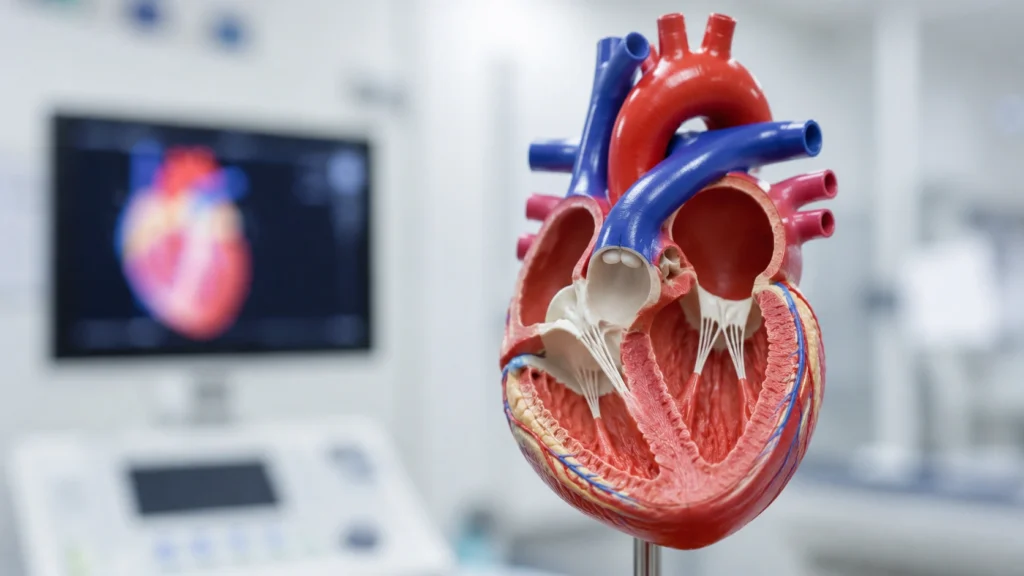

ASD closure is a procedure to close an atrial septal defect (ASD). An ASD is a hole in the heart between the two upper chambers.
No rows found.