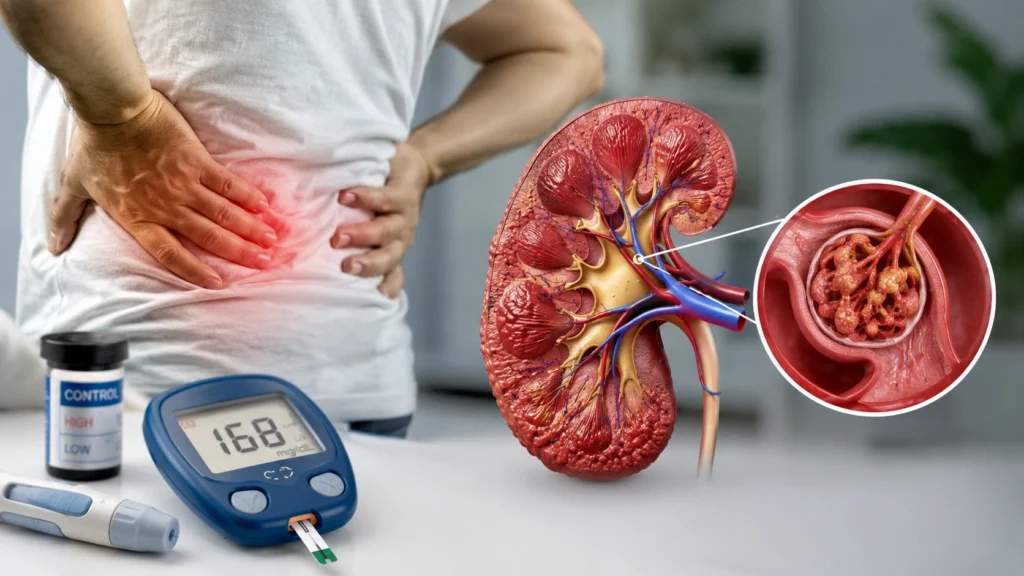
Most people with diabetes watch their blood sugar. They monitor their diet. They take their medication.
But very few are watching their kidneys.
That is a dangerous blind spot.
Diabetic nephropathy is the #1 cause of kidney failure in India. It affects nearly 1 in 3 people with long-standing diabetes, and the terrifying part is this: by the time you feel it, significant damage has already been done.
There are no early warning signs. No pain. No obvious signals. Just your kidneys, quietly losing their ability to filter your blood, while life goes on as normal.
This page is for every diabetic patient, every concerned family member, and every person who wants to understand what diabetic nephropathy actually is, how it progresses, and, most importantly, what can be done about it.
Because when caught early, this condition is very manageable. When ignored, it becomes life-threatening.
Diabetic nephropathy is a serious kidney complication caused by long-term, poorly controlled diabetes.
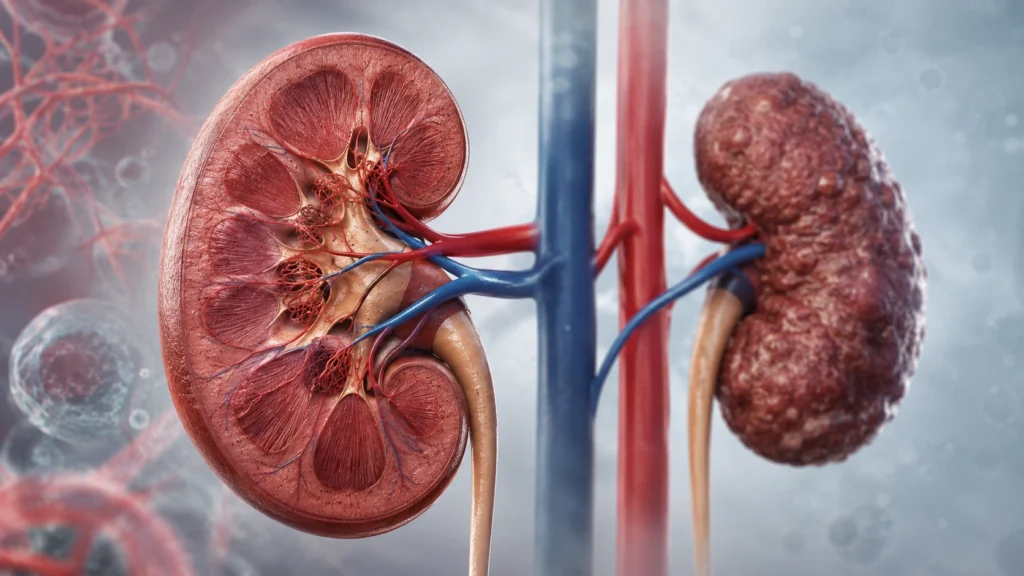
Inside each kidney are approximately 1 million tiny filtering units called glomeruli. When blood sugar stays persistently high, these filters get damaged slowly, over years, until they start leaking proteins they should retain and fail to remove waste they should eliminate.
The result: progressive, permanent kidney damage.
The kidney doesn’t send you a pain signal. It just quietly fails. That’s why diabetic nephropathy is called the silent complication.
Diabetic nephropathy doesn’t happen overnight. It progresses through 5 distinct stages, each with a different level of kidney function and a different treatment approach.
Understanding the stage you or your loved one is in changes everything about how the condition is managed.
| Stage | Name | What’s Happening | Key Marker | GFR Range |
| Stage 1 | Hyperfiltration | Kidneys overwork to compensate for early stress | Elevated GFR, no symptoms | >90 ml/min |
| Stage 2 | Silent Injury | Microscopic structural damage begins | Microalbuminuria may appear | 60–89 ml/min |
| Stage 3 | Early Nephropathy | Measurable protein leaking into urine | Albumin 30–300 mg/day | 30–59 ml/min |
| Stage 4 | Advanced Nephropathy | Significant protein loss, BP rising, GFR declining | Albumin >300 mg/day | 15–29 ml/min |
| Stage 5 | End-Stage Renal Disease | Kidneys’ near-total failure | Dialysis or transplant required | <15 ml/min |
The golden window is Stages 1–3. At these stages, the disease can be slowed, stabilized, and sometimes partially reversed.
Most patients in India are diagnosed at Stage 3 or 4, which is why annual kidney screening for every diabetic is non-negotiable.
Not every diabetic develops nephropathy, but certain profiles carry a significantly higher risk. Early identification and screening is critical for these individuals.
Understanding the cause helps you understand the prevention.
Chronically elevated blood glucose causes:
| Risk Factor | How it damages the kidney | Risk Level |
| Chronic hyperglycemia | Primary driver of all glomerular damage | Critical |
| Hypertension | Accelerates filtration unit destruction | Critical |
| Genetic predisposition | Increases susceptibility 2–3x | High |
| Smoking | Reduces renal blood flow, worsens proteinuria | High |
| Obesity | Increases kidney workload and inflammation | Moderate-High |
| Dyslipidemia (high cholesterol) | Promotes kidney fibrosis | Moderate |
| Prolonged diabetes duration | Cumulative damage over time | Moderate |
| Recurrent UTIs | Additional stress on already-damaged kidneys | Moderate |
This is the most dangerous characteristic of diabetic nephropathy: it hides.
For years, sometimes decades, the kidneys silently deteriorate while producing no noticeable symptoms. By the time symptoms appear, the damage is advanced.
One symptom you should never ignore: foamy urine. It means protein is leaking into your urine, a direct sign of kidney filter damage. Don’t attribute it to dehydration or diet. Get tested.
Diagnosis follows a structured clinical pathway. Every diabetic patient should be on this pathway from the day they are diagnosed.
| Test | What it measures | Clinical significance |
| UACR (Urine Albumin-to-Creatinine Ratio) | Protein leakage in urine | First detectable sign of kidney damage |
| eGFR (Estimated Glomerular Filtration Rate) | Overall kidney filtration capacity | Determines CKD stage and treatment urgency |
| Serum Creatinine | Waste product concentration in blood | Rises as kidney function declines |
| Blood Urea Nitrogen | Nitrogen waste in blood | Indicates filtration efficiency |
| HbA1c | 3-month average blood sugar | Directly correlates with nephropathy progression risk |
| Renal Ultrasound | Kidney size, structure, blood flow | Rules out obstruction, scarring, structural anomalies |
| Complete Blood Count (CBC) | Haemoglobin and blood cell levels | Detects anaemia common in CKD |
| Serum Electrolytes | Potassium, sodium, phosphorus, calcium | Detects dangerous imbalances in advanced disease |
| Kidney Biopsy | Microscopic tissue analysis | Confirms diagnosis in clinically uncertain cases |
| 24-Hour Urine Protein | Total daily protein excretion | Quantifies severity of proteinuria |
Treatment for diabetic nephropathy is not a single intervention; it is a comprehensive, layered strategy.
The goal at every stage: slow the progression, protect remaining kidney function, manage complications, and maintain quality of life.
This class of medication has revolutionized diabetic nephropathy management in the last decade.
A newer class of diabetes medications has significantly improved the management of diabetic kidney disease over the past decade.
Studies have shown that these treatments can help slow kidney damage, reduce the risk of kidney disease progression, and lower the chances of requiring dialysis in the future.
Because of their proven kidney-protective benefits, these medications are now widely recommended by leading diabetes and kidney health guidelines as an important part of treatment for eligible patients with diabetic kidney disease.
Diet is not supportive care in nephropathy. It is active treatment.
| Nutrient | Recommendation | Why it matters |
| Protein | 0.6–0.8 g/kg body weight/day | Excess protein increases kidney filtration burden |
| Sodium | Less than 2,000 mg/day | Reduces blood pressure and fluid retention |
| Potassium | Restricted in Stages 4–5 | Prevents dangerous cardiac arrhythmias |
| Phosphorus | Restricted in advanced CKD | Prevents bone disease and vascular calcification |
| Fluids | Monitored in Stages 4–5 | Prevents dangerous fluid overload |
| Calories | Adequate (30–35 kcal/kg/day) | Prevents malnutrition, which worsens prognosis |
Treatment protocol:
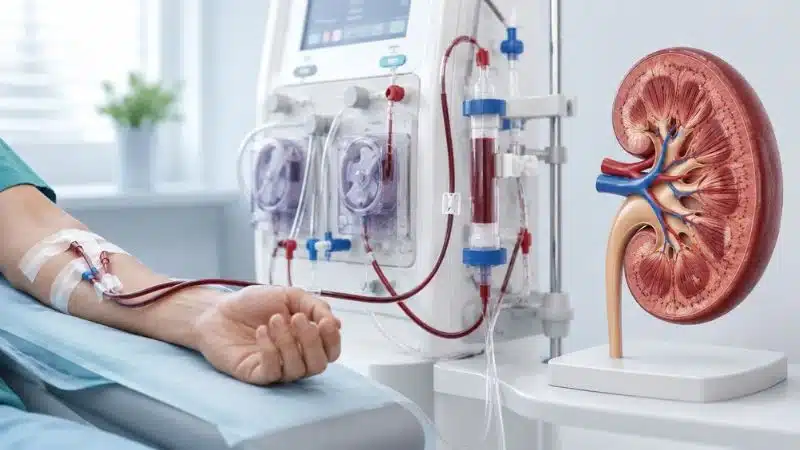
When kidneys reach Stage 5, being unable to sustain life, renal replacement therapy becomes necessary.
Hemodialysis works by:
| Feature | Detail |
| Frequency | 3–4 sessions per week |
| Duration per session | 3–4 hours |
| Location | Hospital dialysis centre or satellite unit |
| Access | Arteriovenous fistula (AVF), surgical creation required |
| Best suited for | Patients who prefer centre-based care, live near a facility |
An alternative to hemodialysis, performed at home using the body’s own peritoneal membrane as a natural filter.
| Feature | Detail |
| Frequency | Daily (Continuous Ambulatory Peritoneal Dialysis) |
| Duration | Multiple exchanges through the day |
| Location | Done at home by trained patient/caregiver |
| Access | Peritoneal catheter insertion (minor surgical procedure) |
| Best suited for | Working patients, those far from dialysis centres, children |
Kidney transplant offers the best long-term outcomes for Stage 5 diabetic nephropathy patients, significantly better survival and quality of life compared to lifelong dialysis.
| Type | Source | Outcome |
| Living Donor Transplant | Family member (compatible) | Best outcomes, planned, lower wait time |
| Deceased Donor Transplant | Organ donation programme | Dependent on availability; excellent outcomes |
| Pre-emptive Transplant | Before dialysis is needed | Optimal, avoids dialysis entirely |
Post-transplant considerations for diabetics:
Advanced CKD disrupts calcium-phosphorus balance, causing renal osteodystrophy.
Starting treatment at Stages 1–3 delivers measurable, life-changing outcomes:
Yes, absolutely, if detected early enough.
At Stages 1–3, aggressive management can:
The single most powerful intervention available: annual urine albumin testing, starting today.
See a nephrologist immediately if you:
Untreated diabetic nephropathy does not plateau. It progresses, and the consequences are severe.
| Complication | How it develops | Severity |
| End-Stage Renal Disease (ESRD) | Progressive loss of all kidney function | Life-threatening |
| Heart failure and cardiovascular disease | Fluid overload and toxin-induced cardiac stress | Life-threatening |
| Severe, drug-resistant hypertension | Kidneys lose ability to regulate blood pressure | Very high |
| Anaemia | Kidneys lose ability to regulate blood pressure | High |
| Renal Osteodystrophy (bone disease) | A calcium-phosphorus imbalance destroys bone density | High |
| Peripheral neuropathy worsening | Toxin accumulation damages nerve fibers. | High |
| Dangerous electrolyte imbalances | Potassium and sodium dysregulation causes cardiac arrhythmias | Life-threatening |
| Multi-organ failure | End-stage cascade when kidneys completely fail | Fatal |
Diabetic nephropathy left untreated is not just a kidney problem. It becomes a whole-body crisis that no system of the body escapes.
Early-stage nephropathy (stages 1–2) can be partially reversed with aggressive blood sugar and blood pressure control. Stages 3 and beyond are generally progressive but can be significantly slowed with the right treatment.
Kidney damage typically develops after 10–15 years of uncontrolled diabetes. However, Type 2 diabetics are sometimes already in stages 2–3 at the time of diabetes diagnosis due to delayed detection.
If a patient reaches Stage 5 (ESRD), dialysis is usually lifelong unless a kidney transplant is performed. Kidney transplant offers the best long-term outcomes.
A low-protein (0.6–0.8 g/kg/day), low-sodium, low-potassium, low-phosphorus diet is recommended. A qualified renal dietitian should create a personalized plan based on the patient’s stage and labs.
Current evidence supports SGLT2 inhibitors + ACE inhibitors or ARBs as the most effective combination for kidney protection. Finerenone is a newer addition for advanced DKD.
Yes. Moderate exercise, walking, swimming, and yoga are beneficial for blood sugar, blood pressure, and overall kidney health. Avoid high-intensity exercise in advanced stages. Always consult your doctor before starting.
Not typically. The kidneys have no pain receptors. Most damage happens silently. Pain may occur only if there is a secondary infection or severe fluid retention.
There is a genetic component. If a parent or sibling has diabetic kidney disease, your risk is significantly higher. This makes regular screening even more important.
Diabetic nephropathy is serious. But it is not a death sentence.
The difference between a patient who reaches kidney failure and one who lives decades with healthy kidney function often comes down to one thing: early action.
Annual urine albumin testing. Blood sugar control. Blood pressure management. The right medications. A kidney-friendly diet.
These are not complicated interventions. They are consistent, daily choices, supported by the right medical team.
At Rama Hospital, our nephrology and diabetes teams work together to give you the most comprehensive kidney care available, from early detection and medical management to dialysis and transplant support.
Your kidneys have been working every single second of your life. They deserve the same commitment in return.
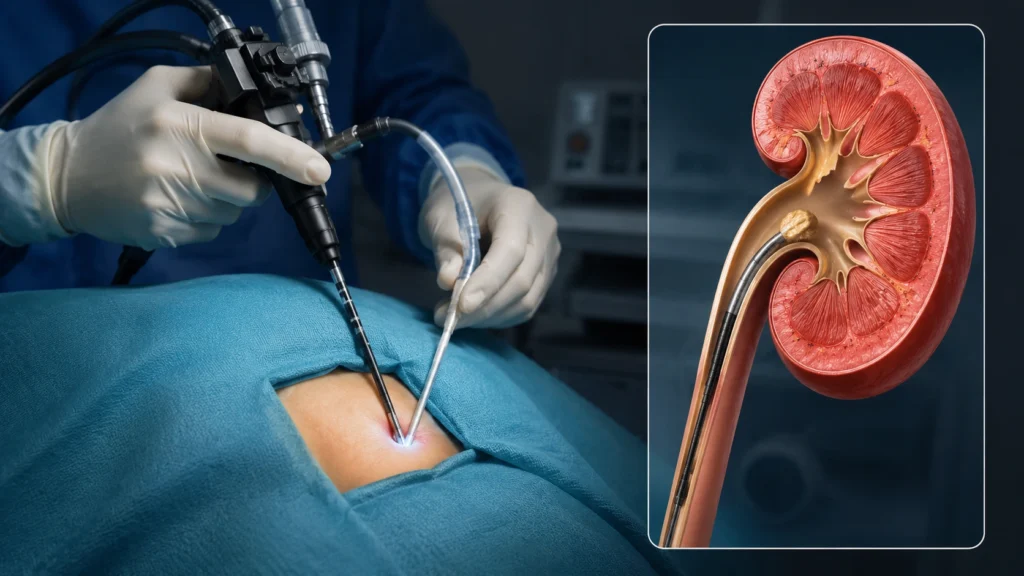
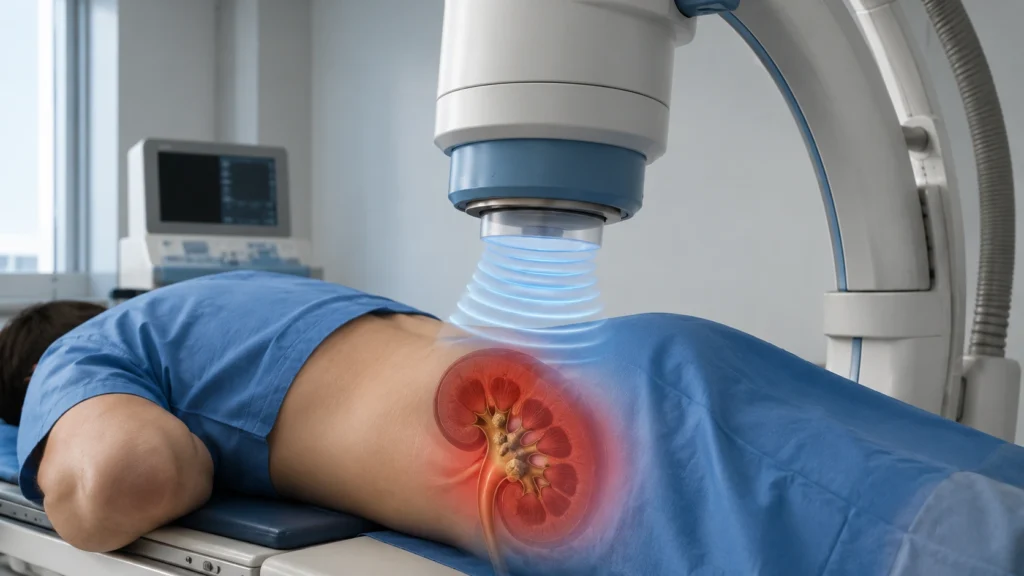
Diabetic nephropathy is the leading cause of kidney disease in patients starting renal replacement therapy and affects ∼40% of type 1 and type 2 diabetic patients.
Diabetic nephropathy should be considered in patients who have diabetes mellitus (DM) and a history of one or more.
Diabetes-related nephropathy is a progressive condition that affects your kidneys. Diabetes causes it.
No rows found.