Most stomach pain is not an emergency. Gas, indigestion, constipation, food poisoning and other digestive problems can all cause abdominal discomfort. But sometimes, what feels like an ordinary stomach ache can be the beginning of something that needs medical attention quickly.
Appendicitis is one such condition.
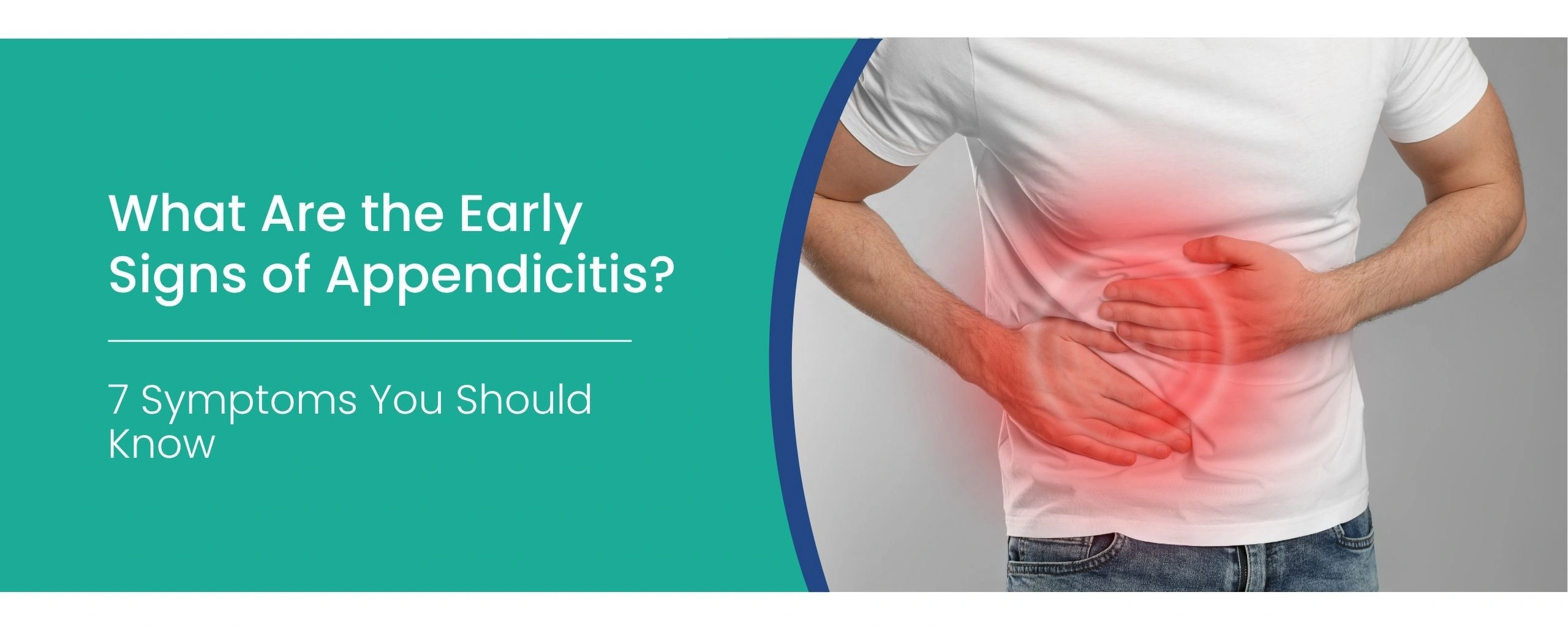
It happens when the appendix, a small pouch attached to the large intestine, becomes inflamed and infected. The symptoms do not always appear all at once. In many people, the pain starts around the belly button and gradually moves toward the lower right side of the abdomen. As the inflammation increases, the pain can become more constant and severe.
Knowing the early signs of appendicitis can help you recognise when abdominal pain may be more than a digestive problem. Early evaluation is important because an untreated appendix can rupture and cause a serious infection inside the abdomen.
What Is Appendicitis?
Appendicitis is inflammation of the appendix. The appendix is a small, finger-shaped pouch connected to the large intestine and located in the lower right part of the abdomen.
Appendicitis often develops when the opening of the appendix becomes blocked. This can allow bacteria to multiply inside the appendix, leading to swelling, inflammation and infection.
Although appendicitis can happen at any age, it is particularly common in children, teenagers and young adults. However, adults can develop it too, and symptoms may not always follow the classic pattern.
Why should you take appendicitis symptoms seriously?
The appendix can become increasingly swollen as inflammation progresses. If it ruptures, infection can spread throughout the abdominal cavity and cause complications such as peritonitis or an abscess.
That is why persistent or worsening abdominal pain should not simply be ignored or treated as gas without medical evaluation.
7 Early Signs of Appendicitis You Should Know
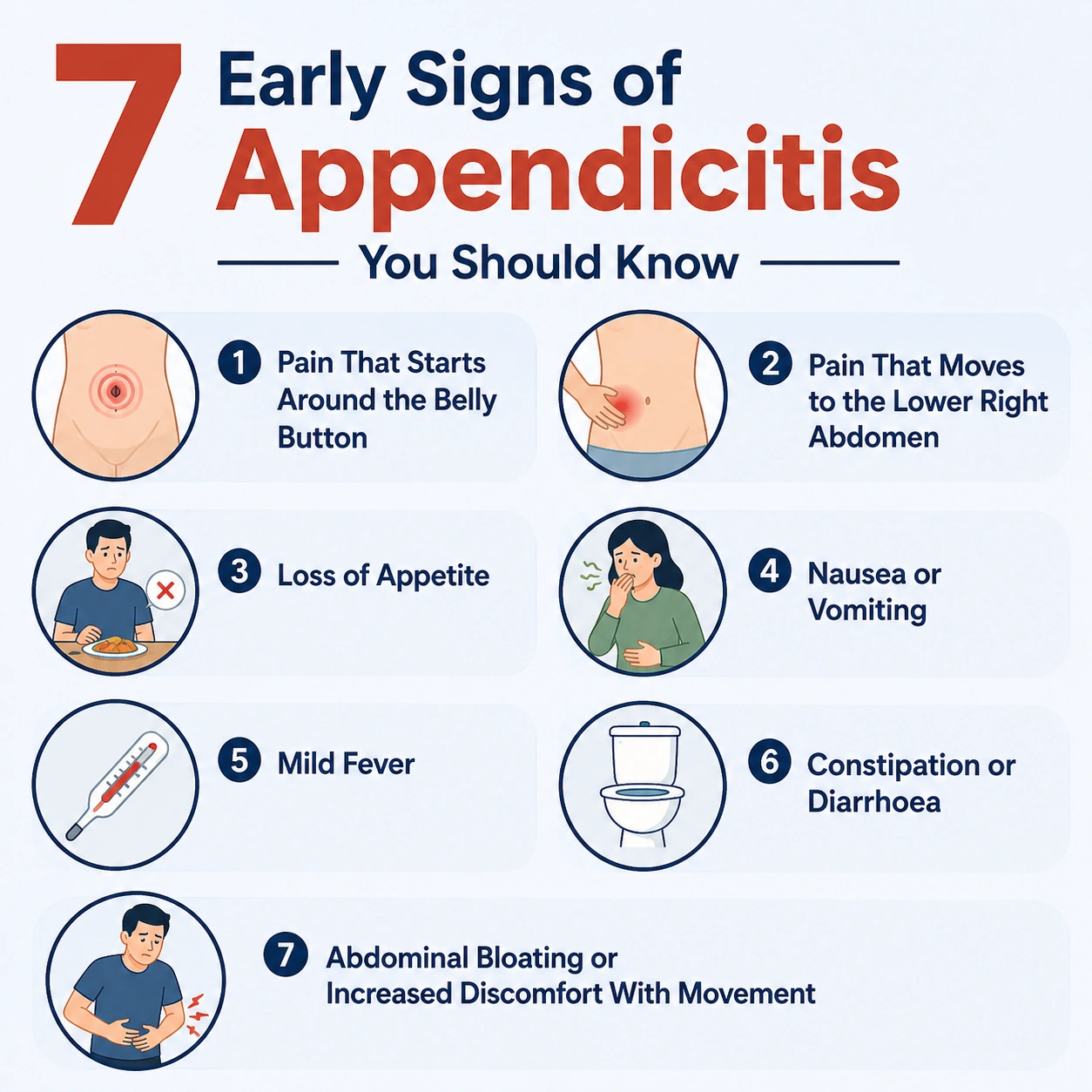
The symptoms of appendicitis can vary from person to person. Some people develop the classic pattern, while others may have less typical symptoms.
Here are seven signs worth knowing.
1. Pain That Starts Around the Belly Button
One of the earliest and most characteristic signs of appendicitis is abdominal pain.
For many people, the pain starts around the belly button. It may initially feel like a dull ache, cramping or discomfort that comes and goes. Over the next several hours, the pain may become more noticeable and begin moving toward the lower right side of the abdomen.
This change in location is important because appendicitis pain often becomes more focused as the inflammation progresses.
You may notice that the pain:
- Becomes increasingly constant
- Gets worse over several hours
- Feels different from your usual stomach pain
- Becomes more noticeable when you walk or move
Not everyone experiences pain in exactly the same location. The position of the appendix can vary, and this can affect where the pain is felt.
2. Pain That Moves to the Lower Right Abdomen
As appendicitis progresses, pain often moves from around the belly button to the lower right side of the abdomen.
This is one of the most important early signs of appendicitis to recognise.
The pain may become sharper, stronger and more constant. Walking, coughing or other movements that jolt the abdomen may make it worse.
However, do not wait for the pain to reach the lower right side before seeking help. Some people, particularly young children, older adults and pregnant women, may not have the typical pattern.
3. Loss of Appetite
Suddenly losing interest in food can also occur with appendicitis.
You may feel hungry much less often than usual or simply have no desire to eat. This symptom commonly occurs along with abdominal pain and nausea.
Loss of appetite alone does not mean you have appendicitis. But when it appears together with worsening abdominal pain, nausea or fever, it deserves attention.
4. Nausea or Vomiting
Feeling sick or vomiting can occur after abdominal pain begins.
Some people may experience nausea without vomiting, while others may vomit once or several times. Nausea and vomiting are common symptoms of appendicitis, but they can also occur with food poisoning, stomach infections and other digestive problems.
The combination matters.
If nausea or vomiting occurs alongside persistent abdominal pain, particularly pain that is becoming stronger or moving toward the lower right abdomen, medical assessment is important.
5. Mild Fever
A low-grade fever can develop as the body responds to inflammation and infection.
You may also feel generally unwell, tired or uncomfortable. In some cases, the fever can become higher as the condition progresses.
A fever does not automatically mean appendicitis. Many infections can cause fever. But when fever appears with worsening abdominal pain, nausea or loss of appetite, it is a reason to seek medical advice.
6. Constipation or Diarrhoea
Appendicitis does not always look like a typical abdominal emergency.
Some people experience constipation, while others may develop diarrhoea. You may also notice changes in your bowel movements or difficulty passing gas.
This can make appendicitis easy to confuse with a stomach infection or another digestive condition.
If bowel changes occur together with persistent or worsening abdominal pain, do not assume it is simply indigestion or a stomach bug.
7. Abdominal Bloating or Increased Discomfort With Movement
Some people with appendicitis experience abdominal bloating or a feeling of fullness. Gas can also occur.
Another useful clue is that abdominal discomfort may become worse when you walk, cough or make sudden movements. This happens because movement can irritate the inflamed area.
The symptoms can be subtle at first, which is why changes over time are important.
What are the symptoms of appendix?
| Symptom | What you may notice | Why it matters |
| Abdominal pain | Pain may begin around the belly button and move toward the lower right abdomen | Often the most important symptom |
| Loss of appetite | Little or no desire to eat | Commonly occurs with abdominal pain and nausea |
| Nausea or vomiting | Feeling sick or vomiting | Can occur as inflammation progresses |
| Fever | Usually mild at first | May indicate an inflammatory or infectious process |
| Constipation or diarrhoea | Changes in bowel movements | Can make appendicitis look like a digestive illness |
| Bloating or gas | Feeling full or swollen | Can occur along with other abdominal symptoms |
| Pain with movement | Pain may worsen while walking or coughing | Can occur as inflammation irritates surrounding tissues |
How Is Appendicitis Different From Ordinary Stomach Pain?
This is one of the most common questions people have when abdominal pain starts.
There is no reliable way to diagnose appendicitis based on symptoms alone. Gas, constipation, stomach infections, urinary problems, kidney stones and several other conditions can cause similar symptoms.
However, the pattern of pain can provide an important clue.
| Feature | Possible appendicitis | More typical digestive discomfort |
| Pain pattern | Often becomes more constant and intense | May come and go |
| Location | May begin around the belly button and move to the lower right abdomen | Can occur across different areas |
| Movement | Walking or coughing may make pain worse | Movement may not significantly affect it |
| Appetite | Often reduced | May return as discomfort improves |
| Nausea/vomiting | Can occur alongside abdominal pain | Can occur, depending on the cause |
| Fever | May develop | Less typical with simple gas or indigestion |
| Progression | Often worsens over hours | May improve after passing gas or a bowel movement |
When Should You See a Doctor for Abdominal Pain?
You should not wait several days if abdominal pain is getting worse. Severe abdominal pain requires urgent medical attention.
Seek prompt medical evaluation if you have:
- Pain that gradually becomes stronger
- Pain that moves toward the lower right abdomen
- Persistent abdominal pain with nausea or vomiting
- Abdominal pain accompanied by fever
- Severe or sudden abdominal pain
- Significant tenderness when the abdomen is touched
- Symptoms that are getting worse rather than better
What if the pain suddenly gets better?
Do not assume the problem has been resolved.
If a ruptured appendix temporarily relieves pain, the infection can continue spreading inside the abdomen. A burst appendix can lead to peritonitis, abscess formation and other serious complications.
Sudden severe abdominal pain or pain that spreads throughout the abdomen should be treated as an emergency.
How Is Appendicitis Diagnosed?
There is no single test that can diagnose every case of appendicitis.
A doctor will usually begin by asking about your symptoms and when they started. A physical examination may then be performed to check for tenderness and other signs of inflammation.
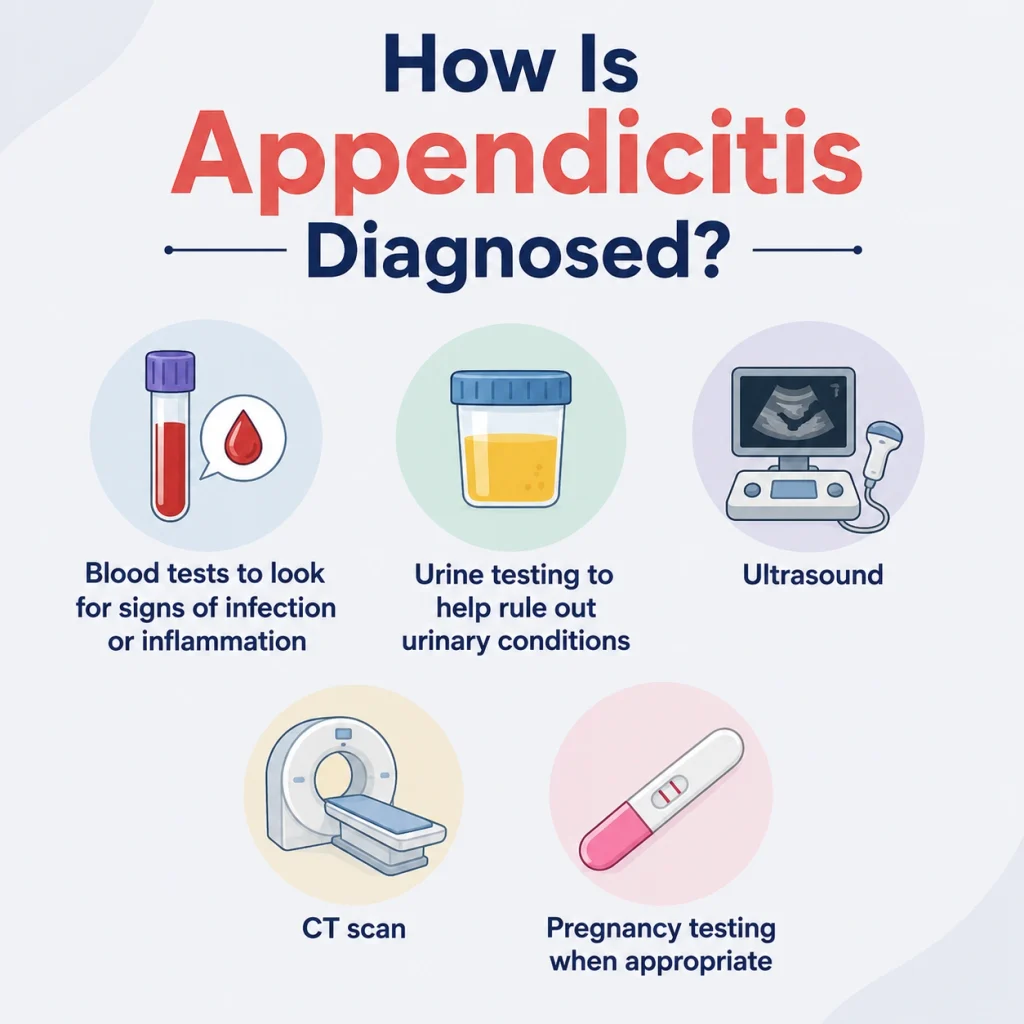
Depending on the situation, tests may include:
- Blood tests to look for signs of infection or inflammation
- Urine testing to help rule out urinary conditions
- Ultrasound
- CT scan
- Pregnancy testing when appropriate
Ultrasound may be particularly useful in children and during pregnancy, while CT scans can provide detailed images of the appendix and surrounding structures.
Because several conditions can resemble appendicitis, doctors consider the complete clinical picture rather than relying on one symptom or test.
How Is Appendicitis Treated?
Treatment depends on the severity of the condition and the individual patient’s situation.
In many cases, appendicitis is treated by removing the appendix through a procedure called an appendectomy. Antibiotics are also commonly used, particularly when infection is present.
Laparoscopic appendectomy
Laparoscopic surgery uses small abdominal incisions and a camera to help the surgeon remove the appendix. It is commonly used when appropriate.
Open appendectomy
In some situations, the appendix may need to be removed through a larger incision. This may be necessary depending on the condition of the appendix and the presence of complications.
Can appendicitis be treated without surgery?
In selected cases, antibiotics may be considered instead of immediate surgery, particularly when the infection is uncomplicated or surgery carries additional risks. However, this decision must be made by a qualified doctor after proper evaluation.
If the appendix has ruptured or an abscess has developed, treatment can be more complex and may involve antibiotics, drainage and surgery depending on the circumstances.
How to prevent appendix?
There is no guaranteed way to prevent appendicitis.
Because the exact cause is not always clear, there is no specific diet or lifestyle change that can reliably prevent it.
What you can do is pay attention to symptoms.
Persistent abdominal pain should not be repeatedly dismissed as gas or indigestion, particularly when it is getting worse or is accompanied by fever, nausea, vomiting, or loss of appetite, as these symptoms may require timely appendicitis treatment in Noida.
Early medical evaluation can help doctors identify appendicitis before complications develop.
Frequently Asked Questions (FAQs)
1. What is usually the first sign of appendicitis?
Abdominal pain is often the first symptom. It may begin around the belly button and later move toward the lower right side of the abdomen as inflammation increases.
2. Can appendicitis feel like gas or indigestion?
Yes. Early appendicitis can initially feel like general abdominal discomfort, cramping or indigestion. Persistent or worsening pain, especially with nausea, fever or loss of appetite, needs medical evaluation.
3. Can you have appendicitis without a fever?
Yes. Fever is a common symptom, but it does not occur in every person with appendicitis. The absence of fever does not rule out appendicitis, particularly during the early stages.
4. Can appendicitis go away on its own?
Appendicitis should not be assumed to resolve on its own. Without appropriate treatment, inflammation can progress and the appendix may rupture, potentially causing serious abdominal infection.
5. When should I go to the hospital for suspected appendicitis?
Seek urgent medical care if abdominal pain is severe, persistent or worsening, particularly if it moves to the lower right abdomen or occurs with vomiting, fever or significant tenderness. Severe or rapidly worsening abdominal pain requires immediate evaluation.
Conclusion
The early signs of appendicitis can look surprisingly similar to an ordinary stomach problem. But pain that becomes progressively worse, moves toward the lower right abdomen, or occurs with nausea, vomiting, fever or loss of appetite should not be ignored.
You do not need to wait until the pain becomes unbearable before seeking help. If appendicitis is suspected, early medical assessment at the best hospital for appendix in Noida can help prevent complications and determine the right treatment.
If you are experiencing persistent or worsening abdominal pain, consult a doctor promptly rather than attempting to self-diagnose.