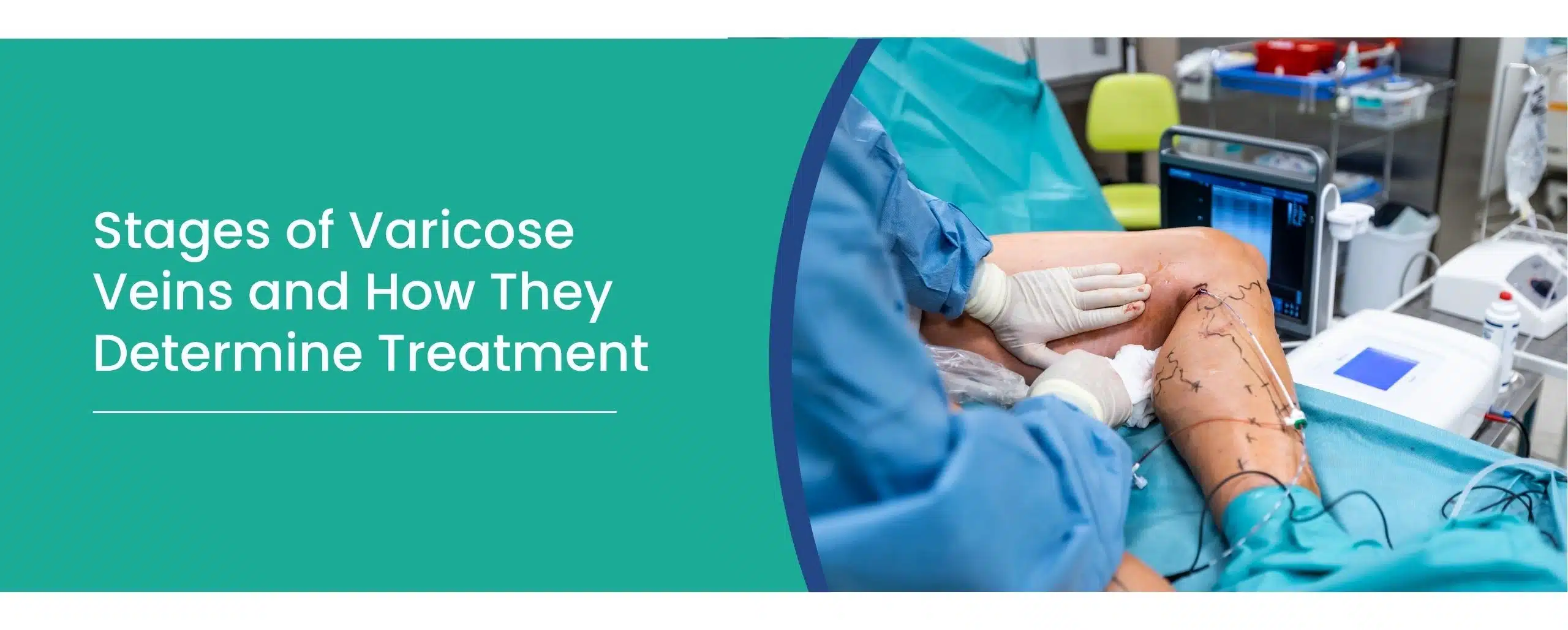
Most people ignore varicose veins until they can’t anymore.
What starts as a faint blue line on your calf can quietly progress into skin ulcers, chronic pain, and permanent vein damage. The problem is not the visible vein itself. The problem is what’s happening beneath the surface, in the venous valves that have stopped working the way they should.
Understanding the stages of varicose veins is not just a medical exercise. It is the difference between a simple clinic procedure and a complex surgical intervention. It determines how quickly you need to act and what your treatment options look like.
This blog breaks down every stage clearly, from the first barely-visible sign to the final, most severe form of chronic venous disease.
What are varicose veins?
Before getting into the stages of varicose veins, let us understand the root cause.
Your leg veins carry blood upward toward the heart. To stop blood from falling back with gravity, tiny one-way valves open and close with each heartbeat. When these valves weaken or fail, blood pools in the vein. The vein swells, twists, and becomes visible under the skin. That is a varicose vein.
Key facts:
- Affects approximately 23% of adults globally.
- More common in women, but increasingly seen in men.
- Worsens progressively if untreated.
- Sedentary lifestyle, prolonged standing, and obesity are major Indian risk factors.
The stages of varicose veins are officially classified using the CEAP classification system, which stands for Clinical, Etiological, Anatomical, and Pathophysiological. This is the global standard used by vascular surgeons, including specialists at the best hospital in Noida.
Stage-by-stage breakdown: what you need to know
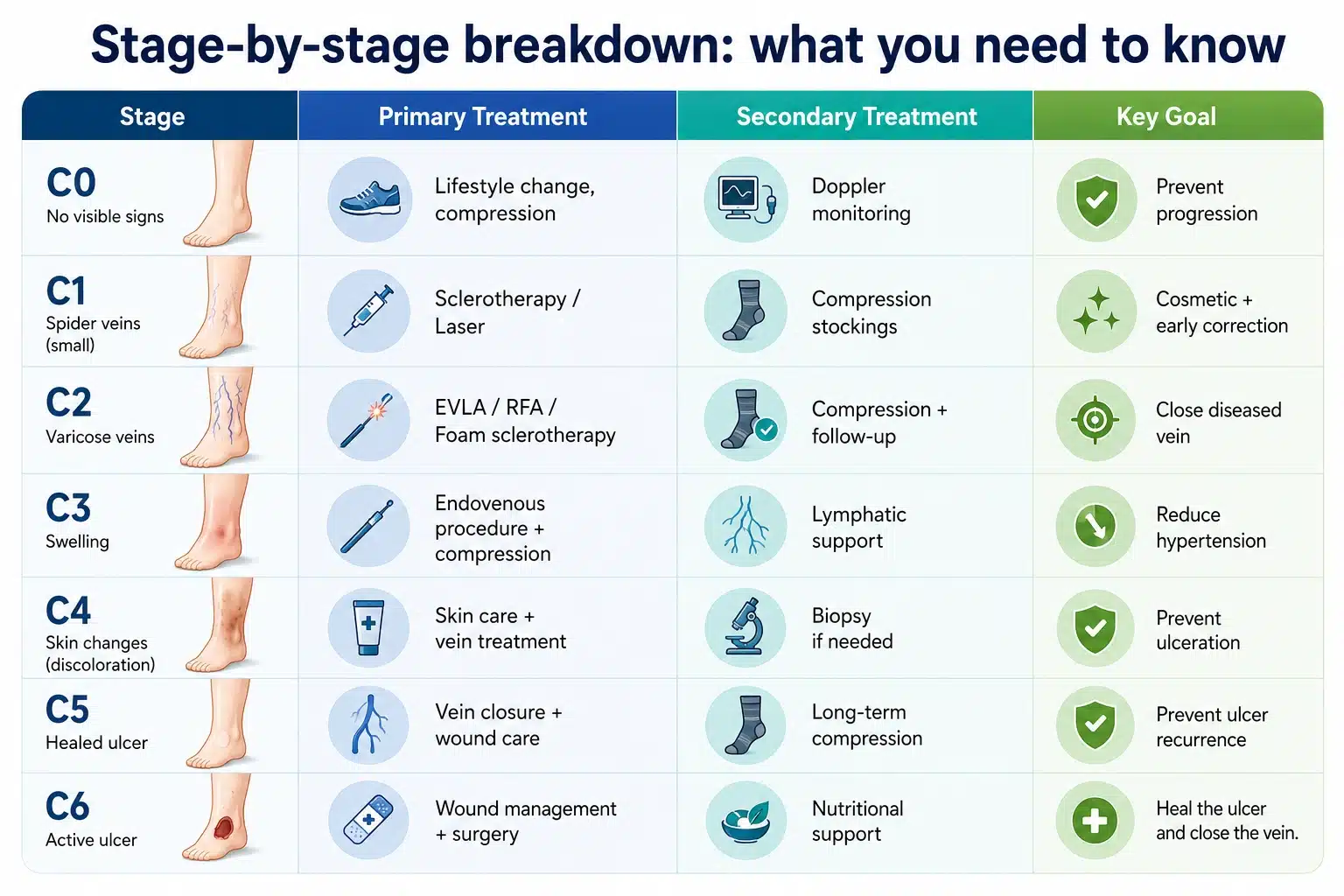
Every stage demands a different strategy. This is why a self-diagnosis based on Google is not enough. Your varicose vein severity grade needs to be confirmed by a Doppler ultrasound and evaluated by a qualified vascular surgeon in Noida.
Who is at risk? key risk factors for indian patients
The stages of varicose veins progress faster in patients with multiple risk factors. Indian populations face a unique combination of lifestyle, dietary, and occupational triggers.
High-risk groups:
- People who stand for long hours (teachers, security personnel, factory workers, surgeons).
- Those who sit for prolonged periods (IT professionals, desk workers).
- Women who have had one or more pregnancies.
- Individuals with a direct family history of varicose veins.
- Overweight or obese individuals.
- Patients with a history of deep vein thrombosis (DVT).
- Smokers.
Accelerating factors specific to Indian patients:
- Low dietary fibre intake leading to chronic constipation (increases abdominal pressure).
- Squatting postures used in Indian toilets (can worsen reflux).
- Heat and humidity worsening vein dilation in summer months.
- Delayed medical consultation due to social stigma around leg-related conditions.
When should you see a doctor?
Do not wait for a visible ulcer before seeking help. The stages of varicose veins are manageable at every level, but outcomes improve dramatically with early intervention.
If you are in Noida or the NCR region, the best hospital in Noida for varicose vein care is Rama Hospital, which offers advanced diagnostic and treatment facilities under one roof.
See a doctor if you notice any of the following:
- Persistent leg heaviness or fatigue beyond three weeks.
- Visible veins that are raised, twisted, or bulging.
- Ankle swelling that does not resolve overnight.
- Skin discoloration or darkening near the ankles.
- Itching or dryness along the vein.
- A wound on the lower leg that is slow to heal.
- Sudden pain or hardness along a vein (possible thrombophlebitis).
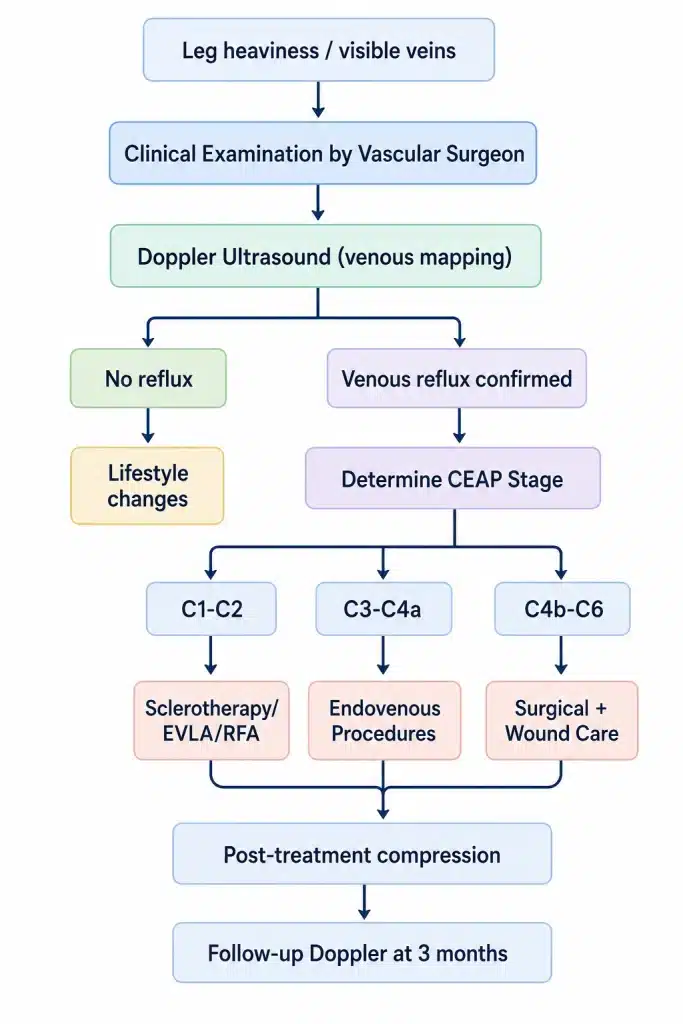
Flowchart: from symptom to treatment
Why early diagnosis matters: the cost of waiting
Patients who arrive at Rama Hospital with advanced stages of varicose veins (C5 or C6) almost always share one thing in common: they waited too long.
The stages of varicose veins do not plateau. They progress. Every month without treatment is a month the condition advances.
Here is what delayed diagnosis costs:
- More complex surgery.
- Longer recovery.
- Higher financial burden.
- Quality of life impact.
Frequently Asked Questions (FAQs)
Q1. My veins are visible, but I have no pain. Do I still need treatment?
Yes. Pain is not the only indicator of disease severity. Many patients with C2 or even C3 of the stages of varicose veins report no significant pain initially.
Q2. Can varicose veins go away on their own without treatment?
No. The stages of varicose veins progress over time. Lifestyle changes such as compression stockings, exercise, and elevation can slow progression and relieve symptoms, but they do not reverse venous valve damage.
Q3. I am pregnant and have varicose veins. Is this dangerous?
Pregnancy is one of the most common triggers for varicose veins due to hormonal changes and increased abdominal pressure. Consult the best vascular surgeon in Noida for personalized advice.
Q4. My doctor says I need surgery. Are there non-surgical options?
For most early to mid-stages of varicose veins (C1 to C3), minimally invasive endovenous procedures like EVLA or RFA are highly effective and avoid open surgery entirely.
Q5. How do I know which stage I am at?
You cannot self-stage accurately. At Rama Hospital, the best hospital in Noida for vascular care, the diagnostic workup for all stages of varicose veins is available under one roof.
Q6. Will varicose veins come back after treatment?
Recurrence is possible, especially if underlying risk factors are not addressed. Ask your vascular surgeon in Noida about the recurrence rates specific to your stage and anatomy.
Q7. I have a dark patch near my ankle. Is it serious?
Yes, this warrants immediate evaluation. Dark pigmentation near the ankle is a feature of C4 in the stages of varicose veins and indicates hemosiderin deposition from chronically leaking venous blood.
Q8. Is varicose vein treatment covered by insurance in India?
In most cases, yes. When varicose veins are symptomatic (pain, swelling, skin changes), the treatment is considered medically necessary and covered under most health insurance policies. Purely cosmetic procedures may not be covered. Confirm with your insurer and the billing team at Rama Hospital before your appointment.
Conclusion
The stages of varicose veins are a roadmap. They tell you where you are today, how serious the situation is, and exactly what needs to happen next.
If you are at C0 or C1, small changes today prevent big problems tomorrow. If you are at C2 or C3, minimally invasive treatment can restore your legs to full function quickly. If you are at C4, C5, or C6, every week matters.
Do not let a treatable condition turn into a chronic wound.
Rama Hospital in Noida brings together the best vascular surgeon in Noida and the best hospital in Noida, advanced imaging, and all modalities of varicose vein treatment under one roof. Whether you are at the earliest stages of varicose veins or managing a complex active ulcer, the team is equipped to guide you at every step.