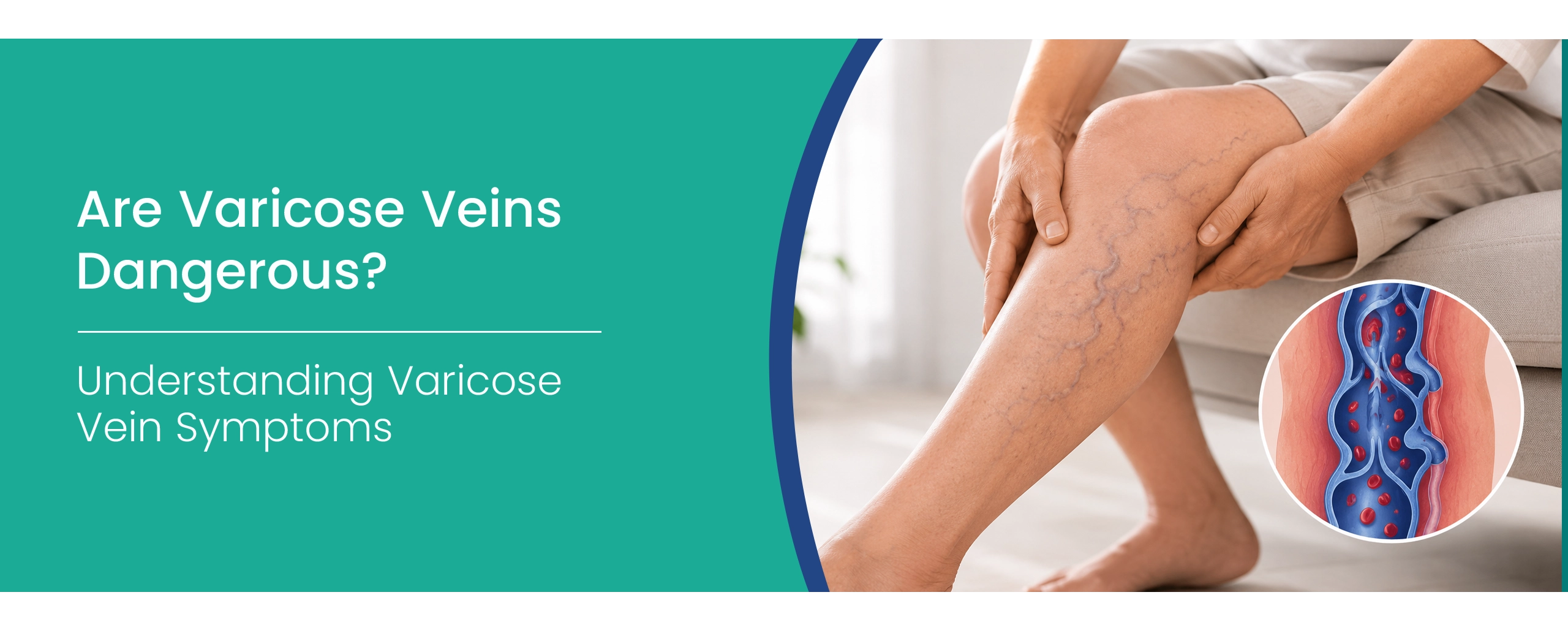
You notice them one day, twisted, bluish-purple veins running along your calves. Maybe your legs feel heavy by evening. Maybe you’ve been ignoring the aching for months, telling yourself it’s just tiredness from standing too long.
But here’s the question that keeps coming back: Are varicose veins actually dangerous?
The honest answer is, it depends on where you are in the condition. For most people, varicose vein symptoms start mild and manageable. But left untreated, they can quietly progress into something far more serious.
What are varicose veins?
Varicose veins are not just a cosmetic problem. They are a sign of venous valve dysfunction, meaning the one-way valves inside your leg veins have weakened or stopped working properly.
This is the beginning of chronic venous disease, a condition that affects millions of Indians, especially those who stand or sit for long hours at work.
The problem isn’t always what you see on the surface. The real risk is what’s happening underneath.
Here’s what happens inside your body:
- Healthy veins push blood upward, back toward the heart.
- When valves weaken, blood flows backward and begins pooling in veins.
- This pooling increases pressure inside the vein walls.
- Over time, veins stretch, bulge, and become visible under the skin.
Early varicose vein symptoms: don’t ignore these
Most people dismiss early varicose vein symptoms as general tiredness or aging. That delay is exactly where the damage begins.
These early varicose vein symptoms are your body sending a clear signal. Poor blood circulation in the legs is already underway. The veins are under stress.
At this stage, the condition is absolutely treatable, and the sooner you act, the better the outcome.
Watch for these early signs:
- Leg heaviness: A persistent feeling of weight in the lower legs, especially after standing or sitting for hours.
- Aching legs: A dull, throbbing ache that gets worse toward evening.
- Leg fatigue: Legs that feel tired even without physical exertion.
- Visible twisted veins: Blue or purple rope-like veins visible just under the skin surface.
- Mild leg swelling: Slight puffiness around the ankles and calves, especially by the end of day.
- Itching or burning sensation: Around the area of the visible veins.
- Restless legs at night: An uncomfortable urge to keep moving your legs while trying to sleep.
Varicose veins stages: how the condition progresses
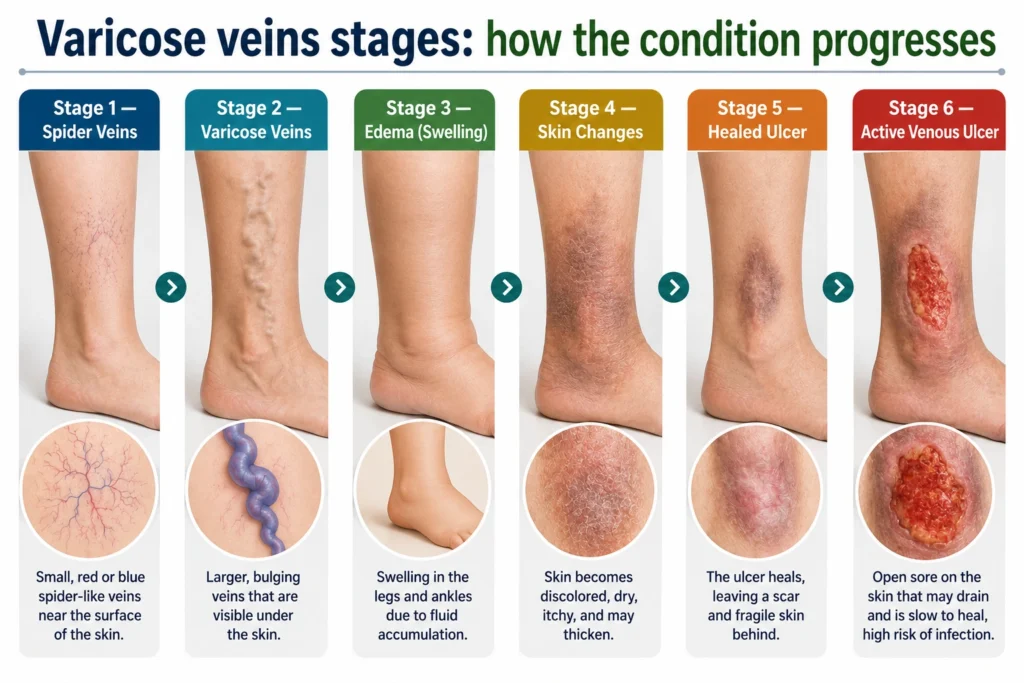
Understanding varicose vein stages helps you see exactly where you stand and why timing matters.
Stage 1 — Spider Veins
Tiny red or purple web-like veins appear near the skin surface. No pain yet. Mostly cosmetic. Easy to dismiss.
Stage 2 — Varicose Veins
Larger, twisted, bulging veins become clearly visible. Leg heaviness, aching legs, and leg fatigue become regular complaints. This is when most people first search for answers.
Stage 3 — Edema (Swelling)
Fluid begins to accumulate in the leg tissue. Ankles swell noticeably by evening. Varicose vein symptoms at this stage affect daily comfort and mobility.
Stage 4 — Skin Changes
The skin around the veins starts to change color. Darkening, hardening, and texture changes appear, signs of leg vein damage from prolonged blood pooling in veins.
Stage 5 — Healed Ulcer
A venous ulcer has formed and healed, but the underlying venous disease remains active. The risk of recurrence is high without proper treatment.
Stage 6 — Active Venous Ulcer
An open, non-healing wound on the lower leg. Painful. Prone to infection. This is the most severe stage of chronic venous disease and requires urgent medical attention.
Advanced varicose vein symptoms: when it gets serious
If early varicose vein symptoms were the warning light on your dashboard, these are the alarm sirens.
At this point, untreated varicose vein symptoms have already caused structural damage to the surrounding skin and tissue. The condition has moved well beyond cosmetic concern into a genuine medical problem.
Advanced symptoms that need medical attention:
- Severe leg pain: Not just discomfort, but sharp, persistent pain that affects walking or sleep.
- Persistent swelling: Swelling that doesn’t reduce even after rest and elevation.
- Skin discoloration: Brown or reddish patches forming around the ankle and lower leg (a sign of vascular health complications).
- Itching around veins: Intense itching over the varicose vein area, often a precursor to ulcer formation.
- Venous ulcers: Open sores near the ankle that don’t heal within a few weeks.
- Bleeding varicose veins: Veins so close to the skin surface that minor trauma causes significant bleeding.
Emergency warning signs: go to a doctor immediately
Certain varicose vein symptoms are not “wait and watch” situations. These require same-day or emergency medical attention.
These are not just varicose vein symptoms complications, they are cardiovascular emergencies. If you’re in Noida or Delhi NCR, Rama Hospital has vascular specialists who handle these cases with urgency.
Do not delay if you experience:
- Sudden leg swelling in one leg: This can indicate a blood clot (Deep Vein Thrombosis or DVT), which is life-threatening if untreated.
- Blood clot symptoms: Warmth, redness, and tenderness deep in the calf or thigh, with or without visible swelling.
- Painful swollen vein: A vein that becomes suddenly hard, red, and extremely tender to touch (Superficial Thrombophlebitis).
- Redness around veins: Spreading redness and warmth, which may indicate infection or clot formation.
- Leg ulcer symptoms: An open wound on the lower leg that shows signs of infection (increasing pain, pus, foul smell, and spreading redness).
- Sudden bleeding from a varicose vein: Apply pressure immediately and go to the nearest hospital.
Are varicose veins dangerous?
Are varicose veins dangerous? Yes, if ignored long enough. Varicose veins are not just about appearance. They are a sign of deeper vascular health complications that deserve proper diagnosis and treatment.
Here’s the reality:
- In early stages, they cause discomfort but not danger.
- In mid-stages, they cause significant quality-of-life issues, pain, swelling, and skin damage.
- In advanced stages, they lead to venous ulcers, chronic wounds, and serious infection risk.
- At any stage, they carry a risk of blood clot symptoms and DVT, which can travel to the lungs and become fatal.
When to worry about varicose veins: A simple checklist
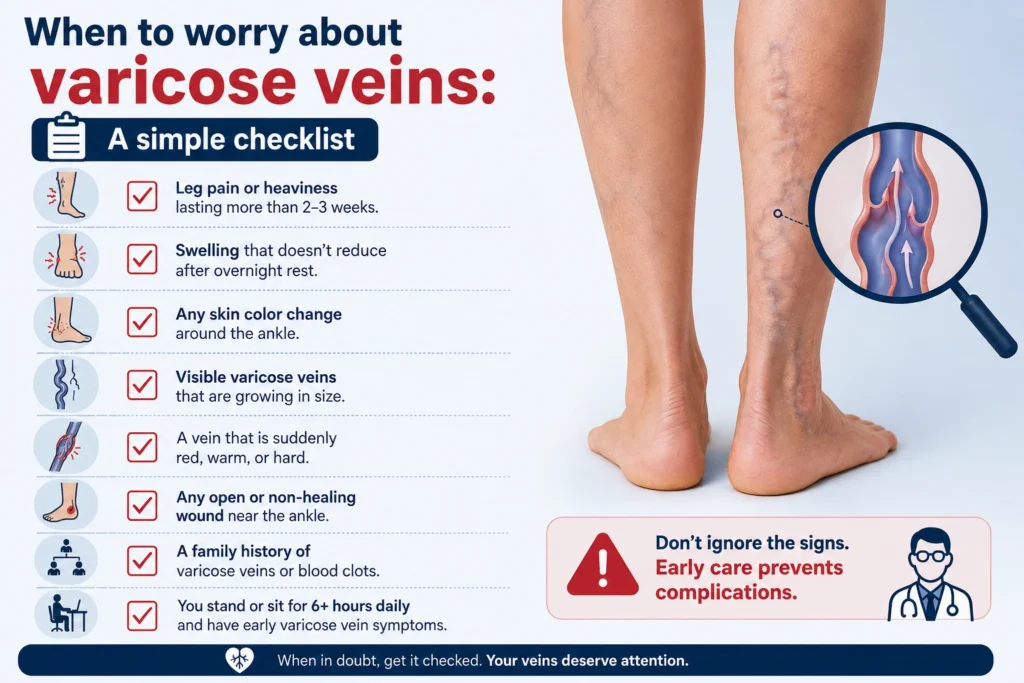
When to worry about varicose vein symptoms is not a complicated calculation. If your legs are telling you something is wrong, trust that message.
- Leg pain or heaviness lasting more than 2–3 weeks.
- Swelling that doesn’t reduce after overnight rest.
- Any skin color change around the ankle.
- Visible varicose veins that are growing in size.
- A vein that is suddenly red, warm, or hard.
- Any open or non-healing wound near the ankle.
- A family history of varicose veins or blood clots.
- You stand or sit for 6+ hours daily and have early varicose vein symptoms.
How to prevent varicose veins?
Understanding how to prevent varicose vein symptoms is about reducing pressure on your venous system over time. Small, consistent changes make a real difference.
If you have early-stage symptoms or risk factors like a family history, sedentary job, or pregnancy, here’s how to slow progression and reduce risk:
Daily habits that protect your veins:
- Move every 45–60 minutes if you sit or stand for long periods. Even a short walk helps.
- Elevate your legs for 15–20 minutes in the evening, above heart level when possible.
- Wear compression stockings; the best stockings for varicose veins are medical-grade Class 1 or Class 2 compression stockings, ideally prescribed by a doctor based on your specific pressure needs.
- Maintain a healthy weight; excess body weight puts significant pressure on leg veins.
- Avoid prolonged crossing of legs while sitting.
- Stay hydrated; dehydration thickens the blood and worsens circulation.
- Exercise regularly; walking, swimming, and cycling are the best options for venous health.
Treatment options: what modern medicine offers
If you’ve been diagnosed with varicose veins or advanced varicose vein symptoms, the good news is that treatment today is minimally invasive, highly effective, and largely painless.
Laser treatment for varicose vein symptoms has transformed outcomes for patients. The recovery is fast, the results are lasting, and the procedure is done under local anesthesia; no general anesthesia is required in most cases.
Current treatment options include:
- Laser treatment for varicose veins (EVLA / EVLT): A thin laser fibre is inserted into the affected vein. Heat closes the vein permanently. No large incisions. Day-care procedure. Return to normal activity within 24–48 hours. One of the most preferred options globally and at Rama Hospital, Noida.
- Radiofrequency Ablation (RFA): Similar to laser, uses radiofrequency energy instead. Equally effective, slightly less post-procedure discomfort for some patients.
- Sclerotherapy: A chemical solution is injected into smaller varicose or spider veins, causing them to collapse and fade. Best for smaller veins and residual vessels after laser treatment.
- Compression therapy: The best stockings for varicose vein symptoms are used alongside treatment to support recovery and prevent recurrence.
- Surgical stripping: Now rarely recommended when laser options are available, but still used in specific complex cases.
Which doctor to consult for varicose veins?
Avoid consulting only a general physician for persistent or advancing varicose vein symptoms. General physicians can refer and advise, but a vascular specialist should confirm diagnosis and decide on treatment.
If you’re searching for a varicose vein specialist near me in Noida or Delhi NCR, Rama Hospital has an experienced vascular team that provides comprehensive diagnosis and laser treatment for varicose vein symptoms with proven outcomes.
Which doctor to consult for varicose veins:
- Vascular Surgeon: The ideal specialist. Trained specifically in diseases of the blood vessels, arteries, and veins.
- Interventional Radiologist: Can perform laser and ablation procedures; works closely with vascular surgeons.
- Phlebologist: A specialist focused purely on vein conditions.
Frequently Asked Questions (FAQs)
Q1. My legs feel heavy and tired every evening. Is this a varicose vein symptom?
Yes, leg heaviness and leg fatigue that worsen through the day, especially after standing or sitting for long hours, are among the earliest and most common varicose vein symptoms. Don’t ignore it. Get a Doppler ultrasound done to assess venous function.
Q2. I can see blue veins on my legs, but there’s no pain. Should I still be concerned?
Visible twisted veins without pain are early-stage varicose veins. The absence of pain doesn’t mean the condition is harmless. Venous valve dysfunction is already happening. Many patients have no pain until Stage 3 or 4. A specialist consultation is still recommended.
Q3. Can varicose veins lead to a blood clot?
Yes. This is one of the most important varicose vein symptoms warning signs to understand. Varicose veins can lead to superficial thrombophlebitis (clot in surface vein) or, more seriously, deep vein thrombosis (DVT). Blood clot symptoms, warmth, redness, deep tenderness in the calf, need immediate attention.
Q4. Is laser treatment for varicose veins painful? How long is the recovery?
Laser treatment for varicose veins (EVLA) is done under local anesthesia and is well-tolerated by most patients. There is minimal discomfort. Most patients walk out of the hospital the same day and return to normal activities within 24–48 hours. It is not the scary surgery most people imagine.
Q5. Which stockings are best for varicose veins?
Medical-grade compression stockings, Class 1 (15–21 mmHg) for mild symptoms and Class 2 (23–32 mmHg) for moderate symptoms, are the best stockings for varicose vein symptoms. Always get the pressure class recommended by your doctor. Over-the-counter fashion compression socks do not provide therapeutic benefit.
Q6. Can varicose veins come back after treatment?
Laser treatment for varicose veins has a very high success rate and low recurrence when combined with lifestyle changes and compression therapy. However, new veins can develop over time, particularly with prolonged standing, weight gain, or subsequent pregnancies. Regular follow-up with your varicose vein specialist helps monitor this.
Q7. Which doctor should I consult for varicose veins in Noida?
A vascular surgeon is the most appropriate specialist. At Rama Hospital, Noida, the vascular team offers complete diagnosis via duplex doppler ultrasound and advanced laser treatment for varicose veins as a day-care procedure. You can search for a varicose vein specialist near me and consult with the team directly.
Q8. I’ve had a dark patch near my ankle for months. Is it related to varicose veins?
Yes, skin discoloration near the ankle is a Stage 4 varicose vein symptom called lipodermatosclerosis. It means blood pooling in veins has been happening for a significant time and is now damaging the skin tissue. This is a serious warning sign. You need to see a vascular specialist without further delay.
Conclusion
Varicose veins don’t shout. They whisper first, with leg heaviness, tired evenings, and a vein you notice in the mirror. Most people silence that whisper for months, sometimes years.
By the time it becomes a shout, pain, swelling, ulcers, and bleeding, the journey back is longer and harder.
The earlier you act on varicose vein symptoms, the simpler the solution.
At Rama Hospital, Best hospital in Noida, patients with varicose veins, from early visible veins to advanced venous ulcers, receive expert diagnosis and laser treatment for varicose veins that is safe, fast, and built around getting you back to your life quickly.
If your legs have been trying to tell you something, now is the right time to listen.
Book a consultation with a varicose vein specialist at Rama Hospital, Noida. Don’t wait for it to get worse.