
Most diabetic patients focus only on one number: blood sugar. Fasting glucose. HbA1c. Post-meal readings.
But here’s what many patients quietly miss. Diabetic kidney disease rarely develops from high sugar alone. High blood pressure plays an equally dangerous, often overlooked role in how fast the kidneys decline.
Doctors treating diabetic kidney disease often notice the same pattern: patients manage sugar diligently but ignore BP completely. That single gap can silently push healthy kidneys toward irreversible damage.
What is diabetic kidney disease?
Diabetic kidney disease is long-term kidney damage caused by prolonged high blood sugar levels. It is also known as diabetic nephropathy, and it remains one of the most common complications among people living with diabetes for many years.
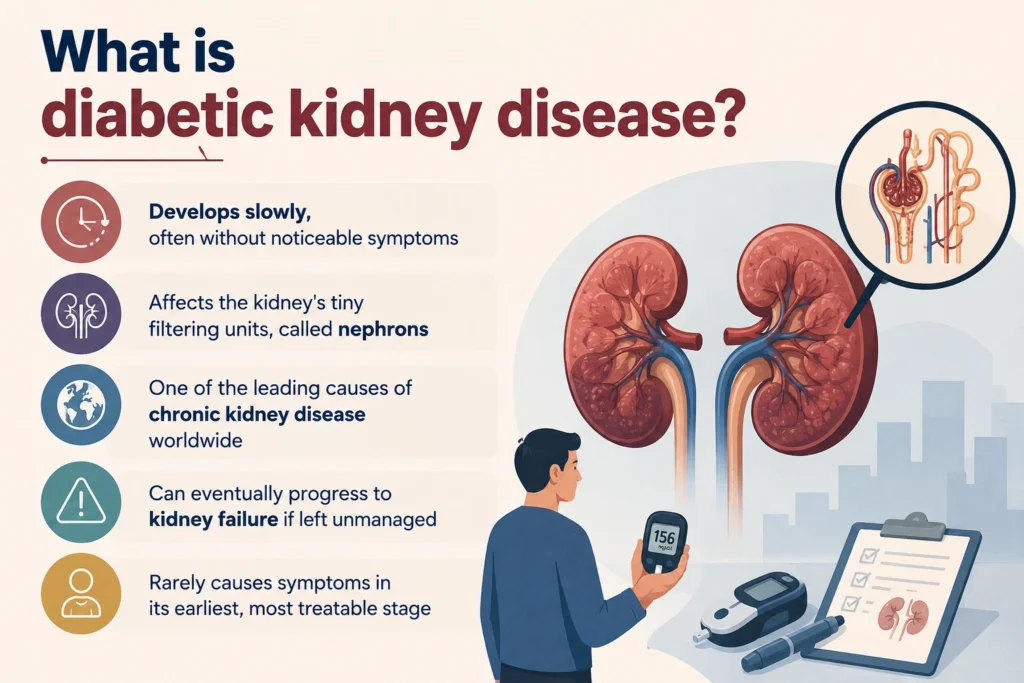
Quick facts worth knowing:
- Develops slowly, often without noticeable symptoms
- Affects the kidney’s tiny filtering units, called nephrons
- One of the leading causes of chronic kidney disease worldwide
- Can eventually progress to kidney failure if left unmanaged
- Rarely causes symptoms in its earliest, most treatable stage
This condition doesn’t announce itself early. Many patients only discover kidney involvement during a routine blood or urine screening, which is exactly why regular testing matters, especially once diabetes has been present for more than five years.
How diabetes damages the kidneys?
Kidneys filter waste from the blood using millions of microscopic blood vessels working continuously, day and night. High sugar levels gradually damage these delicate vessels over time.
This is generally how diabetic kidney disease progresses inside the body:
- Excess sugar thickens and stiffens kidney blood vessel walls.
- Kidney filters slowly become leaky and less efficient.
- Protein starts leaking into urine, a condition called albuminuria.
- Filtration efficiency drops, reflected in eGFR decline.
- Kidney filtration damage gradually becomes permanent.
Doctors explain that this damage rarely happens overnight. A person can feel completely fine for years while internal harm continues building beneath the surface.
This is precisely why diabetic kidney disease earns its reputation as a silent condition. By the time obvious symptoms appear, meaningful, sometimes irreversible damage may have already occurred inside the nephrons.
The connection between high blood pressure and kidney disease
Here’s something many patients simply don’t realize. High blood pressure and kidney disease are deeply intertwined, almost like two sides of the same coin, each one feeding the other.
Why this cycle happens:
- High BP places extra mechanical pressure on kidney blood vessels
- This accelerates high blood pressure kidney damage considerably
- Damaged kidneys struggle to regulate fluid and sodium balance properly
- Poor fluid regulation further raises blood pressure
- A harmful, self-reinforcing cycle begins and continues
This cycle sits at the heart of understanding diabetes and hypertension as a combined threat rather than two isolated conditions.
Research suggests that diabetes and hypertension together cause considerably more kidney damage than either condition would cause alone. This is exactly why nephrologists treat both conditions as one connected risk profile, not as separate, unrelated problems requiring separate attention.
For anyone already living with diabetic nephropathy, ignoring blood pressure essentially means ignoring half of the entire treatment picture.
Why blood pressure control matters as much as sugar control?
Many patients ask a fair question: “Isn’t sugar control enough on its own?”
The honest, evidence-based answer is no.
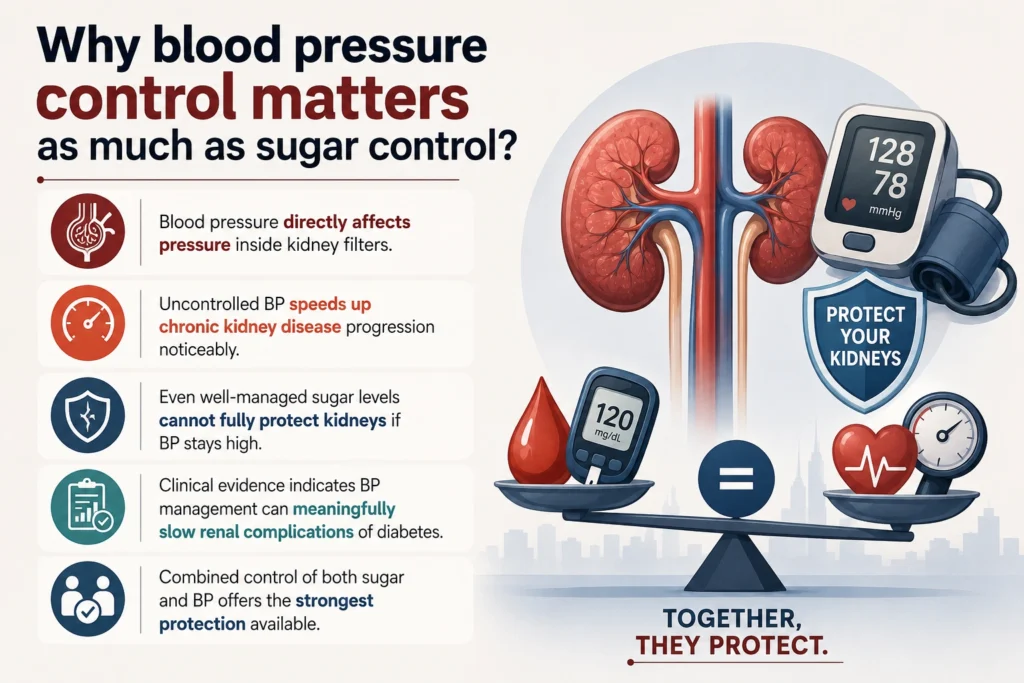
Here’s why blood pressure control in diabetes carries equal weight:
- Blood pressure directly affects pressure inside kidney filters.
- Uncontrolled BP speeds up chronic kidney disease progression noticeably.
- Even well-managed sugar levels cannot fully protect kidneys if BP stays high.
- Clinical evidence indicates BP management can meaningfully slow renal complications of diabetes.
- Combined control of both sugar and BP offers the strongest protection available.
Experts often describe managing diabetic kidney disease as a two-pillar approach. One pillar without the other simply doesn’t hold the structure together.
Ideal blood pressure targets for diabetic kidney disease
Numbers genuinely matter here, more than most patients realize. For most people managing diabetic kidney disease, doctors generally recommend the following:
- Blood pressure maintained below 130/80 mmHg.
- Individualized targets based on age, kidney function, and coexisting conditions.
- Regular home BP monitoring, not just occasional clinic checks.
- Consistent daily tracking alongside sugar readings.
These targets used in managing diabetic kidney disease are never truly one-size-fits-all. A nephrologist typically fine-tunes targets based on eGFR trends, protein-in-urine levels, and a patient’s overall cardiovascular health.
Patients frequently ask about the ideal BP target for this specific condition. While 130/80 mmHg is a commonly cited clinical benchmark, your treating doctor may personalize this figure further based on your latest kidney function reports and risk factors.
It also helps to keep a simple home log: morning and evening BP readings, along with sugar levels, noted in one notebook or app. Bringing this record to every consultation gives your doctor a clearer picture than a single reading taken in a clinic, where anxiety alone can temporarily raise numbers.
Warning signs of worsening kidney disease
Certain signs suggest that kidney involvement may be quietly progressing.
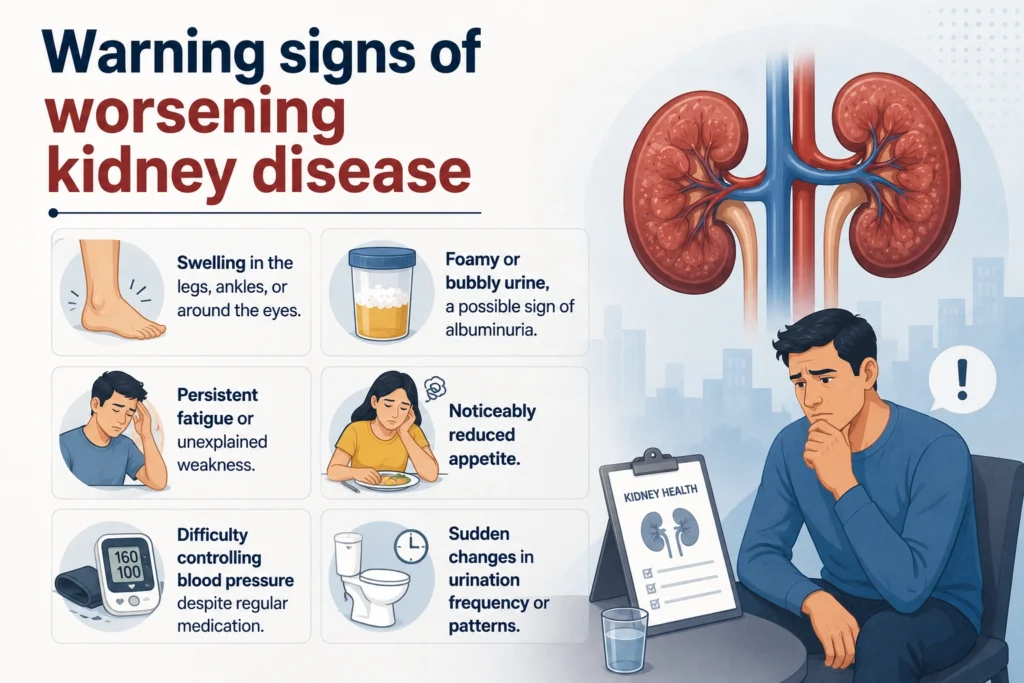
Watch closely for:
- Swelling in the legs, ankles, or around the eyes.
- Foamy or bubbly urine, a possible sign of albuminuria.
- Persistent fatigue or unexplained weakness.
- Noticeably reduced appetite.
- Difficulty controlling blood pressure despite regular medication.
- Sudden changes in urination frequency or patterns.
These symptoms don’t confirm diabetic kidney disease on their own, but they’re strong, legitimate reasons to get properly tested without delay.
Early detection through routine screening remains the single most reliable way to catch kidney involvement before visible symptoms even appear on the surface.
When should you consult a nephrologist?
Not every diabetic patient needs a nephrologist immediately, but certain signs genuinely call for expert evaluation without delay.
Consider consulting a nephrologist for diabetic kidney disease if you notice:
- Protein detected during routine urine tests.
- eGFR readings consistently below the normal range.
- Blood pressure that’s proving genuinely hard to control.
- Diabetes for more than 5–10 years without prior kidney screening.
- Any of the warning signs mentioned earlier in this article.
If you’re actively searching for diabetic kidney disease treatment in Noida, timely consultation with a kidney specialist for diabetes patients can genuinely make a meaningful difference in slowing further progression.
For residents specifically looking for the best nephrologist in Noida, choosing a specialist experienced in both diabetes and hypertension management is genuinely essential.
Patients seeking the best treatment for diabetic kidney disease should ideally look for a best hospital in Noida offering integrated nephrology and diabetology care under one roof, rather than treating each condition in isolation.
Frequently Asked Questions (FAQs)
Can controlling blood pressure prevent kidney failure?
Controlling blood pressure can significantly support kidney failure prevention efforts in patients already dealing with diabetic kidney disease. It may not reverse existing damage, but it often meaningfully reduces the pace of further decline. Keeping blood pressure within the recommended range also reduces stress on the kidney’s delicate blood vessels and filtering units. Regular monitoring and taking prescribed medicines consistently can help protect remaining kidney function and lower the risk of serious complications.
What is the best BP target for diabetic kidney disease?
Most clinical guidelines suggest keeping BP below 130/80 mmHg, though your nephrologist may personalize this target based on your specific kidney function and overall health profile. Keeping blood pressure within the recommended range can reduce stress on the kidneys and help slow further kidney damage. Regular BP monitoring at home and taking prescribed medicines consistently can also help maintain better long-term kidney health.
How often should kidney function be tested in diabetes?
Doctors generally recommend annual screening for most diabetic patients, or more frequent testing once diabetic kidney disease has already been diagnosed. Regular testing can detect early changes in kidney function before noticeable symptoms appear. Early detection also allows doctors to adjust treatment and take steps to slow further kidney damage.
Can diabetic kidney disease be slowed down?
Combined blood pressure control, blood sugar management, and consistent lifestyle changes can meaningfully slow disease progression in many patients over time. Regular kidney check-ups can also help detect changes early, when treatment may be more effective. Taking prescribed medicines consistently and following medical advice can further help protect kidney function and reduce the risk of complications.
Is protein in urine a sign of kidney damage?
Protein in urine, known clinically as albuminuria, is often one of the earliest available indicators of kidney damage and should always be evaluated promptly by a doctor. It may not cause noticeable symptoms in the beginning, so routine urine testing can help detect kidney problems early. Identifying the underlying cause and starting appropriate treatment can help protect kidney function and reduce the risk of further damage.
What foods help protect kidneys in diabetes?
A low-sodium, appropriately controlled-protein diet featuring fresh vegetables and whole grains is generally recommended to support long-term kidney health in patients managing this condition. Choosing fresh, minimally processed foods can also help reduce excess sodium and phosphorus intake. It is important to personalize protein and fluid intake according to kidney function and your doctor’s advice.
Conclusion
Diabetic kidney disease isn’t caused by high sugar alone.
Blood pressure plays an equally powerful, often underestimated role in determining how quickly the condition progresses.
The key takeaway is refreshingly simple: managing this condition effectively means treating BP and sugar together, consistently, rather than addressing them as separate, unrelated concerns in best hospital in Noida.
If you notice swelling, foamy urine, persistent fatigue, or difficulty controlling blood pressure, don’t brush it aside. Early evaluation genuinely leads to better long-term kidney outcomes for most patients.