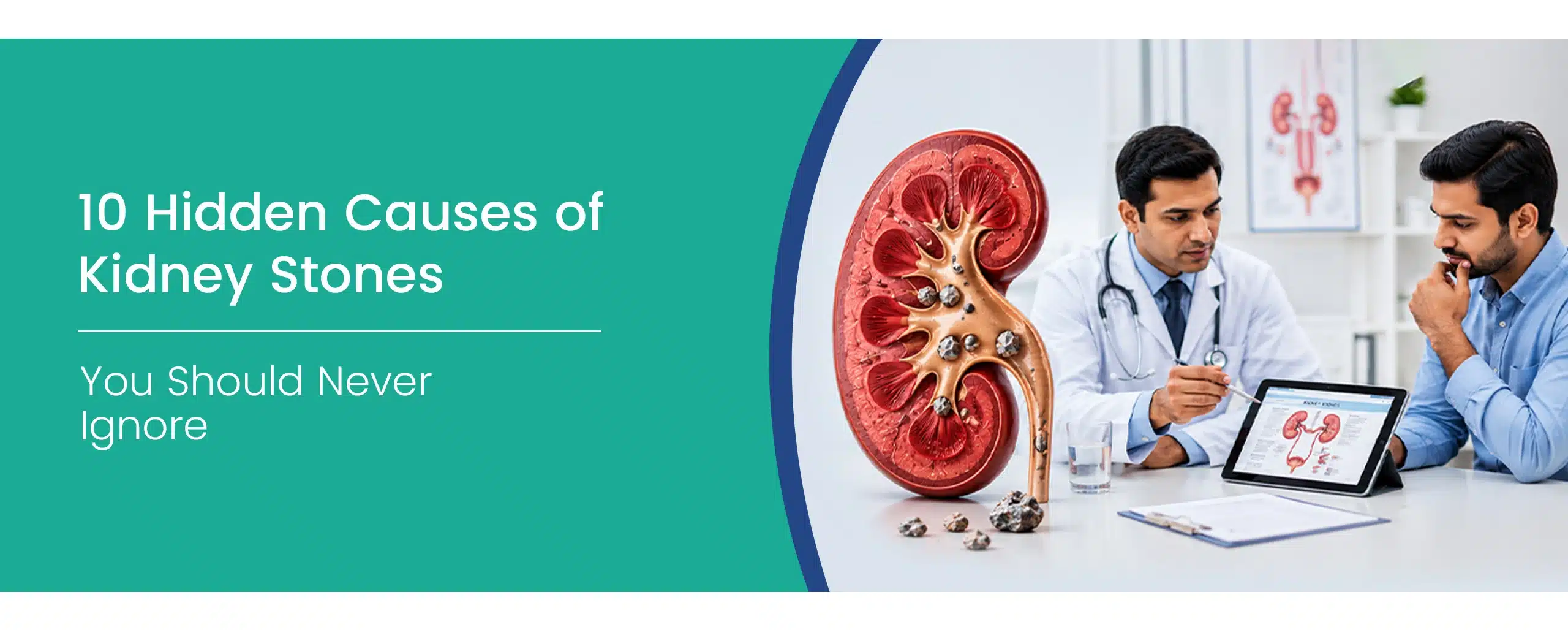
Kidney stones are one of the most painful and commonly occurring urological conditions affecting millions of Indians every year. Yet despite how widespread kidney stones are, most people do not know what truly triggers them until they experience that sharp, unbearable pain in the back or lower abdomen for the very first time.
Kidney stones are caused by a build-up of dissolved minerals and salts inside the kidneys, which over time harden into small, pebble-like deposits. These can vary in size from a grain of sand to a small marble, and they can lodge in the urinary tract, causing immense pain, blood in urine, and difficulty urinating.
Kidney stones form when the concentration of certain substances such as calcium, oxalate, uric acid, or phosphate in the urine becomes so high that they can no longer stay dissolved and begin to crystallize.
What are kidney stones?
Before diving into the causes of kidney stones, it helps to understand what kidney stones actually are. Medically known as renal calculi or nephrolithiasis, they are hard deposits that form inside one or both kidneys. Common causes of kidney stones include poor diet, low water intake, metabolic disorders, and certain medical conditions.
There are four main types of kidney stones:
- Calcium oxalate stones: the most common type in India, directly linked to oxalate-rich foods and kidney stones.
- Uric acid stones: common in people with gout or high-protein-diet stones.
- Struvite stones: typically linked to urinary tract infection stones.
- Cystine stones: rare, caused by a genetic disorder.
10 common causes of kidney stones
1. High Salt (Sodium) Intake
One of the most overlooked diet-related causes of kidney stones is eating too much salt. High-salt diets are directly connected; when you consume excess sodium, your kidneys excrete more calcium into the urine. This elevated urinary calcium then combines with oxalate or phosphate to form calcium-imbalance stones.
Packaged snacks, fast food, pickles, papads, and processed meats are major contributors to high-salt diets in Indian diets. Reducing table salt and avoiding ultra-processed foods can significantly lower your kidney stone risk factors.
2. High Protein Diet
High-protein diets are a growing concern in modern India. When the body breaks down animal protein, found in red meat, poultry, eggs, and seafood, it produces uric acid and calcium as by-products. This increases the acidity of urine, which directly promotes the formation of kidney stones, the cause of the uric acid variety.
People following keto diets or high-meat diets without adequate water intake are particularly susceptible to high-protein diets. The main reason for many young men today is this exact combination of high protein and low hydration.
3. Oxalate-Rich Foods
Oxalate-rich foods and kidney stones have a well-documented relationship. Oxalate is a natural compound found in many healthy foods, but when consumed in excess, especially without enough calcium or water, it binds with calcium in the kidneys to form calcium oxalate crystals, one of the most common causes.
Common high-oxalate foods that trigger oxalate-rich foods in Indian diets include the following:
- Spinach (palak)
- Tomatoes
- Nuts, especially peanuts
- Chocolate and cocoa
- Beets (chukandar)
- Tea in large quantities
4. Excess Sugar Intake
Sugar intake and kidney stones are a connection that surprises many patients. High consumption of refined sugar, particularly fructose found in sugary drinks, packaged juices, cold drinks, and sweets, increases the urinary excretion of calcium, oxalate, and uric acid.
Studies show that people who regularly consume fructose-sweetened beverages have a significantly higher risk of kidney stones. Replacing sugary drinks with plain water or coconut water is one of the simplest preventive steps.
5. Regular Junk Food Consumption
Junk food and kidney stones are increasingly linked, especially in urban populations. Most junk food burgers, pizzas, chips, instant noodles, and fried snacks combine a high-salt diet, high sugar intake, high fat, and oxalate-rich food in one meal. This creates a perfect storm of kidney stone risk factors that strains the kidneys over time.
Additionally, junk food risk rises further because these diets crowd out fruits, vegetables with high water content, and other kidney-protective nutrients.
6. Dehydration and Low Water Intake
Dehydration and kidney stones share the most direct relationship of all lifestyle causes. When you do not drink enough water, your urine becomes highly concentrated, meaning less fluid is available to dilute the minerals and salts in your urinary system. These concentrated substances then crystallize, making low water intake stones and dehydration kidney stones among the most preventable kidney stone formation causes.
Low water intake is the single biggest modifiable risk factor for kidney stones in India. The hot climate, physical outdoor work, and a cultural tendency to underestimate thirst all make dehydration and kidney stones extremely common across the country.
7. Sedentary Lifestyle
Sedentary lifestyle and kidney stones are more connected than most people realize. Physical inactivity leads to poor metabolism, weight gain, and higher concentrations of calcium in the blood and urine, all of which raise risk significantly. People who sit for most of the day are at considerably higher risk of developing kidney stones due to a sedentary lifestyle.
Regular walking, yoga, or any form of moderate exercise helps counter the problem by regulating calcium metabolism and keeping the urinary system functioning efficiently.
8. Obesity
Obesity and kidney stones have a clear clinical link. Excess body weight is associated with insulin resistance, which raises urinary calcium and uric acid levels, both major causes. Obese individuals also tend to have more acidic urine, which promotes uric acid stone formation.
Risk factors include a BMI above 30, particularly when combined with a poor diet and sedentary lifestyle. Managing obesity risk through diet and exercise is therefore both a general health goal and a specific kidney stone prevention strategy.
9. Urinary Tract Infections (UTIs)
Urinary tract infection stones, also called struvite stones or infection stones, form as a direct result of bacterial infections in the urinary system. Certain bacteria produce an enzyme called urease, which raises urine pH and promotes the formation of large, branching urinary tract infection stones called staghorn calculi.
Women are more prone to urinary tract infection stones due to their shorter urethra, making recurrent UTIs and, therefore, this type of kidney stone more common. Timely treatment of UTIs is essential not just to relieve symptoms but also to prevent urinary tract infection stones from forming.
10. Metabolic Disorders and High Uric Acid
Key medical causes include the following:
- High uric acid: Gout and hyperuricemia are leading drivers of kidney stones. When uric acid accumulates excessively in the urine, it crystallizes into high uric acid.
- Calcium imbalance stones: Conditions like hyperparathyroidism cause excessive calcium in the urine, forming calcium imbalance stones.
- Metabolic disorders: Crohn’s disease and ulcerative colitis impair fat absorption, leading to higher oxalate levels and increased kidney stone risk factors.
- Type 2 diabetes: Insulin resistance alters how the kidneys process uric acid and calcium, worsening metabolic disorders and kidney stone risk.
- Renal tubular acidosis: A rare condition that leads to calcium-imbalanced stones due to the kidneys’ inability to properly acidify urine.
Who is at risk of kidney stones?
Understanding who is most at risk of kidney stones can help you take preventive action before symptoms appear. Risk factors include:
- Men aged 30–50 are most commonly affected by kidney stones, though women are now increasingly at risk due to changing lifestyles and diets.
- If a close family member has had kidney stones, your risk of developing them is almost doubled.
- Once you have had kidney stones, there is around a 50% chance of recurrence within 5 years.
- Living in hot regions increases the risk of dehydration due to excessive fluid loss through sweating.
- Low water intake leads to kidney stones, especially in people working outdoors or doing physical labor.
- Poor diet, including high-salt diet, high-protein diet, junk food, and oxalate-rich foods, increases risk significantly.
- Conditions like high uric acid, metabolic disorder, obesity, and urinary tract infection are strong internal risk factors.
- A sedentary lifestyle risk increases when lack of physical activity is combined with unhealthy eating habits.
Recognising the symptoms
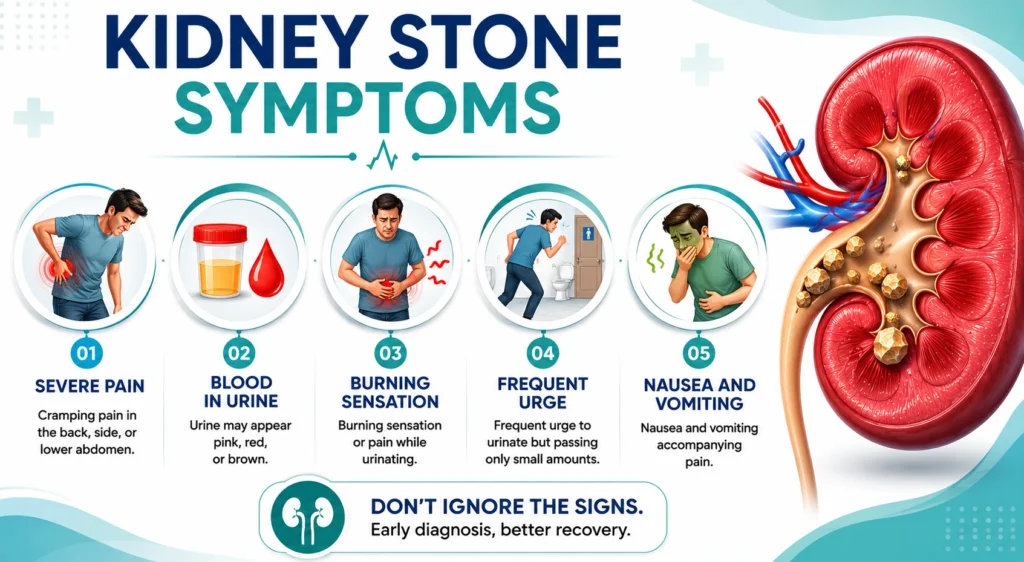
Blood in urine is particularly important to never ignore; it is one of the most direct signals that kidney stones are causing damage or irritation within the urinary tract. Do not delay seeking kidney stone treatment in Noida if this symptom appears.
Kidney stones often remain silent until they begin to move. Warning signs that require urgent medical attention include:
Advanced kidney stone treatment
The Department of Urology at Rama Hospital offers complete diagnosis and management of kidney stones of all stages and severities. Kidney stone treatment in Noida comprises the following options:
- Conservative Management: for small stones (usually under 5 mm), where increased hydration and medications help them pass naturally.
- Medication: alpha-blockers and pain management medications to ease passage.
- Laser Kidney Stone Removal in Noida (URSL/RIRS): Our best urologist in Noida performs laser kidney stone removal in Noida using cutting-edge ureteroscopic techniques. A thin scope is passed through the urinary tract, and a laser precisely breaks the stones into fine particles that are then flushed out. Laser kidney stone removal in Noida is minimally invasive, requires no external incisions, and allows for rapid recovery.
- ESWL (Extracorporeal Shock Wave Lithotripsy): shock waves directed at the kidney stones from outside the body, breaking them into smaller fragments.
- PCNL (Percutaneous Nephrolithotomy): for very large or complex kidney stones, a minimally invasive surgical procedure performed through a small incision in the back.
Prevention: How to reduce your kidney stones risk
The good news is that most kidney stones are preventable. To reduce your kidney stone risk factors:
- Drink 2.5 to 3 liters of water daily to prevent dehydration and kidney stones.
- Reduce salt intake to avoid a high-salt diet.
- Limit red meat and animal protein to prevent high-protein diet-related stones.
- Moderate oxalate-rich foods by pairing them with calcium-containing foods.
- Avoid sugar intake and junk food by cutting out processed beverages and snacks.
- Exercise regularly to counter a sedentary lifestyle and obesity.
- Treat UTIs promptly to prevent urinary tract infection stones.
- Manage high uric acid and metabolic disorders with regular health check-ups.
Frequently Asked Questions (FAQs)
1. Can kidney stones be avoided?
Yes, in most cases it can be prevented. Staying well-hydrated to avoid dehydration, eating a balanced diet low in salt and animal protein to prevent high-salt-diet and high-protein-diet stones, and managing metabolic disorders are the most effective strategies.
2. Can kidney stones come back?
Yes, kidney stone recurrence is common; approximately 50% of patients experience another episode within 5 years if no preventive measures are taken. Addressing all risk factors, including dehydration, sedentary lifestyle, and metabolic disorders, significantly reduces recurrence.
3. Is kidney stone surgery necessary?
Not always. Small stones under 5mm often pass naturally with increased hydration. Larger stones, or those causing infection, severe pain, or blockage, typically require laser kidney stone removal in Noida or other procedures.
4. How much water should I drink daily to prevent kidney stones?
Adults should aim for at least 2.5 to 3 liters per day to prevent dehydration and kidney stones.
Conclusion
The main reason for kidney stones is an imbalance in the mineral composition of urine, but as this blog shows, that imbalance can be triggered by a wide range of causes, from high-salt diets and junk food to urinary tract infections and high uric acid. Understanding your personal risk factors, whether they are diet-related causes, lifestyle causes, or medical causes, is the first and most important step toward preventing stone formation from becoming a painful reality.
If you are experiencing symptoms like blood in urine, back pain, or painful urination or if you carry multiple kidney stone risk factors, do not wait. Early diagnosis and treatment dramatically improve outcomes.
Consult the best urologist in Noida at Rama Hospital today. Our specialists offer advanced laser kidney stone removal in Noida and personalized kidney stone treatment in Noida for every patient.