Joint pain that just won’t go away. A knee that locks without warning. A shoulder that stops you from lifting your arm. An ankle that gives way every few steps.
These aren’t things you should have to live with.
For decades, treating joint problems meant open surgery, large cuts, long hospital stays, months of recovery, and significant scarring. Today, that’s changed completely.
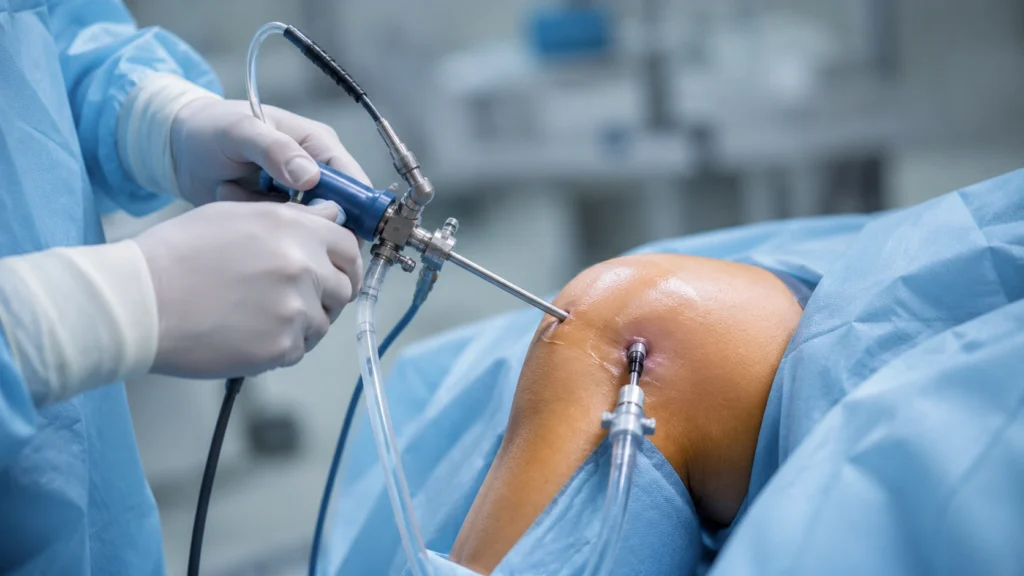
Arthroscopy is a minimally invasive surgical technique where a tiny camera, called an arthroscope, is inserted into the joint through a small incision the size of a buttonhole. The surgeon sees everything inside the joint on a high-definition screen and performs precise repairs using equally small instruments through additional tiny incisions.
Real surgical treatment. Tiny access. Remarkable recovery.
Our orthopedic surgeons perform arthroscopy across the knee, shoulder, hip, and ankle, treating a wide range of joint conditions with the precision of advanced surgery and the gentleness of a minimally invasive approach.
What is arthroscopy?
Think of arthroscopy as giving your surgeon a window directly inside your joint, without having to open it up.
Here’s how it works, simply:
- A tiny incision, often less than 1 centimetre, is made near the joint.
- A thin tube with a high-definition camera (arthroscope) is inserted.
- The camera transmits a live, magnified image of the inside of the joint onto a monitor.
- Additional small incisions allow the surgeon to insert miniature surgical instruments.
- The surgeon diagnoses, repairs, removes, or reconstructs whatever is causing the problem, in real time.
- Everything is done through 2 to 4 tiny incisions, no large cuts required.
What can the surgeon see and treat?
- Cartilage damage and tears.
- Ligament tears and laxity.
- Loose fragments of bone or cartilage floating inside the joint.
- Inflamed or damaged joint lining (synovium).
- Tendon tears and impingements.
- Bone spurs and structural abnormalities.
Arthroscopy vs Open Surgery:
- Smaller cuts: Arthroscopy uses tiny incisions; open surgery requires a larger cut.
- Shorter hospital stay: Most arthroscopy patients go home the same day or next day.
- Faster recovery: Recovery is usually quicker after arthroscopy.
- Less scarring: Tiny cuts mean minimal visible scars.
- Lower infection risk: Smaller wounds reduce the chance of infection.
- Better visibility: A high-definition camera gives surgeons a clear view inside the joint.
- Less tissue damage: Arthroscopy causes less disruption to surrounding muscles and tissues.
- Earlier return to daily activities: Most patients can resume routine activities sooner.
Joints treated with arthroscopy at rama hospital
Arthroscopy at Rama Hospital is performed across four major joints, each with its own range of conditions and procedures.
Knee Arthroscopy
Knee arthroscopy is a minimally invasive procedure used to diagnose and treat knee problems through small incisions.
- Meniscus Tear – Repairs torn knee cartilage that causes pain and locking.
- ACL Injury – Reconstructs a torn ACL to restore knee stability.
- PCL Injury – Treats damage to the posterior cruciate ligament.
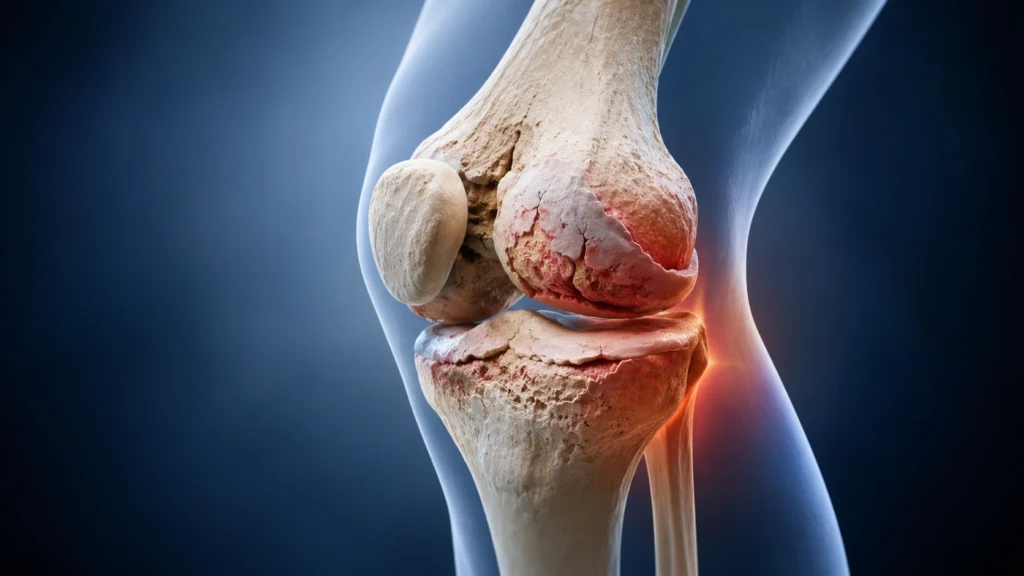
- Cartilage Damage – Repairs damaged cartilage inside the knee.
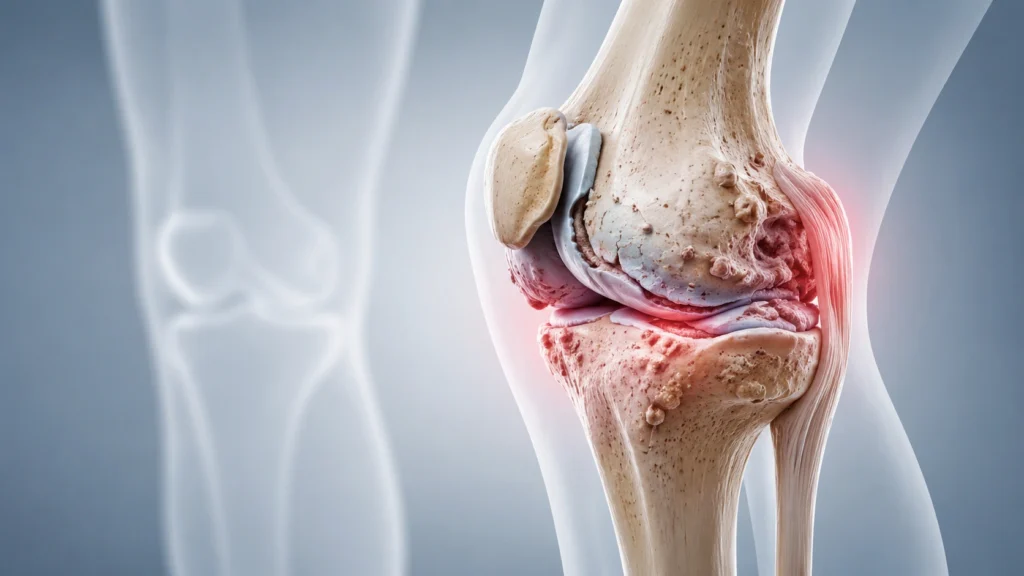
- Early Knee Osteoarthritis – Removes loose tissue and smooths joint surfaces.
- Loose Bodies – Removes floating bone or cartilage fragments.
- Plica Syndrome – Treats irritated tissue inside the knee.
- Synovitis – Removes inflamed joint lining.
- Kneecap Problems – Corrects patellar tracking and cartilage issues.
- Joint Biopsy – Collects tissue samples for diagnosis.
Shoulder Arthroscopy
Shoulder arthroscopy helps treat shoulder injuries and restore movement with minimal tissue damage.
- Rotator Cuff Tear – Repairs torn shoulder tendons.
- Shoulder Impingement – Relieves tendon pinching and pain.
- SLAP Tear – Repairs tears in the shoulder labrum.
- Shoulder Dislocation – Stabilizes the shoulder joint after repeated dislocations.
- Frozen Shoulder – Releases tight tissues to improve movement.
- AC Joint Arthritis – Treats pain in the collarbone-shoulder joint.
- Calcific Tendinitis – Removes calcium deposits from tendons.
- Biceps Tendon Injury – Treats damaged or inflamed biceps tendons.
- Shoulder Osteoarthritis – Cleans the joint to reduce symptoms.
- Synovitis – Removes inflamed shoulder lining.
Hip Arthroscopy
Hip arthroscopy treats hip pain and movement problems through small incisions.
- Hip Impingement (FAI) – Corrects abnormal bone contact in the hip.
- Labral Tear – Repairs damaged cartilage around the hip socket.
- Mild Hip Dysplasia – Helps improve selected hip socket problems.
- Loose Bodies – Removes loose bone or cartilage fragments.
- Synovitis – Treats inflammation inside the hip joint.
- Snapping Hip Syndrome – Releases tight tissues causing snapping sensations.
- Early Hip Osteoarthritis – Cleans damaged tissue from the joint.
- Psoas Tendon Problems – Treats painful tendon snapping.
- Cartilage Damage – Repairs damaged hip cartilage.
Ankle Arthroscopy
Ankle arthroscopy allows precise treatment of ankle conditions with faster recovery.
- Ankle Impingement – Removes tissue or bone causing ankle pain.
- Cartilage Defects (OCD) – Treats damaged ankle cartilage and bone.
- Loose Bodies – Removes floating fragments inside the ankle.
- Chronic Ankle Instability – Repairs damaged ankle ligaments.
- Early Ankle Osteoarthritis – Cleans the joint to improve movement.
- Synovitis – Removes inflamed ankle joint lining.
- Os Trigonum Syndrome – Treats pain at the back of the ankle.
- Peroneal Tendon Problems – Treats tendon tears and instability.
- Ankle Fusion – Fuses damaged joints in severe arthritis cases.
Who needs arthroscopy?
Arthroscopy is recommended when joint pain, injury, or instability is significantly affecting your daily life, and when the cause needs direct surgical assessment or treatment.
You may need arthroscopy if:
- You have persistent joint pain despite physiotherapy and medications.
- You experience joint locking, catching, or giving way.
- You have a known ligament or tendon tear confirmed on MRI.
- Your joint swells repeatedly after activity.
- You have reduced range of motion that is limiting daily activities or sport.
- Imaging shows loose bodies, cartilage damage, or structural abnormalities inside the joint.
- You need a tissue biopsy from inside the joint for diagnosis.
- You have failed conservative treatment for 3 to 6 months without improvement.
- A sports injury has caused acute structural damage requiring surgical repair.
- You want to return to sport or active life as quickly as possible.
Diagnosis before arthroscopy
Before recommending arthroscopy, your surgeon at Rama Hospital conducts a thorough assessment to confirm the diagnosis and determine whether surgical intervention is the right next step.
Clinical Assessment
- Medical History: Understanding symptoms, injury details, duration, and how the condition affects daily activities.
- Physical Examination: Checking joint movement, stability, swelling, pain, and function.
- Lachman Test & Pivot Shift Test: Assess ACL (Anterior Cruciate Ligament) injuries.
- McMurray’s Test: Detects meniscus tears in the knee.
- Hawkins-Kennedy Test: Identifies shoulder impingement.
- FADIR Test: Evaluates hip impingement and labral injuries.
- Anterior Drawer Test: Checks ankle ligament stability.
Imaging Investigations
MRI (Magnetic Resonance Imaging)
- Best test for evaluating ligaments, cartilage, tendons, and other soft tissues.
- Helps identify the exact location and severity of joint damage.
X-Ray
- Shows bone structure, joint alignment, fractures, and arthritis changes.
- Usually the first imaging test performed.
CT Scan
- Provides detailed images of bones and joint anatomy.
- Useful for planning surgery in complex bone conditions.
Ultrasound
- Evaluates tendons and soft tissue movement in real time.
- Can help guide joint injections.
Diagnostic Joint Injection
- A numbing injection used to confirm whether the joint is causing the pain.
- Significant pain relief after the injection suggests the joint is the source of symptoms.
Blood Tests
- Performed when infection or inflammatory arthritis is suspected.
- May include tests such as ESR, CRP, Rheumatoid Factor, and Uric Acid.
How is arthroscopy performed?
At Rama Hospital, arthroscopy is performed in a fully equipped operating theatre by experienced orthopaedic surgeons using the latest HD arthroscopy systems. Here is a clear, step-by-step explanation:
Before the Procedure
- Medical evaluation and necessary tests are performed before surgery.
- Imaging scans are reviewed to plan the procedure.
- An anaesthesia assessment is conducted.
- Patients are advised to fast for a few hours before surgery.
- General, spinal, or regional anaesthesia is given based on the procedure.
- The joint area is cleaned and prepared under sterile conditions.
- A tourniquet may be used during knee arthroscopy to reduce bleeding.
During the Procedure
Step 1: Small Incisions
- Small keyhole incisions are made around the joint.
- One incision is used for the camera and others for surgical instruments.
Step 2: Joint Expansion
- Sterile fluid is introduced into the joint.
- This creates space and improves visibility.
Step 3: Joint Examination
- The arthroscope (camera) is inserted into the joint.
- The surgeon examines cartilage, ligaments, tendons, and other structures.
Step 4: Treatment
- Damaged tissues are repaired or removed using specialised instruments.
- Procedures may include ligament repair, tendon repair, meniscus treatment, bone reshaping, or removal of loose fragments.
Step 5: Closure
- Instruments are removed after the procedure is completed.
- Small incisions are closed with stitches or adhesive strips.
- A sterile dressing and support brace or sling may be applied.
After the Procedure
- Patients are monitored until the anaesthesia wears off.
- Most patients can start moving within a few hours.
- Discharge is usually on the same day or the next day.
- Instructions for wound care, activity, and physiotherapy are provided.
- Follow-up visits are scheduled to monitor recovery.
Benefits of arthroscopy
For the right patient and the right condition, arthroscopy at Rama Hospital offers advantages that open surgery simply cannot match:
- Tiny scars – Small incisions leave minimal visible marks.
- Short hospital stay – Most patients go home the same day or the next day.
- Faster recovery – Return to daily activities much sooner.
- Lower infection risk – Smaller wounds reduce the chance of infection.
- Less blood loss – Minimal bleeding during surgery.
- Less pain after surgery – Smaller incisions mean less discomfort.
- Better surgical precision – High-definition cameras provide a clear view inside the joint.
- Diagnosis and treatment together – Problems can be identified and treated in one procedure.
- Protects healthy tissues – Causes less damage to muscles and surrounding structures.
- Treats many joint problems – Effective for ACL tears, rotator cuff injuries, and more.
- Suitable for all age groups – Can be performed in both young and older patients.
- Helps athletes return to sports – Supports faster and safer recovery for active individuals.
Risks and complications of arthroscopy
Arthroscopy is a safe, well-established procedure, but like all surgery, it carries some degree of risk. At Rama Hospital, these are minimised through meticulous surgical technique and comprehensive pre- and post-operative care.
Common and Temporary
- Pain and swelling – Usually improve with medications and ice packs.
- Joint stiffness – Temporary and improves with physiotherapy.
- Bruising – Mild bruising around the incision sites usually fades within a few days.
Less Common
- Infection – Rare and usually treated effectively with antibiotics.
- Blood clots – Uncommon and can be prevented with early movement and prescribed medicines.
- Nerve or blood vessel injury – Very rare when performed by experienced surgeons.
- Incomplete symptom relief – Some symptoms may persist, especially in arthritis-related conditions.
- Reduced joint movement – Usually improves with rehabilitation exercises.
Rare but Serious
- Instrument breakage – Extremely rare and usually managed during the same procedure.
- Compartment syndrome – A very rare condition caused by fluid buildup in the tissues.
- Conversion to open surgery – Occasionally needed if unexpected issues are found during surgery.
- Graft failure (ACL surgery) – The reconstructed ligament can re-tear, especially with early return to sports.
Tips for better recovery after arthroscopy
Recovery after arthroscopy is faster than open surgery, but it still requires commitment and care. These tips will help you heal well and get the most from your procedure:
First 48–72 Hours
- Rest the affected joint and avoid unnecessary movement.
- Apply ice for 15–20 minutes every 2 hours to reduce swelling.
- Keep the wound clean and dry.
- Take pain medicines as prescribed.
- Wear your brace or sling as advised by your doctor.
First Few Weeks
- Start physiotherapy as recommended.
- Follow weight-bearing instructions carefully.
- Do your rehabilitation exercises regularly.
- Attend all physiotherapy sessions.
- Contact your doctor if you notice fever, redness, excessive swelling, or severe pain.
Long-Term Recovery
- Avoid returning to sports too soon.
- Continue strengthening exercises to support the joint.
- Maintain a healthy weight to reduce joint stress.
- Choose low-impact activities like walking, cycling, or swimming.
- Attend all follow-up appointments to monitor healing.
Why should you choose rama hospital for arthroscopy?
When it comes to joint surgery, the experience of your surgical team and the quality of your rehabilitation make all the difference. Here’s why patients across India trust Rama Hospital:
- Experienced Arthroscopic Surgeons – Skilled specialists with extensive experience in knee, shoulder, hip, and ankle arthroscopy.
- Advanced HD Technology – High-definition arthroscopy systems for precise diagnosis and treatment.
- Complete Arthroscopy Care – From minor procedures to complex ligament and cartilage repairs, all under one roof.
- Dedicated Rehabilitation Support – Expert physiotherapy and recovery programs to help you regain mobility faster.
- Careful Surgical Planning – Detailed evaluation and imaging review before every procedure.
- Patient-Centered Care – Clear guidance, honest advice, and personalized treatment plans.
When to see a doctor for arthroscopy?
- You have joint pain lasting more than 4 to 6 weeks that is not improving with rest.
- Your joint locks, catches, clicks, or gives way during movement.
- You have significant joint swelling, particularly after a specific injury.
- You’ve had a sports injury and your joint doesn’t feel right despite initial management.
- You have been diagnosed with a ligament tear, meniscus tear, labral tear, or rotator cuff tear and need to understand your treatment options.
- Your joint pain is interfering with sleep, work, or daily activities.
- Physiotherapy alone has not resolved your symptoms after 3 to 6 months.
Frequently Asked Questions (FAQs)
Is arthroscopy the same as open surgery?
No, arthroscopy is minimally invasive. Instead of a large incision to open the joint, the surgeon works through 2 to 4 tiny cuts less than 1cm each. A camera shows everything inside the joint on a screen, and miniature instruments perform the repair.
How long does an arthroscopy procedure take?
This depends entirely on what is being done. A simple diagnostic arthroscopy or loose body removal may take 30 to 45 minutes. An ACL reconstruction or rotator cuff repair typically takes 60 to 90 minutes.
Will I need general anaesthesia for arthroscopy?
Most arthroscopy procedures are performed under general anaesthesia (completely asleep) or spinal/regional anaesthesia (lower body numb). The choice depends on the joint, the procedure, and your overall health.
How long is recovery after knee arthroscopy?
Recovery varies by procedure. A meniscectomy (partial meniscus removal) allows return to daily activities in 2 to 3 weeks and sport in 4 to 6 weeks. A meniscus repair takes longer, 3 to 4 months before return to sport.
How long is recovery after shoulder arthroscopy?
A subacromial decompression allows return to most activities in 4 to 6 weeks. A rotator cuff repair requires wearing a sling for 4 to 6 weeks, with rehabilitation continuing for 4 to 6 months before full strength is restored.
Can I have arthroscopy if I have arthritis?
Yes, in selected patients. Arthroscopy for early to moderate Osteoarthritis can provide meaningful symptom relief through washout, debridement, and loose body removal. However, it does not reverse arthritis or replace the need for joint replacement in advanced cases.
When can I drive after arthroscopy?
This depends on the joint operated on and your dominant side. After knee arthroscopy, most patients can drive an automatic car in 2 to 4 weeks when they can perform an emergency stop safely and are off strong pain medication.
Is arthroscopy permanent? Can the problem come back?
The repairs performed during arthroscopy are designed to be durable, a repaired rotator cuff or reconstructed ACL can last many years with appropriate rehabilitation and activity modification.
Conclusion
Persistent joint pain, a locked knee, an unstable shoulder, a clicking hip, a catching ankle, these are not things you should accept as permanent features of your life.
Arthroscopy has revolutionised orthopaedic surgery, transforming what once required large incisions, general hospitals stays, and months of recovery into precise, minimally invasive procedures with remarkable outcomes and fast return to normal life.
At Rama Hospital, our specialist orthopaedic surgeons bring deep experience, the latest technology, and a genuinely patient-centred approach to every joint, whether it’s your knee, shoulder, hip, or ankle. We don’t just treat the joint. We work to understand the full picture, your injury, your lifestyle, your goals, and build a surgical and rehabilitation plan that gives you the best possible long-term outcome.
Whether you’re an athlete wanting to return to sport, a professional struggling with daily tasks, or someone who simply wants to live without joint pain, we’re here to help you get there.