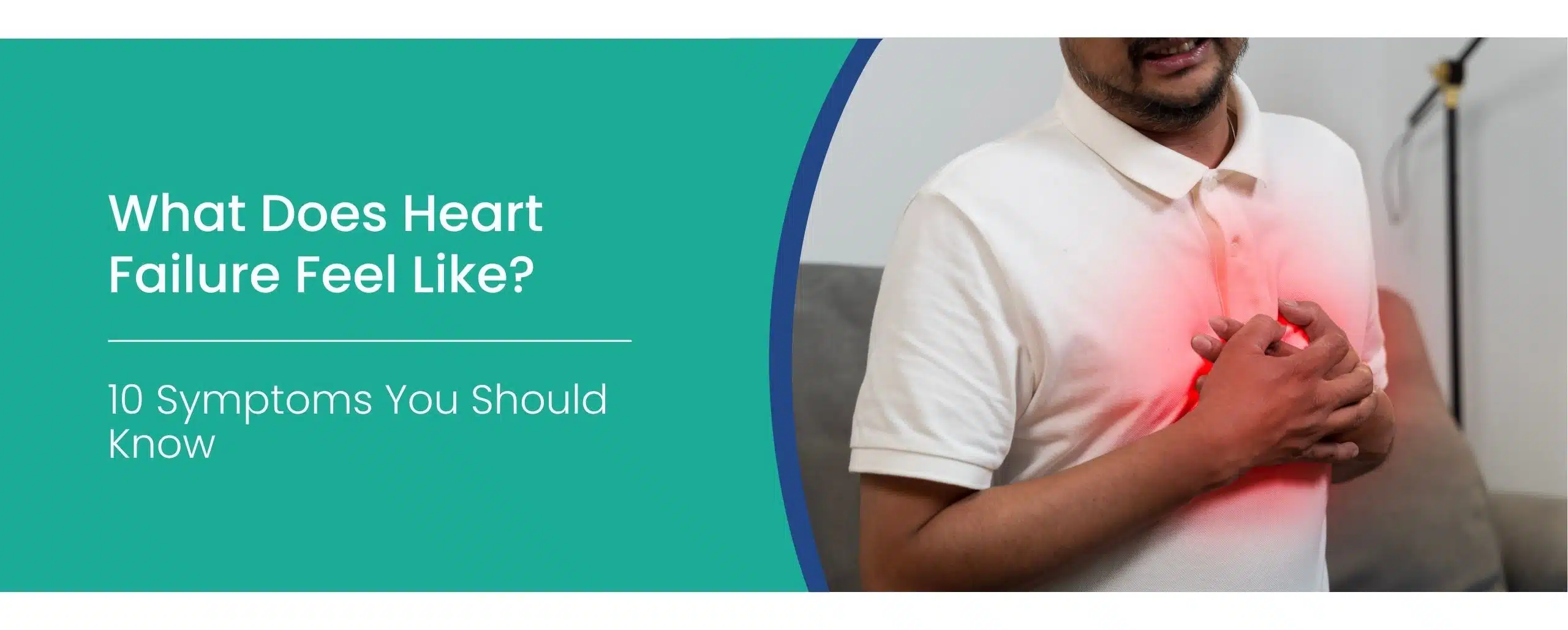
What Does Heart Failure Feel Like?
Heart failure does not always feel like a dramatic heart problem. In many people, the changes can be gradual and easy to dismiss at first. You may notice that you get tired more quickly, become breathless while climbing stairs, or need more pillows to sleep comfortably.
Heart failure happens when the heart cannot pump blood effectively enough to meet the body’s needs. As a result, blood and fluid can build up in the lungs and other parts of the body, causing symptoms such as breathlessness, swelling, fatigue, and weight gain.
The symptoms can vary from person to person. Some people have mild symptoms that develop slowly, while others can experience a sudden worsening that requires urgent medical attention.
What Does Heart Failure Feel Like in Everyday Life?
For many people, heart failure first shows up as a change in what they can comfortably do.
You might notice that a short walk leaves you unusually tired. Climbing stairs may make you more breathless than before. You may find yourself stopping to catch your breath during activities that once felt easy.
Some people notice swelling around their ankles or feet. Others may gain weight quickly without changing their diet because the body is retaining extra fluid.
Heart failure can also cause breathing problems when lying down or may wake you suddenly at night feeling short of breath.
These symptoms do not automatically mean you have heart failure. Several other conditions can cause similar problems. However, persistent or worsening symptoms deserve medical evaluation.
10 Symptoms of Heart Failure You Should Know
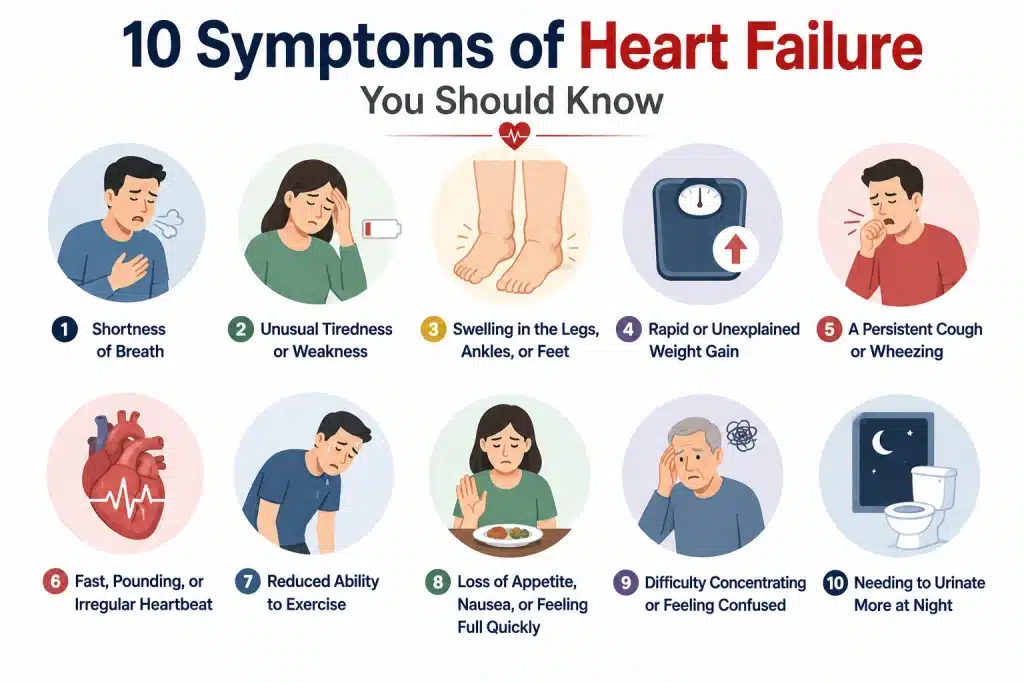
1. Shortness of Breath
Shortness of breath is one of the most common symptoms of heart failure.
At first, you may notice it only during physical activity, such as walking quickly, climbing stairs, or exercising. As heart failure progresses, breathlessness may occur with less activity or even while resting.
Some people also feel short of breath when lying flat or wake up during the night struggling to breathe. This can happen when fluid builds up in or around the lungs.
You may notice:
- Getting winded more easily than usual
- Needing to stop during normal activities
- Sleeping with extra pillows
- Waking up short of breath
2. Unusual Tiredness or Weakness
Feeling tired after a long or demanding day is normal. Heart failure-related fatigue can feel different.
You may feel unusually weak or exhausted after routine activities such as bathing, walking, shopping, or doing household work. Your usual stamina may gradually decrease.
This can happen because the heart is not delivering enough blood to meet the body’s needs.
If activities that once felt easy suddenly leave you exhausted, it is worth discussing the change with a doctor.
3. Swelling in the Legs, Ankles, or Feet
Swelling, also called edema, can occur when fluid builds up in the body.
You may notice that your shoes feel tighter or that your ankles look puffier toward the end of the day. The swelling may affect the feet, ankles, legs, or sometimes the abdomen.
Persistent or increasing swelling should not simply be dismissed as a normal part of getting older. It can have several causes, including heart, kidney, liver, or vein-related problems.
4. Rapid or Unexplained Weight Gain
A sudden increase on the weighing scale does not always mean you have gained body fat.
With heart failure, the body may retain extra fluid. This can cause your weight to rise noticeably over a short period.
If you already have heart failure, sudden weight gain can be an important warning sign that your condition is becoming worse. Mayo Clinic advises contacting a healthcare professional if someone with heart failure gains about 2.3 kg (5 pounds) or more within a few days.
| Symptom | What you may notice |
| Shortness of breath | Breathlessness during activity or while lying down |
| Fatigue | Less energy for everyday activities |
| Swelling | Puffy ankles, feet, legs, or abdomen |
| Weight gain | Rapid increase over a few days |
| Cough | Persistent cough or worsening cough |
5. A Persistent Cough or Wheezing
A cough that does not seem to go away may sometimes be connected to fluid buildup in the lungs.
You may also notice wheezing or a feeling of congestion, particularly when lying down. In some cases, severe fluid buildup can cause coughing up white or pink, frothy mucus.
A persistent cough has many possible causes, including infections, asthma, allergies, and other lung conditions. It should not automatically be assumed to be heart failure.
6. Fast, Pounding, or Irregular Heartbeat
Heart palpitations can feel like your heart is racing, pounding, fluttering, or skipping beats.
An irregular or unusually fast heartbeat can occur alongside heart failure and may also contribute to or worsen heart problems.
Pay attention if palpitations are new, frequent, or occur together with breathlessness, dizziness, chest discomfort, or fainting.
7. Reduced Ability to Exercise
You may not suddenly stop being able to exercise. Instead, your tolerance may gradually decline.
Perhaps you could previously walk for 30 minutes but now need several breaks. Or you may find that climbing one flight of stairs leaves you much more breathless than it used to.
A noticeable decline in exercise capacity can be an important clue, particularly when it occurs alongside fatigue or breathlessness.
8. Loss of Appetite, Nausea, or Feeling Full Quickly
Heart failure can sometimes affect your digestive system and appetite.
You may feel less hungry than usual, experience nausea, or feel unusually full after eating a small amount. Abdominal swelling or fluid buildup can contribute to these sensations.
Because appetite changes are common with many illnesses, this symptom becomes more meaningful when it occurs with other signs of heart failure.
9. Difficulty Concentrating or Feeling Confused
Changes in alertness or concentration can occur in people with heart failure, particularly when the condition becomes more severe.
You may feel mentally foggy, have difficulty concentrating, or notice changes in your ability to think clearly.
New or significant confusion should always be evaluated promptly because it can have many causes and may sometimes signal an urgent medical problem.
10. Needing to Urinate More at Night
Some people with heart failure notice that they need to urinate more frequently during the night.
When you lie down, fluid that has accumulated in the legs during the day can move back into the bloodstream. The kidneys may then process more of this fluid, increasing urine production.
On its own, frequent nighttime urination does not mean you have heart failure. But if it occurs with swelling, breathlessness, fatigue, or unexplained weight gain, mention it to your doctor.
Heart Failure Symptoms Can Look Different From Person to Person
There is no single way that heart failure feels.
Some people primarily experience breathlessness. Others may first notice swelling, fatigue, reduced exercise tolerance, or rapid weight gain. Symptoms can also change as the condition progresses.
The important point is not to wait for every symptom to appear. A combination of symptoms, or a clear change from your normal level of health, deserves attention.
| Possible early changes | Symptoms that may suggest worsening |
| Getting tired more easily | Increasing breathlessness |
| Reduced exercise tolerance | Breathlessness at rest |
| Mild ankle swelling | Increasing swelling in legs or abdomen |
| Occasional cough | Persistent or worsening cough |
| Needing more rest | Difficulty doing routine activities |
| Gradual weight changes | Rapid, unexplained weight gain |
What Causes the Symptoms of Heart Failure?
The symptoms largely come from two related problems: reduced blood flow and fluid buildup.
When the heart cannot pump efficiently, the body may not receive enough oxygen-rich blood. This can contribute to tiredness, weakness, dizziness, and reduced ability to exercise.
At the same time, pressure can build up behind the heart, causing fluid to accumulate in the lungs or other tissues. This can lead to breathlessness, coughing, swelling, and rapid weight gain.
Heart failure can develop because of several underlying heart conditions. Coronary artery disease and previous heart attacks are common causes, while high blood pressure, heart valve disease, abnormal heart rhythms, and diseases of the heart muscle can also contribute.
When Should You See a Doctor?
You should speak with a healthcare professional if you have persistent or unexplained symptoms such as:
- Breathlessness that is new or getting worse
- Swelling in your legs, ankles, or abdomen
- Unusual fatigue
- A noticeable decline in exercise tolerance
- Rapid or unexplained weight gain
- Persistent cough or wheezing
- New or recurring heart palpitations
When Is Heart Failure an Emergency?
Some symptoms require immediate medical attention.
Seek emergency care for severe or sudden shortness of breath, especially if it occurs at rest, or if it is accompanied by chest pain, fainting, severe weakness, or a rapid/irregular heartbeat. Coughing up white or pink frothy mucus with sudden severe breathlessness is also an emergency warning sign.
Do not try to determine on your own whether these symptoms are caused by heart failure or another condition. Sudden breathing difficulty or chest pain can have several serious causes and needs urgent assessment.
How Is Heart Failure Diagnosed?
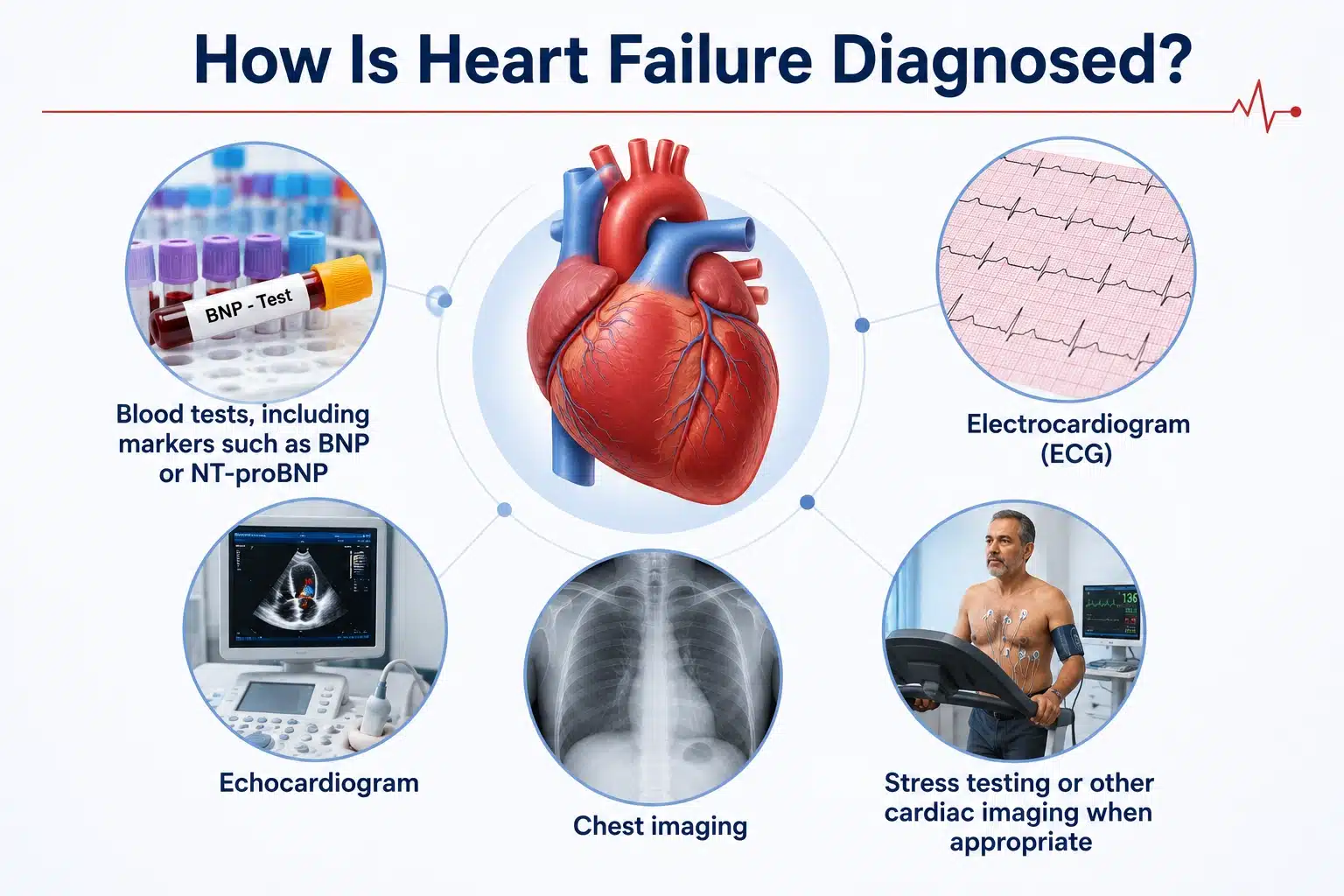
Doctors usually do not diagnose heart failure based on one symptom alone.
Your doctor may ask when your symptoms started, whether they are getting worse, what activities trigger them, and whether you have any history of heart disease or other risk factors.
Depending on your symptoms, testing may include:
- Blood tests, including markers such as BNP or NT-proBNP
- Electrocardiogram (ECG)
- Echocardiogram
- Chest imaging
- Stress testing or other cardiac imaging when appropriate
An echocardiogram can help doctors assess the heart’s structure and pumping function, including the ejection fraction.
Can Heart Failure Be Treated?
Heart failure is a serious condition, but treatment can help control symptoms, improve quality of life, and in many cases slow disease progression.
Treatment depends on the underlying cause and the type and severity of heart failure. It may include medicines, lifestyle changes, treatment of an underlying heart condition, and in some patients, devices or procedures.
The earlier symptoms are recognised and evaluated, the sooner an appropriate treatment plan can be started.
Frequently Asked Questions (FAQs)
1. What does heart failure feel like at first?
Early heart failure may feel like unusual tiredness, reduced stamina, or becoming short of breath during activities that previously felt easy. Some people may also notice mild swelling or unexplained weight gain.
2. What is usually the first noticeable symptom of heart failure?
Shortness of breath during activity is a common early symptom, particularly when activities such as climbing stairs or walking become harder than they used to be. However, symptoms vary from person to person.
3. Can heart failure cause swelling in the legs?
Yes. Heart failure can cause the body to retain fluid, leading to swelling in the feet, ankles, and legs. Swelling can also occur in the abdomen, particularly as heart failure becomes more advanced.
4. Can you have heart failure without knowing it?
Yes. Early heart failure may cause few or no noticeable symptoms. Some people discover a problem during testing before symptoms become obvious, while others develop gradual changes that are easy to mistake for normal ageing or reduced fitness.
5. When should heart failure symptoms be treated as an emergency?
Sudden or severe shortness of breath, chest pain, fainting, severe weakness, or breathlessness accompanied by a rapid or irregular heartbeat requires urgent medical attention. Sudden severe breathing difficulty with pink or white frothy mucus is also an emergency warning sign.
Conclusion
Heart failure does not always announce itself with obvious or dramatic symptoms. It can begin with changes that seem ordinary, getting tired faster, becoming breathless on stairs, developing swollen ankles, or gaining weight unexpectedly.
What matters is noticing when something has changed from your normal.
If these symptoms persist, recur, or gradually worsen, talk with a doctor in best hospital in Noida rather than trying to explain them away. Early evaluation can help identify the underlying cause and determine whether treatment is needed.