Most people don’t think about their kidneys until something goes seriously wrong, and by that time kidney function may already be significantly reduced. Kidney disease is often called a “silent disease” because it can develop gradually without noticeable symptoms in the early stages, meaning you may feel completely fine while your kidneys slowly lose their ability to filter waste, remove excess fluid, and maintain the proper balance of electrolytes in the body. As kidney function continues to decline, certain symptoms and changes may signal that the kidneys are struggling to keep up, and in advanced cases your doctor may recommend dialysis to help take over some of the essential functions your kidneys can no longer perform effectively. Understanding the signs you need dialysis can help you seek medical evaluation early and avoid delaying necessary treatment.
When kidney function declines to a critical level, treatments like dialysis may become necessary to keep the body functioning properly. Unfortunately, many people only learn signs you need dialysis after months of worsening kidney damage that could have been detected earlier.
Understanding the warning signs, knowing when dialysis is needed, and seeking timely medical care can make a significant difference. Early diagnosis not only helps protect the remaining kidney function but also improves treatment outcomes and quality of life.
What is dialysis and why is it needed?
Your kidneys do something remarkable every single day. They filter around 200 litres of blood, remove waste, regulate fluid, and keep your body’s chemistry balanced.
When kidneys fail, partially or completely, that job doesn’t get done. Toxins build up. Fluid overloads your system. Your blood pressure spikes. Eventually, your body starts breaking down.
Dialysis steps in when kidneys can’t. It artificially does what healthy kidneys do naturally, filtering waste, removing excess fluid, and restoring balance.
Two main types are used in India:
- Hemodialysis: Blood is filtered through a machine outside the body. Requires a dialysis center, typically 3 sessions per week.
- Peritoneal dialysis: Done at home using the lining of the abdomen as a filter.
The signs you need dialysis depend on how far kidney function has declined, and how quickly.
When do doctors recommend dialysis?
Doctors don’t recommend dialysis based on how you feel. They use a combination of lab results, symptoms, and clinical judgment.
The key measure is eGFR estimated Glomerular Filtration Rate. It tells doctors how much filtering function your kidneys still have.
General dialysis thresholds:
- eGFR above 60 → kidneys are functioning reasonably well
- eGFR 15–29 → severely reduced function; dialysis is being planned
- eGFR below 15 → one of the strongest signs you need dialysis
- eGFR below 10 with symptoms → dialysis is usually started immediately
But eGFR isn’t the only trigger. A patient with eGFR 12 who feels fine may wait slightly longer. A patient with eGFR 18 but severe fluid overload or uncontrolled toxins may need dialysis urgently.
At what eGFR level is dialysis needed? Most nephrologists initiate signs you need dialysis when eGFR drops below 10–15 ml/min/1.73m², especially when clear symptoms of kidney failure are present.
Warning signs you may need dialysis
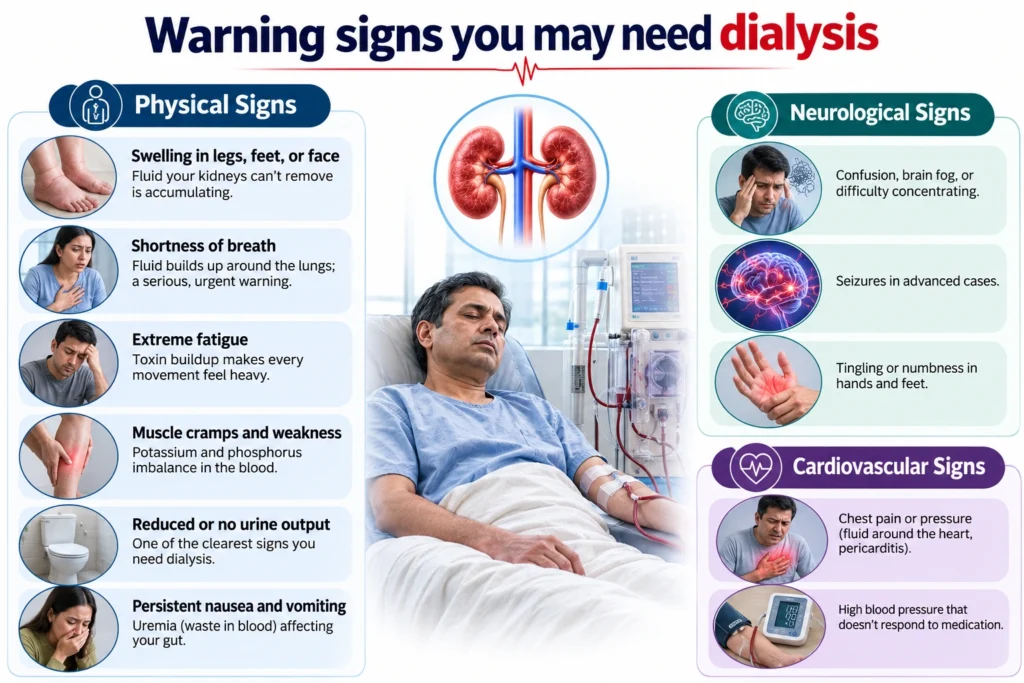
These are the signs you need dialysis that you must not ignore. Each one, alone, may seem minor. Together, they are a medical emergency.
Physical Signs
- Swelling in legs, feet, or face: Fluid your kidneys can’t remove is accumulating.
- Shortness of breath: Fluid builds up around the lungs; a serious, urgent warning.
- Extreme fatigue: Toxin buildup makes every movement feel heavy.
- Muscle cramps and weakness: Potassium and phosphorus imbalance in the blood.
- Reduced or no urine output: One of the clearest signs you need dialysis.
- Persistent nausea and vomiting: Uremia (waste in blood) affecting your gut.
Neurological Signs
- Confusion, brain fog, or difficulty concentrating.
- Seizures in advanced cases.
- Tingling or numbness in hands and feet.
Cardiovascular Signs
- Chest pain or pressure (fluid around the heart, pericarditis).
- High blood pressure that doesn’t respond to medication.
If you’re experiencing three or more of these symptoms together, these are serious signs you need dialysis, seek a nephrologist immediately.
Symptoms of advanced kidney failure
When kidney failure enters the end stage, medically called End Stage Renal Disease (ESRD) or Stage 5 Chronic Kidney Disease, the signs you need dialysis become impossible to ignore.
End stage kidney disease symptoms include:
- Skin turning yellowish or pale (urochrome buildup)
- A metallic or ammonia-like taste in the mouth
- Severe itching with no visible rash (uremic pruritus)
- Complete loss of appetite
- Significant, unexplained weight loss
- Urine that appears dark brown, foamy, or bloody
At this stage, dialysis treatment signs are almost always present. The kidneys are retaining almost no function. The body is being slowly poisoned by its own waste. This is not the time to wait and watch.
What happens if dialysis is delayed?
Many patients, and families, delay starting dialysis. The reasons vary: fear, cost, lack of awareness, or hope that things will improve.
Here’s what actually happens when dialysis is delayed after clear signs you need dialysis have appeared:
- Uremic encephalopathy: Brain function deteriorates; confusion becomes severe.
- Hyperkalemia: Dangerous potassium levels can cause cardiac arrest.
- Pulmonary edema: Fluid flooding the lungs can cause respiratory failure.
- Pericarditis: Inflammation around the heart becomes life-threatening.
- Metabolic acidosis: Blood becomes dangerously acidic, affecting every organ.
Delaying dialysis doesn’t save time. It creates emergencies. Patients who start dialysis in an emergency setting have significantly worse outcomes than those who start in a planned, stable way.
When the signs you need dialysis are present, early action is always the right call.
Can dialysis be avoided?
This is the question every kidney patient asks. And it deserves an honest answer.
In some cases, yes. In advanced kidney failure, no.
Dialysis can sometimes be delayed or avoided if:
- CKD is caught early (Stage 1–3)
- Blood pressure and blood sugar are aggressively controlled
- A low-protein, kidney-friendly diet is followed
- Underlying causes (diabetes, hypertension, infections) are treated
But if kidney function has already dropped to critical levels, the signs you need dialysis are a biological reality, not a choice. Lifestyle changes at that stage cannot reverse the damage.
Do all CKD patients require dialysis? No. Many CKD patients live for years in Stages 1–4 without ever reaching dialysis, provided they get consistent nephrology care and manage their health well.
Can kidney function improve after dialysis? In some cases of Acute Kidney Injury (AKI), yes, kidney function can recover, and dialysis may be temporary. In chronic kidney disease, dialysis is usually long-term unless a kidney transplant is performed.
How kidney function is measured?
Understanding how kidney function is tracked helps you catch the signs you need dialysis before they become a crisis.
Key tests your nephrologist will order:
| Test | What It Measures | Why It Matters |
| eGFR | Overall filtration rate | Core measure for dialysis timing |
| Serum Creatinine | Waste product in blood | Rises as kidneys decline |
| BUN (Blood Urea Nitrogen) | Urea in blood | High levels = uremia risk |
| Serum Potassium | Electrolyte levels | Dangerous when too high |
| Urine Albumin | Protein leaking into urine | Early CKD damage marker |
| Kidney Ultrasound | Kidney size and structure | Assesses structural damage |
These aren’t just routine tests. Each result tells your doctor exactly where you stand, and whether the signs you need dialysis are approaching.
What foods should dialysis patients avoid?
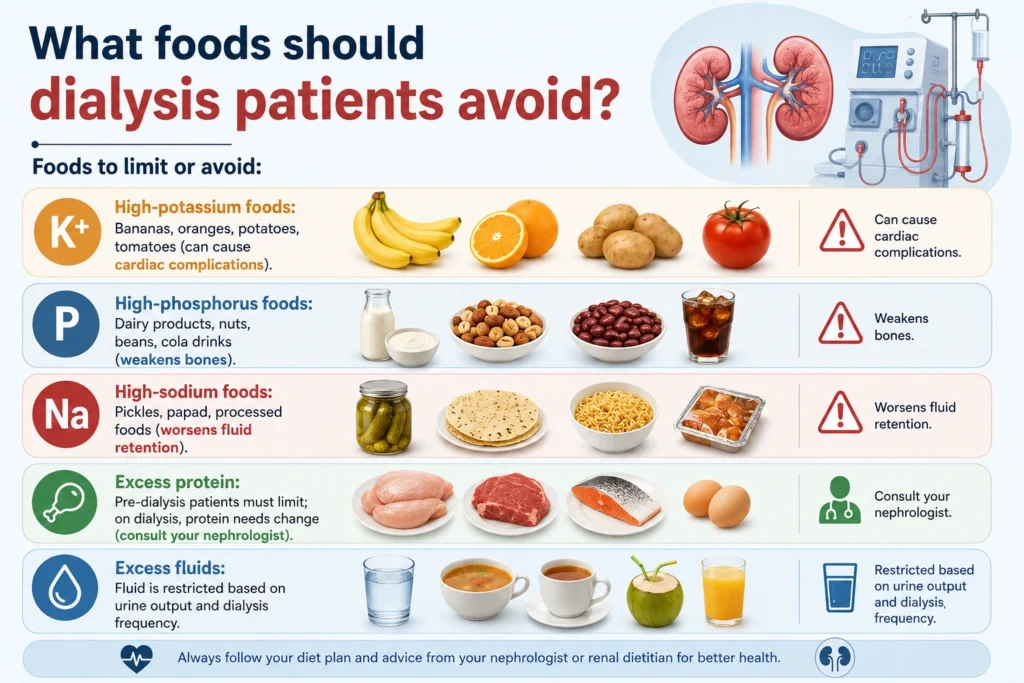
Once dialysis begins, diet becomes a critical part of managing health. The kidneys can no longer regulate what stays and what goes, so food choices matter more than ever.
Foods to limit or avoid:
- High-potassium foods: Bananas, oranges, potatoes, tomatoes (can cause cardiac complications).
- High-phosphorus foods: Dairy products, nuts, beans, cola drinks (weakens bones).
- High-sodium foods: Pickles, papad, processed foods (worsens fluid retention).
- Excess protein: Pre-dialysis patients must limit; on dialysis, protein needs change (consult your nephrologist).
- Excess fluids: Fluid is restricted based on urine output and dialysis frequency.
Every dialysis patient needs a personalised diet plan. What works for one patient may harm another.
Is dialysis painful? How often is it required?
Two of the most common questions patients ask:
Is dialysis painful? Hemodialysis itself isn’t painful. You may feel mild discomfort when the needles are inserted, or experience low blood pressure, cramps, or tiredness during or after the session. These are manageable and improve over time.
How often is dialysis required? For hemodialysis, the standard is 3 sessions per week, each lasting 3–5 hours. Peritoneal dialysis is done daily at home. The frequency is determined by your kidney function, fluid balance, and lab results, your nephrologist will customize your schedule.
When should you consult a nephrologist?
You don’t have to wait until symptoms are severe. In fact, the best time to see a nephrologist is before the signs you need dialysis appear.
Consult a kidney specialist if:
- Your eGFR is below 45 (Stage 3B or lower).
- You have diabetes or hypertension with abnormal kidney tests.
- You’re experiencing persistent swelling, fatigue, or changes in urination.
- A routine blood test showed elevated creatinine.
- You have a family history of kidney disease.
- You notice the early signs you need dialysis.
Early consultation doesn’t mean dialysis is imminent. It means you have options, and time to use them.
If you’re in the Delhi-NCR region, getting expert care is accessible. A consultation with the best nephrologist in Noida or a dedicated kidney specialist in Noida can make an enormous difference in your long-term outcomes. Leading facilities offering hemodialysis treatment in Noida are equipped with modern machines, trained staff, and comprehensive care pathways.
Don’t wait for a crisis. If any of the signs you need dialysis are showing up in your body or your labs, act now.
Frequently Asked Questions (FAQs)
At what eGFR level is dialysis needed?
Dialysis is typically recommended when eGFR falls below 10–15 ml/min/1.73m². If symptoms like severe fluid retention, uncontrolled uremia, or electrolyte imbalance are present, dialysis may begin even at slightly higher eGFR levels.
Can dialysis be temporary?
Yes. In Acute Kidney Injury (AKI), dialysis may be temporary, once the underlying cause is treated, kidney function can recover. In chronic kidney disease, however, dialysis is usually a long-term commitment unless a transplant is performed.
Do all CKD patients require dialysis?
No. Many CKD patients, especially those diagnosed early, never reach the point where the signs you need dialysis become active. Consistent management of blood pressure, blood sugar, and diet can slow progression significantly.
Can kidney function improve after dialysis?
In AKI cases, yes. In CKD Stage 5, the kidney damage is usually irreversible without a transplant. Dialysis maintains life but does not regenerate kidney tissue.
What foods should dialysis patients avoid?
High-potassium foods (bananas, oranges), high-phosphorus foods (dairy, nuts), excess sodium, and fluids beyond the prescribed limit. Diet is highly individualized, always follow your nephrologist’s and dietitian’s guidance.
Is dialysis painful?
No, not typically. Needle insertion may cause brief discomfort. Some patients experience cramps or fatigue during sessions, but these symptoms are usually manageable and decrease over time.
How often is dialysis required?
Hemodialysis is typically 3 sessions per week, each 3–5 hours long. Peritoneal dialysis is done daily at home. Your schedule depends on your clinical condition and your doctor’s assessment.
Conclusion
Kidney disease doesn’t announce itself. It builds quietly, until the signs you need dialysis start showing up one by one.
The good news? When you catch it early enough, you have choices. You can slow it down. You can plan, prepare, and stay ahead of it.
But when the signs you need dialysis are already present when your labs are critical, your symptoms are real, and your body is signaling distress waiting is no longer an option.
Trust what your body is telling you. Trust what your labs are showing. And trust a qualified nephrologist to guide the next step.