Tendon injuries in the hand and wrist can significantly affect movement, grip, and daily life. Even a small cut or deep wound can damage the tendons that help you bend your fingers, straighten your hand, or move your wrist properly. When these tendons are torn or cut, tendon repair surgery may be needed to restore function and prevent long-term stiffness or weakness.
At Rama Hospital, tendon repair for hand and wrist injuries is planned with a focus on precision, recovery, and functional outcome. Our specialists evaluate the injury carefully and recommend the most suitable treatment based on the severity, location, and timing of the tendon damage.
Tendon repair is a surgical procedure used to fix damaged tendons so they can work again. In the hand and wrist, tendons connect muscles to bones and allow movements such as gripping, pinching, bending, and straightening the fingers. If a tendon is cut or torn, these movements may become weak, painful, or impossible.
The goal of tendon repair surgery is to restore movement, improve hand strength, and support normal function. Depending on the injury, the surgeon may directly stitch the tendon ends together or perform a more advanced reconstruction if the tendon damage is severe.
Tendon repair surgery is usually recommended when a tendon injury affects hand movement or function. It is especially important when the tendon is completely cut, the finger cannot move normally, or the injury has occurred from a deep wound or trauma.
Early treatment is very important because delayed repair can lead to scarring, tendon retraction, and reduced hand function.
You may need tendon repair if you have:
Different tendons may be affected depending on the location and severity of the injury. Tendon injuries can range from minor inflammation to complete tendon rupture, significantly affecting hand function. The most common tendon injuries involve flexor tendons, extensor tendons, and tendons around the wrist.
Flexor tendons help bend the fingers and thumb, allowing you to grip, hold, and pick up objects. These tendons run along the palm side of the hand and fingers.
Common signs and symptoms:
Common causes:
Extensor tendons help straighten the fingers, thumb, and wrist. They are located on the back of the hand and fingers and are more vulnerable because they lie close to the skin surface.
Common signs and symptoms:
Common causes:
Tendons around the wrist help coordinate hand, finger, and wrist movements. Injury to these tendons can affect wrist stability, strength, and overall hand function.
Common signs and symptoms:
Common causes:
In some cases, the tendon may completely tear or detach from the bone, resulting in a significant loss of function. This type of injury often requires prompt surgical evaluation and treatment to restore normal hand function.
Key symptoms include:
Hand and wrist tendon injuries often happen suddenly, especially after trauma or sharp cuts. In some cases, tendon damage develops from repeated strain or underlying medical issues.
Common causes include:
Risk factors may include:
Symptoms of tendon injury can range from mild weakness to complete loss of movement. The exact symptoms depend on which tendon is damaged.
If the hand or fingers do not move normally after an injury, medical evaluation should not be delayed.
Common signs include:
A detailed examination is needed before tendon repair surgery. The doctor checks the movement, strength, and function of the hand to confirm tendon injury and identify any associated damage.
This evaluation helps the surgeon decide whether the tendon can be repaired directly or whether reconstruction is needed.
Diagnosis may include:
Tendon repair surgery is done carefully to restore hand function while protecting nearby structures such as nerves and blood vessels.
Step 1: Pre-Surgical Evaluation
Before surgery, the orthopedic or hand surgeon carefully examines the injured hand. The doctor checks finger movement, grip strength, sensation, and the extent of tendon damage. Imaging tests such as X-rays or ultrasound may be recommended to assess associated injuries and plan the most appropriate repair technique.
Step 2: Anesthesia
The surgery is performed under anesthesia to ensure patient comfort. Depending on the location and severity of the injury, the surgeon may use local anesthesia (numbing only the hand), regional anesthesia (numbing the entire arm), or general anesthesia, where the patient remains asleep throughout the procedure.
Step 3: Surgical Cleaning
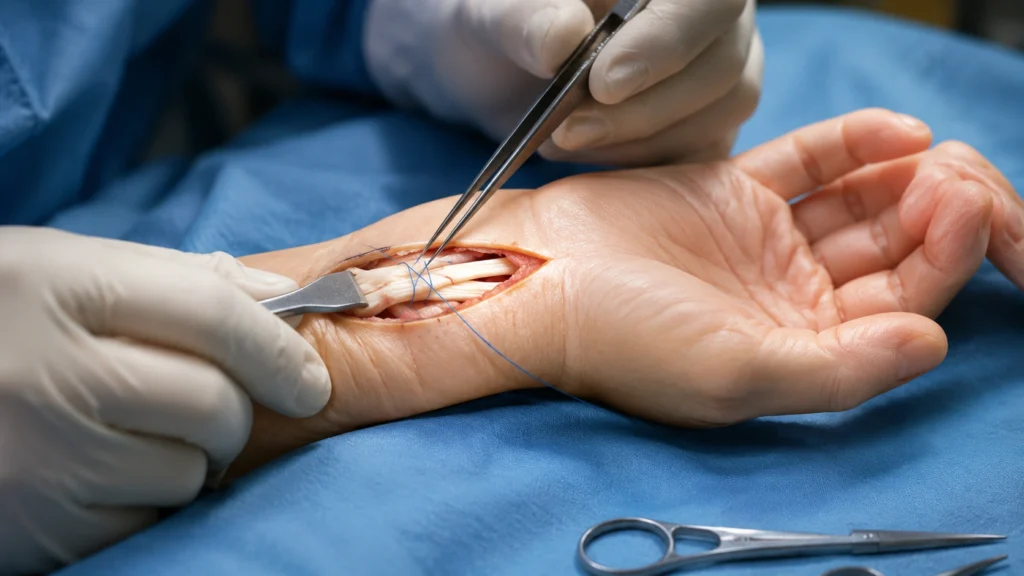
The surgical area is thoroughly cleaned and sterilized to reduce the risk of infection. If the injury is caused by a cut or open wound, the surgeon removes any debris and damaged tissue. The injured tendon is then carefully exposed for repair.
Step 4: Tendon Repair
Once the tendon is identified, the surgeon brings the separated ends together and repairs them using strong surgical sutures. In more complex cases where the tendon is severely damaged or missing a section, tendon grafting or tendon reconstruction may be required to restore normal hand function.
Step 5: Additional Repair
Tendon injuries can sometimes occur along with damage to nearby structures such as nerves, blood vessels, ligaments, or bones. If these injuries are present, the surgeon may repair them during the same operation to improve overall recovery and hand function.
Step 6: Splinting
After the repair is completed, the hand and fingers are placed in a protective splint or cast. This helps keep the repaired tendon in the correct position, prevents excessive movement, and allows the healing process to begin safely.
Step 7: Rehabilitation
Recovery does not end after surgery. A structured rehabilitation program is an essential part of successful tendon healing. Patients usually work with a hand therapist who guides them through specific exercises designed to restore movement, flexibility, strength, and coordination. Regular follow-up visits help monitor healing and ensure the best possible outcome.
Some tendon injuries are more complex and cannot be treated with simple repair alone. The type of surgery depends on the location of the injury, the extent of tendon damage, and how much time has passed since the injury occurred. An orthopedic or hand surgeon will evaluate the tendon and recommend the most appropriate treatment approach.
This is performed soon after the injury, usually within a few days.
This is done when immediate surgery is not possible.
This is performed later when the injury has been neglected or diagnosed late.
A tendon graft may be needed when direct repair is not possible.
This procedure uses a healthy tendon to replace the function of a damaged one.
The success of tendon surgery depends not only on the procedure itself but also on timely treatment, proper rehabilitation, and adherence to the recovery plan recommended by your surgeon.
Depending on the injury, additional procedures may be required:
Tendon repair surgery offers many benefits when done at the right time. The surgery aims to help the patient return to normal hand use as much as possible.
Benefits include:
Like any surgery, tendon repair has some possible risks. These are usually low but should still be understood before treatment. Proper surgical technique and rehabilitation reduce the chance of complications.
Possible risks include:
Recovery after tendon repair depends on protecting the repair and following the doctor’s instructions closely. Helpful recovery tips include:
Hand therapy is an important part of recovery after surgery. It helps prevent stiffness and improves the tendon’s ability to glide smoothly. The timing of exercises is very important. Moving too early can damage the repair, while moving too late may cause stiffness.
Therapy may include:
Rama Hospital offers specialized care for hand and wrist injuries, including tendon repair surgery and recovery support.
Why patients choose Rama Hospital:
Early medical care improves the chances of a good recovery. You should see a doctor quickly if you have:
Not always. Minor partial injuries may heal without surgery, but a complete tendon tear usually needs repair. The surgeon will decide based on movement loss, injury depth, and tendon condition. Early evaluation is the best way to know the right treatment.
Recovery time depends on the tendon involved, the severity of injury, and the type of repair. Healing usually takes several weeks, and therapy may continue for months. Final strength and motion return gradually with proper rehabilitation.
Many patients regain good hand function after tendon repair, especially if treatment is early and therapy is followed properly. However, complete recovery depends on the injury complexity and how the tendon heals. Some stiffness or weakness can remain in severe cases.
The surgery is done under anesthesia, so the patient does not feel pain during the procedure. Some discomfort, swelling, and tightness are normal after surgery. Medicines and follow-up care help control symptoms during recovery.
Hand therapy helps prevent stiffness, improve movement, and protect the tendon repair as it heals. It is a major part of recovery and should not be skipped. Without therapy, the hand may become stiff or weak.
Yes, delayed repair or reconstruction may still be possible in selected cases. However, early treatment is generally better because the tendon is easier to repair. The surgeon will choose the most suitable option after evaluating the injury.
Tendon repair surgery is an important treatment for hand and wrist injuries that affect movement, grip, and daily function. Whether the injury is caused by a deep cut, trauma, or tendon rupture, timely care can make a major difference in recovery. With proper surgery, splinting, and rehabilitation, many patients can regain useful hand function.
At Rama Hospital, tendon repair is managed with expert assessment, precise surgical care, and structured recovery support. If you are dealing with a hand or wrist tendon injury, early consultation can help protect hand function and improve the chances of recovery.
Tendon repair is surgery done to treat a torn or otherwise damaged tendon. Tendons are the soft, band-like tissues that connect muscles to bone. When the muscles contract, the tendons pull the bones and cause the joints to move.
No rows found.