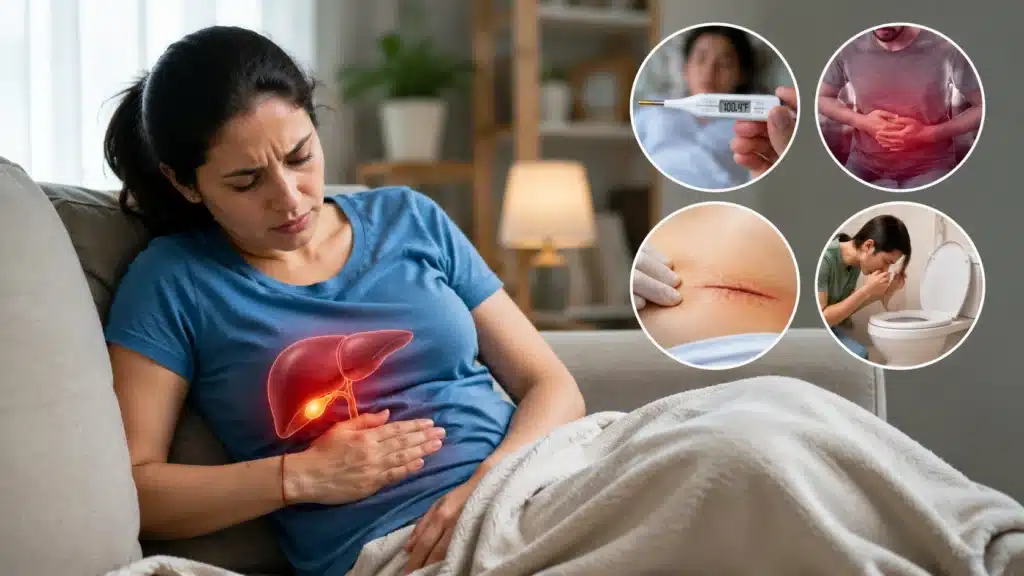
You have probably heard the term “gallbladder stones” from your doctor, or maybe you have been experiencing some discomfort after meals and are wondering what is going on inside your body. Either way, you are in the right place.
Gallbladder stones are one of the most common digestive problems people face today. In India, roughly 1 in 10 adults has them. Globally, they are one of the leading reasons people end up needing digestive surgery. And yet, many people walk around with gallbladder stones for years without ever knowing they have them.
The important thing to understand is this: having gallbladder stones does not automatically mean your life is in danger or that you immediately need an operation. What it means is that you need the right information to make the right decisions, and that is exactly what this guide is for.
By the time you finish reading this, you will know what gallbladder stones are, why they form, what symptoms to watch out for, how they are diagnosed, what your treatment options look like, and how you can protect yourself going forward.
Before we talk about the stones themselves, it helps to understand the organ they live in.
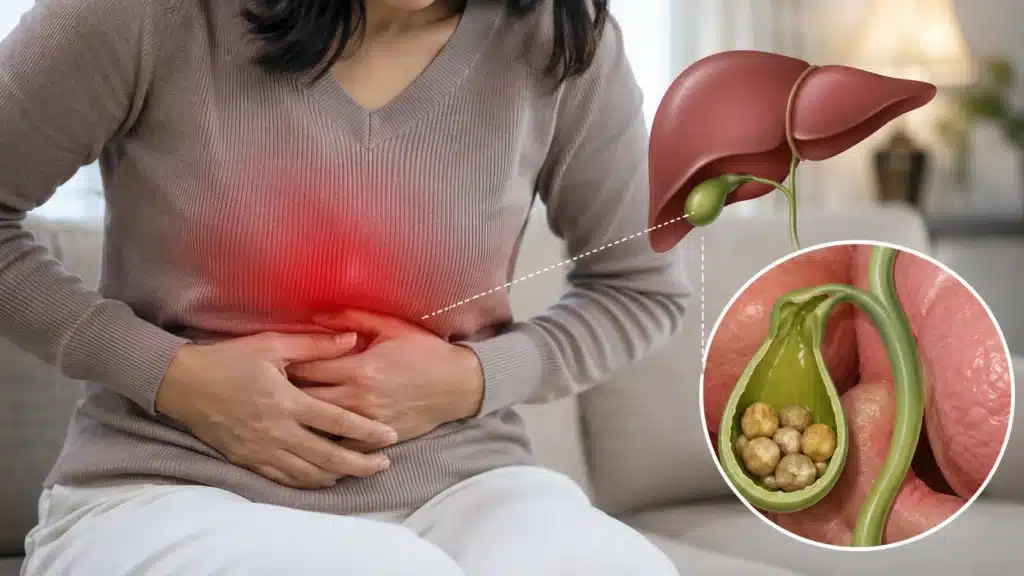
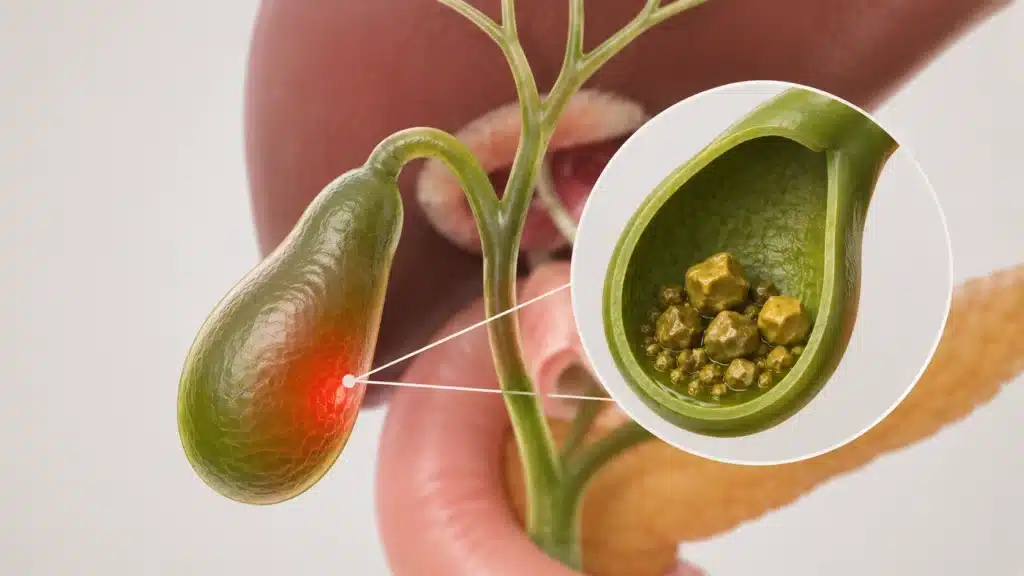
Your gallbladder is a small, pear-shaped pouch sitting just beneath your liver on the right side of your abdomen. Its job is to store bile, a greenish-yellow digestive fluid that your liver makes to help your body break down the fat in food. Every time you eat something fatty, your gallbladder squeezes and releases bile into your small intestine.
Gallbladder stones, medically known as cholelithiasis or calculi in the gallbladder, are hardened deposits that form inside the gallbladder when the chemicals in bile stop being in balance. Think of bile like a solution. When the right ingredients are present in the right amounts, everything stays dissolved. When that balance tips, certain substances crystallize and slowly harden into stones.
These stones can range enormously in size. Some are as tiny as a grain of sand. Others grow as large as a golf ball. You might have just one stone or you might have dozens. What matters is not really how many you have; it is whether they are causing problems.
Not all gallstones are the same. There are three main types, and knowing which type you have helps your doctor decide the right treatment.
Ever wondered what causes gallstones?
In most cases, gallbladder stones form when there is an imbalance in the substances present inside bile, the digestive fluid stored in the gallbladder.
When bile contains too much cholesterol or becomes too concentrated, tiny crystals begin to form. Over time, these crystals grow into gallbladder stones.
Healthy eating habits, proper weight management, and regular meals can help reduce the risk of gallbladder stones and related digestive problems.
Some people have a higher chance of developing gallbladder stones than others. Age, lifestyle, hormones, diet, and certain health conditions can all increase the risk of gallstone formation.
Simple lifestyle changes like healthy eating, regular exercise, and maintaining a healthy weight can help reduce the risk of gallbladder stones and related digestive issues. You may be more likely to develop gallbladder stones if the following apply to you:
Here’s something many people don’t know: not all gallbladder stones cause symptoms. In fact, many people have silent stones that are found only during an ultrasound or health check-up.
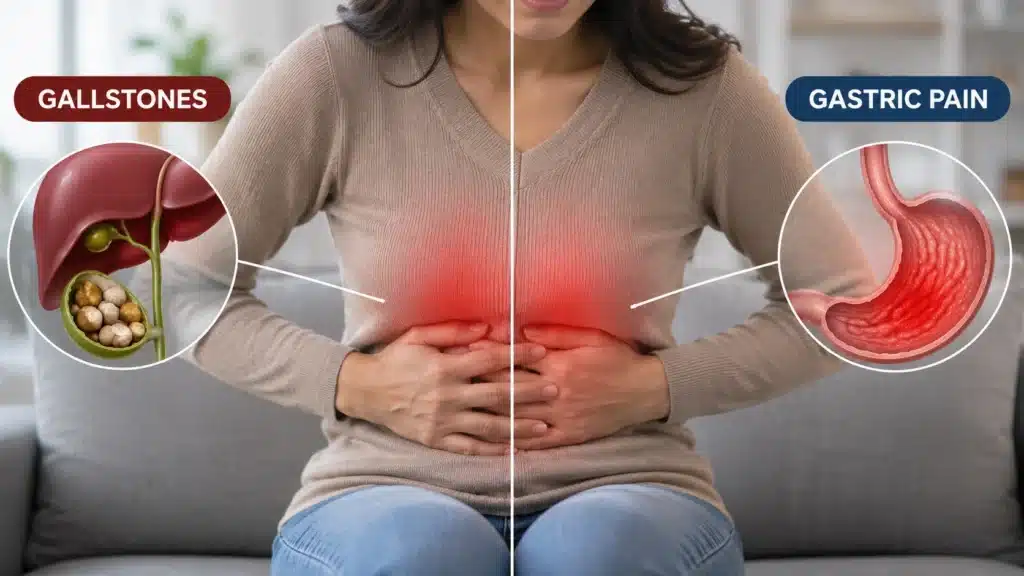
But when gallbladder stone symptoms do appear, they can become difficult to ignore. The most common symptom is sudden gallbladder pain, especially after eating oily or heavy meals. This pain usually happens in the upper right side of the abdomen and may come and go in waves.
Sometimes gallbladder stones can block the bile duct or cause infection, leading to serious complications. Ignoring these signs of gallbladder stones can increase the risk of infection and other serious gallbladder complications. Early diagnosis and timely treatment can help prevent emergencies.
Seek immediate medical attention if you experience:
Diagnosing gallbladder stones is usually simple and painless. If you have symptoms like recurring gallbladder pain, bloating, nausea, or digestive discomfort, your doctor may recommend a few tests to confirm the condition and check for complications.
Early diagnosis helps prevent infection, blockage, and other serious gallbladder problems.
Many people ignore gallstones when the symptoms are mild or occasional. But in some cases, untreated stones can lead to serious and even life-threatening complications.
This is why doctors take recurring gallbladder pain and gallbladder stone symptoms seriously, even if the discomfort comes and goes.
Many cases of gallstones can be prevented with simple lifestyle and diet changes. Your daily habits play a major role in keeping the gallbladder healthy and reducing the risk of stone formation.
Small changes today can help you avoid severe gallbladder pain and future complications. Healthy eating habits and regular physical activity can greatly reduce the risk of gallstones and improve overall digestive health.
When you are dealing with gallstones, the right care can make all the difference. At Rama Hospital, patients receive expert diagnosis, advanced treatment, and compassionate care all under one roof.
You deserve treatment that focuses not just on the stone but on your overall health and recovery. At Rama Hospital, you benefit from:
The treatment for gallstones depends on whether the stones are causing symptoms and if any complications have developed. While some people may only need regular monitoring, others may require surgery or advanced procedures to relieve severe gallbladder pain and prevent future problems.
After gallstone treatment or gallbladder surgery, diet plays an important role in recovery. Most people recover well with simple dietary changes. Some people may experience mild bloating or loose stools initially, but these symptoms usually improve over time.
See your doctor if you experience:
In rare cases, very small stones pass through the bile duct and are excreted. But most gallstones stay put and slowly grow over time. They do not dissolve without treatment.
Laparoscopic gallbladder stone removal is one of the safest and most commonly performed surgeries worldwide. Serious complications occur in fewer than 1% of patients. For most people, the risk of leaving a symptomatic stone untreated is far greater than the risk of surgery.
Yes. Your liver continues producing bile, which flows directly into the small intestine. The vast majority of people who have their gallbladder removed live completely normally. A small number experience loose stools in the early weeks, which settles with a low-fat diet.
There is a clear genetic component. If a parent or sibling has had cholelithiasis, your risk of developing gallstones is roughly double compared to someone with no family history.
They form in different organs from different substances. Gallstones form in the gallbladder from bile components and typically cause gallbladder pain after eating. Kidney stones form in the kidneys from mineral salts and cause pain in the flank or lower back. They require completely different treatments.
No home remedy has been scientifically proven to dissolve or remove calculi in the gallbladder. Dietary changes can reduce symptoms and help prevent new stones from forming, but they cannot remove existing ones. Always speak to your doctor before trying any herbal or alternative treatment.
Ignoring gallstone symptoms puts you at risk of serious complications, including gallbladder infection, bile duct blockage, pancreatitis, and, over the long term, gallbladder cancer. Early treatment is always safer and simpler than treating a complication.
Most patients return to light activities within one week and full normal activity within two weeks after laparoscopic surgery. Open surgery, which is less common, requires four to six weeks of recovery.
Gallstones are becoming increasingly common due to unhealthy eating habits, obesity, sedentary lifestyles, and digestive disorders.
Ureter stones are one of the most painful urinary problems people experience. In many cases, the pain begins suddenly and becomes severe enough to send patients to the emergency room.
Most people never think about their gallbladder until severe pain suddenly sends them to the emergency room.
Back pain is one of the most common health complaints worldwide. Whether you’re sitting at a desk for long hours, lifting heavy objects, or simply getting older, back pain can affect anyone.
This is also where most heart bypass surgery stories actually begin. Not on the day someone collapses, but years before, quietly, while everything still feels normal.
No rows found.