
If you ask ten people about arthritis, chances are you’ll hear ten different opinions. Some will tell you that joint pain is simply a part of growing old. Others may advise complete bed rest or insist that surgery is the only solution.
The problem is that many of these beliefs are actually osteoarthritis myths.
These osteoarthritis myths have been passed down through generations and are often repeated by friends, relatives, and even social media posts. unfortunately, believing these misconceptions can delay proper treatment and allow the condition to worsen over time.
Osteoarthritis is one of the leading causes of joint pain and disability worldwide. in india, millions of people struggle with knee pain, stiffness, and reduced mobility caused by this condition. yet many patients continue to make treatment decisions based on outdated information rather than medical facts.
Understanding the difference between osteoarthritis myths & facts is important because early diagnosis and proper management can significantly improve quality of life. the earlier patients seek help, the better their chances of maintaining healthy joints and staying active.
What is osteoarthritis?
Doctors explain that osteoarthritis isn’t a single-cause disease. It’s influenced by age, weight, genetics, old injuries, and lifestyle. That’s exactly why osteoarthritis myths spread so easily, the condition looks different in every patient.
Before we bust osteoarthritis myths, let’s get the basics right.
- Osteoarthritis is a degenerative joint condition.
- It happens when the cartilage cushioning your joints wears down over time.
- Knees, hips, and hands are commonly affected.
- It’s the most common form of arthritis in India today.
It occurs when the protective cartilage that cushions the ends of bones gradually wears away.
Commonly affected joints include:
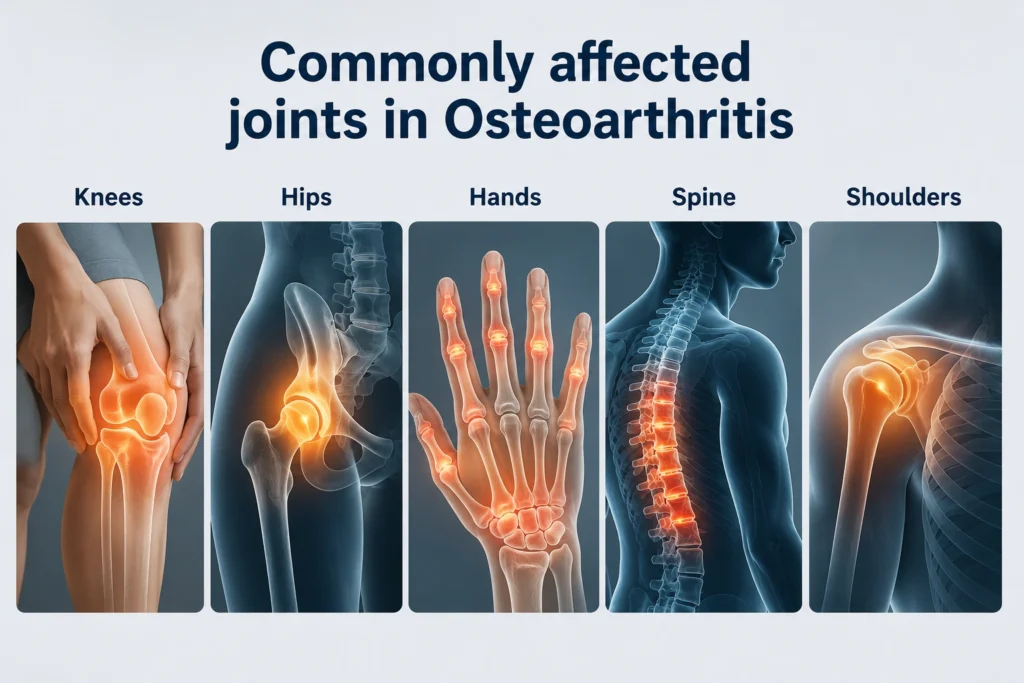
- Knees
- Hips
- Hands
- Spine
- Shoulders
Common symptoms include:
- Joint pain
- Stiffness
- Swelling
- Reduced flexibility
- Difficulty walking
- Cracking or grinding sensation in joints
Despite its prevalence, many osteoarthritis myths still exist. The number of people affected by osteoarthritis in India continues to rise due to:
- Increasing life expectancy
- Sedentary lifestyles
- Obesity
- Sports injuries
- Poor posture habits
Why osteoarthritis myths can delay proper treatment?
Many patients spend months or even years relying on advice from friends, relatives, or social media.
Believing osteoarthritis myths can lead to:
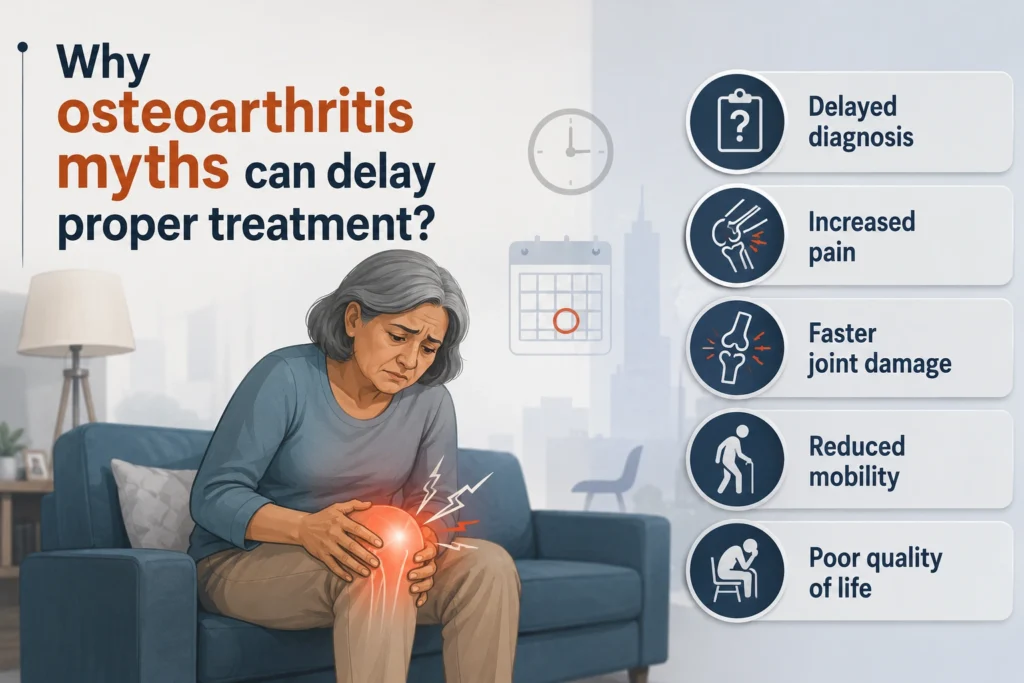
- Delayed diagnosis
- Increased pain
- Faster joint damage
- Reduced mobility
- Poor quality of life
Understanding osteoarthritis myths & facts is essential because early intervention often helps patients stay active for longer.
This is why improving osteoarthritis awareness remains important. Let’s look at the most common myths about osteoarthritis that many Indian patients still believe.
Myth #1: Osteoarthritis only affects elderly people
This is one of the most common osteoarthritis myths.
The Fact
While age is a major risk factor, osteoarthritis is not limited to senior citizens.
Many younger adults develop osteoarthritis due to:
- Previous injuries
- Sports-related joint damage
- Obesity
- Genetic factors
- Repetitive stress on joints
Examples include:
- Former athletes
- People with ligament injuries
- Individuals who are overweight
- Workers with physically demanding jobs
One of the biggest arthritis misconceptions is assuming that joint pain in younger people cannot be osteoarthritis.
Remember
- Osteoarthritis can develop in your 30s or 40s.
- Early symptoms should never be ignored.
- Early treatment often leads to better outcomes.
Among all osteoarthritis myths, this one frequently delays diagnosis in younger patients.
Myth #2: Exercise makes arthritis worse
Many patients avoid movement because they believe exercise will damage their joints.
This is one of the most harmful knee arthritis myths.
The Fact
Appropriate exercise is actually beneficial.
Regular physical activity helps:
- Strengthen muscles around joints
- Improve flexibility
- Reduce stiffness
- Support weight management
- Improve balance
Recommended activities include:
- Walking
- Swimming
- Cycling
- Stretching exercises
- Physiotherapy-guided workouts
One of the biggest osteoarthritis treatment facts is that controlled movement supports joint health.
What to Avoid
- High-impact activities during flare-ups
- Exercising through severe pain
- Incorrect exercise techniques
Among all common myths about arthritis, avoiding movement completely can often make symptoms worse.
This is why healthcare experts continue to emphasize osteoarthritis awareness and active lifestyles.
Myth #3: Joint pain is a normal part of aging
Many people simply accept pain as they grow older.
This is another widespread osteoarthritis myth.
The Fact
Aging itself does not cause persistent joint pain.
Pain is usually a sign that something needs medical attention.
Warning signs include:
- Morning stiffness
- Pain while walking
- Swollen joints
- Difficulty climbing stairs
- Reduced joint movement
Ignoring symptoms because of osteoarthritis myths can result in progressive joint damage.
Important Point
Growing older does not mean you must live with pain.
If symptoms persist, consult an orthopedic specialist.
Many cases improve significantly with:
- Physiotherapy
- Weight management
- Medications
- Lifestyle modifications
Understanding the difference between osteoarthritis facts and myths can help patients seek treatment sooner.
Myth #4: Knee replacement is the only treatment
This is one of the most feared osteoarthritis myths among Indian patients.
Many people assume that diagnosis automatically means surgery.
The Fact
Most patients do not require immediate knee replacement surgery.
Several non-surgical treatments are available.
These include:
- Pain management medications
- Physiotherapy
- Weight reduction
- Joint-supporting exercises
- Bracing
- Activity modification
- Injections when appropriate
One of the most important osteoarthritis treatment facts is that treatment depends on disease severity.
Surgery is considered when
- Pain becomes severe
- Mobility is significantly restricted
- Conservative treatments stop working
- Joint damage becomes advanced
Patients seeking knee arthritis treatment in Noida often discover that surgery is only one part of a broader treatment spectrum.
Among all knee arthritis myths, this misconception creates unnecessary fear and anxiety.
Myth #5: Nothing can be done to slow osteoarthritis
This is perhaps the most damaging of all osteoarthritis myths.
The Fact
Although osteoarthritis cannot be completely reversed, its progression can often be slowed.
Many evidence-based strategies help preserve joint function.
These include:
- Maintaining healthy weight
- Staying physically active
- Strength training
- Early diagnosis
- Physiotherapy
- Managing inflammation
- Following medical advice
One of the key osteoarthritis treatment facts is that patients who act early often experience better long-term outcomes.
Lifestyle measures that help
- Balanced diet
- Adequate hydration
- Joint-friendly exercises
- Proper footwear
- Good posture habits
These steps help improve mobility and reduce symptoms.
This is why arthritis myths debunked discussions are so important for patient education.
When should you see an orthopedic specialist?
You should not wait until pain becomes severe.
Consult a specialist if you experience:
- Persistent knee pain
- Joint swelling
- Stiffness lasting more than a few weeks
- Difficulty walking
- Difficulty climbing stairs
- Reduced joint movement
- Frequent joint discomfort
Early consultation can help identify the problem before significant damage occurs.
If you are looking for osteoarthritis treatment in Noida, timely evaluation by the best orthopedic doctor in Noida can help create a personalized treatment plan.
How osteoarthritis is treated today?
Treatment is personalised. A good orthopedic doctor in Noida will assess joint condition, lifestyle, and progression before recommending a plan, not jump straight to surgery.
Modern osteoarthritis treatment facts show a wide spectrum of options, including:
- Lifestyle modification – weight control, activity adjustment.
- Physiotherapy – targeted strengthening and flexibility programs.
- Medication – pain and inflammation management.
- Injections – for moderate cases needing additional relief.
- Surgical options – reserved for advanced, unresponsive cases.
Tips to protect your joints and stay active
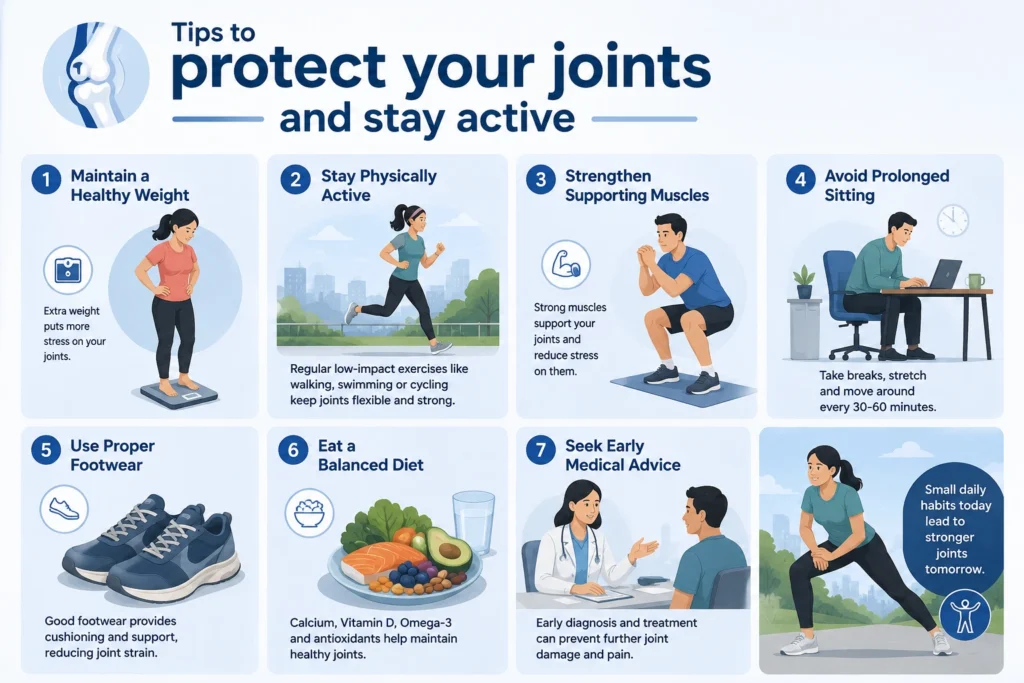
Small lifestyle changes can make a significant difference in managing osteoarthritis and protecting your joints. Simple habits such as staying active, maintaining a healthy weight, and following a balanced diet can help reduce pain and improve mobility. Over time, these consistent efforts can support better joint function and enhance overall quality of life.
- Maintain a Healthy Weight: Less body weight means less stress on joints.
- Stay Physically Active: Regular movement helps maintain flexibility.
- Strengthen Supporting Muscles: Strong muscles provide better joint support.
- Avoid Prolonged Sitting: Take short movement breaks throughout the day.
- Use Proper Footwear: Supportive shoes reduce stress on the knees and hips.
- Eat a Balanced Diet.
Frequently Asked Questions (FAQs)
Can young people develop osteoarthritis?
Yes. Osteoarthritis can affect adults in their 30s and 40s, especially with injury history, obesity, or genetic factors.
Is walking good for osteoarthritis patients?
Generally, yes. Walking is a low-impact activity that supports joint mobility, though intensity should match individual capacity.
Can exercise reduce osteoarthritis symptoms?
Yes. Guided exercise often strengthens muscles around the joint, which may reduce pain and improve function over time.
Is knee replacement necessary for every osteoarthritis patient?
No. Most patients manage symptoms with non-surgical treatment. Surgery is usually considered only in advanced cases.
Can osteoarthritis progression be slowed down?
Often, yes. Weight management, physiotherapy, and early diagnosis can help slow progression significantly.
What are the early symptoms of osteoarthritis?
Morning stiffness, mild swelling, joint clicking, and discomfort during movement are common early signs.
Conclusion
Believing osteoarthritis myths can prevent patients from receiving timely treatment and maintaining an active lifestyle. Many myths about osteoarthritis continue to circulate despite significant advances in orthopedic care.
Understanding the difference between osteoarthritis facts and myths empowers patients to make informed healthcare decisions. Whether it is the belief that osteoarthritis only affects older adults or the misconception that surgery is the only option, these osteoarthritis misconceptions often create unnecessary fear.
The good news is that effective treatment options exist, and early intervention can make a substantial difference.
Consult the best orthopedic doctor in Noida for a comprehensive evaluation and personalized treatment plan. At the best hospital in Noida, patients can access advanced osteoarthritis treatment in Noida, expert joint pain treatment in Noida, and specialized knee arthritis treatment in Noida from experienced orthopedic specialists. If surgery is required, an experienced knee replacement surgeon in Noida can guide you through every step of treatment and recovery.