

Joint pain is one of the most common reasons people visit an orthopedic specialist or rheumatologist. However, many people assume that all arthritis is the same. The reality is quite different. This is not a single disease but a group of conditions that affect the joints, and each type has its own causes, symptoms, and treatment approach.
Among the most common forms are rheumatoid arthritis and osteoarthritis. While both can cause joint pain, stiffness, and reduced mobility, they are fundamentally different conditions. Osteoarthritis is primarily caused by the gradual wear and tear of joint cartilage over time, whereas RA is an autoimmune disease in which the body’s immune system mistakenly attacks healthy joint tissues.
Because the early symptoms can sometimes appear similar, many patients struggle to understand the difference between the two. A person experiencing swollen, painful knees or stiff fingers may assume it is simply age-related when it could actually be an inflammatory condition requiring a completely different treatment strategy.
What is arthritis?
Arthritis is not a single disease. It is an umbrella term for over 100 conditions that cause joint pain, stiffness, and inflammation. The two most common types are the following:
- Osteoarthritis (OA) — a wear-and-tear joint condition.
- Rheumatoid Arthritis (RA) — an autoimmune inflammatory condition.
Both produce symptoms like joint pain and swelling. But the underlying cause and the way they behave in the body are very different. Understanding the difference helps patients seek the right care faster.
How joint damage happens: a quick comparison
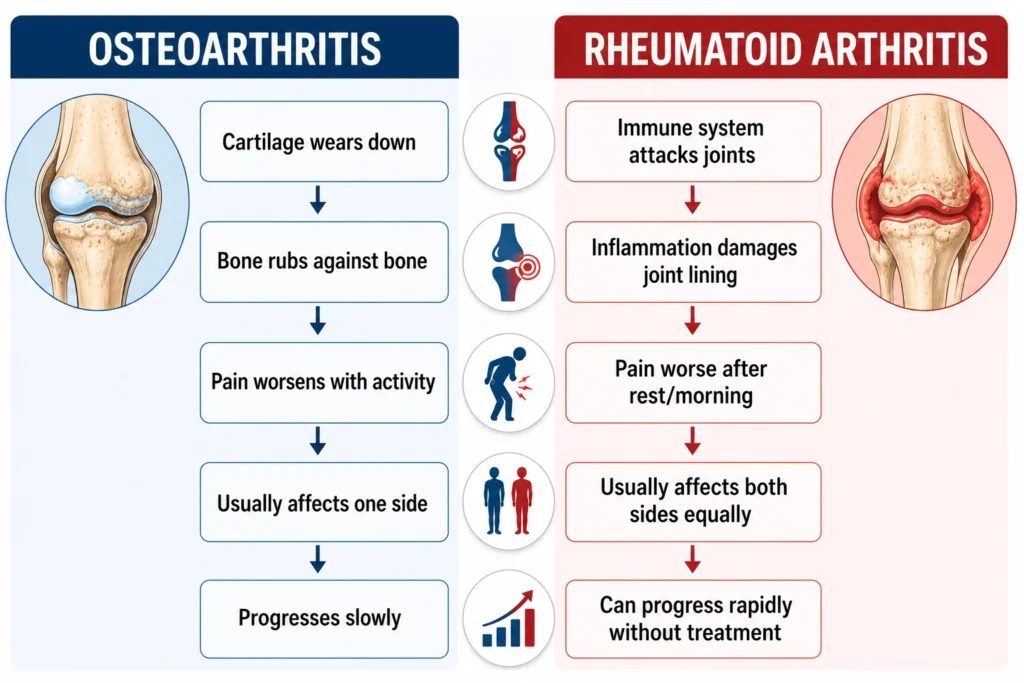
7 key differences between rheumatoid arthritis and osteoarthritis
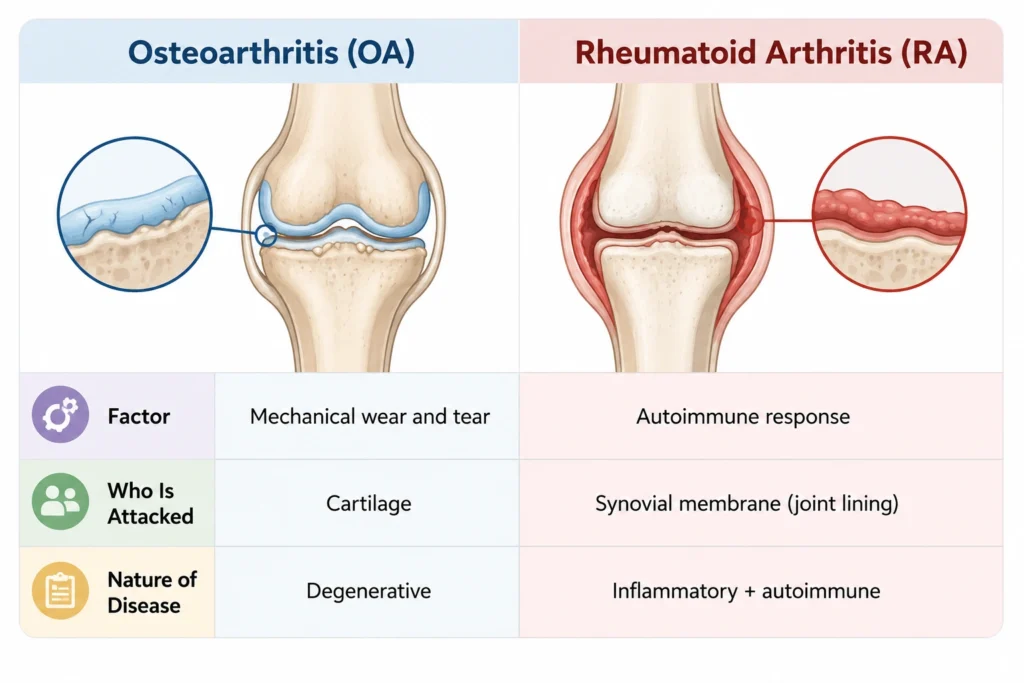
Difference 1: The Root Cause
This is the most important distinction between the two types of arthritis.
Osteoarthritis symptoms develop because of mechanical damage. Over time, the cartilage that cushions your joints breaks down. Bone starts rubbing against bone. The body responds with pain, stiffness, and limited movement.
RA symptoms, on the other hand, are caused by the immune system. In RA, the body mistakenly attacks the synovial membrane, the lining that protects your joints. This autoimmune process triggers persistent symptoms, including inflammation, swelling, and eventual joint damage.
Difference 2: Who It Typically Affects
This age and gender pattern helps doctors narrow down which types of a patient might have even before ordering tests.
Osteoarthritis symptoms are most common in the following:
- People above 50 years of age.
- Individuals who are overweight or obese.
- People with physically demanding jobs.
- Athletes or those with previous joint injuries.
RA symptoms tend to appear in:
- Women (RA is 2–3 times more common in women than men).
- People between 30 and 60 years of age.
- Individuals with a family history of autoimmune conditions.
- Smokers (cigarette smoking significantly raises RA risk).
Difference 3: Which Joints Are Affected
The location of symptoms tells a lot about the type.
Osteoarthritis symptoms typically appear in the following:
- Knees and hips (most common).
- Spine and lower back.
- Fingers and thumbs.
- Feet.
RA symptoms most often affect:
- Small joints of the hands and wrists.
- Feet and ankles.
- Elbows, shoulders, and knees.
- The jaw and cervical spine (in advanced cases).
| Joint Location | Osteoarthritis | Rheumatoid Arthritis |
| Knees & Hips | Very common | Less common initially |
| Small hand joints | Less typical | Very common |
| Affects both sides equally | No | Yes (symmetrical) |
| Spine involvement | Yes (lower back) | Yes (cervical spine) |
A critical clue: RA produces symptoms symmetrically; if your right wrist hurts, your left wrist likely hurts too. OA tends to affect one joint at a time.
Difference 4: The Pattern of Pain and Stiffness
Pain behavior is one of the clearest ways to distinguish osteoarthritis vs RA.
If you wake up every morning with stiff, swollen hands that take more than an hour to loosen up, your symptoms are pointing strongly toward RA.
Osteoarthritis symptoms:
- Pain increases with activity and physical use.
- Stiffness improves once you start moving.
- Morning stiffness lasts less than 30 minutes.
- The joint feels better with rest.
RA symptoms:
- Morning stiffness that lasts more than one hour (often 2–3 hours).
- Pain and swelling are worse after periods of rest.
- Fatigue is a constant companion, not just joint pain.
- Joints may feel warm and look visibly red and swollen.
Difference 5: Systemic vs Local Effects
This difference is often underestimated by patients experiencing symptoms for the first time.
Osteoarthritis is a local condition. It stays in the joint. It does not cause fever, fatigue, or organ involvement. The osteoarthritis symptoms are limited to the affected joint area.
These whole-body symptoms often appear before significant joint damage is visible on scans.
RA is a systemic disease. Because it is autoimmune, it can affect the whole body. Alongside rheumatoid arthritis symptoms in the joints, patients may also experience:
- Persistent fatigue and low energy.
- Low-grade fever.
- Unexplained weight loss.
- Inflammation in the eyes (dry, red, or painful eyes).
- Lung or heart involvement in severe cases.
- Skin nodules near affected joints.
Difference 6: How It Is Diagnosed
When you visit an orthopedic doctor in Noida or a rheumatologist, diagnosis involves both clinical assessment and investigations.
For Osteoarthritis:
- X-ray shows narrowed joint space, bone spurs, and cartilage loss.
- Physical examination of joint range and tenderness.
- MRI may be ordered for soft tissue evaluation.
- Blood tests usually come back normal.
For RA:
- Blood tests are essential: RF (Rheumatoid Factor) and anti-CCP antibody.
- ESR and CRP markers show active inflammation.
- X-ray or MRI detects joint erosion and synovial thickening.
- A positive anti-CCP result is a strong indicator of RA even in early stages.
Difference 7: Treatment Approaches
Osteoarthritis vs RA treatment strategies are quite different, even though both aim to reduce symptoms and improve quality of life.
Osteoarthritis Treatment:
- Weight management to reduce joint load.
- Physiotherapy and strengthening exercises.
- Pain relievers and anti-inflammatory medications.
- Joint injections (corticosteroids or hyaluronic acid).
- Knee or hip replacement surgery in severe cases.
RA Treatment:
- DMARDs (Disease-Modifying Anti-Rheumatic Drugs), the cornerstone of RA treatment.
- Biologic therapies that target specific immune pathways.
- Corticosteroids to manage flare-ups.
- Physiotherapy and occupational therapy.
- Regular monitoring with blood tests and imaging.
When should you see a doctor?
Do not ignore symptoms. Early treatment can make the difference between maintaining full joint function and facing irreversible damage. What may start as occasional stiffness or mild knee pain can gradually progress into persistent discomfort, reduced mobility, and significant joint damage if left untreated.
The sooner osteoarthritis is diagnosed, the more treatment options are available to help manage symptoms and slow disease progression. Early intervention through lifestyle modifications, physiotherapy, medications, and joint-protection strategies can help patients stay active, independent, and pain-free for longer. Seeking medical advice at the first signs of joint problems can significantly improve long-term outcomes and quality of life.
These symptoms warrant a proper evaluation by an experienced specialist. At Rama Hospital, recognized as one of the best hospitals in Noida, our orthopedics and rheumatology team provides advanced treatment in Noida with precision, compassionate care, and the latest diagnostic and treatment technologies.
Frequently Asked Questions (FAQs)
Q1. My knees hurt every morning. How do I know if it is osteoarthritis or rheumatoid arthritis?
Morning stiffness is a key clue. If the stiffness fades within 20–30 minutes, it leans toward osteoarthritis symptoms. If it lasts more than an hour and is accompanied by swelling or warmth, it is more likely rheumatoid symptoms. Pay attention to how your joints feel throughout the day. Osteoarthritis-related stiffness often improves with gentle movement, while RA may cause persistent discomfort, fatigue, and prolonged joint inflammation even after activity.
Q2. Can a young person get arthritis?
Yes. RA symptoms commonly appear between ages 30 and 50. There is also a condition called “juvenile idiopathic arthritis” that affects children. Osteoarthritis symptoms are less common in young people but can occur after joint injuries.
Q3. Is arthritis curable?
Currently, neither type has a complete cure. However, both conditions are highly manageable. With the right treatment in Noida and lifestyle changes, most patients lead active, pain-reduced lives. Early diagnosis plays a crucial role in preventing joint damage and preserving mobility. Regular follow-ups, appropriate medications, physiotherapy, and healthy lifestyle habits can help patients maintain their independence and enjoy a better quality of life for years to come.
Q4. Do I need surgery for arthritis?
Not necessarily. Surgery is considered only when other treatments fail and joint damage is severe. Most patients with symptoms are managed effectively with medication, physiotherapy, and lifestyle adjustments.
Q5. Can diet affect arthritis symptoms?
Yes. Anti-inflammatory foods, like omega-3-rich fish, turmeric, green leafy vegetables, and nuts, may help reduce symptoms in some patients. While diet alone cannot cure, it can support overall joint health and help manage inflammation when combined with medical treatment and regular exercise. Maintaining a healthy weight through balanced nutrition can also reduce stress on weight-bearing joints such as the knees and hips, potentially improving mobility and comfort.
Conclusion
Arthritis symptoms should not be ignored as normal aging. Osteoarthritis and RA need different treatment, so early diagnosis is important. If you have joint pain, stiffness, or swelling, visit the best hospital for arthritis treatment in Noida for proper care.
Whether your symptoms are just beginning or have been bothering you for years, the most important step is getting an accurate diagnosis. Talk to an orthopedic doctor in Noida, understand your types of, and explore the best treatment path for your life.
Ignoring persistent joint pain, stiffness, or swelling can allow the condition to progress and affect your mobility over time. Early evaluation can help identify the underlying cause of your symptoms and prevent unnecessary joint damage. The sooner treatment begins, the better the chances of managing pain, maintaining joint function, and staying active.
Rama Hospital, your trusted partner for expert arthritis treatment in Noida and comprehensive orthopedic care.