Your knees carry your entire body every single day. When they start to hurt, stiffen, or make that grinding noise, life changes fast. Simple things, climbing stairs, getting out of a chair, walking to the market, become tasks you dread.
Most of the time, the reason is osteoarthritis of the knee.
It’s one of the most common joint conditions in India. And yet, most patients don’t fully understand what’s happening inside their knee, why it started, or what can actually be done about it.
What is osteoarthritis of the knee?
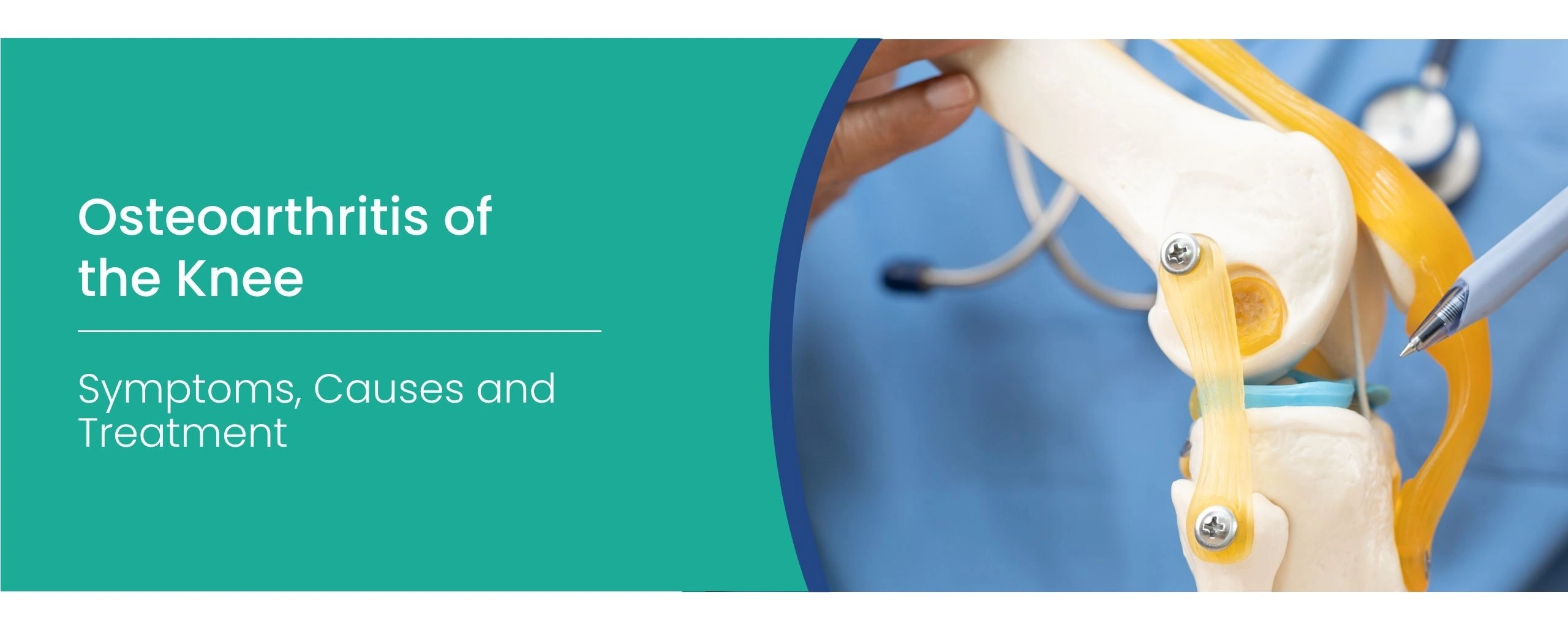
Osteoarthritis of the knee is a degenerative joint disease that develops gradually over time. The cartilage, the smooth, cushion-like tissue that covers the ends of the bones inside the knee joint, slowly breaks down and becomes thinner. This cartilage normally allows the bones to glide smoothly against each other during movement and acts as a shock absorber when you walk, run, or climb stairs.
As the cartilage wears away, the protective cushion between the bones decreases. Eventually, the bones may begin rubbing directly against each other, leading to pain, stiffness, swelling, and reduced mobility. Over time, the joint may also develop bone spurs, inflammation, and changes in its normal shape, making movement even more difficult.
It’s important to understand that knee osteoarthritis is not simply a normal part of aging. While advancing age increases the risk, many other factors contribute to the development of the condition. There are specific causes of osteoarthritis that can damage the knee joint and accelerate cartilage wear.
What are the main causes of osteoarthritis?
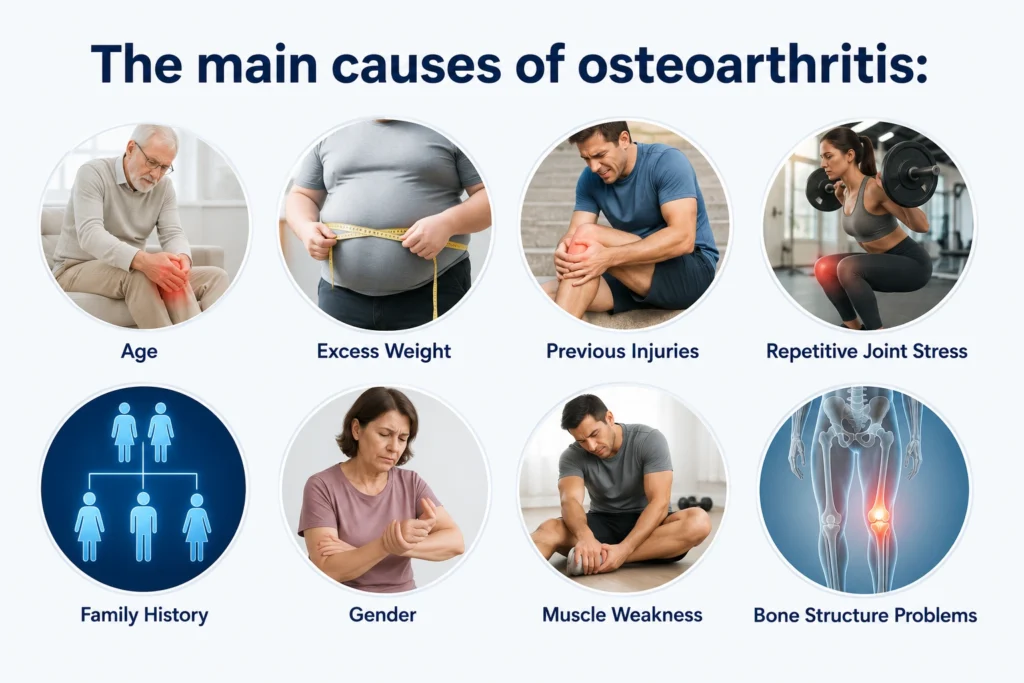
Understanding the causes of osteoarthritis is the first step toward protecting your joints.
Primary Causes of Osteoarthritis:
- Age: Joint cartilage wears down naturally as you get older, especially after 45.
- Excess Weight: Extra body weight puts more pressure on the knee joints.
- Previous Injuries: Old sports injuries, fractures, or ligament tears can increase the risk later in life.
- Repetitive Joint Stress: Frequent kneeling, squatting, standing, or heavy lifting can damage joints over time.
- Family History: Having close family members with osteoarthritis may increase your risk.
- Gender: Women are more likely to develop osteoarthritis, particularly after menopause.
- Muscle Weakness: Weak muscles around the joints provide less support and increase joint strain.
- Bone Structure Problems: Conditions like bow legs or knock knees can cause uneven pressure on the joints.
Risk Factor Summary Table
| Risk Factor | How It Causes Osteoarthritis | Level of Risk |
| Age (45+) | Cartilage loses regenerative ability | High |
| Obesity | Excess load accelerates cartilage wear | Very High |
| Previous injuries | Joint damage speeds up degeneration | High |
| Repetitive joint stress | Micro-damage accumulates over time | Moderate-High |
| Family history (genetics) | Inherited cartilage weakness | Moderate |
| Gender (female, post-menopause) | Hormonal changes affect joint tissue | Moderate |
| Muscle weakness | Poor joint stabilization | Moderate |
| Bone deformities | Uneven weight distribution | Moderate |
Osteoarthritis Knee Symptoms: What to Watch For
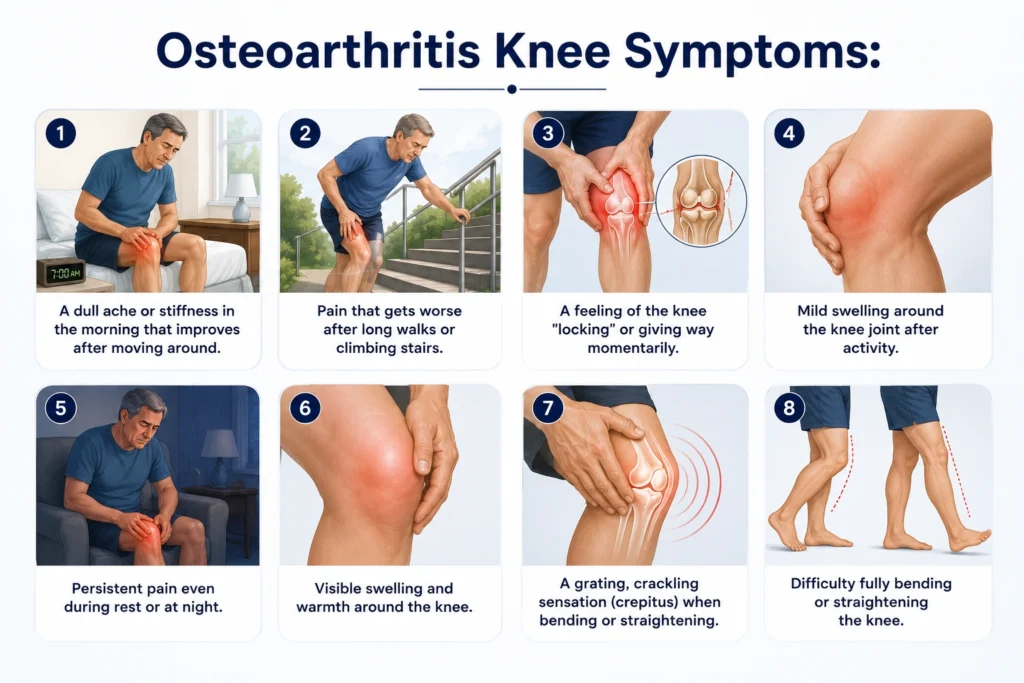
Many patients ignore early osteoarthritis knee symptoms for months, even years. Don’t make that mistake. Early diagnosis leads to far better outcomes.
Early Osteoarthritis Knee Symptoms:
- A dull ache or stiffness in the morning that improves after moving around.
- Pain that gets worse after long walks or climbing stairs.
- A feeling of the knee “locking” or giving way momentarily.
- Mild swelling around the knee joint after activity.
Moderate to Advanced Osteoarthritis Knee Symptoms:
- Persistent pain even during rest or at night.
- Visible swelling and warmth around the knee.
- A grating, crackling sensation (crepitus) when bending or straightening.
- Difficulty fully bending or straightening the knee.
- Noticeable reduction in walking distance due to pain.
- Change in leg alignment, legs appearing more bow-shaped or knock-kneed.
If you’re experiencing three or more of these osteoarthritis knee symptoms, it’s time to see a specialist. Waiting only makes the cartilage damage worse, and harder to treat.
Treatment of osteoarthritis: your options
Treatment of osteoarthritis depends on the stage of the disease, your age, weight, lifestyle, and how much your daily life is affected. There is no one-size-fits-all answer, but there are excellent options at every stage.
Non-Surgical Treatment of Osteoarthritis
These work well in early to moderate stages:
Lifestyle Changes:
- Weight loss: Losing even 5 kg can dramatically reduce knee pain.
- Low-impact exercise: Swimming, cycling, and yoga protect joints while keeping them mobile.
- Avoiding high-impact activities like running on hard surfaces.
Physical Therapy:
- Strengthening exercises for the quadriceps and hamstrings.
- Stretching routines to improve flexibility.
- Gait correction to reduce knee load.
Medications:
- Pain relievers (NSAIDs) to reduce inflammation.
- Topical creams and gels for localized pain relief.
- Corticosteroid injections for flare-ups.
Advanced Non-Surgical Options:
- Hyaluronic acid injections: Lubricates the joint and reduces friction.
- PRP (Platelet-Rich Plasma) therapy: Uses the patient’s own blood to stimulate healing.
- Knee bracing and orthotics for alignment support.
Surgical Treatment of Osteoarthritis
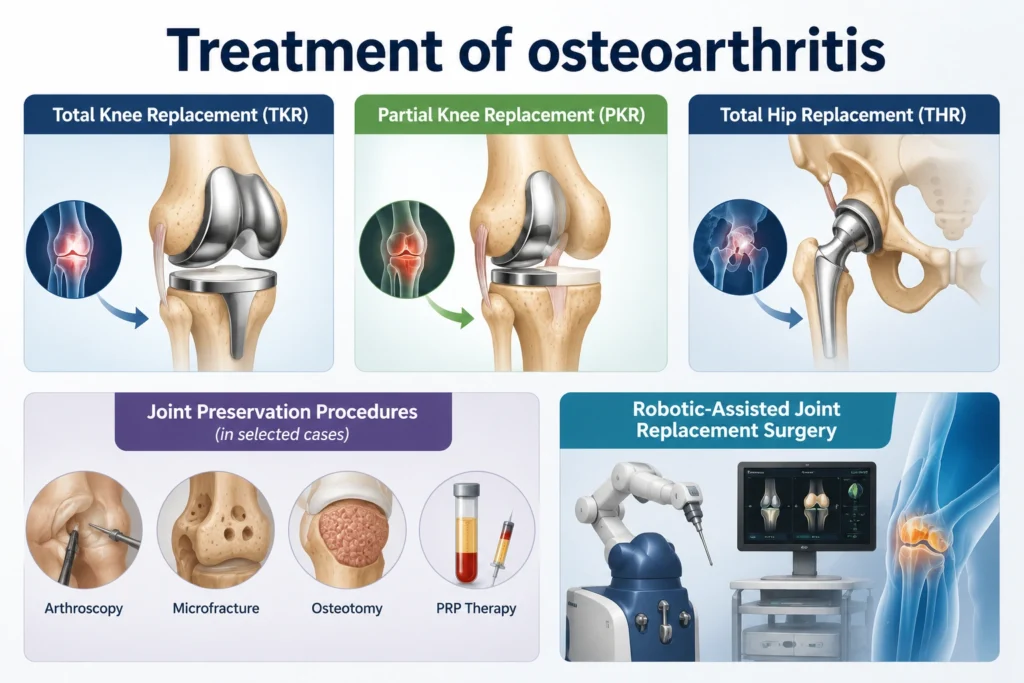
Modern knee replacement surgery has a very high success rate. Most patients return to an active life within 3-6 months.
When non-surgical methods no longer provide relief, surgery may be the most effective option. The treatment of osteoarthritis in severe cases includes advanced surgical procedures aimed at restoring mobility and reducing pain. If you are looking for the best hospital for arthritis treatment in Noida, consulting an experienced orthopedic team can help determine the most suitable treatment approach based on the severity of your condition.
- Total Knee Replacement (TKR)
- Partial Knee Replacement (PKR)
- Total Hip Replacement (THR)
- Joint Preservation Procedures (in selected cases)
- Robotic-Assisted Joint Replacement Surgery
When should you see a doctor?
The best orthopedic doctor in Noida will assess your condition through physical examination, X-rays, and, if needed, an MRI, and recommend the most appropriate treatment of osteoarthritis for your specific case.
Don’t wait for the pain to become unbearable. See a specialist if:
- Knee pain has lasted more than 4-6 weeks without improving.
- You’re changing your daily habits because of knee discomfort.
- Swelling isn’t going away with rest or medication.
- You’ve already tried basic pain relief and it’s not working.
Why patients choose Rama Hospital for knee care
Whether you need non-surgical management or advanced arthritis treatment in Noida, the team at Rama Hospital brings world-class expertise to every patient. If surgery becomes necessary, our experienced knee replacement surgeons in Noida provide comprehensive care, from diagnosis and treatment planning to rehabilitation and recovery.
If you’re looking for the best orthopedic doctor in Noida who takes the time to understand your symptoms, explains your condition clearly, and helps you make informed treatment decisions, Rama Hospital is a trusted choice for many patients across Noida and the NCR region.
Whether you’re experiencing persistent knee pain, stiffness, difficulty walking, sports injuries, or advanced joint problems, the orthopedic team at Rama Hospital provides comprehensive evaluation and personalized treatment plans tailored to your needs. The focus is not just on relieving pain but also on improving mobility, restoring function, and helping patients return to their daily activities with confidence.
Frequently Asked Questions (FAQs)
Q: My knee hurts mostly in the morning. Is that osteoarthritis?
Morning stiffness that improves after 15–30 minutes of movement is a very common early symptom. It’s worth getting an X-ray done to check cartilage health. Don’t assume it will go away on its own.
Q: I’m only 40. Can I still get osteoarthritis of the knee?
Yes. While age is one of the major causes of osteoarthritis, younger people who have had sports injuries, are overweight, or do physically demanding work can develop the condition in their 30s and 40s. It’s not just an elderly person’s problem.
Q: My doctor said I need knee replacement. Is there any other option?
It depends on the stage. In Stage 3, there are still non-surgical and minimally invasive options worth trying. In Stage 4 with severe cartilage loss, knee replacement usually gives the best quality of life.
Q: How long does recovery take after knee replacement surgery?
Most patients are walking within 24 hours of surgery with support. Full recovery to independent activity takes 6–12 weeks. By 3–6 months, most patients are back to daily routines with significantly less pain.
Q: Will I need to take painkillers for the rest of my life if I don’t get surgery?
Long-term dependence on painkillers isn’t ideal; they can affect the stomach and kidneys. Proper treatment of osteoarthritis through physiotherapy, injections, and lifestyle changes can significantly reduce the need for painkillers even without surgery.
Conclusion
Osteoarthritis of the knee is manageable. With the right treatment plan, many people are able to reduce pain, improve mobility, and continue enjoying their daily activities. While osteoarthritis is a chronic condition, it does not mean that joint pain and stiffness have to control your life.
For many patients, a combination of lifestyle modifications, regular exercise, physiotherapy, weight management, and medical treatment can significantly improve symptoms and slow disease progression. The key is to address the condition early rather than waiting until the pain becomes severe.
The good news is that the causes of osteoarthritis are now well understood, allowing doctors to identify risk factors and recommend preventive strategies. Similarly, osteoarthritis knee symptoms such as stiffness, pain while walking, difficulty climbing stairs, and reduced flexibility can often be recognized in the early stages, making timely intervention possible.
Don’t ignore the pain. Don’t wait until you can barely walk.
If you’re in the NCR region and looking for expert knee care, consult the best orthopedic doctor in Noida at Rama Hospital, the best hospital in Noida for orthopedic and joint replacement care. Our knee replacement surgeon in Noida team combines clinical excellence with genuine patient-first care.