
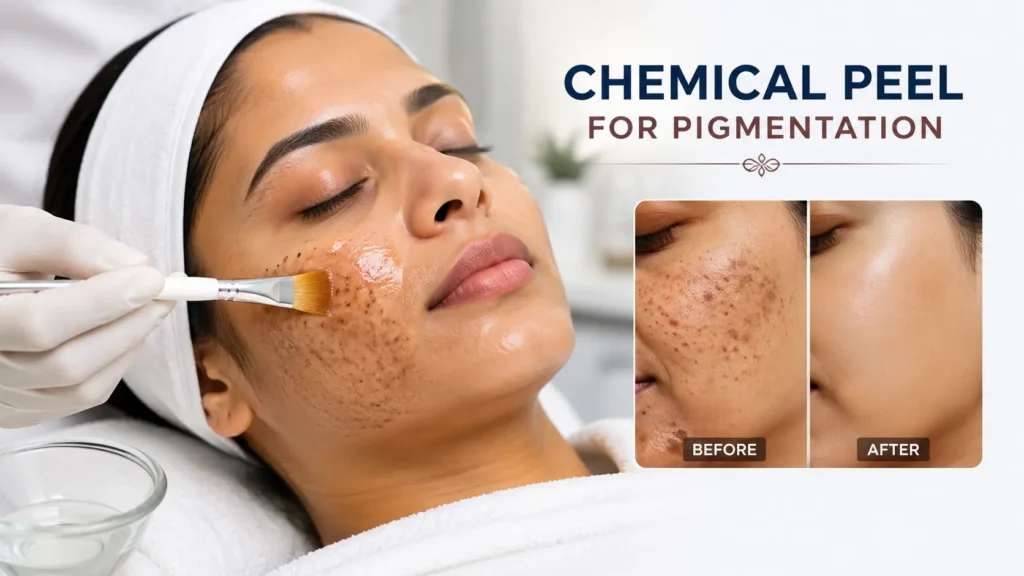
Pigmentation is one of the most common skin concerns among Indians. Whether it appears as acne marks, melasma, sunspots, age spots, or uneven skin tone, pigmentation can affect confidence and make the skin look dull. Fortunately, Chemical Peel for Pigmentation has emerged as one of the most effective dermatologist-recommended treatments for improving skin tone and texture.
A Chemical Peel for Pigmentation removes damaged skin cells, promotes healthy skin regeneration, and gradually fades stubborn pigmentation. Depending on the severity of the condition, dermatologists may recommend different peeling solutions that are safe and effective for Indian skin.
Apart from treating pigmentation, a Chemical Peel for Pigmentation also helps reduce acne scars, improves skin texture, minimizes fine lines, unclogs pores, and enhances overall skin radiance. Whether you are looking for face peeling treatment, skin peeling treatment, or peeling treatment for acne scars and dark spots, chemical peels offer customized solutions for different skin types.
A chemical peel is a dermatologist-performed skin resurfacing procedure that uses specially formulated acids to exfoliate the outer layers of the skin. This controlled exfoliation removes damaged skin cells and stimulates the production of new, healthier skin.
Unlike regular exfoliating scrubs, face peeling treatment works at a deeper level to improve skin quality. It addresses concerns such as pigmentation, acne, scars, wrinkles, sun damage, enlarged pores, and uneven skin tone.
Today, peeling treatment has become one of the most popular non-surgical cosmetic procedures because it provides noticeable skin improvement with minimal downtime.
A Chemical Peel for Pigmentation works by accelerating the natural skin renewal process. The peeling solution loosens dead and damaged skin cells, allowing them to shed naturally. As the treated skin peels away, fresh skin with improved texture and more even pigmentation appears underneath.
This process also stimulates collagen production, improves skin elasticity, and reduces melanin accumulation responsible for pigmentation.
Because pigmentation often develops over several years due to sun exposure, acne, hormonal changes, or inflammation, multiple sessions of Chemical Peel for Pigmentation are usually recommended for optimal results.
Dermatologists classify chemical peels according to the depth of penetration.
A light chemical peel treats the outermost layer of the skin (epidermis). It is ideal for:
A light chemical peel usually involves very little downtime, making it suitable for people with busy lifestyles.
Common ingredients include:
For Indian skin, dermatologists often begin with a light chemical peel before progressing to stronger peels if necessary.
Medium-depth peels penetrate deeper into the skin and are recommended for:
Common peeling agents include:
Recovery usually takes about one week.
A deep chemical peel penetrates into the deeper layers of the skin (dermis) and is typically recommended for severe skin concerns such as deep wrinkles, extensive sun damage, certain scars, and significant skin texture irregularities. It uses stronger peeling agents to remove damaged skin and stimulate the growth of healthier new skin.
Because it reaches deeper skin layers, a deep peel provides more dramatic results but also requires a longer recovery period, usually 2–4 weeks. It is less commonly recommended for Indian skin due to the higher risk of post-inflammatory hyperpigmentation (PIH) or uneven skin colour after treatment. For most Indian skin types, dermatologists generally prefer light or medium chemical peels, as they effectively treat pigmentation with a lower risk of complications.
The skin continuously sheds dead cells and replaces them with new ones. However, aging, UV exposure, acne, pollution, and hormonal changes slow this natural process.
A Chemical Peel for Pigmentation accelerates cell turnover by dissolving the bonds between dead skin cells. Once these damaged cells peel away, healthier skin emerges.
The treatment also:
These effects make Chemical Peel for Pigmentation one of the most effective non-surgical treatments for uneven skin tone.
Different peeling agents target different skin concerns.
| Active Ingredient | Best For | Common Skin Concerns Treated |
|---|---|---|
| Glycolic Acid | Superficial pigmentation and skin rejuvenation | Pigmentation, fine lines, dull skin, sun damage, uneven skin tone |
| Salicylic Acid | Oily and acne-prone skin | Chemical peel for acne, excess oil, blackheads, enlarged pores, acne breakouts |
| Lactic Acid | Sensitive and dry skin | Sensitive skin, mild pigmentation, dry skin, skin brightening, uneven complexion |
| Mandelic Acid | Acne-prone and sensitive skin | Acne, sensitive Indian skin, hyperpigmentation, post-acne marks, rosacea-prone skin |
| Trichloroacetic Acid (TCA) | Medium-depth skin resurfacing | Chemical peel for acne scars, chemical peel for scars, deep pigmentation, wrinkles, sun-damaged skin |
Many people confuse scrubs with chemical peels.
Physical exfoliation removes surface debris using abrasive particles.
Chemical exfoliation uses scientifically formulated acids that penetrate evenly into the skin to remove damaged cells.
Compared to scrubs, a professionally performed skin peeling treatment provides:
There are numerous chemical peel benefits for people dealing with pigmentation and other skin concerns.
Some of the most significant chemical peel benefits include:
The chemical peel benefits for the face extend beyond simply treating pigmentation.
A professional peel can:
These chemical peel benefits for the face become more noticeable after multiple sessions combined with a dermatologist-prescribed skincare routine.
One of the most frequently asked questions is, is chemical peel good for skin?
The answer is yes, when performed by an experienced dermatologist and tailored to your skin type.
A professionally administered Chemical Peel for Pigmentation is considered safe for most individuals and can effectively address:
However, not everyone is an ideal candidate. Individuals with active skin infections, open wounds, severe eczema, or certain medical conditions may need alternative treatments or delayed procedures.
Indian skin has a higher melanin content, making it more susceptible to post-inflammatory hyperpigmentation (PIH). Therefore, selecting the right peel is essential.
A dermatologist will assess your skin type, pigmentation depth, and medical history before recommending a Chemical Peel for Pigmentation suitable for your needs. For most Indian skin tones, superficial and medium-depth peels performed under medical supervision provide excellent results while minimizing the risk of complications.
Commonly recommended peels include:
These treatments are customized based on individual skin concerns, ensuring safer outcomes and gradual improvement in pigmentation.
Pigmentation develops when excess melanin, the pigment responsible for skin colour, is produced in certain areas of the skin. Factors such as prolonged sun exposure, hormonal changes, acne, inflammation, ageing, genetics, and certain medications can all contribute to uneven skin tone. For individuals with stubborn pigmentation, Chemical Peel for Pigmentation has become one of the most trusted dermatological treatments.
A Chemical Peel for Pigmentation works by exfoliating damaged skin cells that contain excess melanin while encouraging healthy skin regeneration. As new skin cells replace the pigmented layers, the complexion gradually becomes brighter, smoother, and more even. Unlike over-the-counter creams that only work on the skin’s surface, a professionally performed Chemical Peel for Pigmentation treats pigmentation at different skin depths depending on the peel selected.
Most dermatologists recommend a customized Chemical Peel for Pigmentation after evaluating your skin type, pigmentation depth, lifestyle, and medical history. The treatment can be adjusted using different peeling agents and strengths, making it suitable for mild to moderate pigmentation in Indian skin.
Indian skin contains a higher concentration of melanin, which naturally provides better protection against UV rays. However, this higher melanin content also makes Indian skin more prone to post-inflammatory pigmentation and uneven skin tone.
Common causes include:
Pigmentation may appear as:
Because pigmentation often develops gradually, it usually requires multiple sessions of Chemical Peel for Pigmentation combined with a dermatologist-recommended skincare routine for the best results.
The choice of peel depends on the type and depth of pigmentation.
One of the most popular options for Chemical Peel for Pigmentation, glycolic acid is an alpha hydroxy acid (AHA) derived from sugarcane. It gently exfoliates the outer layer of the skin, stimulates collagen production, and promotes faster skin cell turnover. It is highly effective for treating mild pigmentation, sun damage, uneven skin tone, and post-acne marks while leaving the skin smoother and brighter. Glycolic acid peels are suitable for most skin types when performed under a dermatologist’s supervision.
Mandelic acid is a gentle alpha hydroxy acid (AHA) derived from bitter almonds and is well-suited for sensitive and acne-prone Indian skin. Its larger molecular size allows it to penetrate the skin more slowly, reducing the risk of irritation. It helps fade pigmentation, improve acne marks, regulate excess oil production, and refine skin texture, making it an excellent choice for first-time chemical peel patients.
Lactic acid is a mild alpha hydroxy acid known for its exfoliating and hydrating properties. It gently removes dead skin cells while helping the skin retain moisture, making it ideal for dry or sensitive skin. Lactic acid peels improve mild pigmentation, uneven skin tone, dullness, and fine lines, resulting in smoother, softer, and more radiant skin with minimal downtime.
A chemical peel for acne commonly uses salicylic acid, a beta hydroxy acid (BHA) that penetrates deep into the pores to dissolve excess oil and remove dead skin cells. It effectively treats acne, blackheads, whiteheads, and oily skin while also reducing post-acne pigmentation and preventing future breakouts. Salicylic acid peels are particularly beneficial for individuals with oily and acne-prone skin.
Trichloroacetic Acid (TCA) is a medium-depth peeling agent used to treat deeper pigmentation, chemical peel for scars, chemical peel for acne scars, sun damage, and fine lines. It penetrates deeper than superficial peels, stimulating collagen production and improving skin texture. Since TCA peels are stronger and require careful application, they should only be performed by qualified dermatologists to ensure safe treatment and minimize the risk of complications, especially in Indian skin.
Hyperpigmentation refers to darkened patches of skin caused by excess melanin production. These patches may occur after acne, injuries, burns, cosmetic procedures, or prolonged sun exposure.
A chemical peel for hyperpigmentation removes damaged skin layers and accelerates cell turnover, allowing fresher skin to replace pigmented cells. Multiple sessions are often required to achieve gradual and natural-looking improvement.
Depending on the severity of pigmentation, your dermatologist may recommend:
Combining a Chemical Peel for Pigmentation with sunscreen and prescription topical medications often produces better long-term results.
Melasma is one of the most difficult pigmentation disorders to treat. It commonly appears as symmetrical brown patches on the cheeks, forehead, nose, and upper lip. Hormonal changes, pregnancy, birth control pills, genetics, and sun exposure are major contributing factors.
While melasma cannot always be permanently cured, a Chemical Peel for Pigmentation can significantly reduce its appearance when combined with:
Because melasma has a tendency to recur, maintenance treatment is often necessary.
Many people search for a chemical peel for skin whitening or chemical peel for skin lightening, expecting dramatic changes in their natural complexion. It is important to understand that chemical peels do not change your natural skin colour.
Instead, they remove damaged skin cells, reduce tanning, improve uneven pigmentation, and restore your original skin tone. This creates a brighter, healthier-looking complexion rather than artificial whitening. A chemical peel for skin whitening may help improve:
Similarly, a chemical peel for skin lightening enhances skin clarity by removing superficial pigmentation and stimulating healthy skin renewal.
One of the biggest advantages of Chemical Peel for Pigmentation is its ability to improve overall skin quality in addition to treating dark spots.
Benefits include:
Patients often notice healthier, glowing skin even before significant pigmentation reduction becomes visible.
One of the most common questions patients ask is about chemical peel before and after results. While some improvement may be visible after the first session, the best outcomes usually develop gradually over multiple treatments.
Immediately after a Chemical Peel for Pigmentation, your skin may appear slightly red or feel tight. Within a few days, mild peeling begins as damaged skin cells shed naturally. New skin gradually emerges with a brighter, smoother, and more even complexion.
Typical chemical peel before and after improvements include:
The results vary depending on the type of pigmentation, skin condition, and the depth of the peel. Following your dermatologist’s post-treatment instructions is essential for achieving optimal results.
A Chemical Peel for Pigmentation is usually performed as an outpatient procedure and typically takes 20–40 minutes.
| Stage | What to Expect |
| Before the Procedure | • Your dermatologist examines your skin to assess the type and severity of pigmentation.• Discusses your skin concerns, treatment goals, and expected results.• Review your medical history, allergies, and current medications.• Recommends the most suitable Chemical Peel for Pigmentation based on your skin type.• Advises you on pre-treatment skincare, such as avoiding retinoids, exfoliants, and excessive sun exposure before the procedure. |
| During the Procedure | • The treatment area is thoroughly cleansed to remove dirt, oil, and makeup.• The selected peeling solution is carefully applied to the skin.• You may experience a mild tingling, stinging, or warm sensation for a few minutes.• Depending on the type of peel, the solution is either neutralized or removed after the required duration.• The entire procedure typically takes 20–40 minutes. |
| After the Procedure | • Mild redness and skin sensitivity are common immediately after treatment.• The skin may feel tight, dry, or slightly warm.• Light flaking or peeling usually begins within 2–3 days, depending on the depth of the peel.• A moisturizer and broad-spectrum sunscreen should be used regularly to support healing and protect the new skin.• Results gradually become visible as fresh, healthier skin replaces the peeled layer. |
These effects are temporary and usually resolve within a few days for superficial peels.
The number of sessions required depends on your skin concern, the severity of pigmentation, and the type of peel selected.
General recommendations include:
| Skin Concern | Recommended Sessions |
| Mild pigmentation | 3–4 sessions |
| Moderate pigmentation | 4–6 sessions |
| Melasma | 6–8 sessions with maintenance |
| Acne marks | 4–6 sessions |
| Chemical Peel for Pigmentation | 4–8 sessions |
| Chemical Peel for Hyperpigmentation | 5–8 sessions |
Sessions are usually scheduled every 2–4 weeks to allow the skin to heal between treatments.
Proper aftercare plays a vital role in the success of a Chemical Peel for Pigmentation.
| Do’s After a Chemical Peel | Don’ts After a Chemical Peel |
|---|---|
| ✔ Apply a broad-spectrum sunscreen (SPF 30 or higher) every day. | ✘ Avoid direct sun exposure. |
| ✔ Keep your skin well moisturized. | ✘ Do not pick, scratch, or peel the skin manually. |
| ✔ Follow the skincare routine recommended by your dermatologist. | ✘ Avoid harsh scrubs, exfoliants, and strong skincare products. |
| ✔ Drink plenty of water to keep your skin hydrated. | ✘ Skip waxing, threading, or other hair removal treatments on the treated area until advised. |
| ✔ Wear protective clothing, a wide-brimmed hat, or use an umbrella when outdoors. | ✘ Avoid swimming pools, steam rooms, hot showers, and saunas for a few days after treatment. |
Following these recommendations helps minimize complications and supports faster healing.
Like any cosmetic procedure, chemical peel side effects are possible, although most are temporary and manageable when treatment is performed by a qualified dermatologist.
Common chemical peel side effects include:
Less common complications may include:
Choosing an experienced dermatologist and following proper aftercare significantly reduces the risk of adverse effects.
A Chemical Peel for Pigmentation may be suitable if you have:
However, treatment may not be appropriate if you have:
A consultation with a dermatologist is essential to determine the most suitable treatment plan.
A Chemical Peel for Pigmentation is one of the most effective non-surgical treatments for improving uneven skin tone, reducing dark spots, acne marks, melasma, and superficial scars. By promoting controlled exfoliation and healthy skin regeneration, chemical peels help reveal brighter, smoother, and healthier-looking skin.
Whether you are considering a chemical peel for hyperpigmentation, chemical peel for acne, chemical peel for acne scars, or simply want to improve overall skin texture, choosing the right peel under the guidance of an experienced dermatologist is key to achieving safe and satisfying results.
If you are looking for expert care, consult the Best Dermatology Hospital in Noida, where experienced dermatologists provide personalised chemical peel treatments tailored to your skin type and concerns. With the right treatment plan, proper aftercare, and consistent sun protection, a Chemical Peel for Pigmentation can deliver long-lasting improvements, restore confidence in your skin, and help you achieve a healthier, more radiant complexion.
Is Chemical Peel for Pigmentation safe for Indian skin?
Yes. When performed by a qualified dermatologist using the appropriate peel, it is generally safe and effective for Indian skin.
Does a chemical peel permanently remove pigmentation?
A Chemical Peel for Pigmentation can significantly reduce pigmentation, but maintenance treatment and sun protection are often required to prevent recurrence.
How soon will I see results?
Many patients notice brighter skin after the first session, while significant pigmentation improvement usually becomes visible after 3–6 sessions.
Can I wear makeup after a chemical peel?
It is generally advisable to avoid makeup for at least 24–48 hours or as directed by your dermatologist.
Can chemical peels treat acne scars?
Yes. A chemical peel for acne scars can improve superficial scars and post-acne pigmentation. Deeper scars may require combination treatments.
A chemical peel is a procedure in which a chemical solution is applied to the skin to remove the top layers. The skin that grows back is smoother. With a light or medium peel, you may need to undergo the procedure more than once to get the desired results.
No rows found.