

If you have diabetes, you probably already know that keeping your blood sugar under control is important. But diabetes can affect more than your blood sugar. Over time, consistently high blood glucose can put stress on the tiny blood vessels inside your kidneys and gradually affect how well they filter your blood.
The tricky part is that kidney damage often develops quietly. You may feel completely normal even when changes are already happening inside your kidneys.
That is where a urine microalbumin test can help.
The test looks for small amounts of albumin, a protein that normally stays in your blood, in your urine. Finding more albumin than expected can be an early sign that the kidney’s filtering system is becoming damaged. Today, doctors commonly refer to this as urine albumin testing or the urine albumin-to-creatinine ratio (UACR) rather than “microalbumin” testing.
For people with diabetes, this simple urine test can provide an important early warning, often before obvious kidney symptoms appear.
What Is a Urine Microalbumin Test?
A urine microalbumin test checks whether a small amount of albumin is leaking into your urine.
Albumin is a protein made by the liver. It normally circulates in the blood and helps maintain fluid balance. Healthy kidneys filter waste products from the blood while keeping useful substances such as albumin in the bloodstream.
When the kidney’s filtering units, called glomeruli, become damaged, they may start allowing albumin to pass into the urine.
A small amount of albumin in the urine may therefore indicate that the kidneys are under stress or beginning to sustain damage.
The test is usually performed using a spot urine sample. Instead of measuring albumin alone, doctors commonly use the urine albumin-to-creatinine ratio (UACR) because it accounts for how concentrated or diluted the urine is. The American Diabetes Association recommends UACR as the preferred way to screen for albuminuria.
Why was it called “microalbumin”?
The term “microalbuminuria” was traditionally used to describe moderately increased levels of albumin in urine.
Today, medical guidelines generally use the term albuminuria instead. This is because the issue is not that the albumin itself is unusually small; rather, the test is detecting relatively small amounts of albumin that may not be picked up by routine urine protein testing.
So if your doctor orders a “microalbumin test,” they may actually be checking your urine albumin-to-creatinine ratio (UACR).
Why Do People With Diabetes Need a Urine Microalbumin Test?
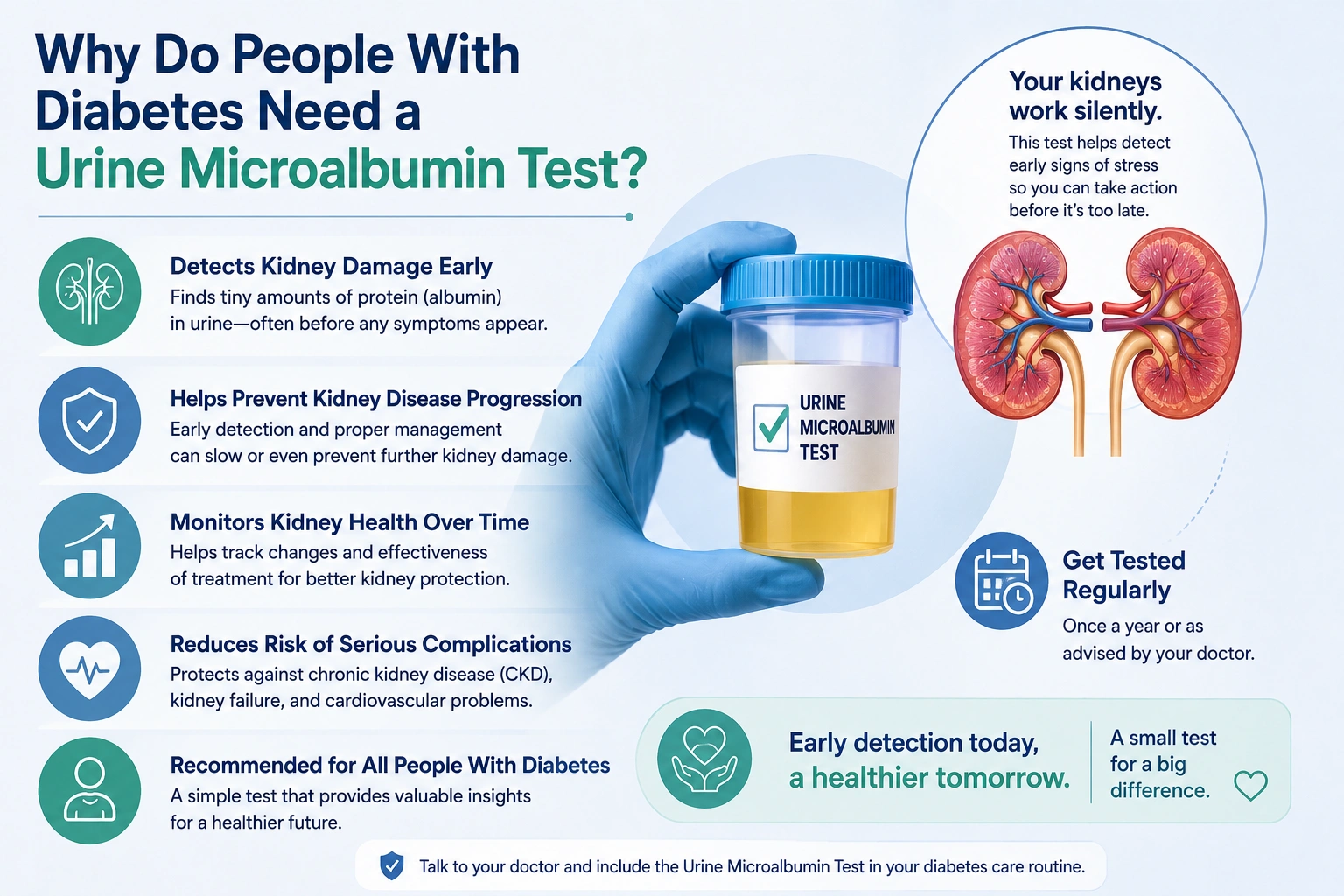
Diabetes is one of the major risk factors for chronic kidney disease.
High blood sugar over a long period can damage the small blood vessels in the kidneys. High blood pressure, which commonly occurs alongside diabetes, can add further stress to these blood vesselscan cause urine microalbumin.
The result can be gradual loss of kidney function.
What makes this particularly important is that early kidney disease often has no obvious symptoms. A person may not have pain, swelling, changes in urination, or any other warning sign.
A urine test can detect albumin leakage before more noticeable problems develop.
The ADA’s 2026 Standards of Care recommend checking kidney function with a spot UACR and estimated glomerular filtration rate (eGFR) at least annually in people with type 2 diabetes and in people with type 1 diabetes after five years of disease duration.
What the test can help detect?
The test is not simply about finding kidney disease. It can also help doctors identify a problem early enough to take steps to slow its progression.
- Early kidney damage
- Albuminuria
- Risk of chronic kidney disease
- Changes in kidney health over time
- The need for closer kidney monitoring
What Does Albumin in Urine or Urine Microalbumin Mean?
Think of the kidney’s filtering system as a very fine sieve.
It allows waste and excess fluid to pass through while retaining important substances in the blood.
When those filters become damaged, the “sieve” can become more permeable. Albumin can then begin leaking into the urine.
The amount of albumin matters.
Urine Albumin-to-Creatinine Ratio: What Do the Numbers Mean?
| UACR result | General category | What it may indicate |
| Less than 30 mg/g | Normal to mildly increased | Usually considered within the normal range |
| 30 to less than 300 mg/g | Moderately increased albuminuria | May indicate early kidney damage |
| 300 mg/g or higher | Severely increased albuminuria | Suggests more significant albumin leakage and requires medical evaluation |
These ranges are based on current diabetes and kidney disease guidance. However, one abnormal result does not automatically mean you have chronic kidney disease. UACR can vary from one test to another, and doctors may repeat the test to confirm persistent albuminuria.
How Is a Urine Microalbumin Test Done?
The test is relatively simple.
In most cases, you provide a small urine sample in a sterile container. A laboratory then measures the amount of albumin and creatinine and calculates the UACR.
A spot urine sample is generally preferred because it is easier than collecting urine over an entire day. A first-morning sample may be preferred when practical because it can reduce some of the variation in results.
What to know before the test
Your doctor or laboratory may give you specific instructions. In general, tell your doctor if you:
- Have recently exercised intensely
- Have a urinary tract infection
- Have a fever or acute illness
- Have very high blood sugar
- Have uncontrolled blood pressure
- Are menstruating
These situations can temporarily increase urine albumin and may affect the result.
You usually do not need to worry about the test itself. It is simply a urine sample, not a painful procedure.
Does a High Urine Microalbumin Result Mean You Have Kidney Disease?
Not necessarily.
This is one of the most important things to understand about the test.
Albumin levels in urine can temporarily increase because of factors such as strenuous exercise, infection, fever, significant hyperglycemia, heart failure or marked hypertension.
That is why doctors generally do not diagnose persistent albuminuria from a single unexpected result.
The ADA notes that, because urine albumin levels naturally vary, two out of three abnormal UACR measurements collected over a 3- to 6-month period should be abnormal before moderately or severely increased albuminuria is considered persistent.
So, if your result comes back high, don’t panic.
Your doctor may recommend repeating the test and looking at other information, including your eGFR, blood pressure, blood sugar control, medical history and other urine or blood tests.
Urine Microalbumin Test vs. Other Kidney Tests
A urine microalbumin test is important, but it is only one part of evaluating kidney health.
Doctors commonly consider both urine albumin and blood-based kidney function. The important point is that UACR and eGFR answer different questions.
UACR looks for evidence of kidney damage through albumin leakage, while eGFR estimates how well the kidneys are filtering.
That is why both are used when screening people with diabetes for chronic kidney disease.
| Test | What it checks | Why it matters |
| Urine albumin-to-creatinine ratio (UACR) | Albumin leakage into urine | Helps detect kidney damage |
| Serum creatinine | Creatinine level in blood | Helps assess kidney function |
| eGFR | Estimated filtering capacity of the kidneys | Helps determine how well the kidneys are filtering |
| Routine urine test | Blood, protein, glucose and other urine findings | Provides additional information about urinary and kidney health |
| Blood glucose / HbA1c | Blood sugar control | Helps assess a major risk factor for diabetic kidney disease |
How Often Should People With Diabetes Get the Test?
The recommended frequency depends on the type of diabetes and whether kidney disease has already been identified.
For people with type 2 diabetes, the ADA recommends assessing UACR and eGFR at least once a year, regardless of treatment.
For people with type 1 diabetes, screening is recommended at least annually after five years of diabetes duration. Once chronic kidney disease is present, monitoring may be needed more frequently depending on the stage and individual risk.
Your doctor may recommend a different testing schedule based on your individual health.
Why regular testing matters?
A single normal result is reassuring, but it does not mean kidney health can be ignored forever.
Diabetes is a long-term condition, and kidney risk can change over time. Regular monitoring allows doctors to spot changes earlier and adjust treatment when necessary.
What Happens If Albumin Is Found in the Urine?
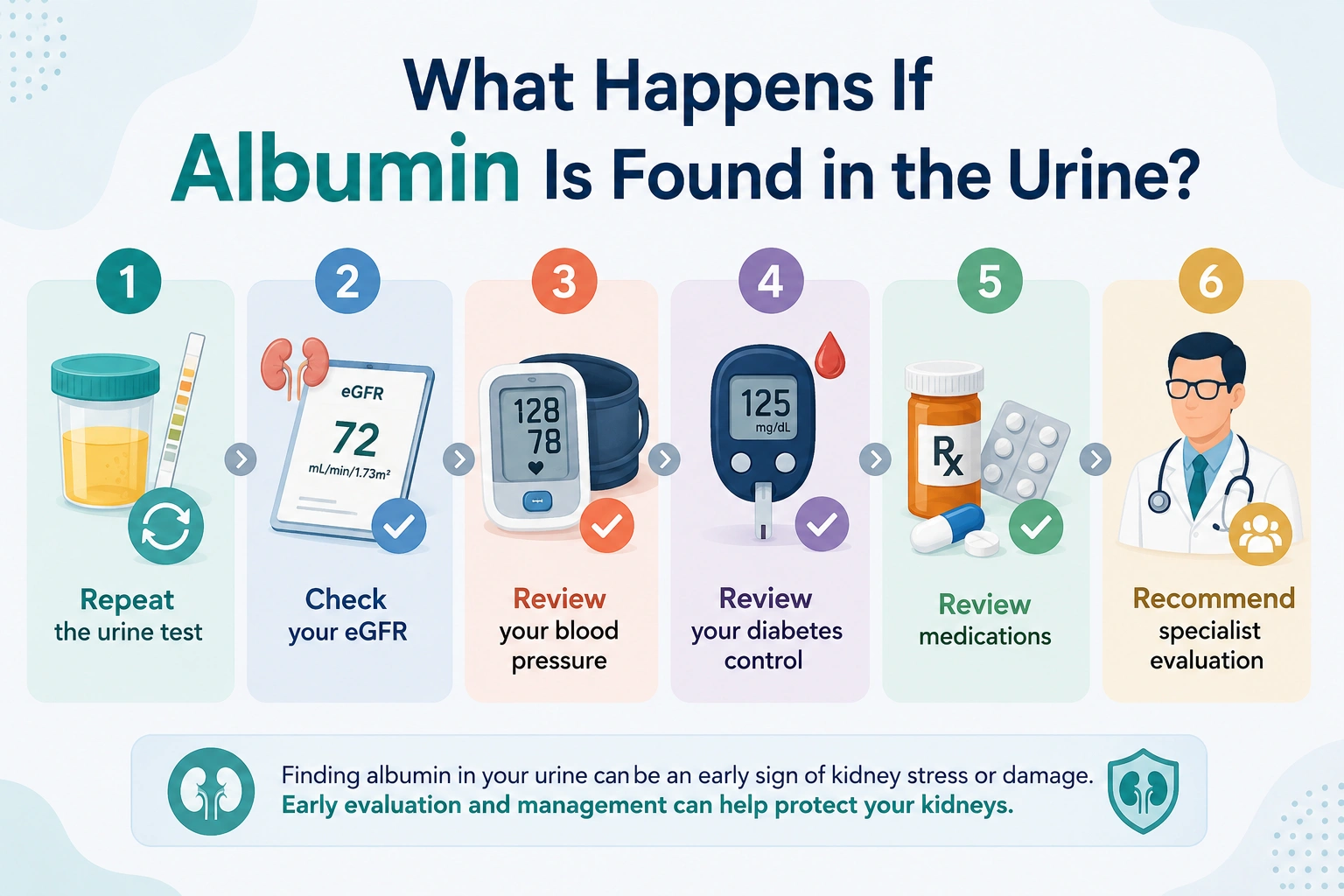
The next step depends on how high the UACR is and whether the result remains elevated.
Your doctor may:
Repeat the urine test:
This helps determine whether albuminuria is persistent or was caused by a temporary factor.
Check your eGFR:
This provides information about how well your kidneys are filtering.
Review your blood pressure:
High blood pressure can both contribute to kidney damage and worsen existing kidney disease.
Review your diabetes control:
Keeping blood glucose within the target range recommended by your healthcare team can help reduce the risk of kidney disease progression.
Review medications:
Depending on your kidney health, diabetes, blood pressure and other risk factors, your doctor may consider medicines that protect kidney and cardiovascular health.
Recommend specialist evaluation:
If albumin levels continue to rise, kidney function declines, or the diagnosis is uncertain, a nephrologist may be involved.
The goal is not simply to “treat a urine test.” The goal is to identify why albumin is appearing and reduce the risk of progressive kidney damage.
Can You Prevent Albumin From Increasing?
Not every case of diabetic kidney disease can be prevented, but managing the factors that affect kidney health can reduce risk and may slow progression.
Some of the most important steps include:
- Keep blood sugar under control as advised by your doctor.
- Monitor and manage blood pressure.
- Take prescribed medicines consistently.
- Avoid smoking.
- Maintain a healthy body weight.
- Stay physically active according to your doctor’s advice.
- Attend regular kidney health checks.
- Do not ignore abnormal urine or blood test results.
Good diabetes management is not only about preventing high blood sugar today. It is also about protecting organs that can be affected by diabetes over many years.
Conclusion
A urine microalbumin test is a simple urine test that can help identify one of the earliest signs of kidney damage in people with diabetes.
Today, doctors commonly use the urine albumin-to-creatinine ratio (UACR) for this purpose. A result below 30 mg/g is generally considered normal to mildly increased, while higher levels may indicate albuminuria and require further evaluation.
Most importantly, an abnormal result does not automatically mean that your kidneys are failing. It is a signal that deserves proper evaluation, confirmation and follow-up in best hospital in Noida.
For people with diabetes, kidney screening is not something to wait for until symptoms appear. Regular UACR and eGFR testing can help identify kidney problems earlier, when there may still be an opportunity to slow their progression.
If you have diabetes and have not had your kidney function checked recently, speak with your doctor about whether a urine albumin-to-creatinine ratio test is appropriate for you.
Frequently Asked Questions (FAQs)
1. Is a urine microalbumin test the same as a UACR test?
They are closely related, but the terminology has changed. “Microalbumin” is an older term for detecting small amounts of albumin in urine. Today, doctors commonly use the urine albumin-to-creatinine ratio (UACR) for screening.
2. What is a normal urine microalbumin level?
A UACR of less than 30 mg/g creatinine is generally considered normal to mildly increased. Your doctor will interpret the result alongside your eGFR, blood pressure, diabetes control and medical history.
3. Can diabetes cause protein in the urine?
Yes. Long-term high blood sugar can damage the kidney’s filtering units and allow albumin to leak into urine. Persistent albuminuria can be an early sign of diabetic kidney disease.
4. Does one high urine microalbumin result mean I have kidney disease?
No. Exercise, infection, fever, high blood sugar and other temporary conditions can raise urine albumin. Doctors may repeat the test to determine whether the increase is persistent.
5. How often should a person with diabetes get a urine microalbumin test?
Current ADA guidance recommends annual UACR and eGFR assessment for people with type 2 diabetes and for people with type 1 diabetes after at least five years of disease duration. People with established kidney disease may need more frequent monitoring.