
Acne can be frustrating. You wash your face more often, try a new cream, scrub away dead skin, or squeeze a pimple because you want it gone quickly. Yet sometimes, despite all that effort, your skin seems to get worse.
The problem may not be that you’re doing too little. You could be doing too much, or using the wrong approach.
Some everyday skincare habits can irritate the skin, damage its protective barrier, increase inflammation, or make breakouts harder to control. For example, washing your face excessively or scrubbing acne-prone skin too aggressively can cause irritation rather than clearer skin.
This is not caused by having “dirty” skin. It develops when hair follicles become clogged with oil and dead skin cells, with inflammation and bacteria also playing a role. That means trying to scrub it away isn’t the answer.
If your breakouts keep returning, take a closer look at your routine. Here are 7 common mistakes that can make acne worse, and what you can do instead.
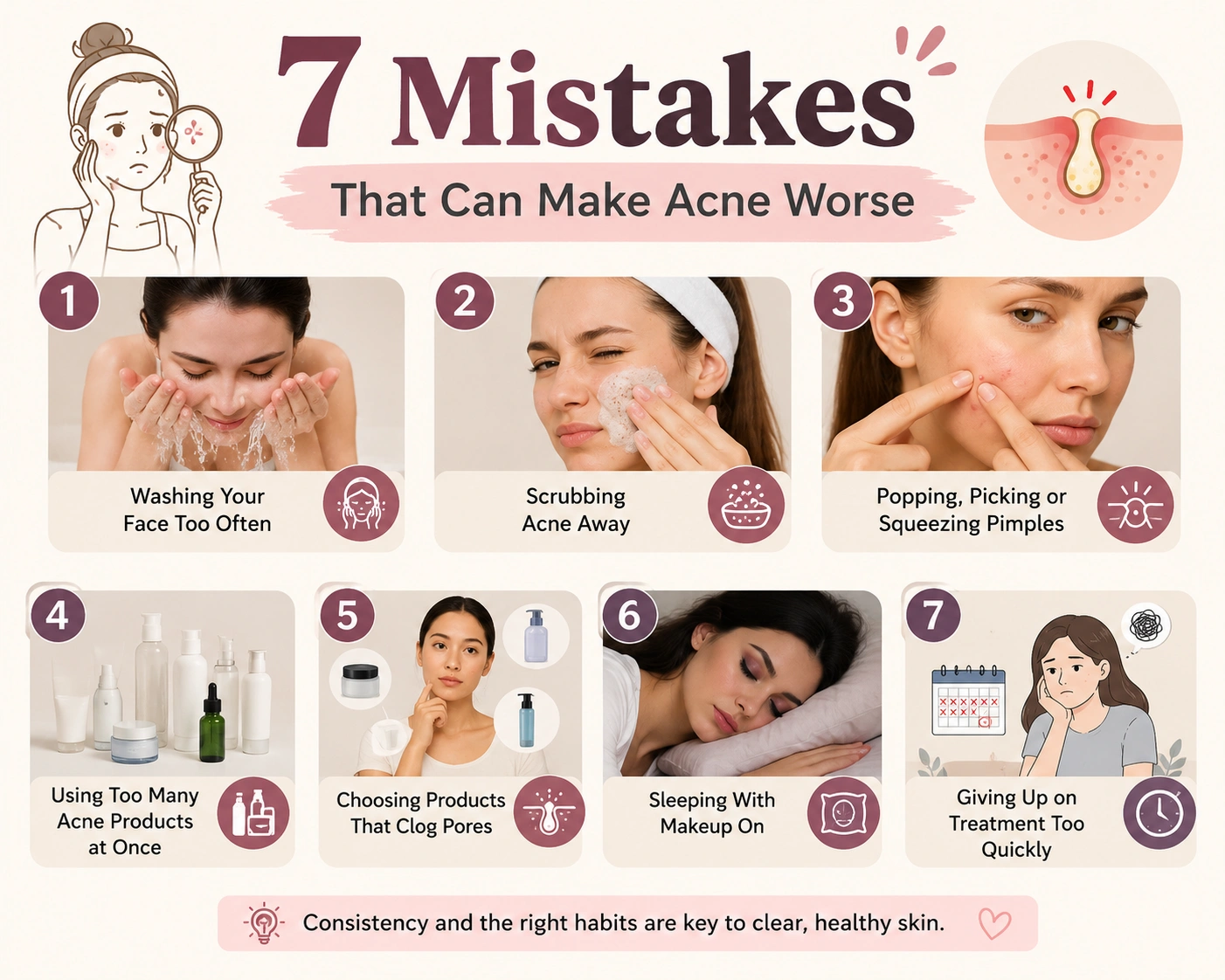
1. Washing Your Face Too Often
When you have oily or acne-prone skin, it can feel natural to wash your face repeatedly throughout the day. You may think that removing oil every few hours will prevent new pimples.
But more washing isn’t necessarily better.
Frequent cleansing, especially with harsh products, can irritate the skin and leave it dry and uncomfortable. Scrubbing aggressively can also worsen existing acne. Dermatology guidance generally recommends gentle cleansing rather than repeatedly stripping the skin.
What to do instead
Wash your face gently, generally twice a day and after heavy sweating or exercise. Use lukewarm water and a mild cleanser, then pat your skin dry instead of rubbing it.
Your goal isn’t to make your skin feel “squeaky clean.” It’s to remove excess oil, sweat, makeup and buildup without irritating the skin.
2. Scrubbing Acne Away
One of the most common mistakes that make this worse is aggressive exfoliation.
Scrubs, rough washcloths, cleansing brushes and repeated exfoliation may seem like a good way to remove dead skin cells and unclog pores. But this is an inflammatory skin condition, and excessive physical irritation can make already-inflamed skin more uncomfortable.
Harsh scrubbing can also damage the skin barrier, which may leave your skin dry, red and sensitive. Mayo Clinic specifically advises against excessive scrubbing and abrasive facial products for acne-prone skin.
What to do instead
Choose a gentle cleanser and avoid physically scrubbing active breakouts.
If your dermatologist recommends an exfoliating ingredient such as salicylic acid, use it as directed rather than adding several exfoliating products to your routine.
Remember: this doesn’t mean your skin needs more friction.
3. Popping, Picking or Squeezing Pimples
This is probably the hardest mistake to avoid.
You see a whitehead in the mirror. You squeeze it. It looks smaller for a moment, so it feels like you’ve solved the problem.
But squeezing can push inflammation deeper into the skin and damage surrounding tissue. It can also increase the risk of infection, prolonged inflammation and scarring.
What looks like a quick fix can therefore leave behind a bigger problem, including a dark mark or scar that lasts much longer than the original pimple.
What to do instead
Try to leave active pimples alone and allow them to heal.
If a lesion is painful, deep or persistent, a dermatologist can determine whether it needs medical treatment or professional extraction.
A pimple that takes a few days to heal is usually easier to deal with than a scar that stays for months or longer.
4. Using Too Many Acne Products at Once
When this isn’t improving, it’s tempting to add another product.
You might use a salicylic acid cleanser in the morning, an exfoliating toner later, a spot treatment at night, and then add another active ingredient because the previous products haven’t worked quickly enough.
The result can be irritated skin rather than clearer skin.
Using multiple strong active ingredients without guidance can disrupt the skin barrier and cause dryness, redness, burning or peeling. Healthline also notes that using too many active ingredients can damage the skin barrier and potentially contribute to more breakouts.
What to do instead
Keep your routine simple.
A basic acne-friendly routine may include:
- Gentle cleanser
- Appropriate acne treatment
- Non-comedogenic moisturizer
- Broad-spectrum sunscreen
If you’re adding an medication, give it enough time to work. Some nonprescription treatments can take 2 to 3 months of consistent use before their full benefit becomes clear.
Changing products every few days makes it difficult to know what is actually helping, or irritating, your skin.
5. Choosing Products That Clog Pores
Your skincare routine isn’t limited to your face wash and medication.
Moisturizers, makeup, sunscreen, hair products and styling products can all come into contact with acne-prone skin. Some oily or comedogenic products may contribute to clogged pores and breakouts.
This can be especially noticeable around the forehead, temples and hairline if heavy hair products repeatedly touch the skin.
What to look for:
The term “non-comedogenic” generally means the product is formulated to be less likely to clog pores. It’s a useful label to look for if you’re prone to breakouts.
| Product | What to look for | What to avoid |
| Cleanser | Gentle, suitable for acne-prone skin | Harsh soaps and strong irritants |
| Moisturizer | Oil-free, non-comedogenic | Heavy, pore-clogging formulas |
| Makeup | Non-comedogenic, easy to remove | Heavy products that clog pores |
| Sunscreen | Lightweight, non-comedogenic | Very greasy formulas if they trigger breakouts |
| Hair products | Keep away from acne-prone skin | Heavy oils and greasy styling products |
6. Sleeping With Makeup On
A long day can make removing makeup feel like one more task you don’t have time for.
But leaving makeup on overnight isn’t a good habit if you’re prone to this.
Makeup can mix with oil, sweat and other buildup on your skin. Some cosmetic products can also contribute to clogged pores, particularly if they’re not suitable for acne-prone skin.
Dermatology guidance recommends removing makeup before bed and choosing non-comedogenic cosmetics when you have acne-prone skin.
What to do instead
Remove makeup before going to sleep, then gently cleanse your skin.
You don’t need an aggressive double-cleansing routine that leaves your face dry and tight. The goal is simply to remove makeup and buildup without irritating your skin.
And don’t forget the things that repeatedly touch your face, such as makeup brushes and phones. Cleaning these regularly can help reduce the amount of oil and debris transferred onto your skin.
7. Giving Up on Treatment Too Quickly
This mistake is easy to understand.
You start an treatment expecting your skin to improve within a few days. When you don’t see immediate results, you stop using it and try something else.
But this treatment often requires patience.
Some over-the-counter the products can take several weeks to begin showing noticeable improvement, and Mayo Clinic notes that it may take 2 to 3 months of consistent use to see the full effects of some treatments.
That doesn’t mean you should continue using a product that causes significant irritation. It means that acne treatment should be approached as a process rather than a quick fix.
A better approach
If acne is severe, painful, leaving scars, or not improving despite consistent care, it’s worth seeing a dermatologist rather than continually changing products yourself.
| If you notice… | A better response |
| No improvement after a few days | Give the treatment more time if your skin tolerates it |
| Mild dryness | Consider using the product less frequently and moisturize appropriately |
| Burning or significant irritation | Stop and seek professional advice |
| Repeated breakouts | Review your routine with a dermatologist |
| Painful or deep acne | Consider medical evaluation |
| Acne scars or persistent dark marks | Seek treatment rather than picking at lesions |
What Does an Acne-Friendly Routine Look Like?
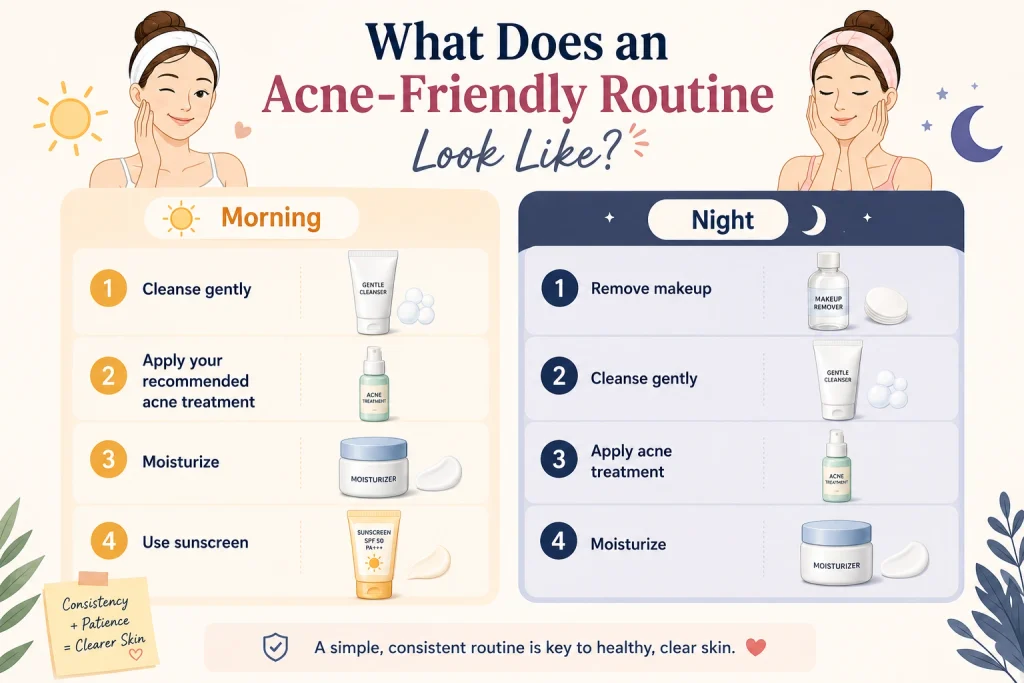
You don’t need a shelf full of skincare products to take care of acne-prone skin.
In many cases, a simple and consistent routine is a better starting point.
Morning
1. Cleanse gently
Use a mild cleanser and lukewarm water.
2. Apply your recommended acne treatment
Use the product or medication according to the instructions provided by your healthcare professional.
3. Moisturize
Choose a lightweight, non-comedogenic moisturizer if your skin needs hydration.
4. Use sunscreen
Sun protection is particularly important because acne can leave dark marks behind, and some acne medications can increase sensitivity to sunlight.
Night
1. Remove makeup
Don’t go to bed with makeup on.
2. Cleanse gently
Avoid scrubbing or repeatedly washing your face.
3. Apply acne treatment
Follow the recommended schedule rather than applying more product than advised.
4. Moisturize
Keeping the skin comfortable and supported can help you stick with your treatment routine.
What About Diet, Stress and Lifestyle?
Skincare isn’t the only factor that can influence acne.
Hormonal changes, certain medications, stress and possibly dietary factors can contribute to or worsen acne in some people. However, acne isn’t simply the result of eating one particular food or failing to wash your face properly.
Stress, for example, doesn’t necessarily cause acne by itself, but it can worsen existing acne.
Rather than following extreme diets or eliminating multiple foods without reason, focus on an overall healthy lifestyle. If you notice a consistent connection between a particular food and your breakouts, discuss it with a healthcare professional rather than making major dietary changes on your own.
When Should You See a Dermatologist?
Not every pimple requires a doctor’s appointment. Mild acne can often be managed with an appropriate skincare routine and over-the-counter treatment.
But professional advice becomes more important when acne is:
- Painful or deep
- Frequently returning
- Leaving scars or persistent dark marks
- Affecting your confidence or daily life
- Not improving despite consistent treatment
- Spreading to the chest, back or other areas
- Getting worse despite changes to your skincare routine
A dermatologist can identify the type and severity of acne and recommend treatment based on your skin and medical history.
If you’re looking for acne treatment in Noida, a dermatologist can also help you avoid the cycle of trying one product after another without knowing what’s actually causing irritation or why your acne keeps returning.
Conclusion
Acne doesn’t always get worse because you’re not treating it enough. Sometimes, your skincare habits may be working against you.
Washing your face too often, scrubbing aggressively, popping pimples, using too many active ingredients, choosing pore-clogging products, sleeping with makeup on and abandoning treatment too quickly can all make acne harder to manage.
The better approach is usually simpler: cleanse gently, avoid picking, choose appropriate non-comedogenic products, follow your treatment consistently and give your skin time to respond.
And if your acne is painful, persistent or leaving scars, don’t keep experimenting on your own. A dermatologist can help you find a treatment plan that fits your skin and your specific type of acne.
Frequently Asked Questions (FAQs)
1. Can washing your face too much make acne worse?
Yes. Excessive washing and aggressive scrubbing can irritate the skin and worsen acne. A gentle cleansing routine, generally twice daily and after heavy sweating, is usually a better approach.
2. Does popping pimples make acne worse?
Popping or squeezing pimples can increase inflammation and raise the risk of infection, scarring and dark marks. It can also delay healing, so it’s best to leave active pimples alone.
3. How long does acne treatment take to work?
It depends on the treatment and severity of your acne. Some nonprescription treatments may require several weeks, and it can take 2 to 3 months to see the full benefit of some products.
4. Can skincare products cause more acne?
Yes. Some oily or comedogenic skincare, makeup and hair products can contribute to clogged pores and breakouts. Look for products labeled non-comedogenic and choose formulas that suit acne-prone skin.
5. When should I see a dermatologist for acne?
Consider seeing a dermatologist if your acne is painful, persistent, leaving scars or not improving with consistent skincare. Professional treatment can help prevent worsening acne and long-term scarring.