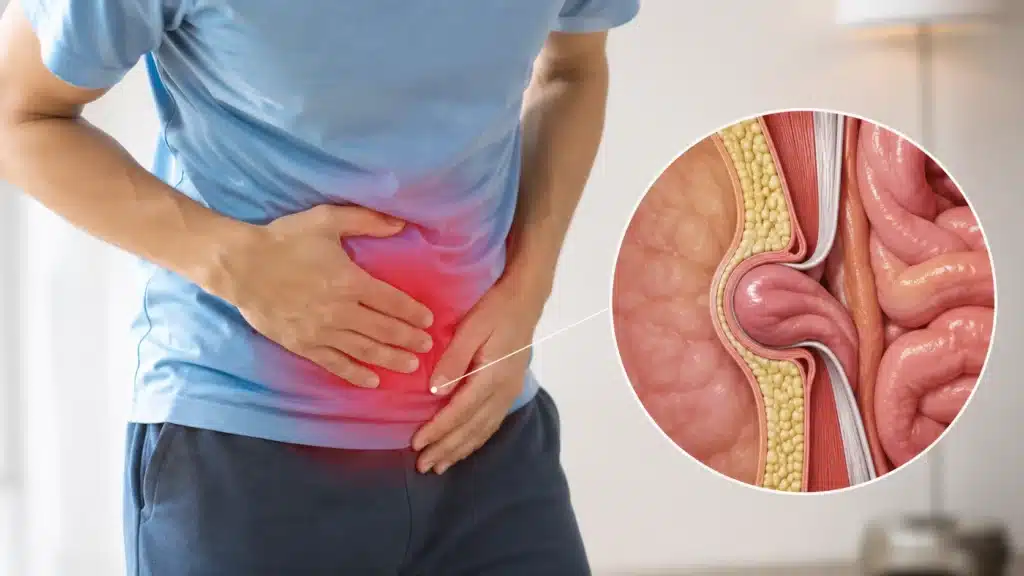
Most people don’t think about their gallbladder until it starts causing problems. And when it does, the pain can be sudden, severe, and completely impossible to ignore.
A sharp, cramping pain in the upper right abdomen after a meal. Nausea that lingers. Bloating that won’t go away. These are the signs that the gallbladder, a small organ tucked just beneath the liver, is struggling, usually because of gallstones.
The solution is well-established, highly effective, and far less daunting than it sounds.
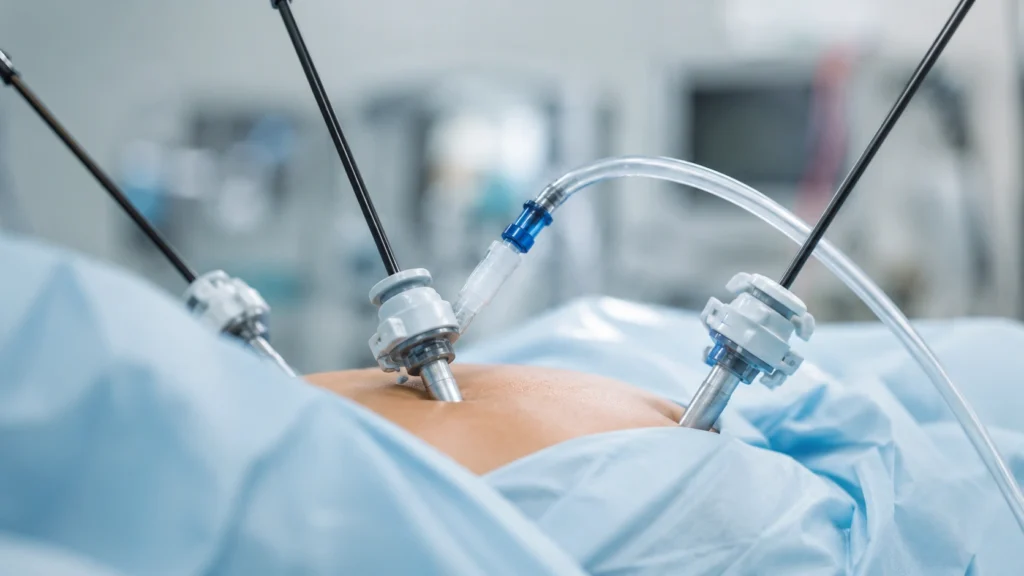
Laparoscopic cholecystectomy, commonly known as keyhole gallbladder surgery, removes the gallbladder through three or four tiny incisions, each smaller than a centimeter. No large cuts. No prolonged hospital stays. Most patients go home within 24 hours and are back to normal life within a week.
What is laparoscopic cholecystectomy?
Laparoscopic cholecystectomy is a surgical procedure to remove the gallbladder using a minimally invasive, keyhole approach, as opposed to traditional open surgery, which requires a large abdominal incision.
Here’s how it works simply:
- The surgeon makes 3–4 small cuts in the abdomen.
- A tiny camera is inserted to view the inside of the abdomen on a screen.
- Special surgical instruments are placed through the other small openings.
- The gallbladder is carefully separated from nearby structures.
- The gallbladder is removed through one of the small incisions.
- The surgery is performed under general anesthesia.
- The procedure usually takes about 45 minutes to 1.5 hours.
- Most patients can return home the same day or the next morning.
What is the gallbladder, and will you miss it?
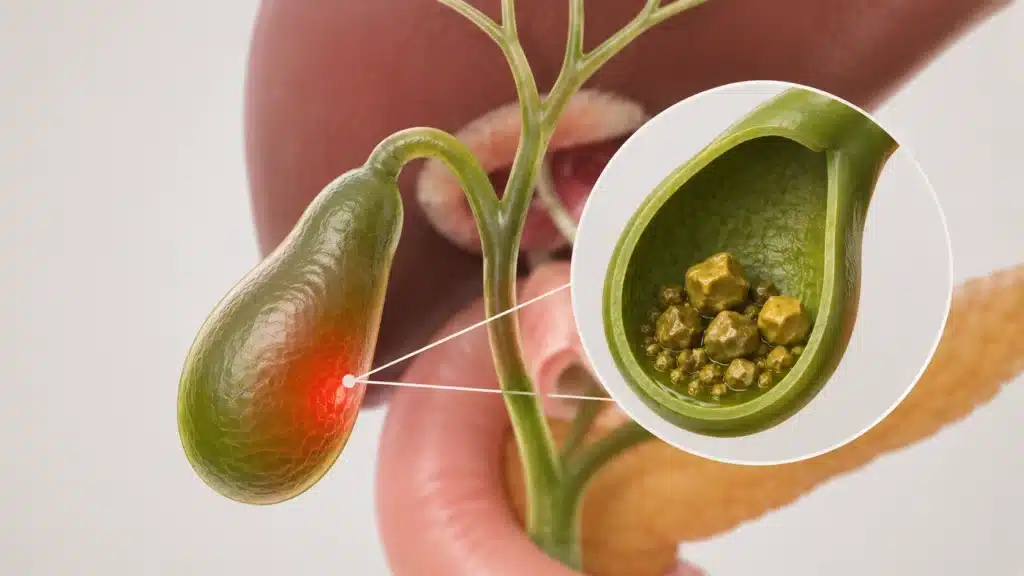
The gallbladder is a small, pear-shaped sac beneath the liver. Its job is to store bile, a digestive fluid made by the liver, and release it into the small intestine when you eat fatty foods. When gallstones form inside the gallbladder, they can block bile flow, cause infection, and create significant pain.
The liver continues to produce bile after the gallbladder is removed; bile simply flows continuously into the small intestine rather than being stored. The vast majority of people live completely normally and eat whatever they like after gallbladder removal. The gallbladder is a useful but not essential organ.
Conditions treated with laparoscopic cholecystectomy
Laparoscopic cholecystectomy is the definitive treatment for a range of gallbladder and biliary conditions, not just gallstones.
Gallstones (Cholelithiasis)
The most common reason for gallbladder removal surgery. Gallstones are hardened deposits of cholesterol, bile salts, or calcium that form inside the gallbladder.
- Many people have gallstones and never know it; they are “silent” and cause no symptoms.
- When stones block the gallbladder outlet, they cause biliary colic, cramping upper abdominal pain, typically after eating.
- Symptomatic gallstones almost always require laparoscopic cholecystectomy; they do not resolve on their own.
- Leaving symptomatic stones untreated risks progression to acute cholecystitis, pancreatitis, or bile duct obstruction.
Acute Cholecystitis (Inflamed Gallbladder)
When a gallstone blocks the neck of the gallbladder, the gallbladder becomes acutely inflamed, a condition called acute cholecystitis.
- Causes severe, constant right upper abdominal pain, fever, and nausea
- Requires urgent laparoscopic cholecystectomy, ideally within 72 hours of symptom onset.
- Delayed treatment risks progression to gallbladder empyema (pus-filled gallbladder), perforation, or gangrene.
Chronic Cholecystitis
Repeated episodes of gallbladder inflammation, often from recurrent biliary colic, cause the gallbladder wall to thicken and scar over time.
- Symptoms include persistent right upper abdominal discomfort, nausea, and intolerance to fatty foods.
- Laparoscopic cholecystectomy relieves symptoms and prevents further progression.
Gallbladder Polyps
Growths that project from the gallbladder wall; most are benign, but larger polyps carry a risk of malignant transformation.
- Polyps larger than 10mm are generally recommended for removal.
- Laparoscopic cholecystectomy removes both the polyp and the gallbladder, eliminating any cancer risk.
- Also recommended for polyps in patients with other risk factors for gallbladder cancer.
Gallbladder Empyema
When the gallbladder fills with pus, usually from a blocked, infected gallbladder.
- Presents with severe pain, high fever, and signs of systemic infection
- Requires urgent surgical removal, laparoscopic cholecystectomy, or open surgery in severe cases
Acalculous Cholecystitis (Gallbladder Inflammation Without Stones)
Gallbladder inflammation occurring without gallstones is seen in critically ill patients, after major surgery, or severe illness.
- Managed with laparoscopic cholecystectomy once the patient is stable enough.
Biliary Dyskinesia (Gallbladder Motility Disorder)
When the gallbladder doesn’t empty properly, causing symptoms identical to gallstones (pain, nausea, bloating) despite no stones being present on imaging.
- Diagnosed by a specialized nuclear medicine scan (HIDA scan) showing reduced gallbladder ejection fraction.
- Laparoscopic cholecystectomy relieves symptoms in the majority of patients.
Mirizzi Syndrome
A rare complication where a large gallstone impacts the cystic duct or Hartmann’s pouch compresses the common bile duct, causing jaundice and biliary obstruction.
- Requires careful surgical planning and experienced laparoscopic technique.
- Laparoscopic cholecystectomy is the treatment, though conversion to open surgery is sometimes necessary in complex cases.
Early Gallbladder Cancer (Selected Cases)
In selected patients with early-stage gallbladder cancer (T1 disease confined to the gallbladder wall), laparoscopic cholecystectomy may be curative.
- More advanced stages require extended resection with liver and lymph node removal.
- Incidental gallbladder cancer, discovered after routine cholecystectomy for stones, is managed by our oncological surgery team.
Choledocholithiasis
Stones in the common bile duct are managed with ERCP (Endoscopic Retrograde Cholangiopancreatography) to clear the duct, followed by laparoscopic cholecystectomy to remove the gallbladder, preventing further stones from entering the duct.
Who needs laparoscopic cholecystectomy?
You are likely a candidate for laparoscopic cholecystectomy if:
- Gallstones are causing repeated pain or digestive problems.
- You have a gallbladder infection (acute or chronic cholecystitis).
- A gallbladder polyp is larger than 10 mm.
- Gallstones have caused inflammation of the pancreas (gallstone pancreatitis).
- There is pus or severe damage in the gallbladder.
- Your gallbladder is not functioning properly and is causing symptoms.
- A gallstone is blocking the bile duct (Mirizzi syndrome).
- You have gallstones along with high-risk conditions such as diabetes or a weakened immune system.
- You frequently travel to remote areas where emergency treatment may not be available.
- Early-stage gallbladder cancer has been detected.
Diagnosis for laparoscopic cholecystectomy
Before recommending laparoscopic cholecystectomy, your surgeon at Rama Hospital will conduct a thorough evaluation.
Imaging Investigations
Ultrasound Abdomen
- First and most common test for gallbladder disease.
- Detects gallstones accurately.
- Checks gallbladder inflammation and wall thickening.
- Identifies bile duct blockage or dilation.
- Most important test before laparoscopic cholecystectomy.
MRCP (Magnetic Resonance Cholangiopancreatography)
- Uses MRI to visualize bile and pancreatic ducts.
- Detects stones in the common bile duct.
- Recommended when bile duct blockage is suspected.
- Helps decide if ERCP is needed before surgery.
CT Scan Abdomen
- Used when complications are suspected.
- Detects infection, perforation, abscess, or cancer.
- Provides detailed images of surrounding organs.
- Not routinely used for simple gallstones.
HIDA Scan
- Evaluates gallbladder function and emptying.
- Used when symptoms exist but no stones are seen on ultrasound.
- Helps diagnose biliary dyskinesia.
- Low ejection fraction suggests poor gallbladder function.
Intraoperative Cholangiogram (IOC)
- X-ray performed during gallbladder surgery.
- Checks bile duct anatomy and blockages.
- Helps identify hidden bile duct stones.
Laboratory Investigations
- Liver Function Tests (LFTs): Detect bile duct blockage and liver involvement.
- Complete Blood Count (CBC): Elevated white blood cells may indicate infection.
- Serum Amylase & Lipase: Increased levels suggest gallstone pancreatitis.
- C-Reactive Protein (CRP): Indicates inflammation or infection.
- Coagulation Profile: Assesses blood clotting before surgery.
- Blood Group & Cross-Match: Performed as part of routine surgical preparation.
The step-by-step procedure: what happens during laparoscopic cholecystectomy?
At Rama Hospital, laparoscopic cholecystectomy is performed by experienced laparoscopic surgeons in a fully equipped operating theater. Here is a clear, step-by-step walkthrough of exactly what happens:
Before Surgery
- Blood tests, scans, and anesthesia assessment are completed.
- Fasting is required for 6–8 hours before surgery.
- General anesthesia is given, so you remain asleep during the procedure.
- Antibiotics are administered to reduce infection risk.
- If bile duct stones are present, ERCP may be performed before surgery.
During Surgery
Step 1: Creating Space: Carbon dioxide gas is used to gently inflate the abdomen.
Step 2: Small Incisions: Three to four small cuts are made for the camera and surgical instruments.
Step 3: Internal Examination: A high-definition camera helps the surgeon view the gallbladder and nearby structures.
Step 4: Identifying Key Structures: The cystic duct and artery are carefully identified before removal begins.
Step 5: Bile Duct Check (If Needed): An X-ray dye study may be performed to check for bile duct stones.
Step 6: Securing the Gallbladder: The cystic duct and artery are clipped and divided.
Step 7: Gallbladder Removal: The gallbladder is separated from the liver and removed through a small incision.
Step 8: Final Inspection: The area is checked for bleeding or bile leakage.
Step 9: Closing the Incisions: Gas is released, incisions are closed, and dressings are applied.
After Surgery
- Recovery is monitored as the anesthesia wears off.
- Most patients can eat and drink within a few hours.
- Pain is usually mild and controlled with medication.
- Most patients go home the same day or the next morning.
- Temporary shoulder pain from residual gas may occur for 24–48 hours.
Benefits of Laparoscopic Gallbladder Surgery
For patients with gallbladder disease, laparoscopic cholecystectomy at Rama Hospital offers compelling advantages over open surgery and all non-surgical alternatives:
- Smaller scars – Only a few tiny cuts are needed.
- Less pain after surgery – Smaller incisions mean less discomfort.
- Short hospital stay – Most patients go home within a day.
- Faster recovery – Return to daily activities within 1–2 weeks.
- Lower infection risk – Fewer wound-related complications.
- Better surgical precision – High-definition camera provides a clear view.
- Permanent solution – Removes the gallbladder and prevents future gallstones.
- Prevents serious complications – Reduces the risk of infection, pancreatitis, and bile duct blockage.
- Shorter anesthesia time – Quick procedure with less exposure to anesthesia.
- Suitable for most patients – Can be safely performed in many complex cases.
- Peace of mind – The root cause is removed, reducing future concerns.
Risks and Complications of Laparoscopic Gallbladder Surgery
Most patients recover without problems, but like any surgery, there are some potential risks.
Common
- Shoulder pain – Caused by surgical gas; usually improves within 1–2 days.
- Mild wound pain – Common around the incision sites and manageable with pain medication.
- Nausea or tiredness – Temporary effects of anesthesia that typically settle within 48 hours.
- Bloating or loose stools – Digestive changes may occur for a few weeks after surgery.
Less Common
- Wound infection – Usually mild and treated with antibiotics.
- Bile leak – Leakage of bile that may require drainage or additional treatment.
- Retained bile duct stone – A stone left behind in the bile duct that may need removal.
- Conversion to open surgery – Sometimes needed if inflammation, bleeding, or anatomy makes keyhole surgery unsafe.
- Port-site hernia – A small risk of hernia developing at an incision site.
Rare but Serious
- Bile duct injury – An uncommon but serious complication that may require specialist repair.
- Significant bleeding – Rare bleeding during surgery that requires immediate management.
- Injury to nearby organs – Very uncommon injury to the bowel or surrounding structures.
- Post-cholecystectomy syndrome – Some patients continue to experience digestive symptoms after gallbladder removal.
Recovery after laparoscopic cholecystectomy
First 24–48 hours
- Rest at home and avoid strenuous activities.
- Mild walking is encouraged to aid recovery.
- Shoulder pain is common and usually settles within a few days.
- Start with light, easy-to-digest foods.
- Drink plenty of water to stay hydrated.
During the first week
- Take prescribed medications as directed.
- Keep incision sites clean and dry.
- Check wounds daily for redness, swelling, or discharge.
- Take short walks and gradually increase activity.
- Avoid lifting heavy objects.
Eating after gallbladder removal
- Begin with light meals and gradually return to a normal diet.
- Limit fatty, fried, and greasy foods for the first few weeks.
- Temporary loose stools or diarrhea may occur.
- Most patients can eat normally within 4–6 weeks.
General recovery tips
- Resume driving after about 1 week if comfortable.
- Return to desk work within 1–2 weeks.
- Resume heavy work or exercise after 3–4 weeks.
- Attend all scheduled follow-up appointments.
- Seek medical attention for fever, worsening pain, jaundice, or wound discharge.
Why choose Rama Hospital for laparoscopic cholecystectomy?
- Experienced Surgeons – Our specialists have successfully performed thousands of laparoscopic gallbladder surgeries.
- Safety-First Approach – Every procedure follows internationally recognized safety protocols to minimize complications.
- Advanced Technology – High-definition laparoscopic equipment ensures greater precision and better outcomes.
- Complete Stone Care – Gallbladder and bile duct stone treatment are managed under one roof.
- Faster Recovery – Many patients can go home within 24 hours after surgery.
- Multidisciplinary Support – Surgeons, gastroenterologists, and specialists work together for comprehensive care.
When should I see a doctor?
- You have upper right abdominal pain, especially after eating fatty foods.
- You experience nausea, bloating, or indigestion that keeps recurring.
- You’ve been told you have gallstones on an ultrasound and want to understand your options.
- You have a gallbladder polyp detected on imaging and haven’t had a surgical opinion.
- You have a history of gallstone pancreatitis and haven’t had your gallbladder removed yet; this needs to be done urgently to prevent recurrence.
Frequently Asked Questions (FAQs)
Do I really need surgery if my gallstones aren’t causing much pain?
It depends. Truly asymptomatic gallstones, found incidentally with no symptoms, can often be monitored. However, once stones cause symptoms, even mild biliary colic, the risk of progression to serious complications like acute cholecystitis or pancreatitis increases with each episode. Most surgeons recommend laparoscopic cholecystectomy once stones become symptomatic.
Can gallstones be dissolved with medication instead of surgery?
For a very small minority of patients with tiny, soft cholesterol stones in a functioning gallbladder, oral medication can slowly dissolve stones. However, this takes months to years, works in only a small proportion of patients, and stones recur in up to 50% within 5 years of stopping treatment.
What happens if I don’t have the surgery?
Each episode of biliary colic can progress to acute cholecystitis, gallbladder empyema, perforation, bile duct obstruction, cholangitis, or gallstone pancreatitis, all of which are more serious, more dangerous, and more difficult to treat than an elective laparoscopic cholecystectomy.
Is laparoscopic cholecystectomy safe?
Yes, laparoscopic cholecystectomy is one of the most commonly performed and safest operations in the world, with an excellent overall safety record. The risk of serious complications like bile duct injury is less than 0.3–0.5% in experienced hands.
How long will I be in hospital?
Most patients having a laparoscopic cholecystectomy for non-complicated gallbladder disease go home the same day or the following morning. Patients with acute cholecystitis or complications may stay 2 to 4 days depending on their recovery.
Will I need to change my diet permanently after gallbladder removal?
Not permanently, for most people. In the first 4 to 6 weeks, eating a lower-fat diet and avoiding very greasy foods helps the body adjust. After that, the vast majority of patients eat completely normally with no permanent dietary restrictions.
Can I have a laparoscopic cholecystectomy if I’ve had previous abdominal surgery?
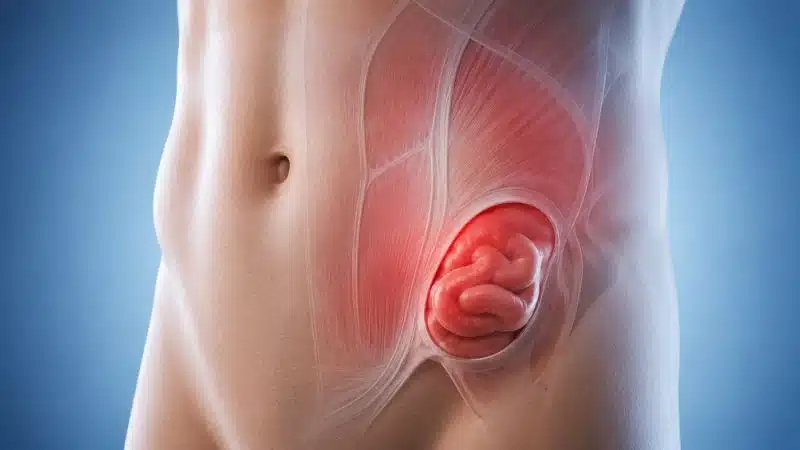
Often yes, but it requires an experienced laparoscopic surgeon. Previous surgery can cause adhesions (scar tissue) that make laparoscopic access more challenging.
What is the difference between laparoscopic and open cholecystectomy?
Laparoscopic cholecystectomy uses three to four tiny incisions and a camera, resulting in less pain, faster recovery, a shorter hospital stay, and smaller scars. Open cholecystectomy requires a large abdominal incision; it is reserved for cases where laparoscopic surgery is not safe or feasible.
Can a laparoscopic operation become open surgery? Is that a failure?
Conversion to open surgery happens in approximately 2 to 5% of laparoscopic cholecystectomies, most often in cases of severe inflammation, unclear anatomy, unexpected bleeding, or bile duct complications. It is never a failure; it is a responsible surgical decision made to protect your safety.
When can I return to work and exercise after a laparoscopic cholecystectomy?
Most patients return to desk-based work within 1 to 2 weeks and physically demanding work or regular exercise within 3 to 4 weeks. Recovery varies between individuals; your surgeon at Rama Hospital will give you personalized guidance based on your procedure and progress.
Conclusion
Gallbladder disease, whether from gallstones, acute cholecystitis, polyps, or biliary dyskinesia, is a common condition but one that genuinely impacts quality of life. Meals become sources of anxiety. Pain becomes unpredictable. And complications, if left untreated, can be serious.
Laparoscopic cholecystectomy has transformed how this condition is treated. What once required a large incision and a week in hospital is now a keyhole procedure performed in under two hours, with most patients home the next morning and back to normal life within a week.
At Rama Hospital, our experienced laparoscopic surgical team combines technical expertise, the highest safety standards, and genuine patient-centered care to deliver outstanding outcomes, from the most straightforward gallstone removal to the most complex acute or complicated cholecystectomy.
If you have gallbladder symptoms or have already been told you need surgery, don’t wait for a complication to force your hand.
Book your consultation with the surgical team at Rama Hospital today. The sooner you act, the simpler and safer the solution.