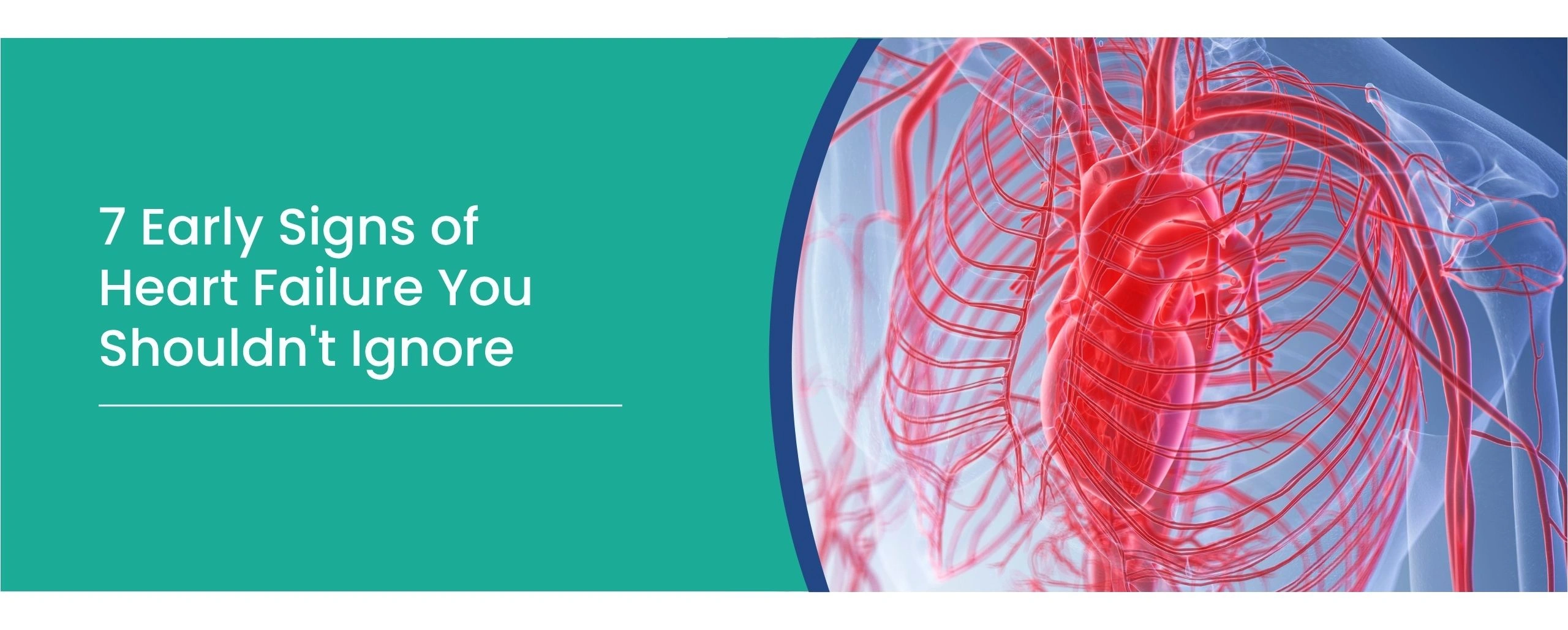
Heart failure doesn’t always begin with dramatic symptoms. Sometimes, the first clues are surprisingly easy to dismiss: getting unusually breathless while climbing stairs, feeling exhausted after routine activities, or noticing that your ankles look swollen by the end of the day.
You may simply think you are getting older, becoming less active, or having a temporary health issue.
But when these changes are new, persistent, or gradually getting worse, they deserve attention.
The early signs of heart failure can develop slowly and may look different from one person to another. Shortness of breath, unusual fatigue, swelling, sudden weight gain, persistent cough, difficulty breathing while lying down, and reduced exercise tolerance can all be warning signs.
Recognising these early symptoms of heart failure does not mean every symptom is caused by a heart problem. Many of them can occur with other conditions too. The important thing is knowing when a change in your usual health pattern should be evaluated.
What Is Heart Failure?
Heart failure does not mean that the heart has stopped working. It means the heart is not pumping blood as well as it should, so it may not be able to supply the body with enough blood and oxygen to meet its needs.
When the heart’s pumping or filling ability is impaired, blood and fluid can begin to back up. This can cause fluid to collect in the lungs, leading to breathlessness, or in tissues such as the feet, ankles and legs, causing swelling.
The term congestive heart failure is often used when heart failure is associated with this type of fluid buildup.
Heart failure can develop gradually or, in some situations, symptoms can appear suddenly. Early recognition and medical evaluation can help identify the underlying cause and guide appropriate treatment.
7 Early Signs of Heart Failure
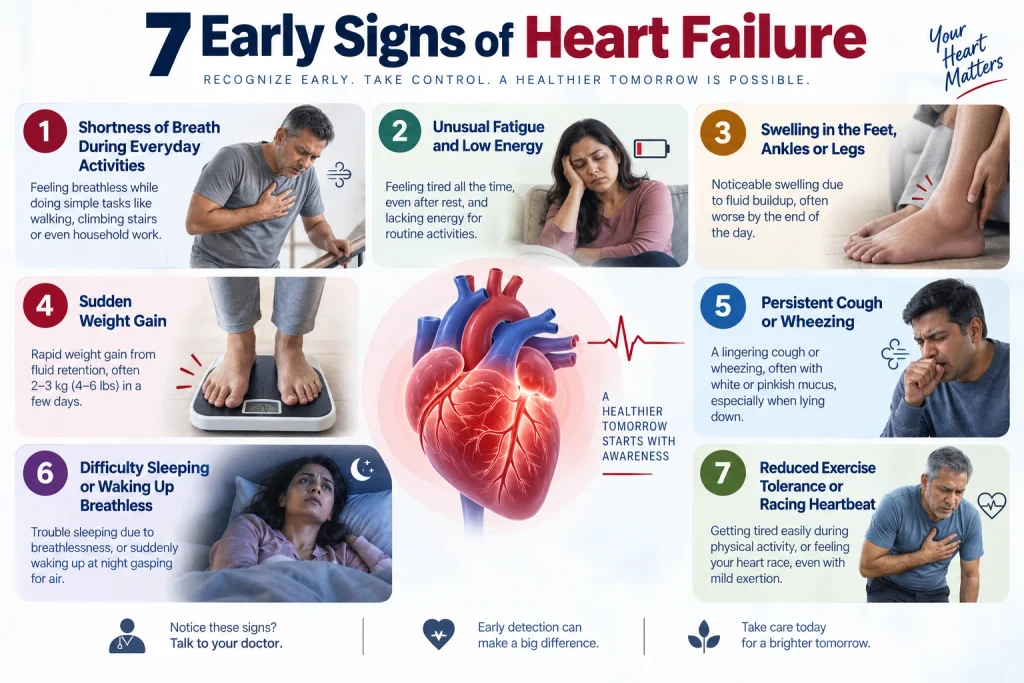
The following symptoms do not automatically mean you have heart failure. However, new, unexplained or worsening symptoms should not be ignored, particularly if you have risk factors such as high blood pressure, diabetes, coronary artery disease or previous heart problems.
1. Shortness of Breath During Everyday Activities
One of the most common heart failure symptoms is shortness of breath.
You may first notice it during activities that previously felt easy. Walking a short distance, climbing a flight of stairs, carrying groceries or doing household chores may suddenly leave you more breathless than usual.
Early on, the breathlessness may occur mainly with physical activity. As heart failure progresses, some people can experience breathing difficulty with less exertion or even while resting.
You may also notice:
- Getting out of breath sooner than before
- Needing to stop more often while walking
- Feeling breathless while climbing stairs
- Difficulty breathing when lying flat
- Needing extra pillows to sleep comfortably
Why does this happen? When the heart cannot handle blood returning from the lungs effectively, pressure can build up in the lung circulation. Fluid may then accumulate in the lungs, making breathing more difficult.
So, shortness of breath in heart failure is not necessarily dramatic at first. A gradual reduction in how much activity you can comfortably do may be the first clue.
2. Unusual Fatigue and Low Energy
Everyone feels tired sometimes. A late night, stressful week, intense workout or poor sleep can leave you exhausted.
Heart-related fatigue can feel different.
You may find that routine activities require much more effort than they used to. Shopping, walking, climbing stairs or carrying everyday items may leave you unusually tired. Johns Hopkins identifies frequent fatigue, weakness and reduced ability to exercise among the early symptoms that can occur with heart failure.
You may notice:
- Feeling tired even after adequate rest
- Needing more breaks during routine activities
- Losing interest in activities you previously enjoyed because they feel exhausting
- Feeling weak during physical activity
- Becoming tired and breathless at the same time
This doesn’t mean every case of persistent tiredness is related to the heart. Anaemia, thyroid problems, sleep disorders, infections, medications and many other conditions can cause fatigue.
But unexplained or progressively worsening fatigue in heart failure should be evaluated rather than simply attributed to ageing or being “out of shape.”
3. Swelling in the Feet, Ankles or Legs
Have your shoes suddenly started feeling tighter by evening? Are your socks leaving deeper marks around your ankles?
Swelling in the feet, ankles and lower legs can occur when excess fluid accumulates in the body.
When the heart isn’t pumping effectively, blood can back up in the veins. This increases pressure in the blood vessels and can cause fluid to move into surrounding tissues, resulting in edema or swelling.
You may notice:
- Swollen feet or ankles
- Swelling that becomes more noticeable later in the day
- Tight shoes or socks
- Legs that feel heavy or uncomfortable
- Increasing swelling over several days
Heart failure is not the only possible cause of leg swelling. Kidney disease, liver disease, certain medications, vein problems and prolonged standing can also cause edema.
What matters is the pattern. New, persistent or increasing swelling, particularly when it occurs along with breathlessness, fatigue or sudden weight gain, warrants medical attention.
4. Sudden Weight Gain
An unexpected increase on the weighing scale does not always mean you have gained body fat.
In heart failure, sudden weight gain can occur because the body is retaining extra fluid. The American Heart Association recommends monitoring weight because rapid changes can be a sign of increasing fluid retention.
This is why weight tracking can be useful, particularly for people who have already been diagnosed with heart failure.
A sudden increase may occur alongside:
- Swollen ankles or legs
- Increasing breathlessness
- Abdominal swelling or discomfort
- Difficulty lying flat
- Reduced ability to exercise
The exact amount of weight gain that should prompt a call to your doctor varies by individual. For people already living with heart failure, the American Heart Association notes that an increase of more than about 2–3 pounds in a day or more than 5 pounds in a week can be a warning sign, but patients should follow the threshold provided by their healthcare team.
So, sudden weight gain in heart failure is worth paying attention to, especially when it happens without an obvious change in diet or routine.
5. Persistent Cough or Wheezing
A cough that refuses to go away may not always be a respiratory infection.
Heart failure can cause a persistent cough or wheezing when fluid builds up in or around the lungs.
Some people notice:
- A dry or hacking cough
- Coughing that becomes worse at night
- Coughing when lying down
- Wheezing or a feeling of chest congestion
- Cough occurring alongside breathlessness
A cough by itself is much more commonly associated with infections, allergies, asthma, acid reflux and other conditions than heart failure.
However, a persistent cough with breathlessness, swelling or difficulty lying flat deserves medical evaluation.
In severe cases, coughing may produce white or pink, foamy or blood-tinged mucus and can occur alongside severe breathing difficulty. This requires urgent medical attention.
6. Difficulty Sleeping or Waking Up Breathless
Sometimes, the clearest signs of heart failure appear at night.
You may lie down comfortably at first but find that breathing becomes harder after some time. You may need to sleep with several pillows or sit upright to breathe more comfortably.
Some people wake suddenly during the night feeling as though they cannot catch their breath. This type of nighttime breathlessness is known as paroxysmal nocturnal dyspnea.
You may notice:
- Needing extra pillows to sleep
- Difficulty breathing when lying flat
- Waking up suddenly short of breath
- Coughing more at night
- Sleeping better in a more upright position
If nighttime breathlessness is new or repeatedly waking you from sleep, don’t simply assume it is a sleep problem.
7. Reduced Exercise Tolerance or Racing Heartbeat
Maybe you used to walk for 30 minutes without stopping, but now you need several breaks.
Perhaps you can no longer keep up with your usual pace, or routine physical activity leaves you unusually tired and breathless.
This reduction in exercise tolerance can be an early sign that the heart is struggling to meet the body’s demands. Johns Hopkins identifies reduced ability to be active as an early symptom of heart failure.
Some people may also notice palpitations, a feeling that the heart is:
- Racing
- Fluttering
- Pounding
- Beating irregularly
Heart failure can be associated with an increased heart rate or abnormal rhythm, but palpitations can also occur for many other reasons, including stress, caffeine, medications, thyroid problems and arrhythmias that are unrelated to heart failure.
A new racing or irregular heartbeat, particularly when accompanied by breathlessness, dizziness, chest discomfort or fainting, should be assessed promptly.
Are These Symptoms Always Caused by Heart Failure?
Shortness of breath, fatigue, swollen legs, cough and palpitations can have many causes. Having one of these symptoms does not mean that you have heart failure.
For example: Shortness of breath: heart or lungs?
Breathlessness can occur because of asthma, chronic lung disease, respiratory infections, anaemia, anxiety, reduced fitness and several other conditions.
If breathlessness is new, unexplained or progressively worsening, a medical evaluation can help determine whether the cause is cardiac, respiratory or something else.
Leg swelling: when should you worry?
Swelling can result from prolonged standing, vein problems, medications, kidney disease or other conditions.
It becomes more concerning when it is new or increasing and occurs with symptoms such as breathlessness, rapid weight gain or reduced exercise tolerance.
Fatigue: when is it more than normal tiredness?
Occasional tiredness is normal. Persistent fatigue that interferes with everyday activities or occurs with breathlessness, swelling or reduced exercise capacity deserves a closer look.
The key is not to diagnose yourself based on one symptom. Instead, look at the overall pattern and whether your usual level of functioning has changed.
Heart Failure Symptoms vs Normal Ageing
It is easy to blame changes in energy or stamina on getting older. But ageing itself should not automatically explain a significant or progressive change in your ability to perform everyday activities.
The pattern matters more than any single symptom.
If you notice that ordinary activities are becoming progressively harder, it is worth discussing the change with a healthcare professional rather than assuming it is simply part of ageing.
| Symptom | May be less concerning | More concerning |
| Breathlessness | After unusually intense exercise | During routine activities that were previously easy |
| Fatigue | After poor sleep or strenuous activity | Persistent or unexplained tiredness |
| Swelling | Temporary after prolonged standing | New, persistent or increasing swelling |
| Weight | Gradual changes over time | Sudden increase without an obvious reason |
| Cough | Short-term infection or irritation | Persistent or worse at night/when lying down |
| Exercise tolerance | Temporary reduction after illness | Progressive difficulty with normal activity |
| Heartbeat | Brief awareness after exertion or stress | New, persistent or irregular racing heartbeat |
When Should You See a Doctor?
You should consider medical evaluation if you develop new or unexplained symptoms that could be related to heart failure, particularly if they persist or are getting worse.
Make an appointment with a doctor or cardiologist if you notice:
- Breathlessness during ordinary activities
- Persistent or worsening fatigue
- New swelling of the feet, ankles or legs
- Unexplained weight gain
- Persistent cough or wheezing
- Difficulty breathing when lying down
- Repeatedly waking up breathless
- New or unusual palpitations
- A noticeable decline in your ability to exercise
The American Heart Association recommends reporting new symptoms or sudden worsening of existing symptoms to your healthcare professional.
Early evaluation can also help identify conditions that may be contributing to your symptoms before they become more difficult to manage.
What Causes Heart Failure?
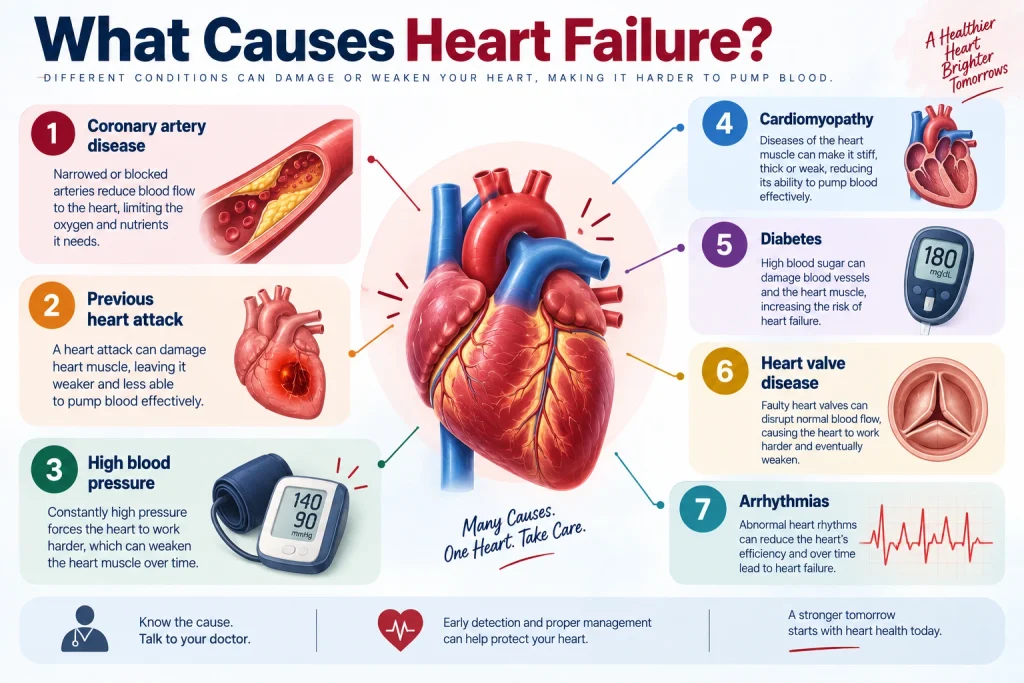
Heart failure can develop because of several conditions that damage or weaken the heart or make it work harder over time.
Common causes and risk factors include:
- Coronary artery disease: Reduced blood flow to the heart muscle can weaken its ability to pump.
- Previous heart attack: Damage to heart muscle after a heart attack can affect pumping function.
- High blood pressure: Long-term uncontrolled blood pressure can place extra strain on the heart.
- Cardiomyopathy: Diseases affecting the heart muscle can interfere with pumping or filling.
- Diabetes: Diabetes can increase the risk of cardiovascular disease and heart failure.
- Heart valve disease: Damaged or abnormal valves can make the heart work harder.
- Arrhythmias: Certain persistent abnormal heart rhythms can affect heart function.
Can Heart Failure Be Treated?
Yes. Heart failure is a serious condition, but it can often be managed with a combination of treatments, depending on its type, cause and severity.
Treatment may include:
- Medicines to improve symptoms and reduce the strain on the heart
- Lifestyle and dietary changes
- Treatment of underlying conditions such as high blood pressure or coronary artery disease
- Devices for selected patients
- Procedures or surgery when appropriate
- Cardiac rehabilitation and ongoing monitoring in suitable patients
Frequently Asked Questions (FAQs)
Can heart failure start suddenly?
Yes. Heart failure can sometimes develop or worsen suddenly, although symptoms may also develop gradually over time. Sudden severe breathlessness, chest pain, fainting or confusion requires urgent medical attention.
What is usually the first symptom of heart failure?
There is no single first symptom for everyone. Shortness of breath and reduced ability to exercise are common early symptoms, while some people may first notice fatigue, swelling or other changes.
Can shortness of breath be the only symptom?
It can be an early symptom, but breathlessness alone does not necessarily indicate heart failure. Lung conditions, anaemia, infections and other problems can also cause it. New or unexplained breathlessness should be evaluated by a healthcare professional.
Does heart failure cause swollen feet?
It can. Reduced heart function can contribute to fluid retention, which may cause swelling in the feet, ankles and legs. However, leg swelling has many possible causes and should not automatically be attributed to heart failure.
Can heart failure cause coughing at night?
Yes. Fluid buildup in the lungs can contribute to persistent coughing or wheezing, and some people notice worsening symptoms when lying down or at night.
Can you have heart failure without knowing it?
Yes. Early heart failure may cause subtle symptoms that are easy to overlook, and some people may have few noticeable symptoms initially.
Is heart failure reversible?
It depends on the underlying cause and type of heart failure. Some conditions contributing to heart failure can be treated or improved, while many forms require long-term management. Your doctor can explain what is possible based on your individual diagnosis.
How is early heart failure diagnosed?
Diagnosis usually involves a combination of medical history, physical examination and investigations. Depending on the situation, these may include blood tests, ECG, chest X-ray and echocardiography, with additional tests when needed.
Conclusion
Heart failure does not always announce itself with a dramatic event. Sometimes, it begins with small changes: getting breathless on stairs, feeling unusually tired, noticing swollen ankles, gaining weight unexpectedly, coughing at night or struggling to sleep while lying flat.
These symptoms can have many causes, so they do not mean you have heart failure. But new, persistent or worsening symptoms should not simply be dismissed as ageing or lack of fitness.
Pay attention to changes in how your body feels and how much activity you can comfortably manage. If you notice possible early signs of heart failure, speak with a doctor for an appropriate evaluation.
And if you develop severe or sudden breathlessness, chest pain, fainting, confusion or blue lips or face, seek emergency medical attention immediately in the best hospital of Noida.