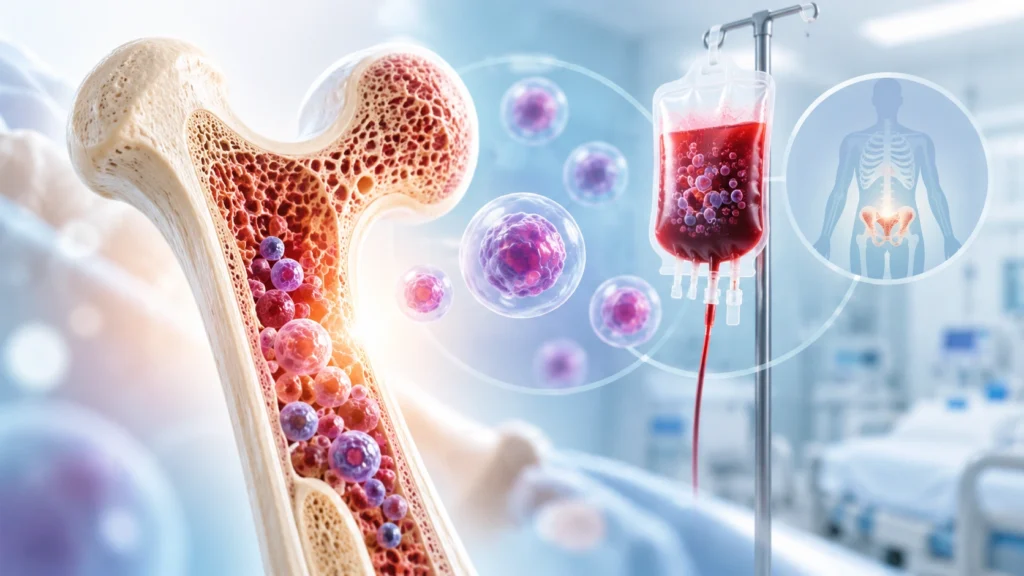
Bone marrow transplant, also known as BMT or stem cell transplant, is a specialized medical procedure used to treat certain blood disorders, cancers, and immune system diseases. The bone marrow is the spongy tissue inside bones that produces blood cells, including red blood cells, white blood cells, and platelets. When the bone marrow is damaged or diseased, it may not produce healthy blood cells. A BMT replaces the unhealthy marrow with healthy stem cells that can grow into new, functioning blood cells.
This procedure is often used for conditions such as leukemia, lymphoma, multiple myeloma, severe anemia, thalassemia, sickle cell disease, and certain immune deficiencies. It can be life-saving for patients who have not responded to standard treatments. However, it is a complex procedure that requires careful planning, specialized care, and long-term follow-up.
BMT is a procedure in which damaged or diseased bone marrow is replaced with healthy stem cells. These stem cells can come from the patient’s own body or from a donor. Once infused into the patient, the stem cells travel to the bones and begin producing new blood cells.
The goal of BMT is to restore the body’s ability to make healthy blood cells. This is important for patients whose bone marrow has been destroyed by disease, chemotherapy, or radiation. The transplant allows the immune system and blood production to recover.
Stem cell transplant is a broader term that includes BMT, peripheral blood stem cell transplant, and cord blood transplant. All of these involve infusing healthy stem cells to rebuild the blood and immune system.
BMT can be classified based on the source of stem cells and the relationship between donor and recipient.
Based on stem cell source
Based on donor type
Why type matters: The type of transplant affects the risk of complications, recovery time, and long-term outcomes. Autologous transplants have lower risk of rejection but may not be suitable for all diseases. Allogeneic transplants can provide a new immune system but carry higher risk of complications such as graft-versus-host disease.
BMT is used for a range of blood disorders and cancers.
Common conditions treated
Why BMT is needed: In these conditions, the bone marrow may be producing abnormal or insufficient blood cells. High-dose chemotherapy or radiation may be needed to destroy the diseased cells. BMT then replaces the damaged marrow with healthy stem cells to restore normal blood production.
Finding a suitable donor is a critical step in allogeneic transplant.
Donor matching process
Types of donors
Why matching matters: Good matching reduces the risk of rejection and graft-versus-host disease. Poor matching increases complications. Advanced techniques now allow successful transplants even with half-matched donors in many cases.
The transplant process involves several stages over weeks or months.
Pre-transplant evaluation
Conditioning regimen
Stem cell infusion
Engraftment phase
BMT carries significant risks that require careful management.
Early complications
Late complications
Why complications happen: High-dose treatment weakens the body temporarily. The new immune system may attack the patient’s tissues in allogeneic transplant. Careful monitoring and medicines help reduce these risks.
Recovery is a gradual process that varies from patient to patient.
Hospital stay
Early recovery at home
Long-term recovery
Proper nutrition is essential for recovery and immune rebuilding.
Diet pointers
Foods to include
Foods to avoid initially
Infection is a major concern during and after transplant.
Prevention pointers
Vaccination after transplant
Why infection prevention matters: The immune system is weak for months after transplant. Even common infections can become serious. Careful precautions reduce this risk significantly.
Long-term follow-up is essential to monitor recovery and detect complications early.
Follow-up schedule
Monitoring areas
Supportive care
BMT is one of the most complex treatments in medicine. It requires a dedicated transplant unit, experienced specialists, and comprehensive supportive care.
Patients with leukemia, lymphoma, multiple myeloma, severe anemia, thalassemia, sickle cell disease, or immune deficiencies may need BMT. It is considered when standard treatments are not enough.
Stem cells can come from the patient’s own body, a matched donor, a half-matched family member, or umbilical cord blood. The source depends on the disease and availability.
The stem cell infusion is not painful and is like a blood transfusion. The conditioning treatment may cause side effects such as nausea or mouth sores, which are managed with medicines.
Hospital stay is usually several weeks. Full recovery of the immune system can take months to a year. Regular follow-up is needed to monitor progress and complications.
Risks include infection, bleeding, organ toxicity, graft failure, and graft-versus-host disease in allogeneic transplant. Careful monitoring and medicines help reduce these risks.
Many patients return to normal life after recovery. Some may have long-term effects that need management. Regular follow-up helps ensure the best possible outcome.
Yes, children can undergo BMT for certain conditions such as thalassemia, leukemia, or immune disorders. Pediatric transplant requires specialized care and monitoring.
BMT is a complex but potentially life-saving treatment for many blood disorders and cancers. It replaces diseased marrow with healthy stem cells to restore blood production and immune function. The procedure requires careful planning, specialized care, and long-term follow-up.
The most important steps are proper patient selection, donor matching, infection prevention, nutrition support, and regular monitoring. For patients with leukemia, lymphoma, thalassemia, or severe anemia, BMT can offer a chance of cure or long-term control. With expert care and consistent follow-up, patients can achieve good outcomes and improved quality of life.
Rama Hospital can provide comprehensive BMT care, including evaluation, procedure, supportive care, and long-term follow-up, with a focus on safety, infection control, and patient-centered care.


A stem cell transplant can treat, and sometimes cure, certain blood disorders, cancers and autoimmune diseases.
No rows found.