

India has over 101 million people living with diabetes. A large number of them don’t realize their kidneys are quietly paying the price.
Diabetic nephropathy is one of the most serious long-term complications of diabetes. It affects nearly 1 in 3 people with diabetes over time. It develops slowly, often without any warning signs, and by the time symptoms appear, significant kidney damage may have already occurred.
The good news? Diabetic nephropathy is manageable. When detected early and treated properly, you can slow its progression and protect your kidney function for years.
The kidneys act as the body’s natural filtration system, removing waste products and excess fluids from the blood. Persistently high blood sugar levels can damage the tiny blood vessels inside the kidneys, making it harder for them to filter blood effectively. Over time, this damage can lead to protein leakage in the urine, reduced kidney function, and eventually chronic kidney disease or kidney failure.
One of the biggest challenges with diabetic nephropathy is that it often progresses silently. Many patients feel completely normal during the early stages, which is why regular kidney screening is essential for people living with diabetes. Simple tests, such as urine protein tests and kidney function blood tests, can help detect problems before noticeable symptoms develop.
What is diabetic nephropathy?
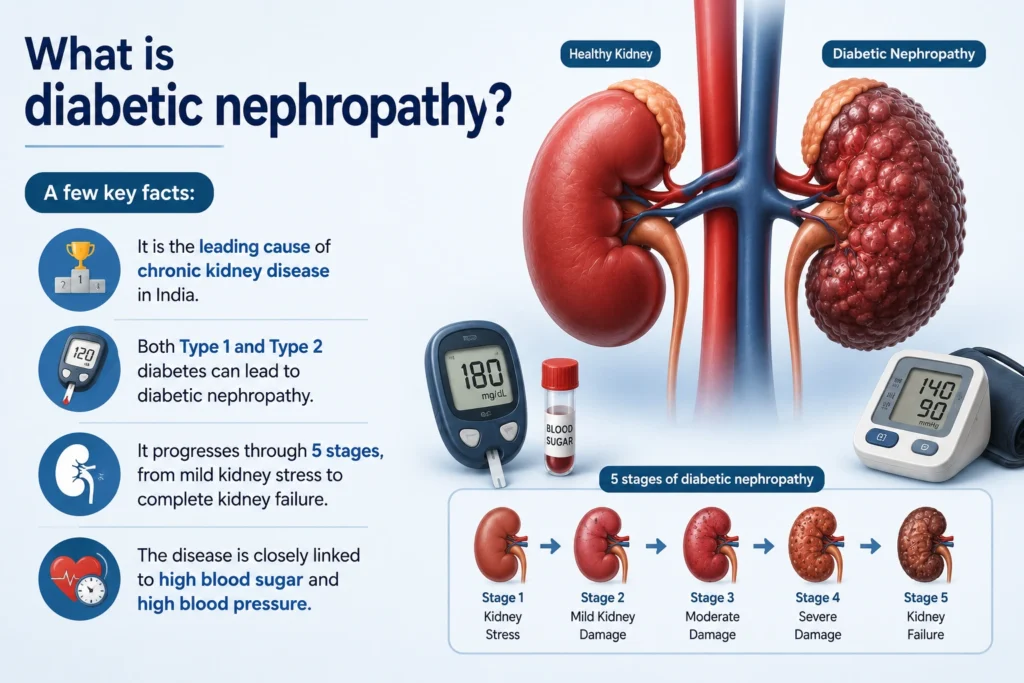
Diabetic nephropathy is a type of diabetic kidney disease caused by long-term uncontrolled diabetes. It damages the tiny blood vessels and filtering units inside the kidneys, reducing their ability to remove waste from the blood.
A few key facts:
- It is the leading cause of chronic kidney disease in India.
- Both Type 1 and Type 2 diabetes can lead to diabetic nephropathy.
- It progresses through 5 stages, from mild kidney stress to complete kidney failure.
- The disease is closely linked to high blood sugar and high blood pressure.
Diabetic nephropathy is not a sudden illness. It builds over years, often silently. That’s exactly what makes it dangerous and why early awareness is life-saving.
How does diabetes damage the kidneys?
Your kidneys contain millions of tiny filters called glomeruli. Their job is to clean your blood continuously, removing waste products and excess fluid while keeping important substances, such as proteins, inside the body.
When diabetes causes blood sugar levels to remain high for long periods, these delicate filters begin to suffer damage. The excess sugar puts stress on the small blood vessels within the kidneys, making them less efficient over time. As a result, the kidneys may start leaking protein into the urine, one of the earliest warning signs of diabetic nephropathy.
In the early stages, this damage often develops silently. Most patients do not experience noticeable symptoms, which is why regular kidney screening is so important for people with diabetes. Without timely intervention, the filtering ability of the kidneys gradually declines, allowing waste products to build up in the body.
High blood pressure makes this process even worse. Elevated pressure inside the blood vessels places additional strain on already damaged kidney filters. In fact, hypertension and diabetes together accelerate kidney damage from diabetes far faster than either condition alone.
Over time, uncontrolled blood sugar and blood pressure can lead to progressive scarring of kidney tissue. As more filters become damaged, the kidneys lose their ability to function properly, increasing the risk of chronic kidney disease and, eventually, kidney failure.
This is why managing both blood sugar and blood pressure is central to preventing diabetic nephropathy from progressing. Regular monitoring, a healthy lifestyle, prescribed medications, and routine kidney function tests can significantly reduce the risk of long-term complications and help preserve kidney health for years to come.
When blood sugar stays high over time, here is what happens:
- Excess glucose thickens the blood vessels in the kidneys.
- The filtering units get overloaded and begin to leak.
- Protein (albumin) starts spilling into the urine, a key early warning sign of diabetic nephropathy.
- Over time, the filtering units scar and stop functioning.
- The kidneys lose their ability to remove waste, leading to a buildup of toxins in the blood.
Early signs and symptoms of diabetic nephropathy
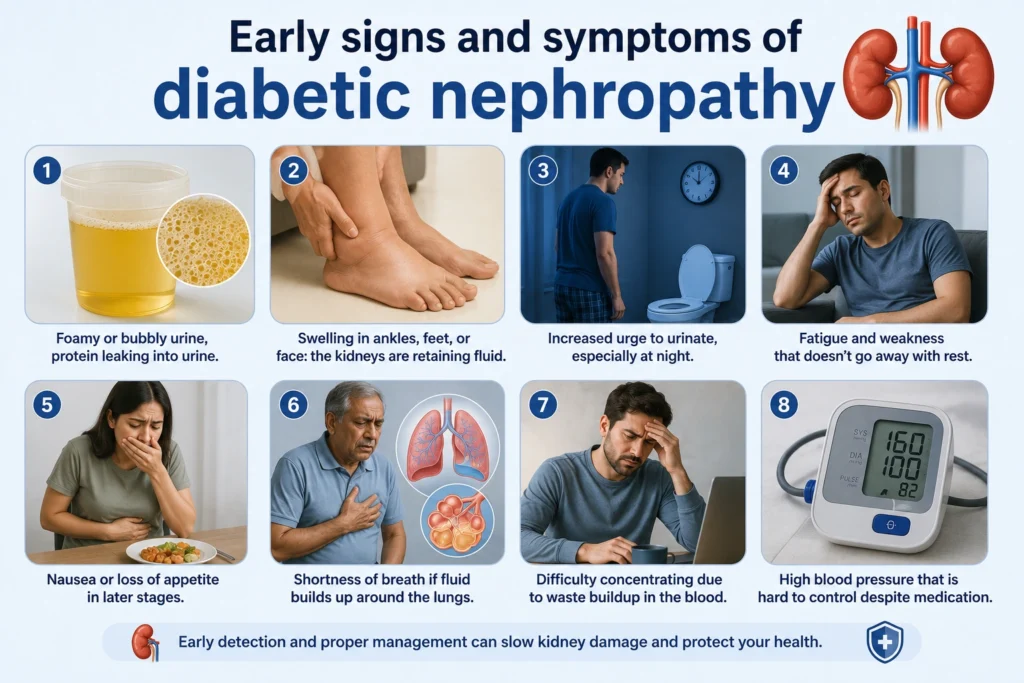
This is where diabetic nephropathy is most misunderstood. In the early stages, there are often no symptoms at all.
By the time symptoms appear, the kidneys may have already lost 50–60% of their function.
The single most important early sign of diabetic nephropathy is protein in the urine (microalbuminuria). This can be detected through a routine urine test years before symptoms develop.
Watch for these warning signs:
- Foamy or bubbly urine, protein leaking into urine.
- Swelling in ankles, feet, or face: the kidneys are retaining fluid.
- Increased urge to urinate, especially at night.
- Fatigue and weakness that doesn’t go away with rest.
- Nausea or loss of appetite in later stages.
- Shortness of breath if fluid builds up around the lungs.
- Difficulty concentrating due to waste buildup in the blood.
- High blood pressure that is hard to control despite medication.
Risk factors for diabetic kidney disease
Not every diabetic patient develops diabetic nephropathy. But certain factors significantly increase the risk:
- Poorly controlled blood sugar over many years, the number one driver.
- High blood pressure (hypertension).
- Smoking restricts blood flow to the kidneys.
- Family history of kidney disease or diabetic kidney disease.
- Being overweight or obese.
- A high-protein diet putting extra strain on kidneys.
- Duration of diabetes: the longer you have it, the higher the risk.
- High cholesterol or triglycerides.
- Frequent urinary tract infections (UTIs).
How is diabetic nephropathy diagnosed?
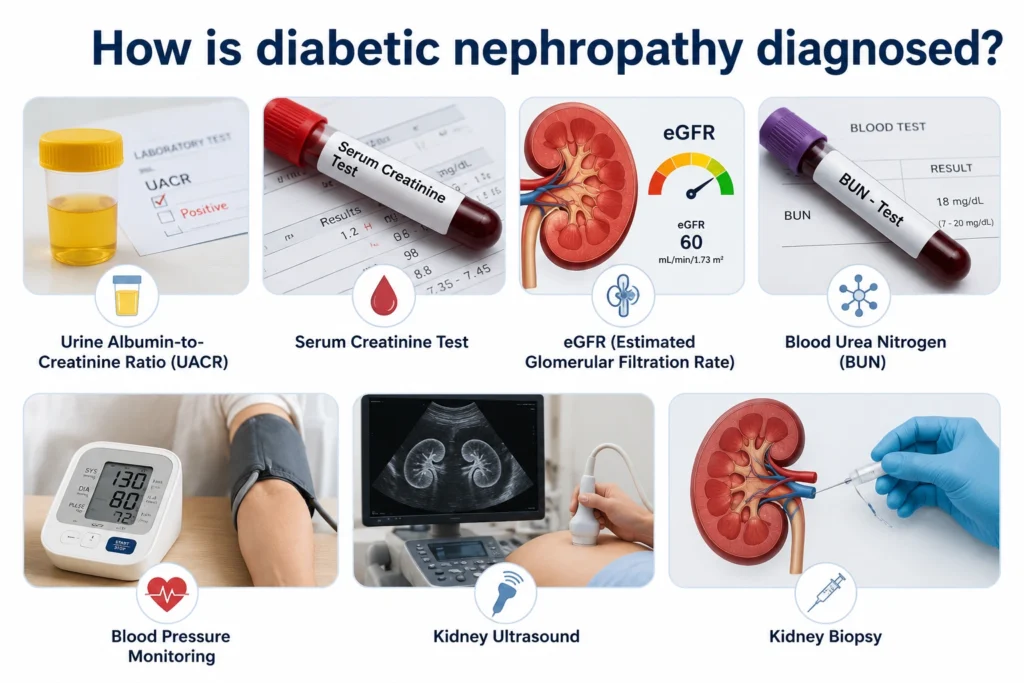
Diagnosing diabetic nephropathy early is straightforward. It doesn’t require complex or painful procedures.
The eGFR and UACR together give the most accurate picture of diabetic kidney disease severity. They are used to stage the disease from Stage 1 (mild) to Stage 5 (kidney failure).
Standard tests used:
- Urine Albumin-to-Creatinine Ratio (UACR): Measures protein leakage. The most sensitive early test for diabetic kidney damage.
- Serum Creatinine Test: Measures waste product levels in blood.
- eGFR (Estimated Glomerular Filtration Rate): Shows how well your kidneys are filtering blood. The key staging test for chronic kidney disease in diabetes.
- Blood Urea Nitrogen (BUN): Another marker of kidney function.
- Blood Pressure Monitoring: Consistently high BP is both a cause and sign of diabetic nephropathy.
- Kidney Ultrasound: Checks for structural damage or size changes.
- Kidney Biopsy: Rarely needed; used only when diagnosis is uncertain.
Treatment options for diabetic nephropathy
There is no single cure for diabetic nephropathy, but there are highly effective ways to slow its progression and protect what kidney function remains.
1. Blood Sugar Control
2. Blood Pressure Management
3. Medications Specific to Diabetic Kidney Disease
4. Diet and Lifestyle Changes
5. Dialysis or Kidney Transplant
How to prevent kidney damage in diabetes
Prevention is always better than treatment, especially for diabetic nephropathy.
Diabetic nephropathy is one of the few complications where disciplined lifestyle choices can make a measurable difference on lab reports. Early diagnosis and expert care at the best hospital in Noida can help slow disease progression and protect kidney function.
Proven prevention strategies:
- Control blood sugar strictly: HbA1c below 7% is the gold standard.
- Manage blood pressure: check it at every doctor visit.
- Get annual kidney function tests, even when you feel well.
- Quit smoking: every cigarette reduces blood flow to kidneys.
- Stay hydrated, especially in summer (critical for the Indian climate).
- Avoid unnecessary medications; self-medicated painkillers are a hidden cause of diabetic kidney damage.
- Control cholesterol: Statins may also offer some kidney protection.
When should you see a nephrologist?
Many patients with diabetes and kidney disease see their general physician or diabetologist, which is fine for early management. But there are clear situations when a kidney specialist for diabetes is essential.
See a nephrologist if:
- Your eGFR drops below 60.
- You have persistent protein in your urine despite good sugar control.
- Your blood pressure is not responding to standard medications.
- You have rapid worsening of kidney function.
- You are approaching Stage 4 or 5 diabetic nephropathy.
- You are being evaluated for dialysis or kidney transplant.
For patients in Noida and the NCR region, diabetic nephropathy treatment in Noida is available at advanced nephrology centers with specialist care and modern diagnostic capabilities.
Early referral to the best nephrologist in Noida or your city can make a significant difference in outcomes. Don’t wait for symptoms to become severe.
Frequently Asked Questions (FAQs)
Can diabetic nephropathy be cured?
Diabetic nephropathy cannot be completely reversed once kidney damage occurs, but its progression can be significantly slowed or even halted with the right treatment and lifestyle changes.
Is protein in urine always a sign of diabetic nephropathy?
Not always. Protein in urine can appear after heavy exercise, fever, or UTIs. But persistent protein in urine, especially in a diabetic patient, is a strong indicator of diabetic kidney disease and must be evaluated by a doctor immediately.
How often should diabetics check kidney function?
At minimum, every 6 to 12 months. If you already have diabetic nephropathy or are at high risk, your doctor may recommend testing every 3 months.
Can diabetic nephropathy lead to kidney failure?
Yes. Without proper management, diabetic nephropathy can progress through 5 stages and eventually lead to end-stage renal disease (ESRD), requiring dialysis or a kidney transplant.
Conclusion
Diabetic nephropathy is serious. It is the most common cause of kidney failure worldwide. In India, with our rising diabetes epidemic, the numbers are growing every year.
The good news is that diabetic nephropathy is not inevitable. With regular monitoring, proper diabetes management, and timely medical care, many people protect their kidney health for years. Seeking care from the best hospital for diabetic nephropathy treatment can also help ensure early diagnosis, effective treatment, and long-term kidney protection.
The biggest mistake is waiting. Waiting for symptoms. Waiting for pain. Waiting until the kidneys are already failing.
Get tested. Stay informed. Seek specialist care early.
If you or someone in your family has diabetes, the time to think about kidney health is not when something goes wrong. The time is now.