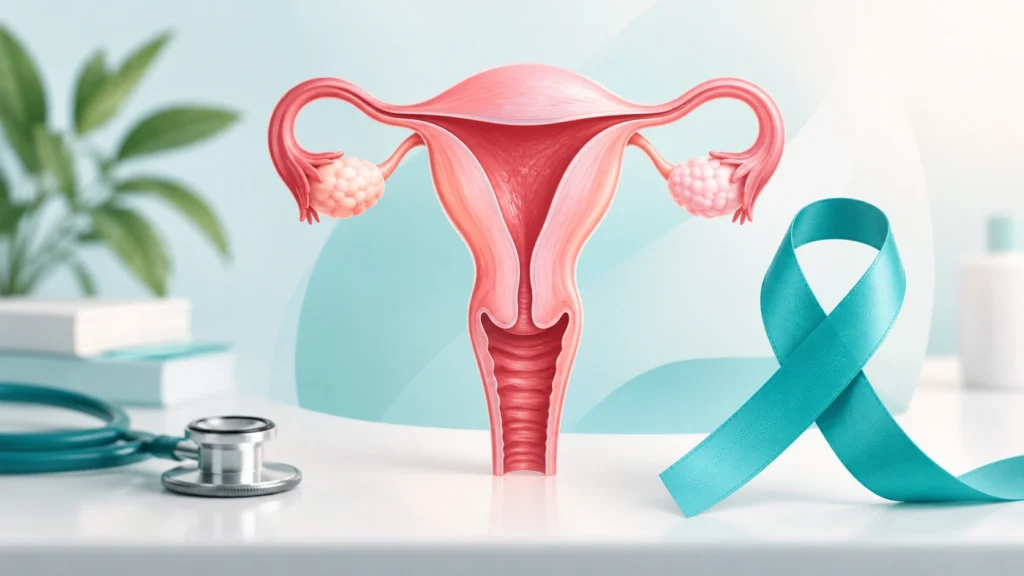
Cervical cancer is one of the most common cancers affecting women in India and worldwide. It develops in the cervix, which is the lower part of the uterus that connects to the vagina. In the early stages, cervical cancer often causes no symptoms. This is why many women do not realize they have a problem until the disease has advanced. However, cervical cancer is also one of the most preventable and treatable cancers when detected early through regular screening.
The main cause of cervical cancer is persistent infection with certain types of human papillomavirus, or HPV. HPV is a very common virus spread through sexual contact. Most HPV infections go away on their own, but some can lead to abnormal cell changes in the cervix that may develop into cancer over time. Because this process is slow, there is a valuable window for early detection and treatment.
This page gives a detailed, patient-friendly explanation of cervical cancer. It covers what it is, causes, risk factors, symptoms, diagnosis, treatment options, surgery, radiation, chemotherapy, prevention, screening, and follow-up care. It is written as a full hospital website condition page with detailed educational content for people who want to understand cervical cancer in a clear and practical way.
Keywords used naturally in this page include cervical cancer, cervical cancer treatment, HPV infection, cervical screening, Pap smear, HPV vaccine, abnormal cervical cells, gynecologic cancer, cervix cancer symptoms, and women’s cancer care.
What is Cervical Cancer?
Cervical cancer is a type of cancer that starts in the cells of the cervix. The cervix is the narrow passage between the uterus and the vagina. It plays an important role in menstruation, pregnancy, and childbirth. When the cells of the cervix grow abnormally and out of control, they can form a tumor and invade nearby tissues.
Most cervical cancers develop slowly over many years. They usually begin as precancerous changes in the cervical cells. These changes can be detected through screening tests such as Pap smear and HPV testing. If these abnormal cells are treated early, cancer can often be prevented.
Cervical cancer is more common in women between the ages of thirty and fifty, but it can occur at any age. It is strongly linked to HPV infection, lack of screening, and certain lifestyle and health factors. With regular screening and timely treatment, the outcomes for cervical cancer have improved significantly.
Types of Cervical Cancer
Cervical cancer is classified based on the type of cells where the cancer begins. Staging helps doctors decide the best treatment plan and understand the prognosis.
Main types include:
- Squamous cell carcinoma, which starts in the thin, flat cells lining the outer part of the cervix. This is the most common type.
- Adenocarcinoma, which starts in the glandular cells that produce mucus in the cervical canal.
- Mixed or adenosquamous carcinoma, which has features of both squamous cell carcinoma and adenocarcinoma.
- Rare types such as neuroendocrine tumors or small cell carcinoma, which are less common and may behave more aggressively.
Stages of cervical cancer
- Stage 1: Cancer is confined to the cervix.
- Stage 2: Cancer has spread beyond the cervix to nearby tissues but not to the pelvic wall or lower vagina.
- Stage 3: Cancer has spread to the pelvic wall, lower vagina, or causes kidney problems.
- Stage 4: Cancer has spread to nearby organs such as the bladder or rectum, or to distant parts of the body.
Causes of Cervical Cancer
The main cause of cervical cancer is persistent infection with high-risk types of human papillomavirus, or HPV. HPV is a group of viruses spread mainly through sexual contact. There are many types of HPV, but only certain high-risk types are linked to cervical cancer.
Common causes and contributing factors
- Persistent infection with high-risk HPV types such as HPV 16 and 18.
- Lack of regular cervical screening.
- Weakened immune system.
- Smoking, which damages cervical cells and reduces immunity.
- Long-term use of oral contraceptives in some cases.
- Multiple sexual partners or early sexual activity.
- Co-infection with other sexually transmitted infections.
- Poor nutrition and overall health.
- Low socioeconomic status with limited access to screening.
How HPV leads to cancer
HPV infects the cells of the cervix. In most women, the immune system clears the infection. In some women, the infection persists and causes changes in the cervical cells. Over time, these changes can progress from mild abnormalities to precancerous lesions and eventually to invasive cancer if not detected and treated.
Risk Factors for Cervical Cancer
Some women are more likely to develop cervical cancer than others.
Higher-risk groups
- Women who have never had cervical screening.
- Women with persistent HPV infection.
- Smokers.
- Women with weakened immune systems, such as those with HIV.
- Women with multiple sexual partners.
- Women who started sexual activity at a young age.
- Women with a history of other sexually transmitted infections.
- Women with long-term use of oral contraceptives.
- Women with multiple full-term pregnancies.
- Women with a family history of cervical cancer.
Why risk increases in these groups
- Lack of screening means abnormal cells are not detected early.
- HPV infection is the main driver of cervical cell changes.
- Smoking reduces the ability of the cervix to fight infection and repair cells.
- Immune suppression makes it harder to clear HPV.
- Sexual behavior increases exposure to HPV.
- Hormonal and reproductive factors may influence cervical cell changes.
Symptoms of Cervical Cancer
In the early stages, cervical cancer often causes no symptoms. This is why regular screening is so important. When symptoms do appear, they may be mistaken for other gynecological problems.
Common symptoms
- Abnormal vaginal bleeding, such as bleeding between periods, after sex, or after menopause.
- Heavier or longer menstrual periods than usual.
- Unusual vaginal discharge, which may be watery, bloody, or foul-smelling.
- Pain during sexual intercourse.
- Pelvic pain or discomfort.
- Lower back pain.
- Pain or difficulty passing urine.
- Blood in urine in advanced cases.
- Swelling in the legs in advanced cases.
- Unexplained weight loss and fatigue in advanced disease.
Emergency warning signs
- Heavy vaginal bleeding that soaks pads quickly.
- Severe pelvic or abdominal pain.
- Difficulty passing urine with pain or blood.
- Severe weakness, dizziness, or fainting due to blood loss.
- Sudden leg swelling with pain.
Cervical Cancer in Different Age Groups
Cervical cancer can affect women of different ages, but the pattern and risk may vary.
In younger women
- Often linked to HPV infection acquired at a younger age.
- Precancerous changes may be detected through screening.
- Fertility preservation may be considered in early-stage disease.
In middle-aged women
- Most common age group for diagnosis.
- May present with abnormal bleeding or discharge.
- Regular screening is critical in this age group.
In older women
- May be diagnosed at a later stage due to lack of screening.
- Symptoms may be mistaken for menopausal changes.
- Treatment may need to consider other health conditions.
How is Cervical Cancer Diagnosed?
Diagnosis is based on symptoms, pelvic examination, screening tests, and biopsy.
Diagnostic steps
- Detailed history of symptoms and menstrual pattern.
- Sexual and reproductive history.
- Pelvic examination to check the cervix.
- Cervical screening tests such as Pap smear and HPV testing.
- Colposcopy, which is a detailed examination of the cervix with a special microscope.
- Biopsy to confirm abnormal cells or cancer.
- Imaging tests to assess the extent of disease.
Common tests that may be done
- Pap smear to detect abnormal cervical cells.
- HPV test to identify high-risk HPV types.
- Colposcopy-guided biopsy for suspicious areas.
- Endocervical curettage to sample cells from the cervical canal.
- Cone biopsy or LEEP procedure for diagnosis and treatment of precancer.
- Ultrasound, CT scan, or MRI to evaluate spread.
- Chest X-ray or PET scan in advanced cases.
Why diagnosis matters: Early diagnosis of precancerous changes can prevent cancer from developing. Early diagnosis of invasive cancer improves treatment options and survival. Delayed diagnosis often leads to more advanced disease and complex treatment.
Treatment for Cervical Cancer
Treatment depends on the stage of cancer, the patient’s age, overall health, and desire for future fertility.
Treatment for precancerous changes
- Observation for mild changes that may resolve on their own.
- Cryotherapy to freeze abnormal cells.
- LEEP or cone biopsy to remove abnormal tissue.
- Regular follow-up to ensure no recurrence.
Treatment for early-stage cervical cancer
- Surgery to remove the cervix and surrounding tissue.
- Fertility-sparing surgery in selected young patients.
- Radiation therapy in some cases.
- Close follow-up after treatment.
Treatment for advanced cervical cancer
- Combination of radiation and chemotherapy.
- Surgery in selected cases.
- Palliative care to manage symptoms in very advanced disease.
- Supportive care for pain, bleeding, and other complications.
1. Surgery
Surgery is often the main treatment for early-stage cervical cancer.
- Simple hysterectomy for removal of the uterus and cervix.
- Radical hysterectomy for removal of uterus, cervix, part of the vagina, and nearby tissues.
- Lymph node removal to check for spread.
- Fertility-sparing surgery such as trachelectomy in selected young patients.
2. Radiation therapy
Radiation uses high-energy beams to kill cancer cells.
- External beam radiation from outside the body.
- Internal radiation or brachytherapy placed inside the vagina near the cervix.
- Often combined with chemotherapy for better results.
- Used for locally advanced disease or after surgery in high-risk cases.
3. Chemotherapy
Chemotherapy uses medicines to kill cancer cells throughout the body.
- Given before surgery or radiation to shrink tumors.
- Given with radiation to enhance its effect.
- Used for advanced or recurrent disease.
- May cause side effects such as nausea, fatigue, and low blood counts.
4. Targeted therapy and immunotherapy
Newer treatments are being used in selected cases.
- Targeted drugs that block specific pathways in cancer cells.
- Immunotherapy that helps the immune system fight cancer.
- Used mainly for recurrent or advanced disease.
- Requires specialist evaluation and monitoring.
5. Supportive and palliative care
For patients with advanced disease, symptom control is essential.
- Pain management.
- Control of bleeding and discharge.
- Treatment of anemia and weakness.
- Emotional and psychological support.
- Nutritional support and rehabilitation.
Recovery After Treatment
Recovery depends on the stage of cancer, type of treatment, and overall health.
Recovery after surgery
- Hospital stay of a few days depending on the procedure.
- Gradual return to normal activities over weeks.
- Avoidance of heavy lifting and sexual activity for a period.
- Follow-up visits to monitor healing and check for recurrence.
Recovery after radiation and chemotherapy
- Fatigue is common during and after treatment.
- Skin changes in the treated area.
- Vaginal dryness or narrowing may occur.
- Regular follow-up to monitor response and side effects.
- Supportive care to manage symptoms.
Long-term follow-up
- Regular pelvic examinations.
- Repeat Pap smear or HPV testing as advised.
- Imaging tests if needed.
- Monitoring for recurrence or late side effects.
- Support for sexual health, fertility, and emotional well-being.
Possible Complications
Cervical cancer and its treatment can lead to complications.
Complications of untreated cervical cancer
- Spread to nearby organs such as bladder or rectum.
- Blockage of urine flow causing kidney problems.
- Severe bleeding and anemia.
- Pain and infection.
- Spread to distant organs such as lungs, liver, or bones.
Complications of treatment
- Surgical risks such as infection or bleeding.
- Urinary or bowel changes after surgery or radiation.
- Vaginal dryness or narrowing affecting sexual function.
- Early menopause if ovaries are affected.
- Fatigue and low blood counts from chemotherapy or radiation.
- Emotional distress and anxiety.
Why complications happen: Cervical cancer affects vital structures in the pelvis. Treatment aims to remove or control cancer while preserving function. However, some side effects are unavoidable. Supportive care and rehabilitation help manage these issues.
When Should You See a Doctor?
Medical evaluation is important for women with symptoms or risk factors.
- Abnormal vaginal bleeding.
- Unusual vaginal discharge.
- Pain during sex.
- Pelvic pain or discomfort.
- Bleeding after menopause.
- History of abnormal Pap smear.
- Lack of regular cervical screening.
Prevention of Cervical Cancer
Cervical cancer is one of the most preventable cancers.
- Regular cervical screening with Pap smear and HPV testing.
- HPV vaccination for girls and young women.
- Safe sexual practices and limited partners.
- Avoiding smoking.
- Early evaluation of abnormal symptoms.
- Treatment of precancerous changes.
- Good nutrition and overall health.
HPV vaccination
- Recommended for girls before sexual activity begins.
- Can also be given to young women up to a certain age.
- Protects against high-risk HPV types that cause most cervical cancers.
- Does not replace the need for screening.
Screening recommendations
- Pap smear every three years for women in the recommended age group.
- HPV testing every five years or combined with Pap smear as advised.
- More frequent screening for women with abnormal results or high risk.
- Screening even if vaccinated against HPV.
Why Choose Rama Hospital for Cervical Cancer Treatment?
Cervical cancer requires expert gynecologic oncology care, advanced diagnostics, and multidisciplinary treatment. A hospital with experienced specialists can provide comprehensive care from screening to surgery, radiation, chemotherapy, and follow-up.
- Expert evaluation by gynecologic oncologists.
- Advanced imaging and pathology for accurate diagnosis.
- Surgical, radiation, and chemotherapy options under one roof.
- Supportive care for nutrition, pain, and emotional health.
- Long-term follow-up and survivorship care.
Frequently Asked Questions (FAQs)
What causes cervical cancer?
The main cause is persistent infection with high-risk types of human papillomavirus, or HPV. Other factors such as smoking, weak immunity, and lack of screening increase the risk.
Can cervical cancer be prevented?
Yes, cervical cancer is highly preventable through HPV vaccination, regular screening with Pap smear and HPV testing, and early treatment of abnormal cells.
What are the symptoms of cervical cancer?
Early stages may have no symptoms. Later symptoms include abnormal bleeding, unusual discharge, pain during sex, pelvic pain, and bleeding after menopause.
How is cervical cancer diagnosed?
Diagnosis is done through pelvic examination, Pap smear, HPV testing, colposcopy, biopsy, and imaging tests to assess the extent of disease.
Is cervical cancer treatable?
Yes, cervical cancer is treatable, especially when detected early. Treatment may include surgery, radiation, chemotherapy, or a combination depending on the stage.
Can cervical cancer come back after treatment?
Yes, there is a risk of recurrence, which is why regular follow-up is essential. Most recurrences happen within the first few years after treatment.
Can women with cervical cancer have children?
In some early-stage cases, fertility-sparing surgery may be possible. However, this depends on the stage, type of cancer, and individual factors. A specialist can advise on options.
Conclusion
Cervical cancer is a serious but largely preventable and treatable disease. It affects the cervix and is strongly linked to HPV infection. Many women have no symptoms in the early stages, which is why regular screening is so important. With early detection, abnormal cells can be treated before they become cancer.
The most important steps are HPV vaccination, regular Pap smear and HPV testing, prompt evaluation of abnormal symptoms, and timely treatment. For women with increasing bleeding, unusual discharge, pelvic pain, or abnormal screening results, a medical evaluation can make a major difference. With a structured plan and consistent follow-up, patients can achieve good outcomes and protect their long-term health.
Rama Hospital can help evaluate cervical cancer risk, provide screening and diagnostic services, and offer comprehensive treatment including surgery, radiation, chemotherapy, and supportive care.