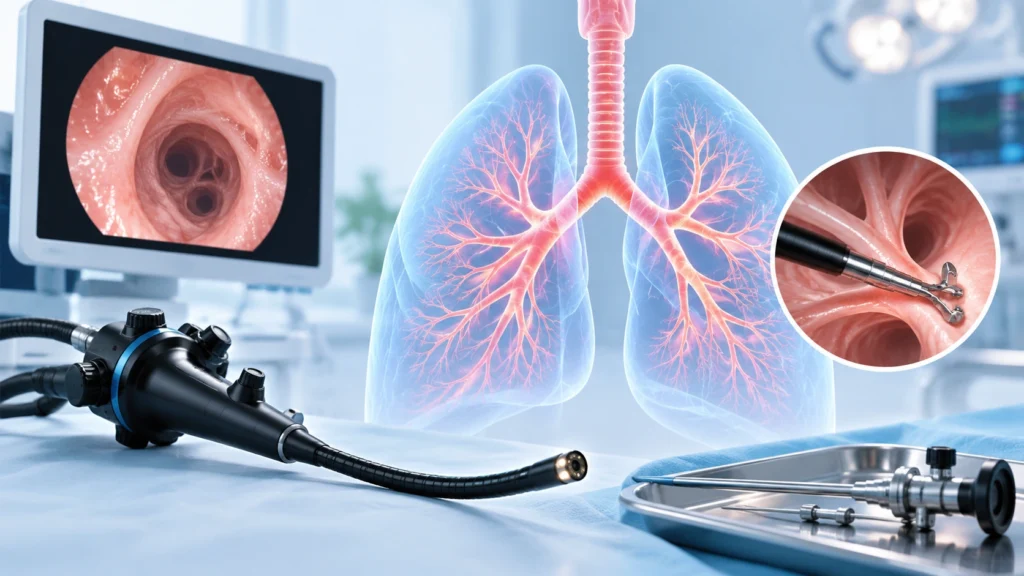
Bronchoscopy is a specialized procedure that allows doctors to look directly inside the airways of the lungs. It is done using a thin, flexible or rigid tube called a bronchoscope, which has a light and camera at the tip. This tube is passed through the nose or mouth, down the throat, and into the windpipe and bronchial tubes. Through the bronchoscope, doctors can see the lining of the airways, take samples, remove foreign bodies, place stents, or perform other treatments.
Bronchoscopy is an important tool in diagnosing and treating many lung and airway conditions. It is used when chest X-rays or CT scans are not enough to explain symptoms such as persistent cough, blood in sputum, recurrent infections, or unexplained lung shadows. It is also used to treat conditions like airway blockages, bleeding, or collapsed lung segments.
What is Bronchoscopy?
Bronchoscopy is a procedure in which a doctor examines the inside of the airways using a bronchoscope. The bronchoscope is a long, thin tube with a light and camera. It allows the doctor to see the trachea, bronchi, and smaller airways on a screen.
This can be done as a diagnostic procedure to find the cause of symptoms, or as a therapeutic procedure to treat a problem in the airway.
During bronchoscopy, the doctor can:
- Inspect the airway lining for inflammation, tumors, or narrowing.
- Take small tissue samples or biopsies from suspicious areas.
- Collect fluid or mucus samples for testing.
- Remove foreign objects stuck in the airway.
- Clear mucus plugs causing blockage.
- Place stents to keep narrowed airways open.
- Control bleeding in the airway.
- Perform laser treatment or other interventions in selected cases.
Types of Bronchoscopy
There are two main types of bronchoscopy, each with specific uses.
Flexible Bronchoscopy
- Uses a thin, flexible tube that can bend easily.
- Passed through the nose or mouth.
- Usually done with local anesthesia and mild sedation.
- Most common type used for diagnosis and many treatments.
- Allows examination of smaller airways.
- Suitable for biopsy, brushing, washing, and some therapeutic procedures.
Rigid Bronchoscopy
- Uses a straight, rigid metal tube.
- Passed through the mouth under general anesthesia.
- Allows better control of the airway and breathing during complex procedures.
- Used for removing large foreign bodies.
- Used for controlling severe bleeding in the airway.
- Used for placing larger stents or performing laser treatments.
- Often used in emergency situations or complex airway interventions.
The choice between flexible and rigid bronchoscopy depends on the reason for the procedure, the patient’s condition, and the expertise of the medical team.
Indications for Bronchoscopy
This is recommended when there is a need to directly visualize the airways or obtain samples from the lungs.
Common reasons for diagnostic bronchoscopy
- Persistent cough that does not improve with treatment.
- Blood in sputum or coughing up blood.
- Recurrent chest infections in the same area of the lung.
- Unexplained lung shadow or mass on X-ray or CT scan.
- Suspected lung cancer or airway tumor.
- Evaluation of airway narrowing or stricture.
- Collection of samples for infection, including tuberculosis or fungal infection.
- Assessment of interstitial lung disease.
- Evaluation of unexplained wheezing or stridor.
Common reasons for therapeutic bronchoscopy
- Removal of foreign body from the airway.
- Clearance of mucus plugs causing lung collapse.
- Control of bleeding in the airway.
- Placement of airway stents to keep narrowed airways open.
- Laser treatment or cautery for tumors blocking the airway.
- Drainage of lung abscess or infected fluid in selected cases.
- Assistance in difficult intubation or airway management.
Preparation for Bronchoscopy
Proper preparation helps make the procedure safer and more comfortable.
Before the procedure
- The doctor will review your medical history and current symptoms.
- You will be asked about allergies, especially to medicines or anesthesia.
- You will be asked about bleeding disorders or blood-thinning medicines.
- Blood tests may be done to check clotting and overall health.
- Chest X-ray or CT scan may be reviewed to plan the procedure.
- You will be given instructions about fasting before the procedure.
Fasting instructions
- Do not eat solid food for at least 6 hours before the procedure.
- You may be allowed to drink clear fluids up to 2 to 4 hours before, depending on hospital policy.
- Follow the exact fasting instructions given by your doctor.
Medicines to discuss with your doctor
- Blood thinners such as aspirin, clopidogrel, warfarin, or newer anticoagulants.
- Diabetes medicines, especially insulin or tablets that can cause low sugar.
- Blood pressure medicines.
- Any herbal supplements or over-the-counter medicines.
Do not stop or change any medicine without medical advice. Your doctor will guide you on what to continue and what to pause before the procedure.
On the day of the procedure
- Wear comfortable, loose clothing.
- Remove jewelry, dentures, and contact lenses.
- Bring all relevant reports, including X-rays, CT scans, and previous test results.
- Arrange for someone to accompany you and take you home, as sedation may make you drowsy.
How is Bronchoscopy Done?
The procedure is usually done in a procedure room or endoscopy suite with monitoring equipment.
Steps of flexible bronchoscopy
- You will be asked to lie on your back or slightly tilted position.
- Monitors will be attached to check heart rate, blood pressure, and oxygen levels.
- Oxygen may be given through a nasal cannula.
- Local anesthetic spray or gel is applied to the nose or throat to reduce discomfort.
- Mild sedation may be given through a vein to help you relax.
- The bronchoscope is gently passed through the nose or mouth into the windpipe.
- The doctor examines the airways on a screen.
- Samples may be taken using small forceps, brushes, or needles.
- Fluid may be instilled and collected for testing.
- If needed, treatment such as stent placement or bleeding control may be done.
- The procedure usually lasts 15 to 45 minutes, depending on complexity.
Steps of rigid bronchoscopy
- Done under general anesthesia in an operating room.
- A rigid tube is passed through the mouth into the airway.
- The airway is secured and breathing is supported during the procedure.
- The doctor performs the required diagnostic or therapeutic intervention.
- The procedure may take longer than flexible bronchoscopy.
- You will be monitored closely in recovery after the procedure.
What you may feel during the procedure
- Pressure or mild discomfort in the throat or nose.
- Coughing or gagging sensation, which is normal.
- Some patients feel drowsy due to sedation and may not remember much.
- The team will monitor you closely and adjust sedation as needed.
What to Expect After Bronchoscopy
After the procedure, you will be taken to a recovery area for observation.
Immediate post-procedure period
- You will be monitored until the effects of sedation wear off.
- Your throat may feel numb for a short time.
- You may have a mild sore throat or hoarseness.
- You may cough up small amounts of blood if a biopsy was taken.
- Oxygen may be continued for a short period if needed.
Going home
- Most patients can go home the same day after flexible bronchoscopy.
- Some patients may need overnight observation, especially after rigid or complex procedures.
- You will be advised not to drive or operate machinery for the rest of the day if sedation was used.
- You should have an adult accompany you home.
Resuming food and drink
- Do not eat or drink until the numbness in your throat wears off to avoid choking.
- Start with small sips of water, then soft foods if tolerated.
- Avoid very hot or spicy food on the day of the procedure.
Risks and Complications of Bronchoscopy
This procedure is generally safe, but like any medical procedure, it carries some risks.
Common and mild side effects
- Sore throat.
- Hoarseness.
- Mild cough.
- Small amount of blood in sputum after biopsy.
- Temporary drop in oxygen levels during the procedure.
- Drowsiness or nausea due to sedation.
Less common but more serious risks
- Significant bleeding from the airway or biopsy site.
- Infection or fever after the procedure.
- Pneumothorax, which is air leak causing lung collapse, especially after certain biopsies.
- Breathing difficulty or airway spasm.
- Reaction to anesthesia or sedation medicines.
- Injury to teeth, lips, or throat, especially in rigid bronchoscopy.
- Irregular heart rhythm in patients with heart disease.
When to seek urgent medical help after bronchoscopy?
Most patients do not experience serious complications. The benefits of bronchoscopy usually outweigh the risks when it is done for the right reasons by an experienced team.
- Severe or increasing shortness of breath.
- Chest pain.
- Coughing up more than a few teaspoons of blood.
- High fever or chills.
- Severe throat pain or difficulty swallowing.
- Bluish lips or fingertips.
- Confusion or extreme drowsiness.
Recovery After Bronchoscopy
Recovery is usually quick, especially after flexible bronchoscopy.
First 24 hours
- Rest and avoid strenuous activity.
- Drink plenty of fluids to keep the throat moist.
- Use throat lozenges or warm salt water gargles if throat is sore.
- Avoid smoking and exposure to smoke or dust.
- Take prescribed medicines as directed.
Following days
- Mild cough or blood-tinged sputum may persist for a day or two.
- Sore throat usually improves within 24 to 48 hours.
- Gradually resume normal activities as you feel comfortable.
- Avoid heavy exercise for a day or two unless advised otherwise.
Follow-up
- Your doctor will inform you when biopsy or test results will be available.
- A follow-up appointment may be scheduled to discuss results and further treatment.
- If you develop any warning signs, contact your doctor or go to the nearest emergency department.
Special Considerations
Some patients need extra care or planning before and after bronchoscopy.
Patients on blood thinners
- Your doctor will advise whether to pause or adjust your medicines.
- This reduces the risk of bleeding during and after the procedure.
- Do not stop these medicines on your own.
Patients with heart or lung disease
- Extra monitoring may be needed during the procedure.
- Oxygen levels and heart rhythm will be closely watched.
- The procedure may be modified to reduce risk.
Elderly patients
- Sedation doses may be adjusted.
- Recovery may take a bit longer.
- Support at home is important after the procedure.
Children
- Bronchoscopy in children is done under general anesthesia.
- It is usually performed by specialists experienced in pediatric airway care.
- Parents will receive specific instructions for preparation and aftercare.
Why Choose Rama Hospital for Bronchoscopy?
Bronchoscopy requires skilled pulmonologists, proper equipment, and good support services. A hospital with experienced respiratory specialists and advanced facilities can make the procedure safer and more effective.
- Experienced pulmonologists trained in flexible and rigid bronchoscopy.
- Modern bronchoscopy suites with monitoring and emergency support.
- Ability to perform both diagnostic and therapeutic procedures.
- Coordination with radiology, pathology, and thoracic surgery teams.
- Proper infection control and sterilization protocols.
- Post-procedure monitoring and follow-up care.
Frequently Asked Questions (FAQs)
Is bronchoscopy painful?
Most patients do not find bronchoscopy very painful. Local anesthesia and sedation are used to reduce discomfort. You may feel pressure, coughing, or a gagging sensation, but the team will adjust sedation to keep you comfortable.
How long does bronchoscopy take?
Flexible bronchoscopy usually takes 15 to 45 minutes, depending on the reason for the procedure. Rigid bronchoscopy or complex therapeutic procedures may take longer. Total time in the hospital may be several hours including preparation and recovery.
Will I be awake during bronchoscopy?
For flexible bronchoscopy, most patients are awake but sedated and relaxed. For rigid bronchoscopy, general anesthesia is used and you will be asleep. The type of anesthesia depends on the procedure and your condition.
Can I eat before bronchoscopy?
No, you must fast before bronchoscopy to reduce the risk of choking or aspiration. Usually, no solid food is allowed for at least 6 hours before the procedure. Follow the exact instructions given by your doctor.
Is bronchoscopy safe?
Bronchoscopy is generally safe when done by experienced doctors in a proper setting. Mild side effects like sore throat are common. Serious complications are rare but can include bleeding, infection, or lung collapse. Your doctor will explain your individual risk.
When will I get the results?
Some findings can be discussed immediately after the procedure. Biopsy and lab test results may take a few days to a week, depending on the tests done. Your doctor will schedule a follow-up to explain the results and next steps.
Can I go home the same day?
Most patients can go home the same day after flexible bronchoscopy once the sedation wears off. Some patients may need overnight observation, especially after rigid bronchoscopy or complex procedures. You should have someone to accompany you home.
Conclusion
Bronchoscopy is a valuable and widely used procedure for diagnosing and treating many lung and airway conditions. It allows doctors to see inside the airways, take samples, and perform treatments that are not possible with imaging alone. While the idea of a tube in the airway may seem intimidating, the procedure is usually well tolerated with proper anesthesia and experienced care.
The most important steps are proper preparation, clear communication with your doctor about your medical history and medicines, and following aftercare instructions carefully. For patients with persistent cough, blood in sputum, recurrent infections, or unexplained lung findings, bronchoscopy can provide crucial information that guides treatment and improves outcomes.
Rama Hospital can provide safe and expert bronchoscopy services, including flexible and rigid bronchoscopy, with experienced pulmonologists, modern facilities, and comprehensive support from preparation to recovery. Patients and families can expect clear guidance, careful monitoring, and personalized care throughout the process.