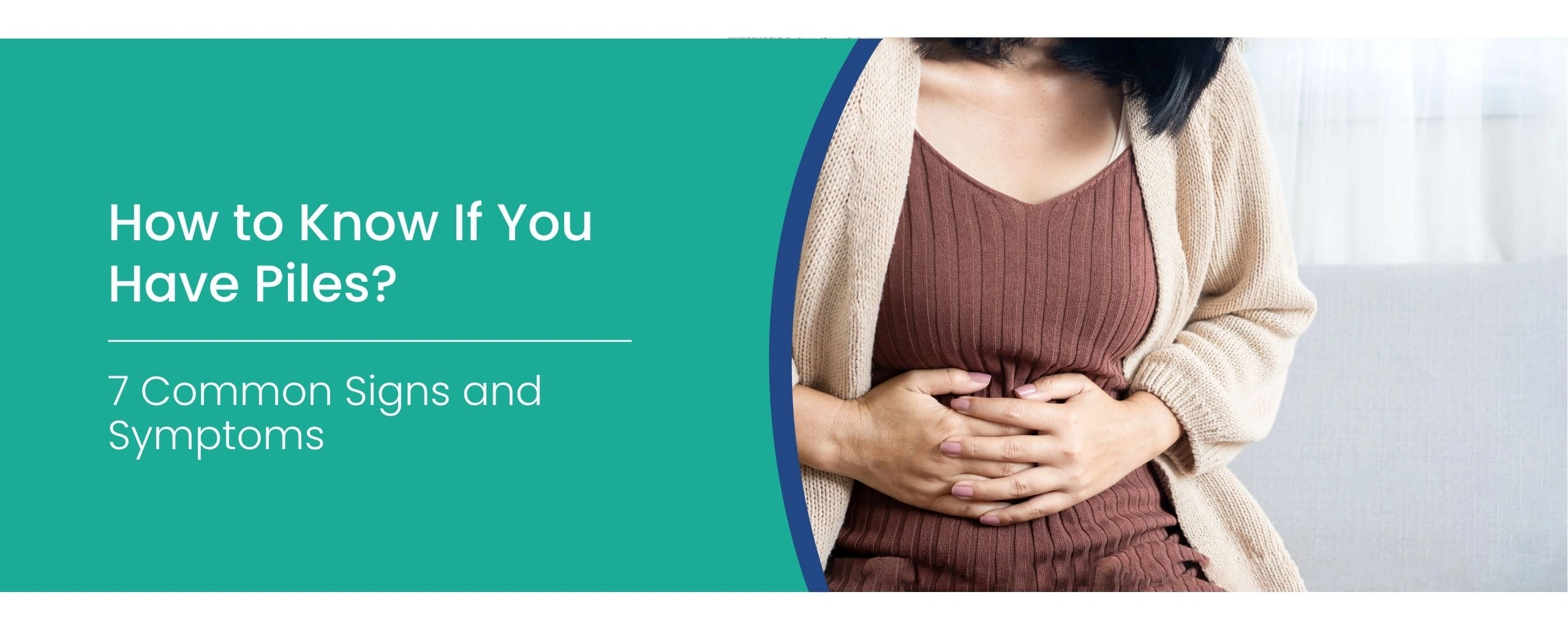
Wondering whether the bleeding, itching, pain or lump around your anus could be piles?
Common signs of piles symptoms include bright red bleeding during or after a bowel movement, itching or irritation around the anus, pain or discomfort, swelling or a lump, and tissue that may protrude from the anus. However, not everyone experiences the same symptoms. Internal piles may cause painless bleeding, while external or thrombosed piles can be more painful.
Piles, medically known as hemorrhoids, are swollen veins in and around the anus and lower rectum. They are common and often improve with simple measures, but persistent or significant symptoms should not simply be assumed to be piles symptoms. Rectal bleeding can also occur with other conditions, so getting the cause checked is important.
What Are Piles?
Piles, or hemorrhoids, are swollen and enlarged veins in the lower rectum or around the anus. They can develop when increased pressure causes these veins to stretch and swell.
Common factors that can contribute include:
- Straining during bowel movements
- Long-term constipation or diarrhoea
- Sitting on the toilet for long periods
- A low-fibre diet
- Pregnancy
- Being overweight or obese
- Regular heavy lifting
piles symptoms can be internal or external, depending on where they develop.
Sometimes, a blood clot can form inside an external pile. This is called a thrombosed hemorrhoid and can cause sudden, severe pain and a firm, discoloured lump.
- Internal piles develop inside the rectum. They often do not cause pain but may bleed or protrude through the anus.
- External piles develop under the skin around the anus. They may cause itching, swelling, tenderness or pain.
7 Common Signs and Symptoms of Piles
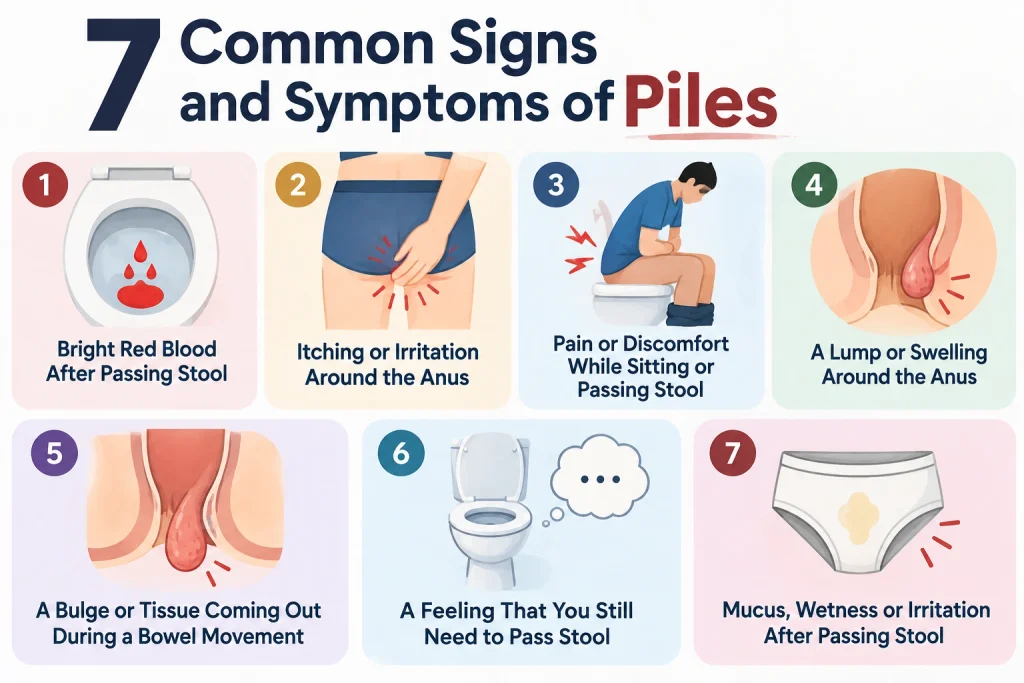
1. Bright Red Blood After Passing Stool
One of the most common signs of piles symptoms is bright red blood during or after a bowel movement.
You may notice:
- Blood on toilet paper
- A few drops of blood in the toilet
- Bright red streaks on the outside of the stool
Internal piles symptoms commonly cause painless bleeding because they are located inside the rectum. Straining or irritation while passing hard stool can make them bleed.
However, do not automatically assume that every episode of rectal bleeding is caused by piles. Anal fissures, bowel conditions and other problems can also cause bleeding. If bleeding keeps happening, is heavy, or is accompanied by other concerning symptoms, medical evaluation is important.
2. Itching or Irritation Around the Anus
An itchy or irritated feeling around the anus is another common symptom.
You may notice:
- Persistent itching
- Burning or irritation
- Discomfort after passing stool
- Irritation while wiping
This can happen when swollen hemorrhoidal tissue or mucus irritates the skin around the anus.
Although occasional itching may have many causes, persistent or recurring anal itching should not automatically be attributed to piles symptoms. Skin conditions, infections and other problems can also cause similar symptoms.
3. Pain or Discomfort While Sitting or Passing Stool
Pain is more commonly associated with external piles than uncomplicated internal piles.
You may feel:
- Pain while passing stool
- Soreness around the anus
- Discomfort while sitting
- Tenderness when touching the area
A thrombosed external hemorrhoid can cause particularly intense and sudden pain because a blood clot has formed inside the swollen vein.
If your pain is severe, sudden or persistent, it is better to have the area examined rather than assuming it is simply piles symptoms.
4. A Lump or Swelling Around the Anus
Have you noticed a small lump near the anus?
It could be an external hemorrhoid, particularly if it is associated with tenderness, itching or swelling.
External piles can usually be seen or felt around the anus. A thrombosed hemorrhoid may feel like a firm, painful lump and can appear bluish or purple.
But remember: not every lump around the anus is a pile. Other conditions can also cause lumps, swelling or pain. A doctor can determine the cause through an appropriate examination.
5. A Bulge or Tissue Coming Out During a Bowel Movement
Sometimes an internal pile becomes enlarged and prolapses, meaning it pushes through the anal opening.
You may notice:
- A soft lump appearing while passing stool
- Tissue coming out of the anus
- Irritation after bowel movements
- A feeling of pressure or discomfort
Some prolapsed hemorrhoids may return inside on their own. Others may remain outside and cause irritation or pain.
If you repeatedly notice tissue coming out during bowel movements, it is worth getting evaluated. Treatment depends on the severity and type of hemorrhoid.
6. A Feeling That You Still Need to Pass Stool
Another possible symptom is a feeling that your bowel has not completely emptied, even after you have passed stool.
You may feel: “I still need to go.”
This sensation can occur with piles, particularly when swollen tissue protrudes or irritates the anal area.
However, this symptom is not specific to piles symptoms. Constipation, bowel disorders and other conditions can also cause a feeling of incomplete bowel emptying.
If this sensation continues or is accompanied by changes in your bowel habits, speak with a healthcare professional.
7. Mucus, Wetness or Irritation After Passing Stool
Some people with piles symptoms may notice mucus on toilet paper or in their underwear, particularly when hemorrhoidal tissue protrudes.
This may be accompanied by:
- Anal itching
- Moisture around the anus
- Irritation
- Difficulty keeping the area clean
These symptoms can overlap with other anal and bowel conditions, so persistent symptoms should be assessed rather than self-diagnosed.
Piles Symptoms at a Glance
The exact symptoms depend on whether the hemorrhoids are internal, external, prolapsed or thrombosed.
| Symptom | What You May Notice |
| Bright red bleeding | Blood on toilet paper, stool or in the toilet |
| Itching | Irritation around the anus |
| Pain | Discomfort while sitting or passing stool |
| Lump or swelling | A bump around the anus |
| Protruding tissue | A pile coming out during bowel movements |
| Incomplete emptying | Feeling that you still need to pass stool |
| Mucus or wetness | Mucus on toilet paper or underwear |
Internal vs External Piles: What Is the Difference?
Knowing whether the symptoms are more consistent with internal or external piles can help you understand what you are experiencing. This distinction is useful, but symptoms alone cannot always confirm the diagnosis.
| Feature | Internal Piles | External Piles |
| Location | Inside the rectum | Under the skin around the anus |
| Bleeding | Common, often painless | May occur |
| Pain | Usually absent unless prolapsed or complicated | More likely |
| Lump | May protrude during bowel movements | Can usually be felt or seen |
| Itching/irritation | May occur | Common |
| Severe sudden pain | Less typical | Possible, especially if thrombosed |
What Causes Piles?
piles symptoms develop when increased pressure affects the veins in the anus and lower rectum. The risk can increase when bowel movements regularly involve straining or hard stools.
This is why improving bowel habits is an important part of both managing and preventing piles symptoms.
Common contributing factors include:
- Constipation and straining
- Long periods of sitting on the toilet
- Chronic diarrhoea
- Low-fibre diet
- Pregnancy
- Excess body weight
- Heavy lifting
- Increasing age
When Should You See a Doctor for Piles?
Not every case of piles symptoms requires urgent treatment. Mild symptoms may improve with changes such as increasing dietary fibre, drinking enough fluids and avoiding straining.
- Rectal bleeding keeps coming back
- Symptoms are getting worse
- Pain is severe or persistent
- A lump continues to enlarge or remains painful
- Symptoms do not improve with home care
- Piles keep coming back
- You notice a new or unusual change around the anus
Warning Signs That Need Prompt Medical Attention
Rectal bleeding should not always be blamed on piles symptoms. Large amounts of bleeding, especially when accompanied by dizziness or fainting, can require emergency evaluation.
The reason is simple: bleeding from the rectum can have causes other than hemorrhoids, including conditions that need timely diagnosis.
Seek prompt medical attention if you have:
- Heavy or continuous rectal bleeding
- Large blood clots
- Dizziness, fainting or lightheadedness
- Black or very dark stools
- Severe or worsening anal pain
- Fever or chills
- Pus or signs of infection
- Significant changes in bowel habits
- Unexplained weight loss
How Are Piles Diagnosed?
A doctor usually starts by asking about your symptoms, bowel habits and medical history.
The examination may include looking at the area around the anus and, when appropriate, examining the anal canal and rectum. Internal hemorrhoids may not be visible from the outside. If symptoms or risk factors suggest another bowel condition, further testing such as colonoscopy may sometimes be recommended.
The purpose of diagnosis is not only to identify piles symptoms but also to make sure another cause of bleeding or anal symptoms is not being missed.
Depending on your symptoms, a healthcare professional may perform:
- Physical examination
- Digital rectal examination
- Anoscopy or another visual examination
- Additional bowel investigations when indicated
Can Piles Go Away on Their Own?
Yes, mild piles symptoms can often improve with home care and changes in bowel habits. These measures can reduce pressure on the veins and make bowel movements easier.
However, recurring, severe or persistent symptoms may require medical treatment.
Helpful measures may include:
- Eating more fibre
- Drinking adequate fluids
- Avoiding straining during bowel movements
- Avoiding long periods on the toilet
- Staying physically active
- Keeping stools soft
Piles vs Anal Fissure: Are They the Same?
No. piles symptoms and anal fissures are different conditions, although they can cause similar symptoms.
Both may cause bleeding or pain during bowel movements.
A fissure is a small tear in the lining of the anus, while piles symptoms involve swollen veins in or around the anus.
A sharp or burning pain during and after passing stool, particularly after constipation, may be more suggestive of an anal fissure, but symptoms can overlap.
If you are unsure about the cause of your symptoms, an examination can help identify the problem.
How Can You Reduce the Risk of Piles?
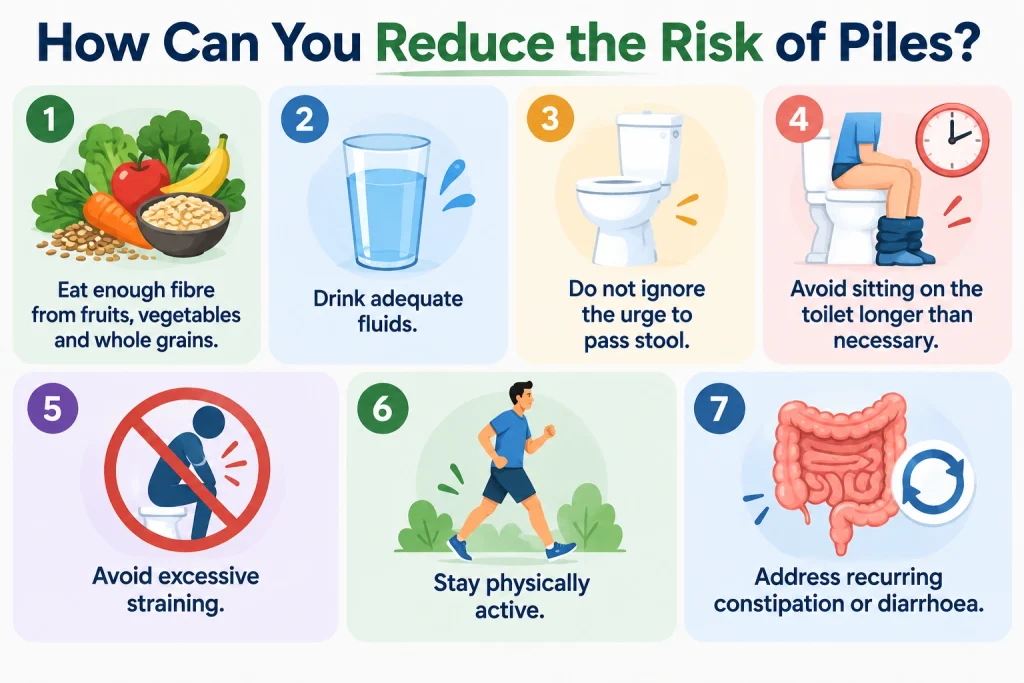
The goal is to reduce pressure and straining during bowel movements.
Practical steps include:
- Eat enough fibre from fruits, vegetables and whole grains.
- Drink adequate fluids.
- Do not ignore the urge to pass stool.
- Avoid sitting on the toilet longer than necessary.
- Avoid excessive straining.
- Stay physically active.
- Address recurring constipation or diarrhoea.
Frequently Asked Questions (FAQs)
1. What is the most common symptom of piles?
Bright red rectal bleeding, particularly during or after passing stool, is a common symptom of internal piles. Itching, discomfort, swelling and lumps are also common, particularly with external hemorrhoids.
2. Are piles always painful?
No. Internal piles often cause painless bleeding and may not be noticeable. External piles are more likely to cause pain or discomfort, while thrombosed hemorrhoids can cause sudden and severe pain.
3. How do I know if my bleeding is from piles?
Bright red blood after passing stool can occur with piles symptoms, but you cannot reliably determine the cause from bleeding alone. Anal fissures and other bowel conditions can also cause rectal bleeding. Persistent or unexplained bleeding should be evaluated by a healthcare professional.
4. Can piles cause a lump near the anus?
Yes. External piles can appear or feel like a lump around the anus. A thrombosed hemorrhoid may cause a firm, painful, bluish or purple lump. However, other conditions can also cause anal lumps, so an examination may be needed.
5. Can piles go away without surgery?
Many mild cases improve without surgery through dietary and lifestyle changes and appropriate medical care. More persistent, large or prolapsed hemorrhoids may require a procedure or surgery depending on their severity.
6. Is itching around the anus always a sign of piles?
No, piles symptoms can cause anal itching, but skin irritation, infections and other conditions can also cause itching. If the itching persists or repeatedly returns, it is better to have the cause checked.
7. When should I see a doctor for piles?
See a doctor if your symptoms are persistent, worsening or recurrent, or if you have rectal bleeding. Seek urgent medical attention for heavy bleeding, dizziness or fainting, severe pain, fever or other concerning symptoms.
8. Can piles become serious?
Most hemorrhoids are not serious, but complications can occasionally occur. Severe bleeding, thrombosed hemorrhoids and strangulated hemorrhoids can cause significant symptoms. More importantly, rectal bleeding should not automatically be attributed to piles symptoms because other conditions can also cause it.
Conclusion
Piles can be uncomfortable, but knowing the symptoms can help you recognise the problem early.
Bright red bleeding, itching, anal discomfort, swelling, a lump, protruding tissue, a feeling of incomplete bowel emptying and mucus are among the common signs associated with piles symptoms.
At the same time, rectal bleeding or an unusual lump should not be self-diagnosed as piles symptoms. If symptoms are persistent, severe, recurrent or getting worse, consult a healthcare professional for the right diagnosis and treatment in best hospital in Noida.
With appropriate evaluation and treatment, most people with piles can get effective relief and return to their normal routine.