Acute burn injuries are among the most painful and potentially life-threatening emergencies that can happen to anyone, at any age. A burn occurs when the skin or deeper tissues are damaged by heat, chemicals, electricity, radiation, or friction. While minor burns may heal with simple first aid, severe burns can cause shock, infection, scarring, loss of function, and even death if not treated promptly and properly.
Burn injuries are not just about the skin. They affect the entire body. Severe burns can lead to fluid loss, infection risk, breathing problems, metabolic stress, and long-term physical and emotional challenges. That is why understanding the types of burns, early first aid measures, and the importance of timely hospital care is so important for patients and families.
What are Acute Burn Injuries?
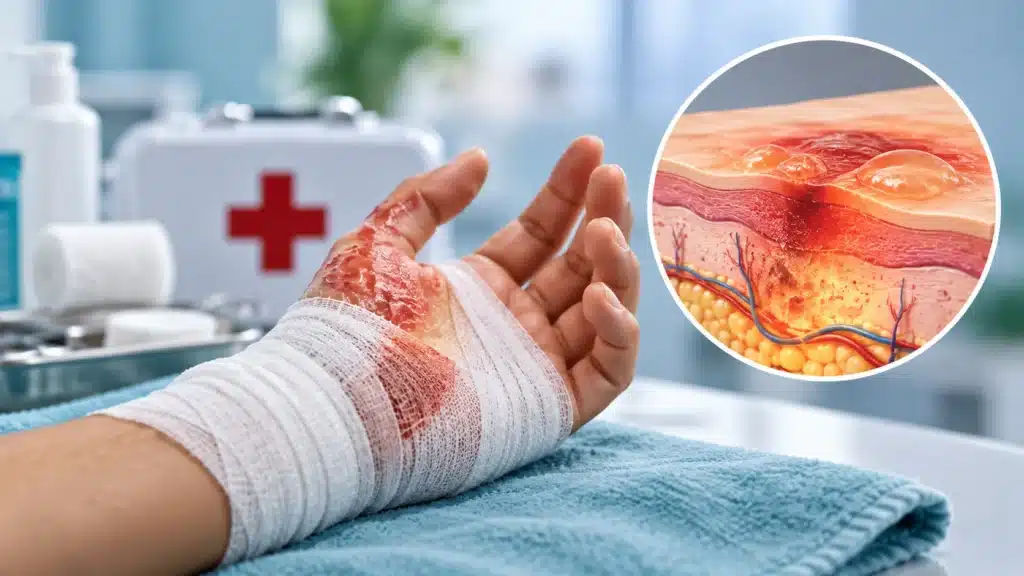
Acute burn injuries refer to sudden damage to the skin and sometimes deeper tissues caused by external agents. The injury can range from mild redness and pain to deep tissue destruction involving muscle, bone, and internal organs. The severity depends on the cause, temperature or strength of the agent, duration of contact, and the area of the body affected.
Burns are called acute because they happen suddenly, unlike chronic wounds or long-standing skin conditions. The body responds to a burn with inflammation, fluid loss, and pain. In severe cases, the immune system is stressed, and the risk of infection increases significantly.
Early and appropriate care is critical. Proper first aid in the first minutes can limit tissue damage. Timely hospital treatment can prevent complications such as shock, infection, and scarring. Delayed or incorrect management can turn a survivable injury into a life-threatening one.
Types of Burn Injuries
Burns are classified based on the cause of injury. Each type has different characteristics and risks.
Thermal burns
- Caused by hot liquids, steam, fire, or hot objects.
- Most common type of burn injury.
- Includes scalds from hot water, oil, or tea.
- Flame burns from clothing, gas leaks, or accidents.
- Contact burns from touching hot surfaces or metals.
Chemical burns
- Caused by strong acids, alkalis, or industrial chemicals.
- Can occur at home, in laboratories, or workplaces.
- May continue to damage tissue until the chemical is fully removed.
- Often cause deep tissue injury even if skin looks less damaged initially.
Electrical burns
- Caused by contact with electrical current.
- May look small on the skin but cause deep internal damage.
- Can affect heart rhythm, muscles, and nerves.
- High-voltage injuries are especially dangerous.
Radiation burns
- Caused by excessive exposure to radiation.
- Can occur with certain medical treatments or industrial exposure.
- Sunburn is a mild form of radiation burn.
Friction burns
- Caused by rubbing the skin against a rough surface.
- Common in road traffic accidents or sports injuries.
- Often combined with abrasions and tissue loss.
Degrees of Burn Severity
Burns are also classified by depth, which helps guide treatment and predict healing.
First-degree burns
- Affect only the outer layer of skin.
- Cause redness, pain, and mild swelling.
- Usually heal within a few days without scarring.
- Example includes mild sunburn.
Second-degree burns
- Involve the outer layer and part of the deeper layer.
- Cause blisters, severe pain, swelling, and wet-looking skin.
- May take two to three weeks to heal.
- Can leave some color change or mild scarring.
Third-degree burns
- Destroy the full thickness of the skin.
- May look white, brown, or charred.
- Often less painful because nerve endings are damaged.
- Require medical treatment and often surgery.
- Heal with significant scarring.
Fourth-degree burns
- Extend through skin into fat, muscle, or bone.
- Life-threatening and often need complex surgery.
- May cause loss of function in the affected area.
- Require long-term rehabilitation.
Causes of Acute Burn Injuries
Burn injuries can happen at home, at work, on the road, or in public places.
Common causes include:
- Spilling hot liquids such as water, tea, or oil.
- Cooking accidents with fire or hot utensils.
- Gas cylinder leaks or stove explosions.
- Electrical short circuits or faulty wiring.
- Industrial chemical exposure.
- Road accidents with fuel fire or friction.
- Fireworks-related injuries during festivals.
- Hot iron or appliance contact, especially in children.
- Scalding bath water for infants or elderly.
- Intentional self-harm or assault in some cases.
High-risk situations
- Kitchens without safety measures.
- Overcrowded housing with unsafe wiring.
- Workplaces handling chemicals or high heat.
- Celebrations involving fireworks or open flames.
- Homes with young children or elderly members.
Symptoms of Burn Injuries
Symptoms depend on the degree and area of the burn.
Common symptoms
- Redness and swelling.
- Pain or tenderness.
- Blisters or fluid-filled sacs.
- Wet or weeping skin in partial-thickness burns.
- White, brown, or black charred skin in deep burns.
- Numbness in severe burns due to nerve damage.
- Difficulty breathing if the face or airway is burned.
- Cough or hoarseness after smoke inhalation.
Signs of severe burn injury
- Large area of skin involvement.
- Burns on the face, hands, feet, genitals, or major joints.
- Deep burns that look white or charred.
- Signs of shock such as pale skin, rapid pulse, or confusion.
- Difficulty breathing or swallowing.
- Severe pain not relieved by simple measures.
- Chemical or electrical burns of any significant size.
First Aid for Burn Injuries
Immediate first aid can reduce tissue damage and improve outcomes.
Steps to take immediately
- Move the person away from the source of burn.
- Stop, drop, and roll if clothing is on fire.
- Remove jewelry, watches, or tight items near the burn before swelling starts.
- Cool the burn with clean, cool running water for at least 10 to 20 minutes.
- Do not use ice directly on the burn.
- Cover the area with a clean, non-stick cloth or sterile dressing.
- Do not apply butter, oil, toothpaste, or home remedies.
- Do not break blisters.
- Keep the person warm to prevent hypothermia, especially in children.
- Seek medical help for anything beyond a very minor burn.
What not to do
- Do not apply cotton directly to the wound.
- Do not use colored antiseptics that hide the true appearance.
- Do not peel off stuck clothing forcefully.
- Do not ignore chemical or electrical burns even if they look small.
When to Seek Emergency Care?
Not all burns need hospital care, but some situations are emergencies.
Go to the hospital immediately if:
- The burn is large or deep.
- The burn involves the face, hands, feet, genitals, or major joints.
- There is difficulty breathing or smoke inhalation.
- The burn is caused by chemicals or electricity.
- The person is a child, elderly, or has other medical conditions.
- There are signs of shock such as weakness, confusion, or pale skin.
- Pain is severe and not controlled.
- There are multiple burns or associated injuries.
Diagnosis of Burn Injuries
Diagnosis is based on history, examination, and sometimes tests.
Diagnostic steps
- Understanding how the burn happened.
- Checking the size and depth of the burn.
- Assessing vital signs such as pulse, blood pressure, and breathing.
- Looking for signs of inhalation injury or other trauma.
- Estimating the percentage of body surface area burned.
Tests that may be done
- Blood tests to check for infection, anemia, or organ function.
- Urine tests to assess kidney function and muscle breakdown.
- Chest X-ray if smoke inhalation is suspected.
- ECG for electrical burns to check heart rhythm.
- Wound swab if infection is suspected.
Treatment for Acute Burn Injuries
Treatment depends on the type, depth, and size of the burn.
1. Minor burn treatment
- Cooling and cleaning the wound.
- Application of appropriate burn ointment or dressing.
- Pain relief medicines.
- Tetanus update if needed.
- Home care instructions and follow-up.
2. Moderate to severe burn treatment
- Hospital admission for monitoring.
- IV fluids to prevent shock and maintain hydration.
- Strong pain relief and sometimes sedation.
- Specialized burn dressings and wound care.
- Antibiotics if infection risk is high.
- Nutritional support to aid healing.
- Physiotherapy to maintain movement and prevent stiffness.
3. Chemical burn treatment
- Immediate and prolonged washing with water.
- Neutralization only under medical guidance.
- Removal of contaminated clothing carefully.
- Monitoring for systemic effects depending on the chemical.
4. Electrical burn treatment
- Cardiac monitoring for rhythm abnormalities.
- Assessment of deep tissue damage.
- Monitoring kidney function for muscle breakdown products.
- Wound care and possible surgery depending on depth.
5. Inhalation injury management
- Oxygen therapy.
- Breathing support if needed.
- Monitoring for airway swelling.
- Early intubation if airway compromise is suspected.
Surgical Treatment for Burns
Some burns require surgery for proper healing and function.
Indications for surgery
- Deep third-degree or fourth-degree burns.
- Burns that are unlikely to heal well on their own.
- Burns over joints that may cause stiffness.
- Large surface area burns needing coverage.
Types of burn surgery
- Escharotomy to relieve pressure from tight burned tissue.
- Debridement to remove dead tissue.
- Skin grafting to cover large wounds.
- Flap surgery for complex areas.
- Reconstructive surgery for scarring and contractures.
Skin grafting
- Skin is taken from another part of the patient’s body.
- Graft is placed over the cleaned burn wound.
- Helps reduce infection risk and speed healing.
- May need more than one procedure for large burns.
Recovery and Rehabilitation
Recovery from burns can be short for minor injuries but long and complex for severe burns.
Recovery pointers
- Wound healing takes days to weeks depending on depth.
- Pain gradually reduces as healing progresses.
- New skin may be sensitive, itchy, or tight.
- Scar management begins once wounds are closed.
- Physiotherapy helps maintain movement and strength.
- Psychological support is important for emotional recovery.
Rehabilitation support
- Stretching exercises to prevent tight scars.
- Splints or supports for burned limbs.
- Occupational therapy for daily activities.
- Counseling for anxiety, depression, or trauma.
- Support groups for patients and families.
Possible Complications
Burn injuries can lead to complications, especially if severe or poorly managed.
Early complications
- Infection of the burn wound.
- Fluid loss and shock.
- Breathing problems from smoke inhalation.
- Kidney stress from muscle breakdown.
- Electrolyte imbalance.
Late complications
- Scarring and contractures.
- Loss of movement in joints.
- Chronic pain or sensitivity.
- Cosmetic concerns and body image issues.
- Psychological trauma or post-traumatic stress.
Prevention of Burn Injuries
Many burn injuries can be prevented with simple safety measures.
- Keep hot liquids away from children.
- Use back burners on the stove and turn handles inward.
- Install smoke detectors and keep fire extinguishers.
- Check electrical wiring and avoid overloading sockets.
- Store chemicals safely and label them clearly.
- Supervise children around cooking areas.
- Avoid loose clothing while cooking.
- Be cautious with fireworks and open flames.
- Set water heater temperature to a safe level.
- Learn basic fire safety and first aid.
Why Choose Rama Hospital for Burn Injury Treatment?
Burn care requires a team approach with emergency support, surgical expertise, and long-term rehabilitation. A hospital with experience in trauma and burn management can provide comprehensive care from the first hour to full recovery.
- Immediate emergency stabilization.
- Expert assessment of burn depth and area.
- Advanced wound care and infection control.
- Surgical options including grafting and reconstruction.
- Pain management and nutritional support.
- Physiotherapy and scar management.
- Psychological and social support for patients and families.
Frequently Asked Questions (FAQs)
How do I know if a burn is serious?
A burn is serious if it is large, deep, involves the face, hands, feet, or genitals, or is caused by chemicals or electricity. Difficulty breathing, severe pain, or signs of shock also indicate the need for urgent care.
What is the best first aid for burns?
Cool the burn with clean running water for 10 to 20 minutes, remove tight items, and cover with a clean non-stick dressing. Do not apply ice, oil, or home remedies. Seek medical help for anything beyond a very minor burn.
Do all burns need skin grafting?
No, only deep or large burns usually need skin grafting. Minor and superficial burns often heal with proper wound care and dressings without surgery.
How long does a burn take to heal?
Minor burns may heal in a few days to two weeks. Deeper burns can take several weeks or months and may need surgery and rehabilitation for full recovery.
Can burn scars be reduced?
Yes, scar appearance and tightness can often be improved with proper wound care, scar massage, silicone sheets, physiotherapy, and sometimes laser or surgical treatment. Early care reduces long-term scarring.
Are electrical burns dangerous even if they look small?
Yes, electrical burns can cause deep internal damage even when the skin injury looks minor. They can affect the heart, muscles, and nerves, so medical evaluation is always important.
What should I do for a chemical burn?
Immediately rinse the area with plenty of clean water for at least 20 minutes, remove contaminated clothing carefully, and seek medical care. Do not try to neutralize the chemical unless advised by a professional.
Conclusion
Acute burn injuries are painful, potentially serious, and require prompt and appropriate care. Minor burns can often be managed with good first aid and simple treatment, but moderate to severe burns need expert medical attention to prevent complications such as infection, shock, scarring, and loss of function.
The most important steps are early cooling and protection of the wound, quick assessment of severity, and timely hospital care when needed. With proper treatment, wound management, surgery when indicated, and rehabilitation, many patients recover well and regain function and quality of life.
Rama Hospital can provide comprehensive care for acute burn injuries, from emergency stabilization and wound care to surgery, rehabilitation, and long-term follow-up, with a focus on safety, recovery, and prevention of complications.