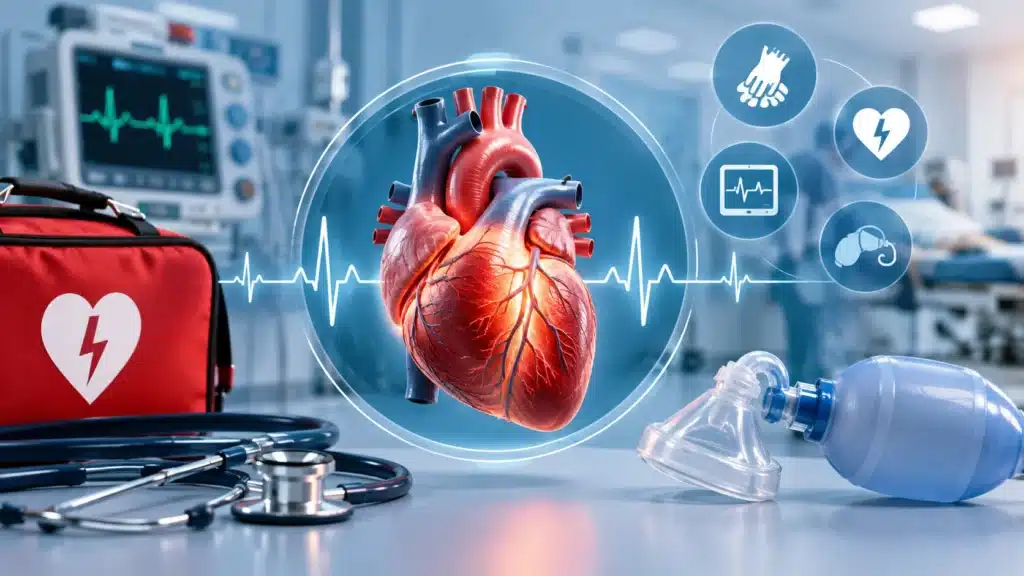
Advanced Cardiac Life Support, commonly known as ACLS, is a set of emergency medical interventions used to treat patients in life-threatening cardiac and respiratory emergencies. It is not just a training program or certification. It is a real-world, hospital-based approach to managing cardiac arrest, severe heart attacks, dangerous heart rhythms, shock, and breathing failure. ACLS represents the highest level of emergency cardiac care that can be provided in a hospital setting.
When a person’s heart stops beating effectively or when breathing fails, every second matters. ACLS protocols guide doctors, nurses, and emergency teams to act quickly and systematically. The goal is to restore heart rhythm, support breathing, maintain blood flow to the brain and vital organs, and prevent long-term damage. This type of care is provided in emergency rooms, intensive care units, cardiac care units, and during in-hospital emergencies.
What is Advanced Cardiac Life Support (ACLS)?
Advanced Cardiac Life Support is a comprehensive emergency treatment system used by healthcare teams to manage patients with cardiac arrest, severe arrhythmias, acute coronary syndromes, stroke, and respiratory failure. It builds upon basic life support measures such as chest compressions and rescue breathing, and adds advanced interventions like defibrillation, medications, airway management, and post-resuscitation care.
ACLS is not a single procedure. It is a coordinated set of actions performed by a team of trained professionals. These actions are guided by standardized algorithms that help the team respond quickly and effectively in high-stress situations. The focus is on restoring circulation, supporting breathing, identifying the underlying cause, and stabilizing the patient for further treatment.
In a hospital setting, ACLS is activated when a patient’s heart stops, when dangerous heart rhythms develop, or when breathing becomes critically compromised. The emergency team responds immediately to begin resuscitation and advanced care.
When is ACLS Used?
ACLS is used in a variety of life-threatening emergencies involving the heart, lungs, and circulation.
Common situations where ACLS is needed
- Cardiac arrest, when the heart stops beating effectively.
- Ventricular fibrillation, a chaotic heart rhythm that prevents blood flow.
- Ventricular tachycardia, a dangerously fast heart rhythm.
- Severe bradycardia, an abnormally slow heart rate causing instability.
- Acute myocardial infarction or heart attack with complications.
- Stroke with airway or breathing compromise.
- Respiratory failure requiring advanced airway support.
- Shock due to severe infection, bleeding, or heart failure.
- Drug overdose or poisoning affecting heart and breathing.
- Electrolyte imbalances causing dangerous arrhythmias.
- Post-operative cardiac complications.
- Trauma patients with cardiac or respiratory arrest.
Why ACLS is critical in these situations
In these emergencies, the brain and vital organs can be damaged within minutes if blood flow and oxygen are not restored. ACLS provides the structured, advanced interventions needed to reverse the crisis and give the patient the best chance of survival and recovery.
Steps in Advanced Cardiac Life Support
ACLS follows a systematic approach to ensure nothing is missed during an emergency.
Initial assessment and recognition
- Check for responsiveness and breathing.
- Activate the emergency response team immediately.
- Begin high-quality chest compressions if the patient is unresponsive and not breathing normally.
- Attach a cardiac monitor or defibrillator to assess heart rhythm.
- Establish intravenous or intraosseous access for medications.
Airway and breathing management
- Provide oxygen using a bag-valve-mask device.
- Insert advanced airway devices such as endotracheal tube or supraglottic airway when needed.
- Confirm proper airway placement with clinical assessment and monitoring.
- Provide controlled ventilation to support breathing.
- Monitor oxygen saturation and adjust oxygen delivery as needed.
Circulation and defibrillation
- Continue high-quality chest compressions with minimal interruptions.
- Analyze heart rhythm and deliver shocks if ventricular fibrillation or pulseless ventricular tachycardia is present.
- Administer emergency medications such as epinephrine, amiodarone, or others based on the rhythm and condition.
- Check for pulse and signs of circulation after each cycle of interventions.
- Treat reversible causes such as low oxygen, low blood volume, or electrolyte problems.
Post-resuscitation care
- Stabilize heart rhythm and blood pressure.
- Provide targeted temperature management if indicated.
- Monitor neurological status and organ function.
- Transfer to intensive care unit for continued support.
- Identify and treat the underlying cause of the emergency.
Medications Used in ACLS
Medications play a crucial role in ACLS by supporting heart function, restoring rhythm, and improving blood flow.
Common medications include:
- Epinephrine to stimulate the heart and improve blood flow during cardiac arrest.
- Amiodarone to treat ventricular fibrillation and ventricular tachycardia.
- Lidocaine as an alternative antiarrhythmic medication.
- Atropine to treat symptomatic bradycardia in specific situations.
- Adenosine to terminate certain types of fast heart rhythms.
- Magnesium sulfate for specific arrhythmias such as torsades de pointes.
- Sodium bicarbonate to correct severe acidosis or specific overdoses.
- Calcium for certain electrolyte abnormalities or drug toxicities.
- Vasopressors to support blood pressure in shock states.
- Antiplatelet and anticoagulant medications for heart attack or stroke when appropriate.
How medications are given
- Intravenous injection through a vein.
- Intraosseous injection through the bone marrow in emergencies when IV access is difficult.
- Endotracheal administration in rare situations when other routes are not available.
- Continuous infusion for medications that need to be given over time.
Procedures and Interventions in ACLS
ACLS involves several advanced procedures that go beyond basic life support.
Defibrillation and cardioversion
- Defibrillation delivers an electric shock to stop chaotic heart rhythms like ventricular fibrillation.
- Cardioversion delivers a synchronized shock to treat unstable fast rhythms like atrial fibrillation or ventricular tachycardia with a pulse.
- Both procedures require proper pad placement and timing to be effective and safe.
Advanced airway management
- Endotracheal intubation places a tube into the windpipe to secure the airway.
- Supraglottic airway devices provide an alternative when intubation is difficult.
- Proper placement is confirmed by listening to breath sounds, observing chest rise, and using monitoring devices.
- Mechanical ventilators may be used to support breathing after the airway is secured.
Intravenous and intraosseous access
- IV lines are placed in large veins to give fluids and medications quickly.
- Intraosseous access is used in emergencies when IV access cannot be obtained rapidly.
- Both routes allow rapid delivery of life-saving drugs and fluids.
Monitoring and diagnostics
- Continuous cardiac monitoring to track heart rhythm.
- Blood pressure monitoring, often with an arterial line in critical cases.
- Oxygen saturation monitoring to assess breathing effectiveness.
- Blood tests to check electrolytes, blood gases, and markers of heart damage.
- Imaging such as chest X-ray or echocardiogram when needed.
Post-Resuscitation Care
Surviving the initial cardiac arrest is only the first step. Post-resuscitation care is critical to improve outcomes and prevent further complications.
Key components of post-resuscitation care
- Stabilizing heart rhythm and blood pressure.
- Providing oxygen and breathing support as needed.
- Monitoring neurological function and brain perfusion.
- Managing body temperature with targeted temperature management in selected patients.
- Treating the underlying cause such as heart attack, infection, or electrolyte imbalance.
- Preventing complications like pneumonia, blood clots, or organ failure.
- Early involvement of cardiology, neurology, and critical care specialists.
Why post-resuscitation care matters
Many patients who survive the initial resuscitation can still face serious complications. The brain, heart, kidneys, and other organs may be vulnerable after a period of low blood flow. Intensive monitoring and supportive care in the ICU improve the chances of meaningful recovery.
Possible Complications
ACLS interventions are life-saving, but they can also be associated with complications.
Complications during resuscitation
- Rib fractures or chest wall injury from chest compressions.
- Lung injury or pneumothorax from airway procedures.
- Aspiration of stomach contents into the lungs.
- Irregular heart rhythms from medications or shocks.
- Low blood pressure or organ damage from prolonged arrest.
- Neurological injury due to lack of oxygen to the brain.
Complications after resuscitation
- Brain injury or cognitive changes.
- Heart dysfunction or recurrent arrhythmias.
- Infection such as pneumonia.
- Kidney injury from low blood flow.
- Blood clots in legs or lungs.
- Critical illness weakness requiring rehabilitation.
Why complications happen
During cardiac arrest, the body is deprived of oxygen and blood flow. Even with excellent ACLS care, some damage may occur. The goal is to minimize this damage through rapid response, high-quality interventions, and careful post-resuscitation management.
When to Activate ACLS?
ACLS is activated in hospital settings when a patient experiences a life-threatening emergency.
Signs that require immediate ACLS response
- Patient is unresponsive and not breathing normally.
- No pulse is detected.
- Dangerous heart rhythms are seen on the monitor.
- Severe breathing difficulty with dropping oxygen levels.
- Sudden collapse with suspected cardiac cause.
- Heart rate that is too fast or too slow causing instability.
- Signs of shock with low blood pressure and poor perfusion.
Who activates the response
- Nurses or staff who first notice the emergency.
- Doctors or technicians present at the time.
- Automated alerts from monitoring systems in some hospitals.
- Family members or visitors who call for help when they see someone collapse.
Why Hospital-Based ACLS Care Matters?
ACLS is most effective when delivered in a hospital with a trained team, proper equipment, and intensive care support.
Advantages of hospital-based ACLS
- Immediate access to defibrillators and cardiac monitors.
- Trained doctors, nurses, and respiratory therapists available.
- Advanced airway equipment and medications on hand.
- Ability to perform procedures like intubation and central line placement.
- Intensive care unit for post-resuscitation management.
- Access to cardiology, neurology, and other specialists.
- Continuous monitoring and rapid response to changes.
Trust and authority points
- Standardized protocols based on international guidelines.
- Regular training and simulation for emergency teams.
- Quality improvement programs to review outcomes.
- Family support and communication during and after emergencies.
- Comprehensive care from resuscitation to rehabilitation.
Recovery and Long-Term Care
Recovery after ACLS depends on the cause of the emergency, the duration of cardiac arrest, and the patient’s overall health.
Recovery may include:
- Continued monitoring in the intensive care unit.
- Medications to support heart function and prevent arrhythmias.
- Cardiac evaluation such as echocardiogram or angiography.
- Neurological assessment and rehabilitation if needed.
- Physical therapy to regain strength and mobility.
- Counseling or psychological support for patients and families.
- Long-term follow-up with cardiology and primary care.
Why long-term care is important
Surviving a cardiac arrest is a major event. Many patients need ongoing treatment to prevent recurrence, manage underlying conditions, and support recovery. Regular follow-up helps detect problems early and optimize health.
Prevention of Cardiac Emergencies
While not all cardiac arrests can be prevented, many risk factors can be managed.
Prevention pointers
- Control high blood pressure, diabetes, and cholesterol.
- Quit smoking and avoid tobacco products.
- Maintain a healthy weight and active lifestyle.
- Follow a heart-healthy diet low in salt and saturated fat.
- Take prescribed medications regularly.
- Attend regular health check-ups and cardiac evaluations.
- Recognize warning signs such as chest pain, breathlessness, or palpitations.
- Seek immediate care for symptoms of heart attack or stroke.
For patients with known heart disease
- Follow cardiology advice closely.
- Know the signs of worsening heart condition.
- Keep emergency contact numbers handy.
- Ensure family members know basic life support steps.
- Carry a list of medications and medical history.
Frequently Asked Questions (FAQs)
Is ACLS only for cardiac arrest?
No, ACLS is used for cardiac arrest as well as other emergencies like dangerous heart rhythms, heart attack complications, stroke with breathing issues, and severe shock. It covers a wide range of critical conditions.
Can ACLS save a life?
Yes, ACLS significantly improves the chances of survival when applied quickly and correctly. Early defibrillation, high-quality chest compressions, and advanced interventions can restore heart function and prevent organ damage.
What happens after ACLS treatment?
After ACLS, patients are usually transferred to the intensive care unit for close monitoring and supportive care. They may need breathing support, heart medications, and treatment of the underlying cause.
Are there risks with ACLS procedures?
Yes, there can be complications such as rib fractures from compressions, lung injury from airway procedures, or neurological effects from lack of oxygen. However, the benefits of ACLS in life-threatening emergencies far outweigh the risks.
How long does ACLS treatment take?
The initial resuscitation may last from minutes to over an hour depending on the patient’s response. Post-resuscitation care continues in the ICU for hours to days based on the patient’s condition and recovery.
Can anyone receive ACLS treatment?
ACLS is provided to patients who experience life-threatening cardiac or respiratory emergencies in a hospital setting. The decision to use ACLS interventions is based on the patient’s condition and medical appropriateness.
What is the difference between BLS and ACLS?
Basic Life Support (BLS) includes chest compressions and rescue breathing by anyone trained. ACLS adds advanced interventions like defibrillation, medications, airway management, and critical care by healthcare professionals in a hospital.
Conclusion
Advanced Cardiac Life Support is a critical, life-saving approach used in hospitals to manage cardiac arrest, dangerous heart rhythms, heart attack complications, and severe respiratory emergencies. It represents the highest level of emergency cardiac care, combining rapid response, advanced procedures, medications, and intensive post-resuscitation support. While cardiac emergencies are frightening, timely ACLS intervention can restore heart function, protect the brain, and give patients a chance at meaningful recovery.
The most important factors are early recognition, immediate activation of the emergency team, high-quality resuscitation, and comprehensive post-event care. For patients with heart disease, risk factors, or warning symptoms, understanding ACLS and seeking prompt medical attention can make a life-saving difference. With expert teams, modern equipment, and standardized protocols, hospitals can provide the best possible outcomes in these critical moments.
Rama Hospital is equipped to provide Advanced Cardiac Life Support with experienced emergency and critical care teams, advanced monitoring and defibrillation capabilities, and intensive care support for post-resuscitation management. Our goal is to deliver rapid, effective, and compassionate care when every second counts.