
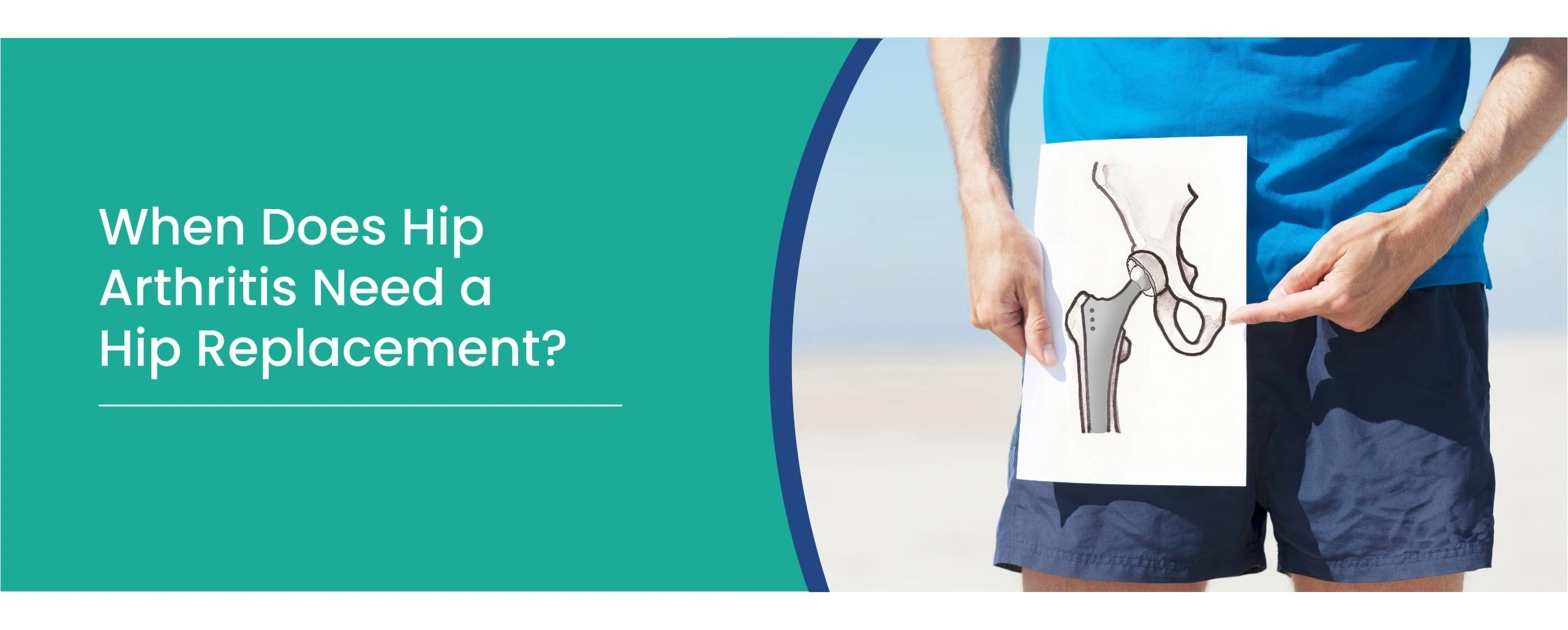
Hip arthritis does not automatically mean you need a hip replacement. Many people with hip arthritis can manage their symptoms with exercise, physiotherapy, medicines, activity modification and other nonsurgical treatments.
But when hip pain becomes persistent, starts interfering with walking or sleeping, makes everyday activities difficult, and no longer improves enough with conservative treatment, it may be time to discuss hip replacement with an orthopaedic specialist.
The decision is not based on your X-ray alone. Doctors consider how much pain you have, how well you can move, how arthritis is affecting your quality of life, how much the joint is damaged, and whether other treatments are still helping. Hip replacement is generally considered when symptoms are significant and nonsurgical treatment no longer provides adequate relief.
When Does Hip Arthritis Need a Hip Replacement?
Hip replacement may be considered when:
- Hip pain has become severe or persistent.
- Walking or everyday activities have become difficult.
- Pain is affecting your sleep or overall quality of life.
- Hip movement has become significantly restricted.
- Medicines, physiotherapy, exercise or other nonsurgical treatments no longer provide enough relief.
- Imaging shows significant joint damage that matches your symptoms.
- Arthritis is causing functional limitations or disability.
There is no single pain score, age or X-ray finding that automatically means you need surgery. Instead, hip replacement is usually considered when advanced arthritis and significant symptoms come together, particularly when reasonable nonsurgical treatment has not provided enough improvement.
In other words, the important question is not simply, “How bad does my X-ray look?” It is also, “How much is my hip stopping me from living my normal life?”
What Is Hip Arthritis?
Hip arthritis occurs when the cartilage that normally allows the ball-and-socket joint to move smoothly becomes damaged or worn down.
The most common type is osteoarthritis, often called wear-and-tear arthritis. As cartilage becomes thinner, the space between the bones can narrow. In advanced disease, the joint may develop bone spurs, changes in the underlying bone and significant loss of smooth movement. The severity of these symptoms can vary considerably from person to person.
Common symptoms include:
- Hip or groin pain
- Stiffness
- Reduced range of motion
- Pain with walking or movement
- Difficulty performing everyday activities
7 Signs Your Hip Arthritis May Need a Hip Replacement
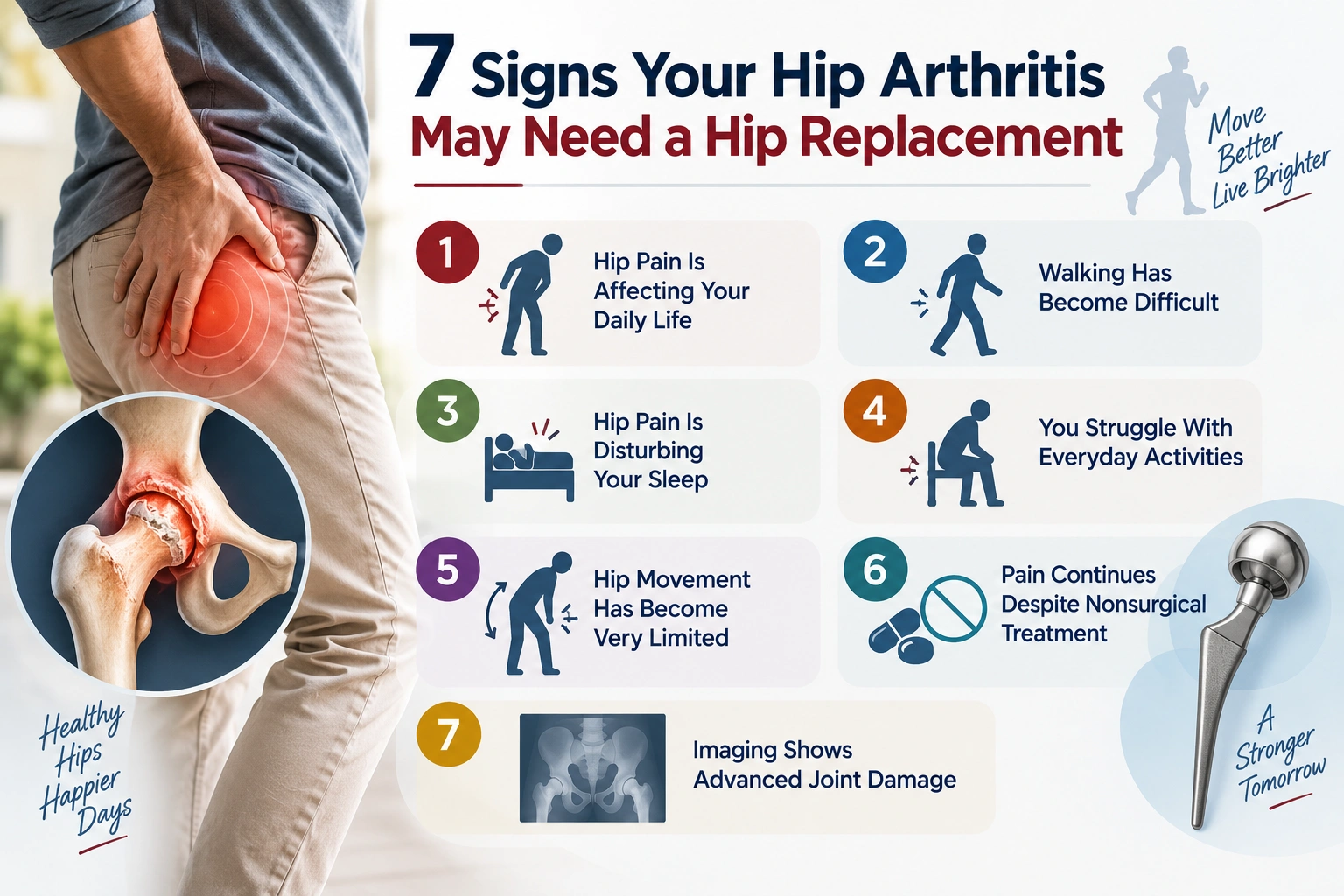
Having one of these symptoms does not automatically mean you need surgery. However, if several are present and they are becoming worse despite treatment, an orthopaedic evaluation can help determine whether hip replacement is appropriate.
1. Hip Pain Is Affecting Your Daily Life
Pain is one of the most important factors doctors consider when evaluating someone for hip replacement.
You may notice that activities that once felt routine now require planning or avoidance. A short walk may become uncomfortable. Standing for long periods may be difficult. You may start avoiding outings because you are worried about how much walking will be involved.
Pain that repeatedly limits your normal activities is more important than a pain score alone.
If your hip pain is consistently preventing you from doing the things you need or want to do, it is worth discussing your options with an orthopaedic specialist.
2. Walking Has Become Difficult
Hip arthritis can gradually change the way you walk.
You may begin taking shorter steps, walking more slowly or putting less weight on the painful side. Some people eventually need a cane or walker to move around comfortably.
Difficulty walking can also lead to reduced activity. Over time, this may contribute to weakness in the muscles around the hip and further reduce mobility.
When walking becomes increasingly difficult despite appropriate treatment, hip replacement may become a reasonable option for some patients with advanced arthritis.
3. Hip Pain Is Disturbing Your Sleep
Pain that interferes with sleep is another sign that hip arthritis may be significantly affecting your quality of life.
You may find it difficult to sleep on the affected side, wake up because of pain or struggle to find a comfortable position.
Occasional discomfort does not necessarily mean you need surgery. But persistent night pain, particularly when combined with daytime limitations and reduced response to treatment, deserves medical evaluation.
4. You Struggle With Everyday Activities
Hip arthritis can make simple movements surprisingly difficult.
You may struggle with:
- Putting on your shoes or socks
- Climbing stairs
- Getting out of a chair
- Getting into or out of a car
- Bending or turning your hip
- Walking around the house
These functional limitations are important because the purpose of treatment is not simply to improve an X-ray. It is to help you move and function with less pain.
When everyday activities become increasingly difficult, your orthopaedic doctor may discuss whether continued nonsurgical treatment or joint replacement makes more sense for you.
5. Hip Movement Has Become Very Limited
Arthritis can gradually reduce the range of motion of the hip.
You may notice that movements that were previously easy, such as bending, turning your leg or putting on footwear, become increasingly difficult.
During an examination, an orthopaedic specialist will assess your hip movement, strength and pain. Reduced movement combined with significant pain and functional limitations can be an important part of the decision-making process.
6. Pain Continues Despite Nonsurgical Treatment
Hip replacement is generally not the first treatment for early or manageable hip arthritis.
Depending on your condition, treatment may include:
- Physical therapy
- Exercise
- Activity modification
- Weight management
- Pain-relief medicines
- Injections
- Walking aids
These approaches can reduce symptoms and improve function for many people, particularly when arthritis is mild to moderate.
But if you have followed an appropriate treatment plan and still experience significant pain or disability, your doctor may discuss surgical options.
7. Imaging Shows Advanced Joint Damage
An X-ray can help doctors understand how much structural damage has occurred in the hip.
Advanced osteoarthritis may show narrowing of the joint space, bone spurs, changes in bone density or other degenerative changes.
However, an abnormal X-ray does not automatically mean you need a hip replacement.
The imaging findings need to be considered alongside your symptoms, physical examination and functional limitations.
How Bad Does Hip Arthritis Have to Be for a Hip Replacement?
There is no universal pain score or X-ray result that determines when someone needs a hip replacement.
Two people can have similar-looking X-rays but very different symptoms. One person may continue normal activities with manageable discomfort, while another may have severe pain that affects walking, sleep and independence.
Doctors typically consider several factors together:
- Pain severity: How often does the hip hurt, and how much does it interfere with your life?
- Functional limitation: Can you walk, climb stairs, sit, stand and perform daily activities?
- Quality of life: Are you avoiding activities or changing your routine because of hip pain?
- X-ray findings: Is there evidence of significant joint damage?
- Response to treatment: Have medicines, physiotherapy, exercise, injections or other appropriate treatments stopped providing enough relief?
- Overall health: Are you medically fit enough for surgery and rehabilitation?
- Patient expectations: What are you hoping to achieve from treatment?
This is why the decision should be individualised. The American College of Rheumatology notes that joint replacement is generally considered for advanced joint disease when symptoms are causing functional decline and disabling pain, particularly after nonsurgical management has been unsuccessful.
Can Hip Arthritis Be Treated Without Hip Replacement?
Yes. Hip replacement is not automatically required when arthritis is diagnosed.
For many people, especially those with earlier or less severe disease, nonsurgical treatment can help reduce pain and maintain movement.
Physical Therapy
A physiotherapist can recommend exercises to improve strength, flexibility, balance and hip function.
Exercise and physical therapy are commonly used to manage hip osteoarthritis symptoms, particularly in mild to moderate disease.
Exercise and Activity Modification
Remaining active is generally better than becoming completely inactive.
Low-impact activities such as walking, swimming or cycling may be easier on an arthritic hip than high-impact activities.
Your exercise plan should be adapted to your symptoms and overall health.
Weight Management
If you are overweight, losing weight can reduce the load placed on weight-bearing joints and may help improve pain and function.
Even modest changes can be useful when combined with an appropriate activity and treatment plan.
Pain-Relief Medicines
Depending on your health and other medicines, your doctor may recommend pain-relief or anti-inflammatory medicines.
These are not suitable for everyone, particularly people with certain kidney, stomach, heart or other medical conditions. They should therefore be used according to medical advice.
Injections
A corticosteroid injection into the hip may provide short-term pain relief for some people with symptomatic hip osteoarthritis.
However, injections do not reverse the underlying arthritis.
Walking Aids
A cane or other walking aid may reduce stress on the painful hip and make movement easier for some people.
A physiotherapist or doctor can help determine whether an assistive device is appropriate and how to use it correctly.
When Do These Treatments Stop Being Enough?
The question is not simply whether you have tried nonsurgical treatment.
The more important question is: Does your current treatment still give you enough relief to live the life you want?
For example, treatment may once have allowed you to walk comfortably for 30 minutes, but now only provides relief for a few minutes. Or medicines may reduce the pain temporarily, only for it to return repeatedly.
When advanced arthritis continues to cause significant pain and functional limitations despite appropriate nonsurgical management, discussing hip replacement with an orthopaedic surgeon may be appropriate.
Signs that conservative treatment may no longer be enough include:
- Pain keeps returning despite treatment.
- Walking becomes increasingly difficult.
- You need more help with everyday activities.
- You are increasingly dependent on pain medicines.
- You have stopped activities you enjoy.
- Your sleep is repeatedly disturbed.
- Your independence is decreasing.
What Does a Hip X-Ray Show Before Replacement?
An X-ray is commonly used when evaluating hip osteoarthritis and planning treatment.
It may show:
- Narrowing of the joint space due to cartilage loss
- Bone spurs, also called osteophytes
- Changes in the underlying bone
- Cysts or other degenerative changes
- Joint deformity in advanced disease
Cartilage itself does not appear directly on a standard X-ray. Instead, doctors look at changes such as reduced space between the bones to estimate cartilage loss.
But remember: an X-ray supports the diagnosis; it does not make the decision for surgery.
If the X-ray looks severe but you have little pain and can function normally, immediate surgery may not be necessary. Conversely, significant symptoms and functional limitations may require a detailed discussion even when imaging findings do not tell the whole story.
What Happens If Severe Hip Arthritis Is Left Untreated?

Severe hip arthritis can progressively affect mobility and quality of life.
As symptoms worsen, you may experience:
- Increasing hip or groin pain
- Greater difficulty walking
- Reduced hip movement
- Muscle weakness from reduced activity
- Increasing dependence on others
- Difficulty performing normal activities
- Reduced quality of life
This does not mean that everyone with hip arthritis will inevitably require surgery. Treatment should be individualised based on symptoms, joint damage, health and goals.
The aim is to manage the condition before pain and loss of function significantly restrict your life.
Hip Replacement vs Continuing Conservative Treatment
| Factor | Conservative Treatment | Hip Replacement |
| Pain relief | May provide meaningful relief, depending on disease severity | Designed to address pain from advanced joint damage |
| Mobility | May improve movement and function | Usually aims to improve pain and functional mobility |
| Surgery | No | Yes |
| Recovery | Usually little or no surgical recovery | Requires rehabilitation and gradual return to activities |
| Best suited for | Mild–moderate or manageable symptoms | Advanced disease with significant symptoms and functional limitations |
| Main consideration | Whether symptoms remain manageable | Whether benefits of surgery outweigh its risks for the individual |
The choice is not necessarily “surgery versus doing nothing.” A doctor may recommend continuing conservative treatment, modifying the treatment plan or considering surgery depending on how your condition is progressing.
What Happens During Total Hip Replacement?
During a total hip replacement, the damaged portions of the hip joint are removed and replaced with artificial components designed to restore the function of the ball-and-socket joint.
The goal is to reduce pain and improve function. The exact surgical approach, implant choice and rehabilitation plan depend on the individual patient.
In general:
- The damaged femoral head is removed.
- The damaged socket surface is prepared.
- Artificial components are placed in the socket and thighbone.
- The new joint is positioned and stabilised.
- Rehabilitation begins after surgery.
How Long Does It Take to Recover From Hip Replacement?
Recovery varies from person to person. Your age, general health, muscle strength, activity level, surgical technique and adherence to rehabilitation can all influence recovery.
Walking usually begins soon after surgery with support from a physiotherapist, and many patients initially use a walker or crutches.
A general recovery pattern may look like this:
- Early days: Walking begins with assistance and prescribed exercises.
- First few weeks: Mobility and strength gradually improve.
- Around 6 weeks: Many patients are able to resume a range of normal activities, depending on their recovery and doctor’s advice.
- Following months: Strength, endurance and confidence in movement can continue improving.
Who Is a Good Candidate for Hip Replacement?
Importantly, age alone does not determine whether you need a hip replacement. The decision is based more on symptoms, functional limitations, joint condition, overall health and individual goals. A person may be considered a good candidate when several factors come together:
- Hip arthritis is advanced or causing significant symptoms.
- Pain is persistent or disabling.
- Walking and everyday activities are becoming difficult.
- Quality of life has declined.
- Nonsurgical treatment has not provided enough relief.
- Imaging supports significant joint damage.
- The person is medically fit enough for surgery.
- Expectations about surgery and recovery are realistic.
Frequently Asked Questions (FAQs)
Does everyone with hip arthritis need a hip replacement?
No. Many people with hip arthritis can manage their symptoms with exercise, physiotherapy, medicines, activity modification and other nonsurgical treatments. Hip replacement is generally considered when symptoms become significant and these treatments no longer provide adequate relief.
How bad does hip arthritis have to be before surgery?
There is no single severity level that automatically means you need surgery. Doctors consider pain, mobility, quality of life, imaging findings, response to treatment and overall health together.
What are the signs that you need a hip replacement?
Important signs include persistent or severe hip pain, difficulty walking, disturbed sleep, reduced hip movement, difficulty with everyday activities and symptoms that continue despite appropriate nonsurgical treatment.
Can hip arthritis be treated without surgery?
Yes. Depending on the severity of arthritis, treatment may include physical therapy, exercise, activity modification, weight management, medicines, corticosteroid injections and walking aids.
Can you delay hip replacement surgery?
Sometimes. If symptoms remain manageable and you can maintain your normal activities with nonsurgical treatment, surgery may not be necessary immediately. However, if pain and functional limitations are significantly affecting your quality of life despite treatment, delaying an appropriate evaluation may not be beneficial.
Is bone-on-bone hip arthritis a reason for replacement?
“Bone-on-bone” is commonly used to describe severe loss of joint space seen on imaging. It can be associated with advanced arthritis, but the X-ray finding alone does not determine whether surgery is necessary. Your symptoms and functional limitations also matter.
How long does hip replacement recovery take?
Recovery varies. Many patients begin walking with assistance soon after surgery, but full recovery can take several months. Your individual recovery depends on factors such as general health, strength, activity level and rehabilitation.
What happens if severe hip arthritis is left untreated?
Severe hip arthritis can lead to increasing pain, stiffness, reduced mobility, muscle weakness and difficulty with everyday activities. It can significantly affect independence and quality of life.
Conclusion
Hip arthritis does not automatically mean that a hip replacement is necessary.
The decision becomes more relevant when pain is persistent, walking and everyday activities are becoming difficult, sleep is affected, hip movement is significantly restricted, and appropriate nonsurgical treatments no longer provide enough relief.
An X-ray can show the extent of joint damage, but it is only one part of the decision. Your symptoms, functional limitations, overall health and treatment goals matter just as much.
If hip arthritis is making it harder to walk, sleep, work or enjoy everyday activities, an orthopaedic evaluation can help you understand whether it is time to consider hip replacementor whether there are still nonsurgical options worth trying in best hospital in Noida.