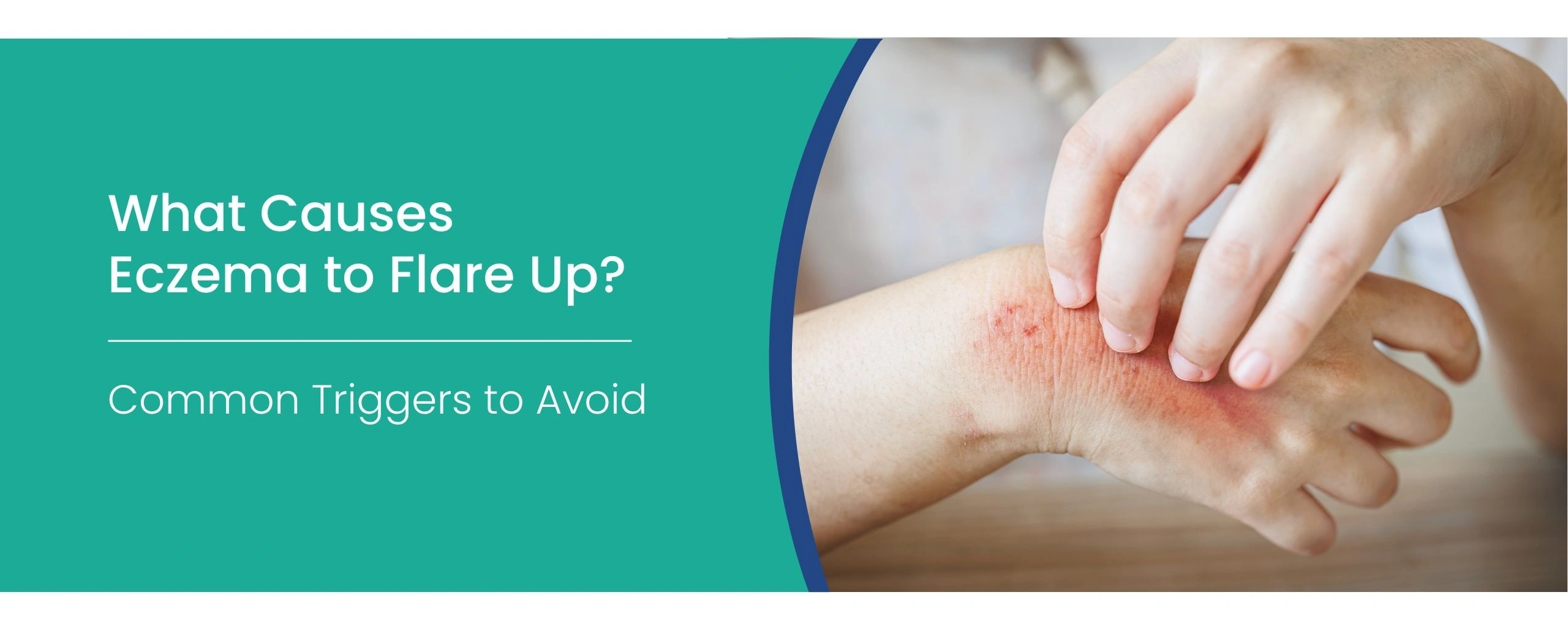
Your eczema may seem under control one week and suddenly become itchy, red and irritated the next. Often, the flare isn’t random, something may have irritated your skin or weakened its protective barrier.
Common eczema flare up triggers include dry weather, heat and sweating, stress, fragrances, harsh soaps and detergents, certain fabrics, allergens, infections and, in some people, specific foods. However, eczema flare up triggers are not the same for everyone. What causes a flare-up for one person may have little effect on another.
Learning your personal triggers can make eczema flare up easier to manage. Once you know what tends to make your symptoms worse, you can take steps to protect your skin and reduce the frequency or severity of flare-ups.
What Is an Eczema Flare-Up?
Eczema is a chronic skin condition that can cause dryness, itching, redness, irritation and inflammation. It often follows a pattern of improving and worsening rather than staying the same all the time.
An eczema flare up is a period when your usual symptoms suddenly become more noticeable or severe. You may experience:
- More intense itching
- Red or inflamed skin
- Increased dryness or scaling
- Cracked or irritated skin
- Small bumps or patches
- Skin that becomes thicker after repeated scratching
Eczema can come and go because the skin barrier in people with eczema flare up is more vulnerable to irritation and moisture loss. Everyday exposures, including weather, sweat, skincare products and stress, can sometimes push already-sensitive skin into a flare.
The important thing to remember is that there is no single trigger that causes every eczema flare up. Triggers can vary by person, age, eczema flare up type and even season.
What Causes Eczema Flare Up?
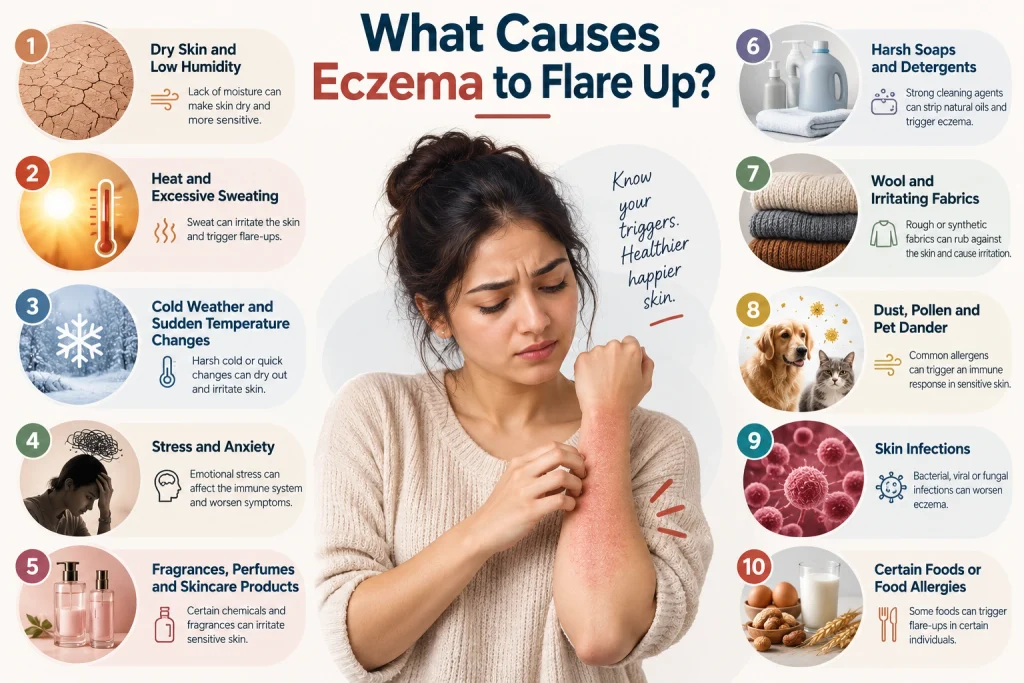
Identifying your triggers is one of the most useful steps in managing recurring eczema. Here are some of the most common triggers to watch for.
1. Dry Skin and Low Humidity
Dryness is one of the most common reasons eczema flare up can become worse.
When the skin loses too much moisture, its protective barrier becomes less effective. This can increase dryness and irritation and make the skin more vulnerable to other triggers.
Dry indoor air, air conditioning and prolonged exposure to low humidity can contribute to this problem.
You may notice more flare-ups:
- During dry weather
- After long, hot showers
- When you don’t moisturize regularly
- In rooms with very dry air
What can help: Use a fragrance-free moisturizer regularly, particularly after bathing while the skin is still slightly damp. Creams and ointments are often more effective at reducing moisture loss than lighter lotions.
2. Heat and Excessive Sweating
Hot weather can be difficult for people with eczema. Heat may make the skin feel more irritated, while sweat can trigger itching and discomfort.
This can create a frustrating cycle:
Heat → sweating → itching → scratching → more irritation
Exercise, outdoor activities, hot rooms and tight clothing can all contribute to overheating.
What can help: Stay cool, wear loose-fitting clothing and shower with lukewarm rather than very hot water. Try to rinse away sweat gently after exercise and moisturize afterward.
3. Cold Weather and Sudden Temperature Changes
Cold, dry weather can remove moisture from the skin and contribute to eczema flare up. Moving repeatedly between very cold outdoor air and heated indoor environments may also irritate sensitive skin.
Some people notice that their eczema flare up becomes worse during winter, while others experience more problems during hot and humid weather.
Sudden temperature changes can be particularly noticeable when the skin is already dry or irritated.
What can help: Protect exposed skin in cold weather, avoid excessively hot baths, and apply moisturizer regularly to prevent excessive dryness.
4. Stress and Anxiety
Eczema isn’t “caused by stress” alone, but emotional stress can contribute to flare-ups in some people.
Stress can affect the body’s inflammatory and immune responses and may also make itching harder to ignore. When you feel stressed, you may scratch more frequently, which can further irritate the skin.
This means stress and eczema flare up can sometimes form a cycle:
Stress → more itching → scratching → irritated skin → more stress
What can help: Regular sleep, physical activity, relaxation techniques and other healthy stress-management habits may help reduce stress-related flare-ups. If stress is significantly affecting your daily life, discuss it with a healthcare professional.
5. Fragrances, Perfumes and Skincare Products
That new scented lotion may smell great—but your eczema-prone skin may not agree with it.
Fragrances and certain ingredients in skincare and personal-care products can irritate sensitive skin or trigger a reaction in some people.
Potential triggers include:
- Perfumes and colognes
- Scented moisturizers
- Fragranced soaps
- Certain cosmetics
- Essential oils
- Some hair and skincare products
What can help: Choose simple, fragrance-free products designed for sensitive skin. When introducing a new skincare product, consider testing it on a small area first and stop using it if it causes irritation.
6. Harsh Soaps and Detergents
Some soaps, cleansers and laundry products can strip natural oils from the skin or cause irritation.
Antibacterial and deodorant soaps, strong cleaning products and fragranced laundry detergents may be particularly problematic for some people with eczema flare up.
You don’t necessarily need to stop bathing or washing your skin frequently. The goal is to avoid unnecessary irritation.
What can help:
- Choose mild, fragrance-free cleansers.
- Use lukewarm rather than hot water.
- Keep showers relatively short.
- Avoid aggressive scrubbing.
- Choose fragrance-free, dye-free laundry detergent.
- Moisturize after bathing.
7. Wool and Irritating Fabrics
Some fabrics can rub against sensitive skin and increase itching.
Wool is a common example, but some people may also react to certain synthetic materials, tight clothing, clothing tags or rough seams.
If clothing repeatedly causes itching in the same area, it may be contributing to your flare.
What can help: Choose soft, loose-fitting clothing that feels comfortable against your skin. Many dermatologists recommend cotton clothing for people with sensitive or eczema-prone skin and advise avoiding wool directly against the skin.
Washing new clothes before wearing them can also help remove substances left from manufacturing.
8. Dust, Pollen and Pet Dander
Environmental allergens and irritants can trigger symptoms in some people with eczema flare up.
Potential triggers include:
- Pollen
- Dust
- Dust mites
- Pet dander
- Mold
- Cigarette smoke
However, not everyone with eczema reacts to these exposures. Avoiding every possible environmental trigger is not necessary unless you have noticed a clear connection.
If your eczema consistently worsens around a particular environment, keeping track of when and where the flare occurs may help identify a pattern.
9. Skin Infections
Eczema can weaken the skin barrier, making irritated or cracked skin more vulnerable to infection. At the same time, an infection can make an existing eczema flare up considerably worse.
Watch for changes such as:
- Increasing pain
- Pus or fluid
- Yellow or honey-coloured crusts
- New swelling or warmth
- Red streaks
- Fever
These signs should not simply be assumed to be “another eczema flare.” A skin infection may need medical treatment. Mayo Clinic recommends medical attention when eczema flare up appears infected, particularly if fever occurs.
If your skin suddenly becomes much more painful, develops discharge or crusting, or your symptoms are rapidly worsening, speak with a dermatologist or doctor.
10. Certain Foods or Food Allergies
Food is often mentioned when discussing eczema flare up triggers, but this area requires some caution.
Not everyone with eczema flare up has food-related triggers, and eliminating foods without medical guidance can be unnecessary or even harmful.
Food allergies can be associated with eczema flare up, particularly in children, and certain foods may trigger symptoms in people who have a genuine food allergy or sensitivity. Mayo Clinic notes that some infants and children may experience eczema flares associated with foods such as eggs or cow’s milk.
If you repeatedly notice that eczema flare up symptoms occur after eating a particular food, especially alongside symptoms such as hives, swelling, vomiting, wheezing or breathing difficulty, talk to a healthcare professional.
Don’t start a restrictive elimination diet on your own. A dermatologist, allergist or other qualified healthcare professional can help determine whether food is actually contributing to your symptoms.
How Can You Find Your Personal Eczema Triggers?
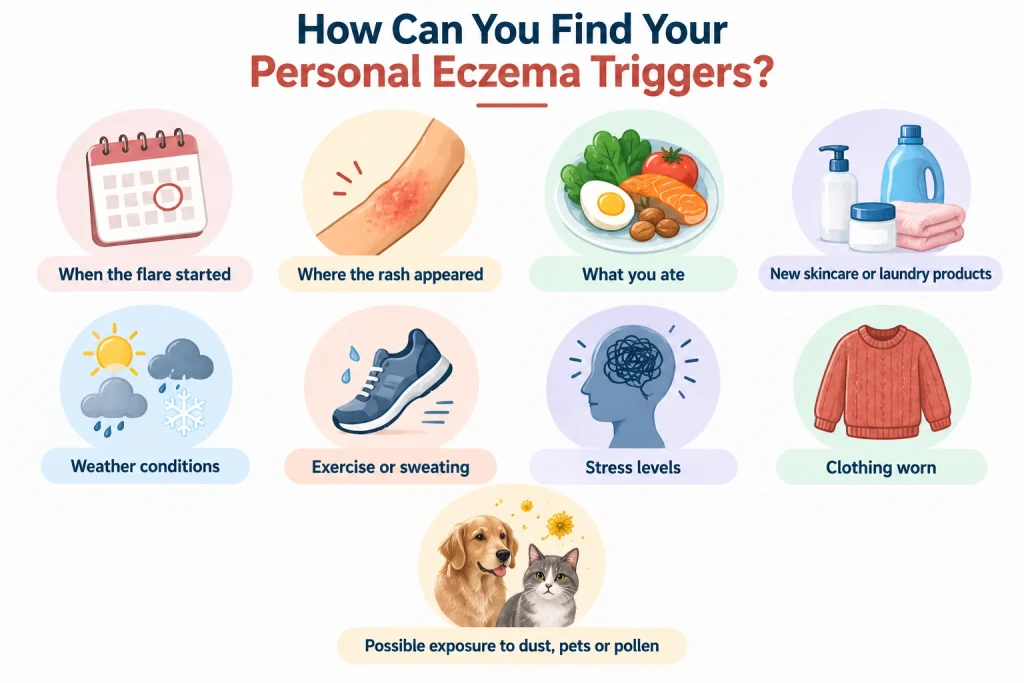
Because eczema flare up triggers vary from person to person, identifying your own pattern can be more useful than trying to avoid everything.
A simple trigger diary can help. Record:
- When the flare started
- Where the rash appeared
- What you ate
- New skincare or laundry products
- Weather conditions
- Exercise or sweating
- Stress levels
- Clothing worn
- Possible exposure to dust, pets or pollen
Over time, you may notice that the same trigger appears repeatedly before a flare.
However, don’t assume that every event before a flare is necessarily the cause. Eczema flare up can have several contributing factors at the same time, and some flares may occur without an obvious trigger.
When Should You See a Dermatologist?
Occasional mild flares can often be managed with a consistent skincare routine and trigger avoidance. But recurring or severe eczema flare up may need professional evaluation and treatment.
Consider seeing a dermatologist if:
- Your eczema flare up keeps coming back.
- It is interfering with sleep or daily activities.
- Your skin is painful rather than simply itchy.
- Over-the-counter skincare isn’t helping.
- The rash is spreading or becoming more severe.
- You suspect a specific allergy or contact trigger.
- Your skin develops pus, crusting or other signs of infection.
A dermatologist can assess your symptoms, identify possible triggers and recommend a treatment plan based on your eczema flare up type and severity.
If you’re looking for eczema treatment in Noida, professional evaluation can also help determine whether your symptoms are due to eczema flare up or another skin condition that may look similar.
Conclusion
Eczema flare up can feel unpredictable, but they are often linked to changes in the environment, skin care, lifestyle or overall skin health.
Common triggers include dry skin, heat and sweat, cold weather, stress, fragrances, harsh soaps and detergents, irritating fabrics, environmental allergens and skin infections. In some people, food allergies may also contribute to flares.
The key is not to avoid everything. Instead, pay attention to your skin and look for patterns. A consistent fragrance-free skincare routine, regular moisturizing, comfortable clothing and protection from extreme temperatures can help reduce irritation.
If your eczema is frequent, severe or difficult to control, a dermatologist can help identify possible triggers and create a treatment plan suited to your skin.
Frequently Asked Questions (FAQs)
1. What is the most common trigger for eczema?
There isn’t one universal trigger for everyone. Common triggers include dry skin, heat and sweating, stress, fragrances, harsh detergents, rough fabrics, cold and dry weather, and environmental irritants.
2. Can stress cause eczema to flare up?
Stress can contribute to eczema flare-ups in some people. It may increase itching and scratching and can make existing symptoms more difficult to control.
3. Can weather make eczema worse?
Yes. Both cold, dry weather and excessive heat and sweating can trigger or worsen eczema in some people. Sudden temperature changes may also contribute to irritation.
4. Can certain foods trigger eczema?
Certain foods may trigger eczema symptoms in people with a genuine food allergy, particularly some children. However, food is not a trigger for everyone with eczema, so unnecessary food restrictions should be avoided. Discuss suspected food triggers with a healthcare professional.
5. Why does my eczema flare up after using a new skincare product?
Some skincare products contain fragrances or other ingredients that can irritate sensitive skin or cause an allergic reaction. If a new product consistently causes itching or a rash, stop using it and discuss the reaction with a dermatologist.
6. Can sweating make eczema worse?
Yes. Heat and sweating can irritate eczema-prone skin and trigger itching or a flare in some people. Staying cool, wearing breathable clothing and gently washing away sweat may help.
7. How can I prevent eczema flare-ups?
Start by identifying your personal triggers. Regular moisturizing, fragrance-free skincare, avoiding harsh cleansers, choosing comfortable clothing and protecting your skin from extreme temperatures can help reduce flare-ups. If symptoms continue despite these measures, see a dermatologist for individualized treatment.