If your stomach hurts after eating, the cause may be something as simple as eating too much or too quickly. But recurring pain after meals can also be linked to indigestion, acid reflux, food intolerance, gallstones, ulcers, or other digestive conditions.
Stomach hurt after eating is not always a sign of a serious problem, but if it keeps happening, becomes severe, or comes with symptoms such as vomiting, fever, blood in the stool, or unexplained weight loss, it should be evaluated by a doctor.
The timing, location, severity and other symptoms can provide useful clues about what may be causing the discomfort.
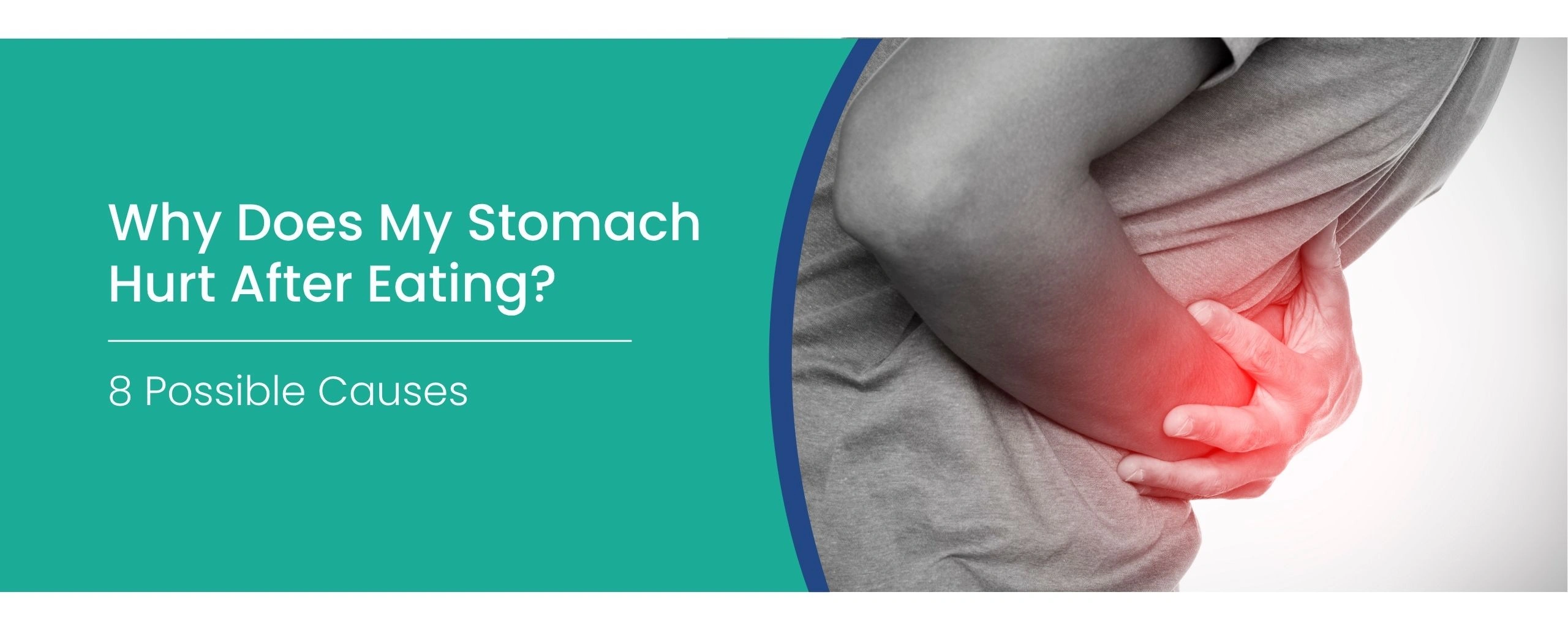
Why Does My Stomach Hurt After Eating?
Stomach hurt after eating can happen because your digestive system is reacting to the amount or type of food you have eaten, or because an underlying digestive condition is being triggered by a meal.
Not every case needs medical treatment. Occasional mild discomfort after a heavy meal may settle on its own. However, repeated or worsening pain deserves attention because treating the underlying cause is more effective than repeatedly managing the symptom.
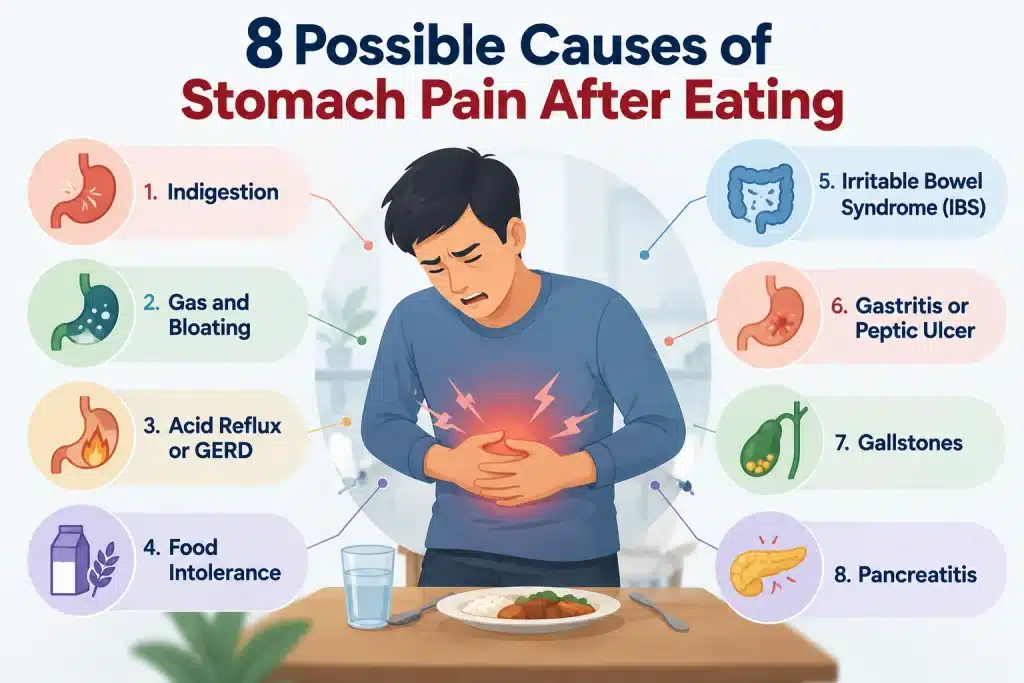
Some common causes include:
- Indigestion
- Gas and bloating
- Acid reflux or GERD
- Food intolerance
- Irritable bowel syndrome (IBS)
- Gastritis or peptic ulcers
- Gallstones
- Pancreatitis
8 Possible Causes of Stomach hurt After Eating
1. Indigestion
Indigestion, also called dyspepsia, is one of the most common reasons for discomfort after eating.
It may happen when you eat a large meal, eat too quickly, or consume foods that trigger digestive symptoms. You may notice pain or discomfort in the upper abdomen along with a feeling of fullness.
Other symptoms can include:
- Bloating
- Belching
- Nausea
- Feeling uncomfortably full
- Burning or discomfort in the upper abdomen
Frequent indigestion should not simply be ignored. It can sometimes be associated with an underlying digestive condition.
2. Gas and Bloating
Gas can build up in the digestive tract when you swallow air while eating or when certain foods are broken down during digestion.
This may cause cramping, pressure, bloating or a feeling that your stomach is stretched.
You may notice it particularly after:
- Eating a large meal
- Eating very quickly
- Consuming foods that commonly cause gas
- Eating foods you do not tolerate well
Gas-related discomfort often improves after passing gas or having a bowel movement. But persistent abdominal pain should not automatically be blamed on gas.
3. Acid Reflux or GERD
If your pain comes with heartburn or a burning sensation after eating, acid reflux may be responsible.
Acid reflux happens when stomach contents move back into the oesophagus. Larger meals and certain foods, including fatty or spicy foods, can trigger symptoms in some people.
You may also experience:
- Heartburn
- Sour taste in the mouth
- Food or acid coming back up
- Nausea
- Burning discomfort in the upper abdomen or chest
If reflux happens frequently, it may be gastroesophageal reflux disease (GERD) and may require medical evaluation.
4. Food Intolerance
Does stomach hurt happen after eating a particular food?
A food intolerance could be one possible explanation.
For example, some people have difficulty digesting lactose in dairy products. Certain other food components may also trigger digestive symptoms in sensitive individuals.
Symptoms may include:
- Stomach pain
- Bloating
- Gas
- Diarrhea
- Nausea
Food intolerance is different from a food allergy. An allergy involves an immune response, while an intolerance generally relates to difficulty digesting or tolerating a particular food.
If you repeatedly notice symptoms after eating the same food, keeping a food-and-symptom diary may help your doctor identify a pattern.
5. Irritable Bowel Syndrome (IBS)
Irritable bowel syndrome, or IBS, is a long-term gastrointestinal condition that can cause abdominal pain along with changes in bowel habits.
For some people, eating can trigger or worsen symptoms.
Common symptoms include:
- Abdominal cramps
- Bloating
- Gas
- Diarrhea
- Constipation
- Changes in bowel habits
IBS symptoms can vary from person to person, and certain foods, stress and other factors may contribute to flare-ups.
If stomach hurt after meals regularly occurs along with constipation or diarrhea, talk to a doctor rather than assuming it is simply a food problem.
6. Gastritis or Peptic Ulcer
Gastritis occurs when the stomach lining becomes inflamed. A peptic ulcer is a sore that develops in the lining of the stomach or the upper part of the small intestine.
Both can cause upper abdominal discomfort.
You may experience:
- Burning or aching stomach pain
- Nausea
- Bloating
- Feeling full quickly
- Indigestion
For some people, eating can make the discomfort worse, while in others the pattern can be different. This is why the timing of your pain alone cannot establish the cause.
Persistent or recurrent upper abdominal pain should be evaluated, particularly if you also have vomiting, unexplained weight loss or signs of bleeding.
7. Gallstones
If your pain mainly occurs in the upper right side of your abdomen, particularly after a fatty or heavy meal, gallstones may be one possible cause.
Gallstones can interfere with the normal flow of bile and may cause an episode of abdominal pain known as biliary colic.
The pain may:
- Occur after eating
- Be felt in the upper right abdomen
- Be severe or persistent
- Sometimes spread toward the back or shoulder
Gallstone-related pain should be evaluated by a doctor, especially if it is severe or associated with fever, vomiting or yellowing of the skin or eyes.
8. Pancreatitis
Pancreatitis is inflammation of the pancreas and can cause significant abdominal pain.
The pain is often felt in the upper abdomen and may extend toward the back. It can occur with nausea and vomiting.
Acute pancreatitis can require urgent medical care.
If abdominal pain is severe, persistent or accompanied by repeated vomiting, fever or significant tenderness, seek medical attention rather than trying to manage it at home.
What Does the Location of Stomach hurt After Eating Mean?
The location of your pain can sometimes provide clues, although it cannot confirm the cause on its own.
The same condition can produce different symptoms in different people. A doctor may need to consider your medical history, examination findings and other symptoms before determining the cause.
| Where you feel the pain | Possible causes |
| Upper abdomen | Indigestion, gastritis, ulcer, acid reflux |
| Upper right abdomen | Gallstones or gallbladder-related problems |
| Lower abdomen | IBS, constipation and other intestinal conditions |
| Widespread abdominal pain | Gas, indigestion, infection or other digestive problems |
What Other Symptoms Occur With Stomach hurt After Eating?
These additional symptoms can help a doctor understand whether the problem is related to digestion, reflux, the gallbladder, pancreas, intestines or another condition. Pay attention to what happens along with the pain.
You may notice:
- Bloating or gas
- Heartburn
- Nausea
- Vomiting
- Diarrhea
- Constipation
- Feeling full quickly
- Belching
- Blood in stool
- Loss of appetite
When Should You See a Doctor for Stomach hurt After Eating?
Occasional mild discomfort may improve with simple changes to your eating habits.
Persistent symptoms can sometimes point to an underlying digestive condition that needs proper diagnosis. But you should consider seeing a doctor if:
- The pain keeps returning after meals
- The pain is becoming more frequent or severe
- You regularly experience heartburn or indigestion
- You have persistent vomiting
- You have unexplained weight loss
- You notice blood in your stool or vomit
- You have difficulty swallowing
- You develop fever or jaundice
- Your symptoms interfere with eating or daily activities
Warning Signs That Need Urgent Medical Attention
Severe upper abdominal or chest discomfort can occasionally be confused with other serious conditions. If abdominal or upper-body pain occurs with chest pressure, shortness of breath, sweating, dizziness or pain spreading to the arm, jaw or neck, seek emergency medical help.
Seek urgent medical care if stomach hurt after eating is:
- Sudden and severe
- Getting rapidly worse
- Associated with repeated vomiting
- Accompanied by fever or chills
- Associated with blood in vomit or stool
- Accompanied by yellowing of the skin or eyes
- Associated with severe abdominal tenderness or swelling
- Making it difficult to keep fluids down
How Is Stomach hurt After Eating Diagnosed?
There is no single test for stomach hurt after eating because the symptom can have many possible causes.
Depending on your symptoms, further evaluation may include blood tests, stool tests, ultrasound, CT imaging, endoscopy or other investigations.
The goal is not simply to identify where the pain is coming from, but to find and treat the underlying cause.
Your doctor may first ask about:
- When the pain begins after eating
- Where the pain occurs
- How long it lasts
- What foods trigger it
- Whether you have heartburn, vomiting or bowel changes
- Your medical history
- Any medicines or supplements you take
What Can You Do If Your Stomach Hurt After Eating?
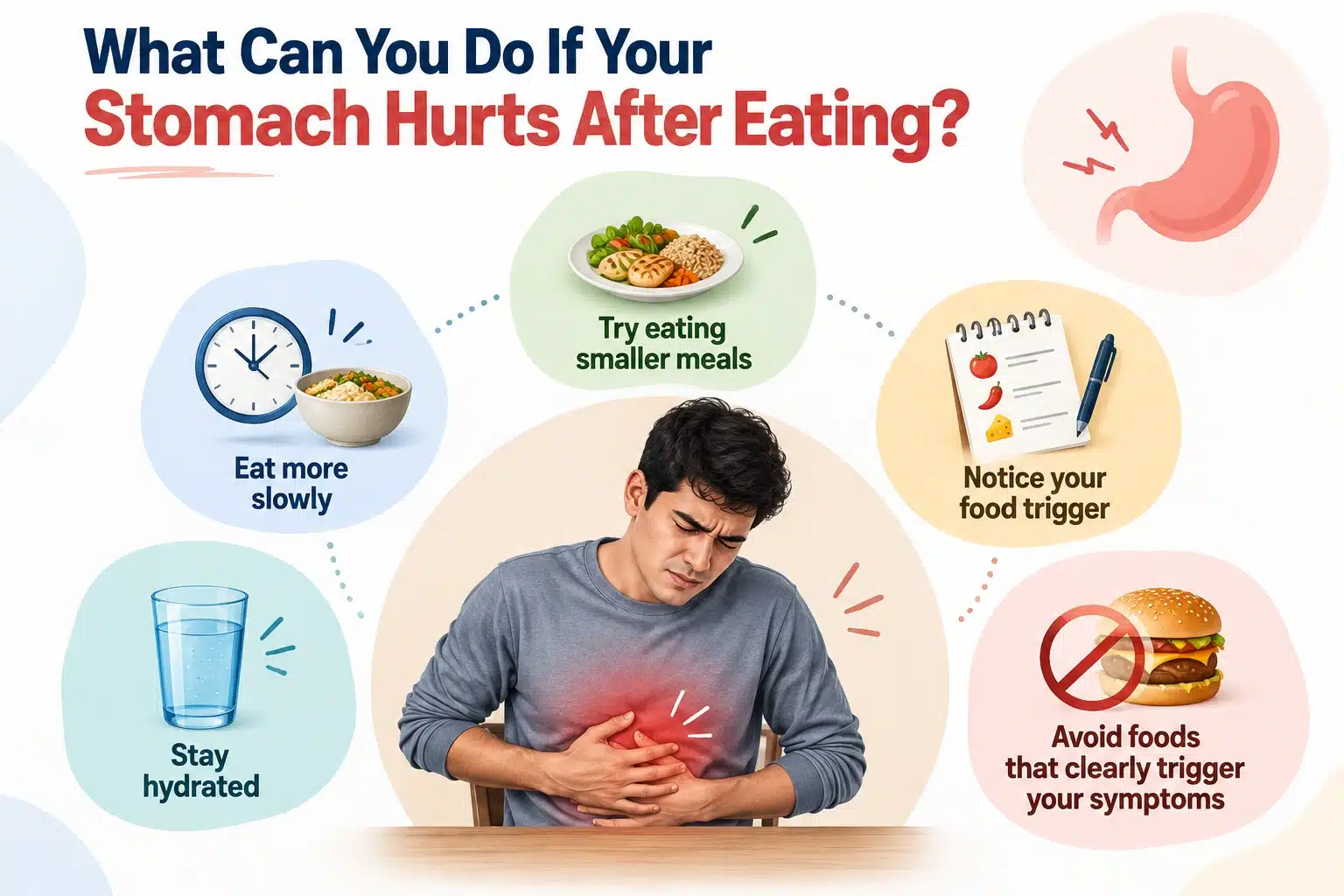
If your symptoms are mild and occasional, a few habits may help reduce digestive discomfort. Lifestyle changes can help some causes of post-meal discomfort, but they should not replace medical evaluation when symptoms are persistent or severe.
- Try eating smaller meals: Large meals can contribute to indigestion, reflux and abdominal discomfort. Smaller portions may be easier for some people to tolerate.
- Eat more slowly: Eating quickly can contribute to swallowing air and may make it harder to recognise when you are full.
- Notice your food triggers: Keep track of foods that repeatedly cause symptoms. This may help identify a possible intolerance or trigger.
- Stay hydrated: Adequate fluid intake supports normal digestion and overall gastrointestinal health.
- Avoid foods that clearly trigger your symptoms: If you repeatedly notice discomfort after particular foods, discuss the pattern with a healthcare professional instead of unnecessarily eliminating large groups of foods from your diet.
Can Stomach Pain After Eating Be Prevented?
Not every cause can be prevented, but healthy eating and paying attention to your symptoms may reduce some types of digestive discomfort.
If pain continues despite these changes, the next step is finding out why it is happening rather than continuing to avoid foods without a diagnosis.
Helpful habits include:
- Eat balanced meals
- Avoid overeating
- Eat slowly
- Drink enough water
- Identify personal food triggers
- Maintain a healthy weight
- Avoid excessive alcohol
- Do not ignore recurring digestive symptoms
Frequently Asked Questions (FAQs)
Why does my stomach hurt every time I eat?
Pain after almost every meal can have several causes, including indigestion, reflux, food intolerance, IBS, gastritis, ulcers or gallbladder problems. If it happens regularly, consult a doctor to identify the underlying cause.
Is stomach hurt after eating normal?
Occasional mild discomfort can happen after overeating or eating too quickly. However, recurring, severe or worsening pain is not something you should routinely ignore.
Why does my upper stomach hurt after eating?
Upper abdominal pain after eating may occur with indigestion, acid reflux, gastritis, peptic ulcers, gallstones or other digestive conditions. The exact cause depends on the pain pattern and accompanying symptoms.
Why does my stomach hurt after eating fatty food?
Fatty meals can worsen indigestion or acid reflux in some people. Pain after fatty foods, particularly in the upper right abdomen, may also occur with gallbladder problems such as gallstones.
Can gas cause stomach hurt after eating?
Yes. Gas can cause abdominal pressure, bloating and cramping, particularly after certain foods or when eating quickly. Persistent or severe pain should not automatically be attributed to gas.
When should I worry about stomach hurt after eating?
Seek medical attention if the pain is severe, persistent or recurrent, or if it occurs with vomiting, fever, blood in the stool or vomit, unexplained weight loss, jaundice or significant abdominal tenderness.
Can stomach hurt after eating be a sign of an ulcer?
It can be. Peptic ulcers may cause burning or aching upper abdominal pain, although symptoms vary. A doctor can determine whether an ulcer or another digestive condition is responsible.
Which doctor should I see for stomach hurt after eating?
A gastroenterologist can evaluate recurring stomach or abdominal pain, particularly when it is associated with indigestion, reflux, bowel changes, vomiting or other digestive symptoms.
Conclusion
Stomach hurt after eating can have a simple explanation, such as overeating, gas or indigestion. But when the pain keeps returning, the pattern matters.
The timing, location and accompanying symptoms can provide important clues. Conditions such as acid reflux, food intolerance, IBS, gastritis, ulcers, gallstones and pancreatitis can all cause digestive discomfort after meals.
If your stomach hurt repeatedly after eating, don’t keep guessing which food is responsible. Getting the right diagnosis can help you understand the cause and choose the right treatment in best hospital in Noida.
If you have persistent or concerning digestive symptoms, consult a gastroenterologist for an appropriate evaluation.