
Bladder stones don’t always announce themselves with severe pain. Some people may have small stones without noticeable symptoms, while larger stones can irritate the bladder or interfere with the normal flow of urine. When symptoms do appear, they may initially look like a urinary tract infection or another common urinary problem.
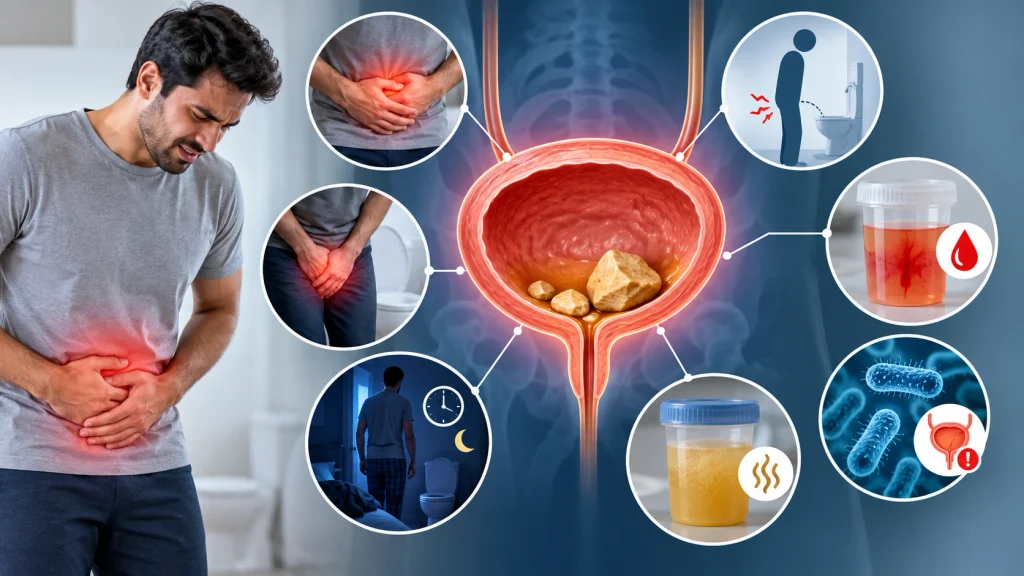
The most common warning signs of bladder stones include lower abdominal pain, painful or burning urination, frequent urination, difficulty passing urine, blood in the urine, cloudy or unusually dark urine, and recurrent urinary tract infections (UTIs).
Recognising these symptoms early matters because bladder stones can continue to grow or cause complications if the underlying problem, particularly incomplete bladder emptying, is not addressed.
What Are Bladder Stones?
Bladder stones are hard mineral deposits that form inside the urinary bladder. They usually develop when urine stays in the bladder and isn’t completely emptied. As urine becomes more concentrated, minerals can crystallise and gradually form a stone.
Small stones may sometimes pass naturally without causing symptoms. Larger stones, however, may irritate the bladder lining or interfere with urine flow.
Bladder Stones vs Kidney Stones
The two are related but are not the same.
- Kidney stones form inside the kidneys.
- Bladder stones form inside the bladder.
- A small kidney stone can sometimes travel down the urinary tract and enter the bladder, where it may remain and grow.
The location of the stone often influences the symptoms a person experiences. Kidney stones commonly cause pain in the side or back, while bladder stones are more likely to cause lower abdominal discomfort and urinary symptoms.
7 Warning Signs of Bladder Stones
1. Pain in the Lower Abdomen
One of the most common signs of bladder stones is pain or discomfort in the lower abdomen.
You may feel the pain:
- Below the belly button
- Around the lower pelvic area
- As a dull ache or pressure
- Intermittently rather than continuously
The discomfort can become more noticeable when the bladder is full or while passing urine. Some people may also experience pain around the urethra or genital area.
The exact location and intensity of bladder stone pain can vary depending on the size and position of the stone and whether it is irritating the bladder or interfering with urine flow.
Don’t assume that lower abdominal pain automatically means you have a bladder stone. UTIs, bladder inflammation and other urinary or pelvic conditions can cause similar symptoms.
2. Pain or Burning While Urinating
A burning or painful sensation while urinating is another common warning sign.
You may notice:
- Burning as urine passes
- Stinging or discomfort during urination
- Pain that becomes more noticeable toward the end of urination
Because painful urination is also common with UTIs, this symptom alone cannot confirm the presence of a bladder stone. A urine test and, when needed, imaging can help determine the underlying cause.
If painful urination keeps returning despite treatment for suspected UTIs, it is worth discussing the possibility of another underlying urinary problem with a doctor.
3. Frequent Urination, Especially at Night
Do you feel the need to urinate more often than usual, even shortly after you’ve just gone?
Bladder stones can irritate the bladder and create a persistent sensation of needing to urinate. You may find yourself:
- Urinating more frequently during the day
- Waking up several times at night to urinate
- Feeling an urgent need to use the bathroom
- Passing only small amounts of urine at a time
Frequent urination is not specific to bladder stones. It can also occur with UTIs, an overactive bladder, diabetes, prostate problems and other conditions. However, when frequent urination occurs along with pain, interrupted urine flow or blood in the urine, it deserves medical evaluation.
4. Difficulty Starting or Maintaining Urine Flow
Changes in your urine stream can be an important clue.
You may notice that:
- It takes longer to start urinating.
- The urine stream becomes weak.
- The flow stops and starts.
- You suddenly cannot pass urine despite feeling the urge.
Bladder stones can sometimes move toward the bladder outlet or urethra and interfere with urine flow. This symptom can also occur because of the underlying condition that caused the stone, such as an enlarged prostate or another form of urinary obstruction.
Being completely unable to pass urine requires urgent medical attention, particularly if you have increasing lower abdominal pain or a strong urge to urinate.
5. Blood in the Urine
Blood in the urine, medically known as hematuria, can occur when a bladder stone irritates or damages the bladder lining.
Depending on the amount of blood, your urine may appear:
- Pink
- Red
- Dark brown
Sometimes blood is present in very small amounts and can only be detected through a urine test.
However, blood in the urine does not automatically mean you have bladder stones. UTIs, kidney stones, prostate conditions and other urinary tract problems can also cause hematuria. Persistent or visible blood in urine should therefore be evaluated rather than dismissed.
6. Cloudy, Dark or Unusual-Smelling Urine
Changes in the appearance or smell of urine can sometimes accompany bladder stones, particularly when a urinary infection is also present.
Your urine may appear:
- Cloudier than usual
- Darker than usual
- Unusually strong-smelling
Cleveland Clinic notes that cloudy or dark urine and foul-smelling urine may occur with bladder stones, particularly when UTIs are involved.
But urine colour can change for many other reasons, including dehydration, certain foods, medicines and infections. If the change persists or occurs alongside pain, burning, fever or difficulty urinating, it is better to get checked.
7. Recurrent Urinary Tract Infections
Repeated UTIs can sometimes be a sign that something else is affecting the urinary tract.
Bladder stones can contribute to recurrent infections, and infections themselves can also play a role in stone formation. This can create a cycle in which urinary symptoms keep returning.
If you have been treated for UTIs multiple times but symptoms repeatedly return, your doctor may recommend further evaluation to look for an underlying cause, including bladder stones.
What Does Bladder Stone Pain Feel Like?
Bladder stone pain does not feel exactly the same for everyone.
Some people may have little or no pain, particularly when the stone is small. Others may experience discomfort as the stone irritates the bladder wall or interferes with urine flow.
Bladder stone pain may include:
- Lower abdominal pain or pressure
- Pain or burning during urination
- Intermittent discomfort that comes and goes
- Pain that is more noticeable while passing urine
- Discomfort around the pelvic or genital area in some people
The intensity can range from mild irritation to significant pain. It is also possible for symptoms to change over time as the stone moves or becomes larger.
Because bladder stone pain can resemble symptoms of a UTI or other urinary conditions, pain alone cannot establish the diagnosis.
Bladder Stones vs UTI: How Can You Tell the Difference?
Bladder stones and urinary tract infections can cause remarkably similar symptoms. Both may cause painful urination, frequent urination and changes in urine.
That is why trying to diagnose the condition based only on symptoms can be misleading.
| Symptom | Bladder Stones | UTI |
| Painful urination | ✓ | ✓ |
| Frequent urination | ✓ | ✓ |
| Blood in urine | Possible | Possible |
| Difficulty or stop-start urine flow | More suggestive | Less typical |
| Recurrent infections | Can occur | Common |
| Stone visible on imaging | ✓ | — |
The table is a guide, not a diagnostic test. Symptoms overlap, and some people can have both a bladder stone and a UTI. A urine test and appropriate imaging may be needed to determine what is causing the symptoms.
If you repeatedly experience UTI-like symptoms, especially difficulty urinating or recurrent infections, talk to a urologist rather than repeatedly treating the symptoms without investigating the underlying cause.
What Causes Bladder Stones?
The most important mechanism behind bladder stone formation is incomplete bladder emptying.
When urine remains in the bladder, it becomes more concentrated. Minerals in the urine can then form crystals, which may gradually combine and develop into a stone.
Several conditions can interfere with normal bladder emptying or contribute to stone formation. Treating the underlying cause is important because removing the stone alone may not prevent another one from developing.
Common causes include:
- Enlarged prostate: An enlarged prostate can narrow the urinary passage and prevent the bladder from emptying completely.
- Neurogenic bladder: Nerve damage can interfere with the bladder’s ability to store or empty urine properly.
- Recurrent urinary infections: Some infections can contribute to bladder stone formation.
- Bladder diverticula: Small pockets in the bladder wall can trap urine.
- Certain medical devices: Long-term urinary catheters and other devices can contribute to stone formation.
- Kidney stones: A stone formed in the kidney can travel into the bladder and, in some cases, remain there and grow.
Who Is at Higher Risk of Bladder Stones?
Bladder stones can affect anyone, but certain people have a higher risk. Bladder stones are more common in men, particularly older men, largely because prostate enlargement can interfere with bladder emptying. However, women and children can also develop bladder stones.
Risk may be increased in:
- Men with an enlarged prostate
- People who have difficulty emptying their bladder
- People with neurogenic bladder
- People with recurrent UTIs
- People with certain urinary tract abnormalities
- People with bladder diverticula
- People who have undergone certain urinary procedures
- People who use urinary catheters or other urinary devices
- People with a history of kidney stones that migrate into the bladder
When Are Bladder Stones an Emergency?
Not every bladder stone requires emergency treatment. However, certain symptoms should not be ignored.
Seek urgent medical attention if you:
- Cannot pass urine at all
- Have severe or rapidly worsening pain
- Have fever or chills along with urinary symptoms
- Notice significant or visible blood in your urine
- Have severe pain while urinating
- Develop symptoms suggesting infection together with urinary blockage
Inability to urinate can indicate significant obstruction. Fever or chills with urinary symptoms can also signal infection and require prompt assessment.
Do not wait for symptoms to become severe before seeking help if you are having difficulty passing urine.
How Are Bladder Stones Diagnosed?
Symptoms alone cannot confirm a bladder stone. Your doctor may use a combination of your medical history, examination, urine testing and imaging to identify the cause.
The tests recommended will depend on your symptoms, medical history and what your doctor suspects.
Common diagnostic tests include:
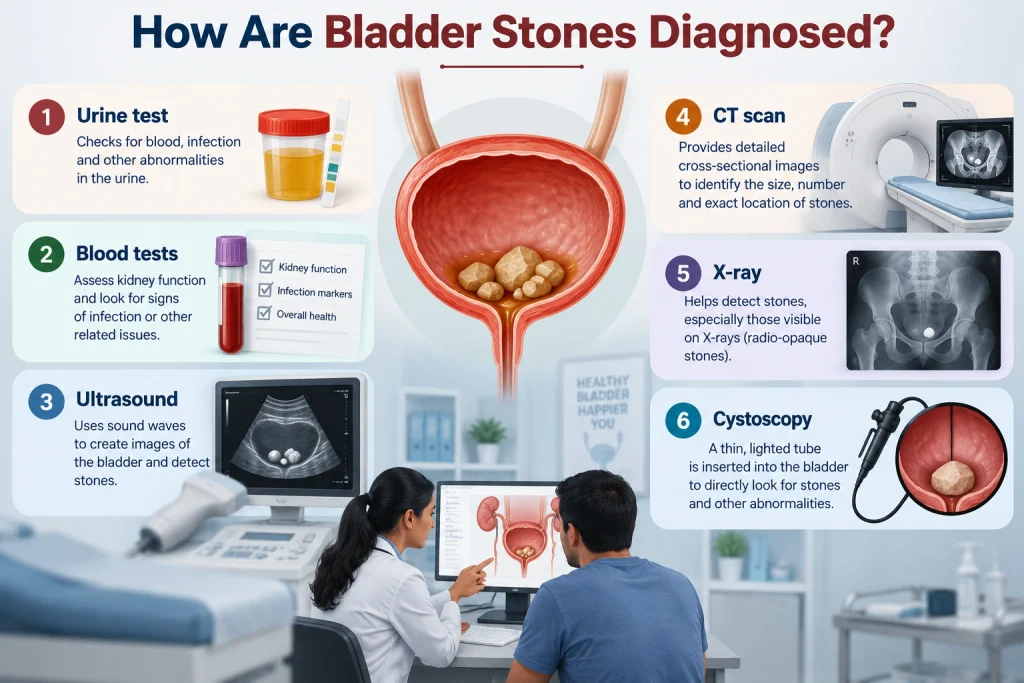
- Urine test: A urine sample can help detect blood, infection and other abnormalities.
- Blood tests: These may be recommended when your doctor needs to assess infection, kidney function or other relevant concerns.
- Ultrasound: Ultrasound can help identify stones and assess the urinary system without radiation.
- CT scan: CT can detect small stones and provide detailed images of the urinary tract.
- X-ray: Certain bladder stones can be visible on an X-ray, although not all stone types are easily seen.
- Cystoscopy: A thin camera is passed through the urethra into the bladder, allowing the doctor to directly examine the bladder and identify a stone.
How Are Bladder Stones Treated?
Bladder stone treatment depends on factors such as the stone’s size, location, symptoms and the reason it developed.
Very small stones may sometimes pass naturally. However, many bladder stones require removal, particularly when they are large, persistent, symptomatic or causing urinary problems.
Cystolitholapaxy
One of the commonly used minimally invasive approaches is cystolitholapaxy.
During this procedure, a cystoscope is passed through the urethra into the bladder. The doctor identifies the stone and uses an appropriate energy source, such as a laser, to break it into smaller fragments. The fragments can then be removed or flushed out of the bladder.
Surgical removal
Very large or particularly hard stones may require a different surgical approach. The choice depends on the individual patient and the characteristics of the stone.
Just as importantly, the underlying reason for stone formation may need treatment. For example, if an enlarged prostate is preventing the bladder from emptying properly, treating the obstruction may help reduce the risk of future bladder stones.
If you are experiencing persistent urinary symptoms, consult a urologist to determine whether you need bladder stone removal or treatment for an underlying urinary condition.
Can Bladder Stones Be Prevented?
There is no single prevention strategy that works for everyone because bladder stones often develop as a result of another urinary problem.
Adequate fluid intake can dilute minerals in the urine, while treating the underlying cause of incomplete bladder emptying is particularly important for preventing recurrence.
However, some measures may help reduce the risk:
- Drink adequate fluids as advised by your doctor.
- Avoid routinely holding your urine for long periods.
- Address urinary retention or difficulty emptying the bladder.
- Get prostate-related urinary symptoms evaluated.
- Treat recurrent UTIs appropriately.
- Follow medical advice for neurogenic bladder or other bladder conditions.
- If you feel that your bladder has not emptied completely, discuss this symptom with a doctor.
Frequently Asked Questions (FAQs)
Can bladder stones cause frequent urination?
Yes. Bladder stones can irritate the bladder and create a frequent or persistent urge to urinate. You may also need to urinate more often at night. However, frequent urination can have many causes, so it should not automatically be attributed to bladder stones.
Can bladder stones cause blood in urine?
Yes. A bladder stone can irritate the bladder lining and cause blood in the urine. The urine may appear pink, red or dark brown. However, blood in urine can have other causes and should be medically evaluated.
Can bladder stones block urine flow?
Yes. A bladder stone can interfere with the opening through which urine leaves the bladder and may cause a weak, interrupted or difficult urine stream. Complete inability to urinate requires urgent medical attention.
Can bladder stones pass on their own?
Some small bladder stones may pass naturally during urination. However, many bladder stones require removal, particularly when they are larger or are causing symptoms. Drinking more water does not necessarily solve the problem because bladder stones often form due to incomplete bladder emptying.
Are bladder stones the same as kidney stones?
No. Kidney stones form in the kidneys, while bladder stones form inside the bladder. A kidney stone can sometimes travel down the urinary tract and enter the bladder, but the two conditions are not the same.
Can bladder stones cause recurrent UTI?
Yes. Bladder stones can contribute to repeated urinary tract infections. If UTI-like symptoms keep returning, your doctor may recommend further testing to identify whether a stone or another underlying urinary problem is contributing to the infections.
How are bladder stones removed?
Bladder stones are commonly removed using a minimally invasive procedure called cystolitholapaxy. A cystoscope is used to reach the bladder, and the stone can be broken into smaller pieces using a laser or another suitable device before the fragments are removed. Larger stones may require surgery.
Is bladder stone surgery painful?
Bladder stone procedures are performed using appropriate anaesthesia, so you should not feel the procedure itself in the usual way. Some temporary discomfort, burning while urinating or urinary symptoms may occur during recovery. Your doctor will explain the specific procedure, anaesthesia and expected recovery based on your condition.
Conclusion
Bladder stones can begin with symptoms that seem relatively minor, such as burning while urinating, frequent bathroom visits or mild lower abdominal discomfort. But persistent or worsening urinary symptoms should not be ignored.
The warning signs to watch for include lower abdominal pain, painful urination, frequent urination, difficulty passing urine, blood in the urine, changes in urine appearance and recurrent UTIs. These symptoms can overlap with other urinary conditions, so proper evaluation is important rather than trying to diagnose the problem based on symptoms alone.
If you are having difficulty passing urine, notice blood in your urine, develop severe pain or have fever or chills with urinary symptoms, seek prompt medical attention in best hospital in Noida.