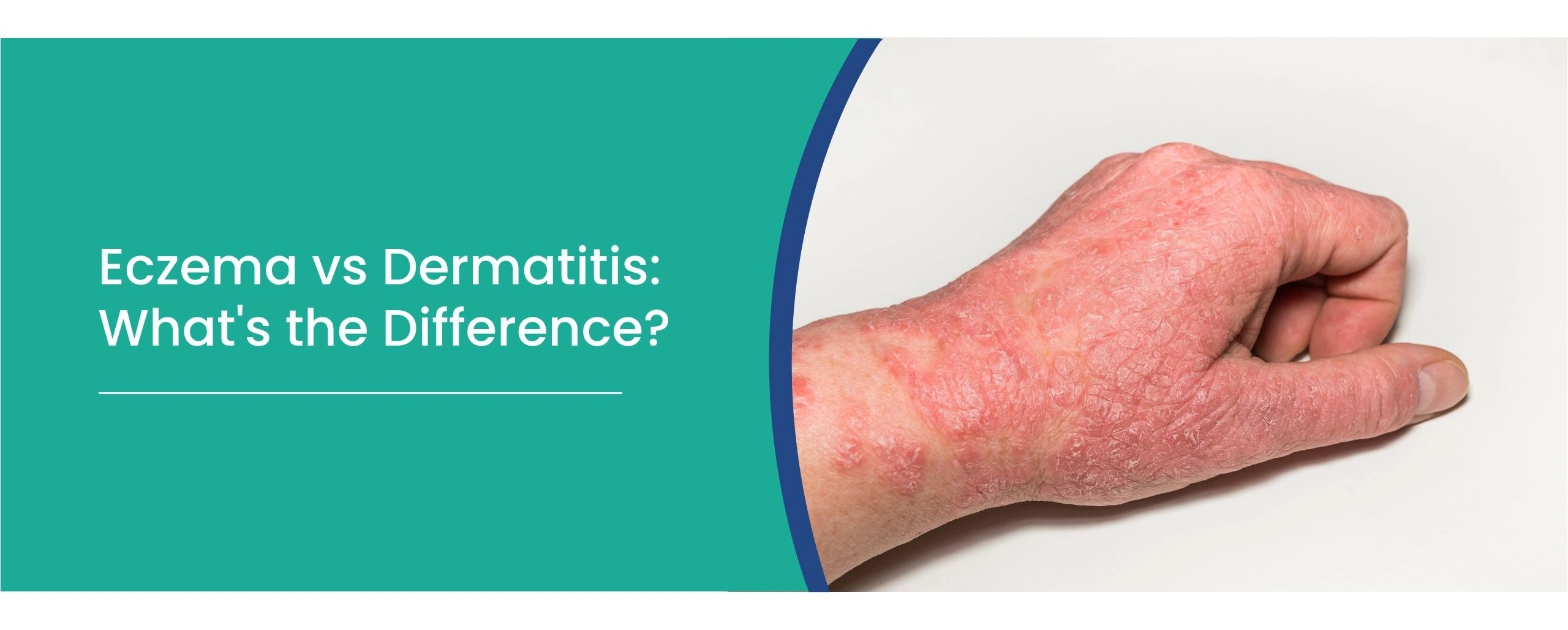
Eczema and dermatitis are words you may hear when talking about an itchy, dry or irritated rash. Because the terms are often used interchangeably, it is easy to wonder: Are eczema and dermatitis actually the same thing?
The short answer is: they overlap, but they are not always exactly the same.
Dermatitis is a broad term used for inflammation of the skin, while eczema is generally used for a group of inflammatory skin conditions. Atopic dermatitis is one specific type of eczema and is often what people mean when they use the word “eczema.”
Other types of dermatitis, such as contact dermatitis and seborrheic dermatitis, have different triggers and may require different treatments.
So, if you have an itchy or unusual rash, the name alone does not tell you exactly what is causing it or how it should be treated.
Eczema vs Dermatitis: Are They the Same?
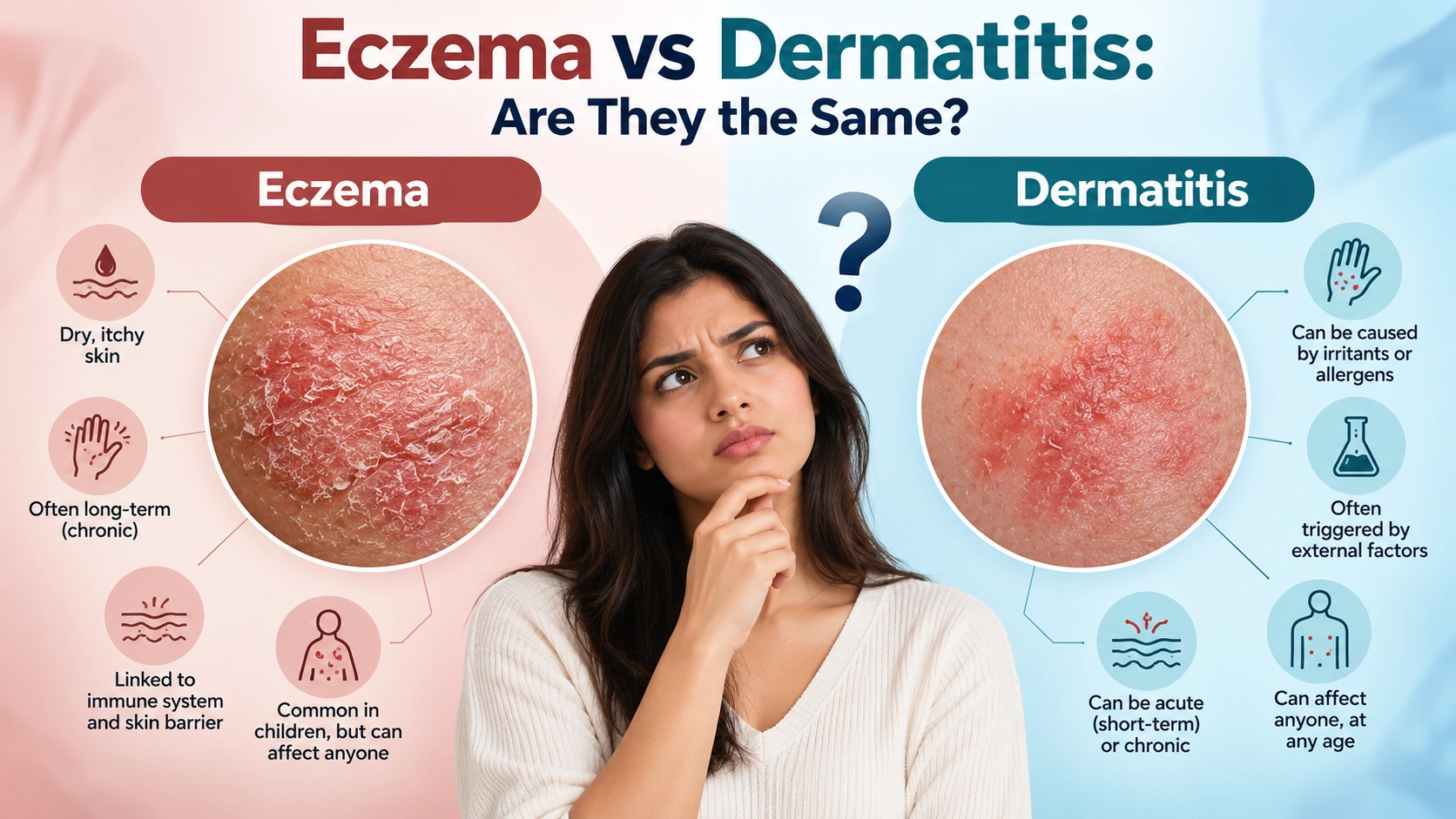
Eczema and dermatitis are closely related terms, but they are not always interchangeable.
- Dermatitis means inflammation of the skin.
- This refers to a group of inflammatory skin conditions that commonly cause itching, dryness and rashes.
- Atopic dermatitis is one specific type of eczema.
- Other conditions, including contact dermatitis and seborrheic dermatitis, may also be described as forms of eczema or dermatitis depending on the terminology being used.
In simple terms: dermatitis describes skin inflammation, while this is commonly used to describe a group of inflammatory skin conditions.
That distinction matters because the cause, location, appearance and treatment can vary considerably between different types.
Eczema vs Dermatitis: Key Differences
| Feature | Eczema | Dermatitis |
| Meaning | Group of inflammatory skin conditions | General term for skin inflammation |
| Itching | Common | Common, depending on the type |
| Dryness | Common | May occur |
| Rash | Common | Common |
| Causes | Vary by type | Vary by type |
| Types | Atopic, nummular, dyshidrotic and others | Atopic, contact, seborrheic, stasis |
| Treatment | Depends on the specific type and severity | Depends on the cause and type |
The important point is that neither “eczema” nor “dermatitis” automatically tells you the exact cause of a rash. A dermatologist may need to look at the skin, ask about your symptoms and identify possible triggers before determining the most appropriate diagnosis and treatment.
What Is Eczema?
This is a term used for a group of inflammatory skin conditions that can cause itchy, dry and irritated skin.
One of the best-known forms is atopic dermatitis, a chronic condition that often begins during childhood but can occur at any age. It tends to flare up and improve over time rather than following a predictable pattern.
Common symptoms may include:
- Intense itching
- Dry or scaly skin
- Inflamed or discoloured patches
- Cracking
- Swelling
- Thickened skin after repeated scratching
- Oozing or crusting during some flares
This can look different from person to person. Skin inflammation may appear red on lighter skin tones, while darker skin may show brown, purple, gray or darker areas, as well as bumps or changes in pigmentation.
Common types of eczema
This is not just one condition. Common forms include:
- Atopic dermatitis
- Nummular eczema
- Dyshidrotic eczema
- Seborrheic eczema
- Contact eczema
Different forms may affect different parts of the body and have different triggers.
What can trigger eczema?
This flare-ups can be associated with factors such as:
- Dry skin
- Heat and sweating
- Fragrances
- Certain cleaning products
- Dust, pollen or pet dander
- Stress
- Cold, dry weather
- Irritating fabrics or chemicals
Triggers vary between individuals, so identifying your own pattern can be an important part of managing recurrent flares.
What Is Dermatitis?
Dermatitis is a broad term for inflammation of the skin.
It can occur because of different causes, including reactions to substances that come into contact with the skin, environmental factors, internal factors or problems affecting circulation. The location and pattern of the rash can therefore provide useful clues, but they do not always provide a definite diagnosis.
This is why simply saying “you have dermatitis” may not be enough. The next question is usually:
Common types of dermatitis
- Atopic dermatitis: Often called eczema, atopic dermatitis is associated with a weakened skin barrier and immune-system activity. It commonly causes dry, itchy and inflamed skin.
- Contact dermatitis: This occurs when the skin reacts to something it comes into contact with. It may be:
- Allergic contact dermatitis — caused by an allergic reaction to a substance.
- Irritant contact dermatitis — caused by direct irritation or damage from a substance.
- Common triggers can include fragrances, soaps, detergents, cosmetics, chemicals and metals such as nickel.
- Seborrheic dermatitis: This commonly affects areas with more oil-producing glands, particularly the scalp, eyebrows, sides of the nose, ears and other areas of the face and upper body. It can cause scaling and flaking and is closely associated with dandruff.
- Stasis dermatitis: This form usually affects the lower legs and is associated with problems with venous circulation. It can cause inflammation, scaling and skin changes around the lower legs.
Eczema vs Dermatitis Symptoms
Because this is a type of inflammatory skin condition and many forms of dermatitis also involve inflammation, their symptoms can overlap considerably.
Common symptoms include:
- Itching
- Dry skin
- Scaling or flaking
- Redness or changes in skin colour
- Swelling
- Cracking
- Thickened skin
- Burning or irritation
- Blisters in some conditions
- Oozing or crusting in some cases
Skin colour changes can look different depending on your natural skin tone. Eczema, for example, may appear as darker brown, purple or gray areas rather than obvious redness in some people with darker skin.
This is one reason it is better not to diagnose eczema or dermatitis based only on an online picture or symptom list.
The same symptom, such as itching, can occur in several different skin conditions, and the treatment for one condition may not work for another.
What Causes Eczema and Dermatitis?
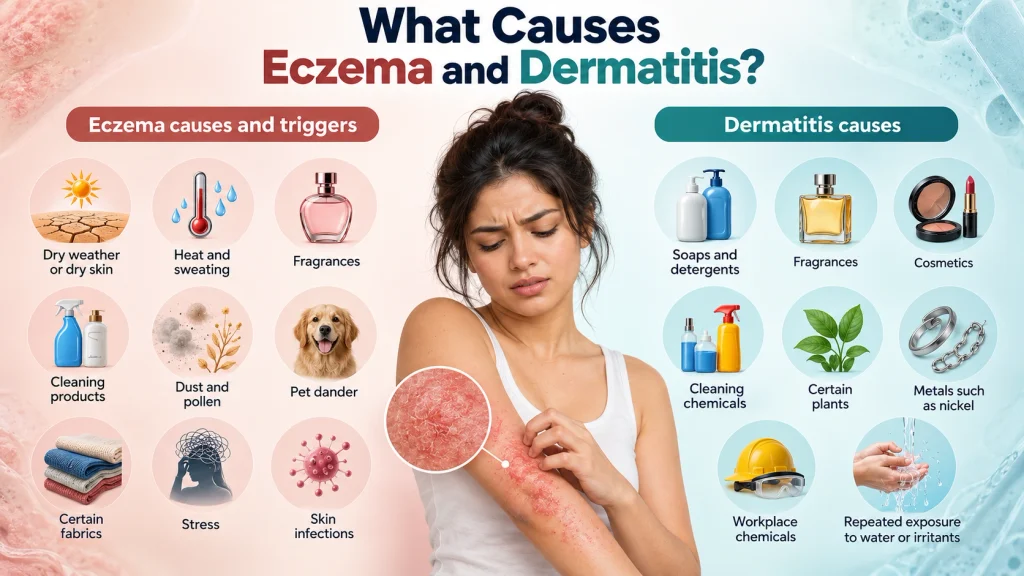
There is no single cause of allv skin disease or dermatitis.
The underlying factors depend on the specific condition.
Eczema causes and triggers
For atopic dermatitis, factors may include problems with the skin barrier, genetic factors and immune-system activity. A weakened skin barrier can make it harder for the skin to retain moisture and protect itself from irritants and allergens.
Common flare triggers may include:
- Dry weather or dry skin
- Heat and sweating
- Fragrances
- Cleaning products
- Dust and pollen
- Pet dander
- Certain fabrics
- Stress
- Skin infections
Not everyone with this reacts to the same triggers.
Dermatitis causes
Potential triggers include:
Some types of dermatitis are more directly connected to external exposure.
- Soaps and detergents
- Fragrances
- Cosmetics
- Cleaning chemicals
- Certain plants
- Metals such as nickel
- Workplace chemicals
- Repeated exposure to water or irritants
With contact dermatitis, the rash can develop because the skin has reacted to or been irritated by something it touched.
Finding the trigger can therefore be an important part of treatment.
Eczema vs Contact Dermatitis
This is one of the most common areas of confusion because contact dermatitis can also be called contact eczema.
Atopic dermatitis
Atopic dermatitis is a form of eczema associated with skin-barrier dysfunction and immune-system factors. It does not necessarily occur because the skin has touched one particular substance.
Allergic contact dermatitis
This occurs when the immune system reacts to a substance after skin contact.
Possible triggers include:
- Nickel
- Fragrances
- Cosmetics
- Certain preservatives
- Plants
- Adhesives
Irritant contact dermatitis
This happens when a substance directly irritates or damages the skin.
Common examples include repeated exposure to:
- Soaps
- Detergents
- Cleaning chemicals
- Solvents
- Water
The pattern and timing of the rash can provide clues. For example, a rash that repeatedly appears where a particular product touches the skin may raise suspicion of contact dermatitis.
When an allergy is suspected, a dermatologist may recommend patch testing to identify specific allergens.
Eczema vs Seborrheic Dermatitis
Seborrheic dermatitis is another condition that can be confused with other forms of eczema.
It commonly affects areas with more sebaceous glands, particularly:
- Scalp
- Eyebrows
- Sides of the nose
- Behind or around the ears
- Beard area
- Upper chest
It can cause flaking, scaling and inflammation. On the scalp, a milder non-inflamed form of scaling is commonly known as dandruff.
Compared with typical atopic eczema, seborrheic dermatitis is more strongly associated with oil-rich areas of the skin.
The appearance can also vary with skin tone, so diagnosis should not depend on redness alone.
How Is Eczema or Dermatitis Diagnosed?
A dermatologist usually starts with a medical history and physical examination. The doctor will then examine the rash and consider its location, appearance and pattern.
In many cases, this is enough to identify the likely condition. However, additional testing may sometimes be needed.
Patch testing
If allergic contact dermatitis is suspected, patch testing can help identify substances that trigger an allergic skin reaction. Small amounts of potential allergens are placed on the skin and monitored for a reaction.
Other tests may be considered when the diagnosis is uncertain or another skin condition needs to be ruled out.
How Are Eczema and Dermatitis Treated?
There is no single treatment that works for every type of eczema or dermatitis.
Treatment depends on the specific diagnosis, severity, location and underlying trigger.
Common approaches for eczema
Treatment may include:
- Regular moisturizers or emollients
- Avoiding known triggers
- Gentle skin-care routines
- Topical anti-inflammatory medicines
- Other prescription treatments for moderate or severe disease
Moisturizing regularly can help support the skin barrier and reduce dryness. For people with atopic dermatitis, treatment may need to be adjusted depending on the severity and frequency of flares.
Treatment for dermatitis
For dermatitis, identifying and addressing the cause can be particularly important.
For example, treatment may involve:
- Avoiding the irritant or allergen
- Using moisturizers
- Topical anti-inflammatory medicines
- Specific treatments for seborrheic dermatitis
- Medicated shampoos for scalp involvement
- Other prescription treatment depending on the condition
If contact dermatitis is caused by an allergen, simply treating the rash without identifying the trigger may not prevent it from returning.
The right treatment starts with the right diagnosis. Using someone else’s eczema cream or repeatedly treating an unexplained rash without medical advice may delay the correct diagnosis.
Frequently Asked Questions (FAQs)
Is eczema the same as dermatitis?
Not exactly. Dermatitis is a broad term for inflammation of the skin, while eczema is generally used for a group of inflammatory skin conditions. The terms overlap, and some types of dermatitis are also called eczema.
Is atopic dermatitis a type of eczema?
Yes. Atopic dermatitis is one type of eczema. It is a chronic inflammatory skin condition commonly associated with dry, itchy skin and recurring flares.
Can you have eczema and contact dermatitis?
Yes. Contact dermatitis can be described as contact eczema, and a person can also have atopic dermatitis along with contact dermatitis. Identifying whether an external allergen or irritant is contributing to symptoms can be important for treatment.
How do I know if I have eczema or dermatitis?
You usually cannot determine the exact type reliably from symptoms alone. Several skin conditions can cause itching, dryness, scaling and inflammation. A dermatologist may diagnose the condition based on your history and skin examination and may recommend patch testing when allergic contact dermatitis is suspected.
Is dermatitis contagious?
No. Dermatitis itself is not contagious. It does not spread from one person to another through ordinary contact.
Can eczema go away permanently?
It depends on the type. Some people experience long periods without symptoms, while others have recurring flares over many years. Atopic dermatitis is considered a chronic condition, although symptoms can improve or disappear for periods of time.
What triggers eczema flare-ups?
Triggers vary from person to person. Common factors include dry skin, heat and sweating, fragrances, cleaning products, environmental allergens, stress and cold or dry weather. Identifying individual triggers can help reduce future flares.
What triggers contact dermatitis?
Contact dermatitis can be triggered by substances that irritate the skin or cause an allergic reaction. Examples include soaps, detergents, fragrances, cosmetics, chemicals and metals such as nickel.
Conclusion
Eczema and dermatitis are closely connected, but the terms do not always mean exactly the same thing.
Dermatitis is a broad term for skin inflammation, while eczema generally refers to a group of inflammatory skin conditions. Atopic dermatitis is one type of eczema, while contact dermatitis and seborrheic dermatitis are other forms of dermatitis that can have different causes and treatment approaches.
The most important thing is not simply identifying whether a rash is “eczema” or “dermatitis.” It is understanding what type of skin condition you have and what is causing it.
If your rash is persistent, repeatedly returning, severely itchy, painful, spreading or showing signs of infection, a dermatologist can help determine the cause and guide you toward the right treatment in best hospital in Noida.