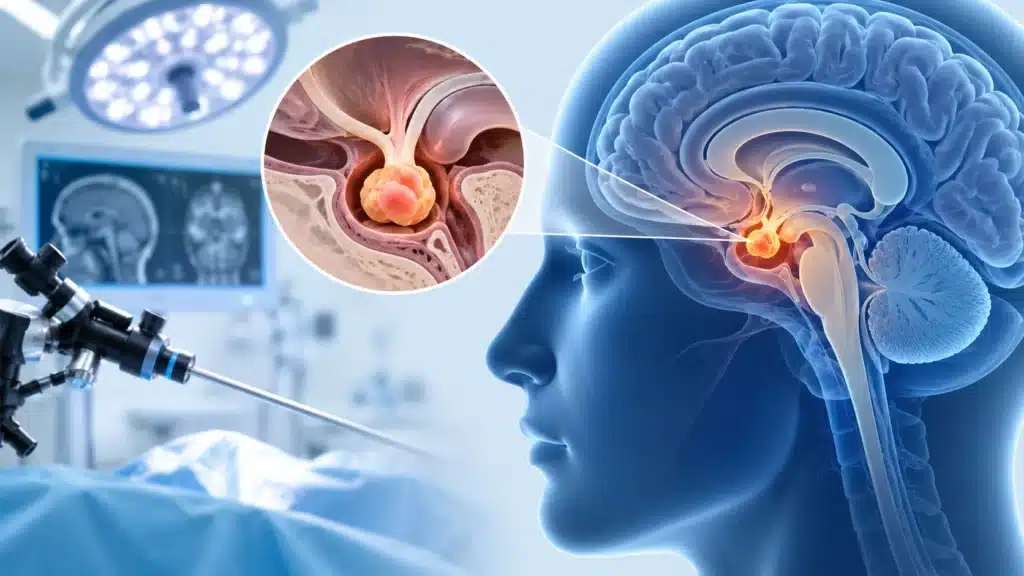
Pituitary tumor surgery is a specialized neurosurgical procedure performed to remove abnormal growths in the pituitary gland, a small but vital structure located at the base of the brain. The pituitary gland controls many important hormones that regulate growth, metabolism, reproduction, stress response, and other essential body functions. When a tumor develops in this area, it can disrupt hormone balance, cause vision problems, lead to headaches, and affect overall health.
Most pituitary tumors are benign, meaning they are not cancerous, but they can still cause serious problems due to their location and hormone effects. Surgery is often the main treatment when the tumor is large, causing symptoms, or producing excess hormones. The goal of surgery is to remove as much of the tumor as safely possible, relieve pressure on surrounding structures, and restore normal hormone function.
What is a Pituitary Tumor?
A pituitary tumor, also called a pituitary adenoma, is an abnormal growth that develops in the pituitary gland. Most of these tumors are slow-growing and non-cancerous. However, they can cause significant health issues depending on their size and whether they produce excess hormones.
Pituitary tumors are classified based on their size and hormone activity. Microadenomas are smaller than 10 millimeters, while macroadenomas are larger than 10 millimeters. Some tumors produce hormones such as prolactin, growth hormone, or ACTH, leading to specific syndromes. Others are non-functioning and cause problems by pressing on nearby structures like the optic nerves or normal pituitary tissue.
Why is Surgery Needed for Pituitary Tumors?
Not all pituitary tumors require surgery. Some small, non-functioning tumors can be monitored with regular imaging and hormone tests. However, surgery becomes necessary in certain situations.
Common reasons for surgery include:
- The tumor is causing vision loss or visual field defects.
- The tumor is producing excess hormones that cannot be controlled with medication.
- The tumor is large and pressing on the brain or optic nerves.
- The tumor is growing rapidly on serial imaging.
- There is pituitary apoplexy, which is sudden bleeding into the tumor.
- The patient has severe headaches or neurological symptoms.
- Medication has failed to control hormone-secreting tumors.
- The diagnosis is uncertain and tissue sampling is needed.
Goals of pituitary tumor surgery
- Remove the tumor completely or as much as safely possible.
- Relieve pressure on the optic nerves and brain structures.
- Restore normal hormone production.
- Prevent tumor recurrence or further growth.
- Improve quality of life and reduce symptoms.
Types of Pituitary Tumor Surgery
There are two main surgical approaches for pituitary tumor removal. The choice depends on tumor size, location, surgeon expertise, and patient factors.
1. Transsphenoidal Surgery
This is the most common approach for pituitary tumor surgery. The surgeon accesses the pituitary gland through the nose and sphenoid sinus, without making any external incisions.
- Performed using an endoscope or microscope.
- No visible scar on the face or head.
- Shorter hospital stay and faster recovery.
- Less pain and discomfort compared to open surgery.
- Suitable for most pituitary tumors.
2. Endoscopic Endonasal Surgery
This is a minimally invasive technique using a thin endoscope with a camera. It provides excellent visualization of the tumor and surrounding structures.
- High-definition camera provides clear views.
- Allows precise tumor removal.
- Reduced risk of damage to surrounding tissues.
- Faster recovery and less nasal congestion.
- Often combined with image guidance for accuracy.
3. Craniotomy (Open Surgery)
This approach is rarely needed and reserved for very large or complex tumors that cannot be reached through the nose.
- Involves an incision in the scalp and skull.
- Used for tumors extending far above the pituitary.
- Longer recovery time.
- Higher risk of complications.
- Reserved for select complex cases.
Pre-Surgical Preparation
Proper preparation is essential for safe and successful pituitary tumor surgery.
Pre-operative evaluations
- Detailed neurological and endocrine evaluation.
- MRI of the brain with pituitary protocol.
- CT scan of the sinuses if endoscopic approach is planned.
- Comprehensive hormone blood tests.
- Visual field testing by an ophthalmologist.
- Assessment of overall health and fitness for surgery.
- Review of current medications and supplements.
- Discussion of risks, benefits, and expected outcomes.
Medication adjustments
- Blood thinners may need to be stopped before surgery.
- Hormone medications may be adjusted.
- Steroids may be given to support adrenal function.
- Diabetes or blood pressure medications reviewed.
- Allergies and previous surgical history discussed.
Patient education
- Fasting instructions before surgery.
- What to expect on the day of surgery.
- Post-operative care and activity restrictions.
- Signs of complications to watch for.
- Follow-up schedule and testing plan.
The Surgical Procedure
Pituitary tumor surgery is performed under general anesthesia. The patient is completely asleep and does not feel pain during the procedure.
Steps in transsphenoidal surgery
- The patient is positioned comfortably on the operating table.
- The surgeon accesses the nasal cavity and sphenoid sinus.
- Using an endoscope or microscope, the surgeon identifies the pituitary gland.
- The tumor is carefully removed in pieces using specialized instruments.
- Normal pituitary tissue is preserved whenever possible.
- The surgical area is checked for any bleeding.
- The nasal cavity may be packed with dissolvable material.
- The procedure typically takes 2 to 4 hours depending on tumor size.
Intraoperative monitoring
- Continuous monitoring of vital signs.
- Neurological monitoring if needed.
- Image guidance for precise navigation.
- Hormone levels may be checked during surgery.
- Immediate assessment of tumor removal completeness.
Hospital Stay and Immediate Recovery
After surgery, patients are monitored closely in the recovery area and then transferred to a regular ward or intensive care unit depending on their condition.
Typical hospital stay
- Most patients stay in the hospital for 2 to 4 days.
- Vital signs and neurological status are monitored regularly.
- Pain is managed with appropriate medications.
- Nasal congestion and mild headache are common.
- Fluid intake and urine output are closely watched.
Immediate post-operative care
- Head elevation to reduce swelling.
- Avoid blowing the nose or straining.
- Soft diet initially, advancing as tolerated.
- Gentle oral care and nasal saline sprays.
- Early mobilization with assistance.
- Regular monitoring of hormone levels.
Recovery at Home
Recovery continues after discharge from the hospital. Most patients can return to normal activities gradually over several weeks.
Activity restrictions
- Avoid heavy lifting for 4 to 6 weeks.
- Do not blow the nose forcefully.
- Avoid strenuous exercise initially.
- Sleep with head elevated for the first week.
- Avoid bending forward or straining during bowel movements.
- No swimming or submerging the head in water.
Wound and nasal care
- Use saline nasal sprays as prescribed.
- Keep the nasal area clean and dry.
- Attend follow-up appointments for nasal cleaning.
- Report any persistent bleeding or discharge.
- Avoid inserting objects into the nose.
Return to normal activities
- Most patients return to work in 3 to 6 weeks.
- Driving can resume when cleared by the surgeon.
- Gradual increase in physical activity.
- Avoid contact sports until fully healed.
- Follow all post-operative instructions carefully.
Hormonal Management After Surgery
Hormone balance is a critical part of recovery after pituitary tumor surgery. Some patients may need temporary or long-term hormone replacement.
Common hormonal changes after surgery
- Temporary decrease in cortisol production.
- Possible need for thyroid hormone replacement.
- Monitoring of sodium and water balance.
- Assessment of sex hormone levels.
- Growth hormone evaluation if needed.
Hormone replacement therapy
- Steroids may be prescribed temporarily or long-term.
- Thyroid medication if levels are low.
- Desmopressin for water balance issues.
- Sex hormone replacement if indicated.
- Regular blood tests to monitor levels.
Importance of endocrine follow-up
- Regular visits with an endocrinologist.
- Serial hormone testing every few weeks initially.
- Adjustment of medications based on results.
- Long-term monitoring for recurrence or new deficiencies.
- Patient education on hormone replacement.
Possible Risks and Complications
Like any major surgery, pituitary tumor surgery carries some risks. Most patients do well, but it is important to be aware of potential complications.
Common risks include:
- Bleeding during or after surgery.
- Infection in the surgical area.
- Nasal congestion or sinus problems.
- Temporary or permanent hormone deficiencies.
- Cerebrospinal fluid leak from the nose.
- Vision changes or worsening of vision.
- Damage to surrounding brain structures.
- Blood clots in the legs or lungs.
- Reaction to anesthesia.
- Need for additional surgery.
Signs of complications to watch for
- Clear fluid dripping from the nose.
- Severe headache that worsens.
- Fever or chills.
- Vision changes or double vision.
- Excessive thirst and urination.
- Severe nausea or vomiting.
- Confusion or altered consciousness.
- Stiff neck or sensitivity to light.
- Persistent nasal bleeding.
- Swelling or redness at the surgical site.
Long-Term Follow-Up Care
Long-term follow-up is essential to monitor for tumor recurrence, hormone balance, and overall health.
Follow-up schedule
- First visit 2 to 4 weeks after surgery.
- MRI scan at 3 to 6 months post-operatively.
- Regular hormone testing every few months initially.
- Annual MRI and hormone tests for long-term monitoring.
- Lifelong follow-up with neurosurgery and endocrinology.
Monitoring for recurrence
- Regular imaging to detect any tumor regrowth.
- Hormone tests to check for excess production.
- Visual field testing if vision was affected.
- Prompt evaluation of new symptoms.
- Early intervention if recurrence is detected.
Lifestyle and health maintenance
- Maintain a healthy diet and regular exercise.
- Manage stress and get adequate sleep.
- Avoid smoking and limit alcohol.
- Keep all follow-up appointments.
- Report any new or worsening symptoms promptly.
Why Choose Rama Hospital for Pituitary Tumor Surgery?
Pituitary tumor surgery requires a highly specialized team with expertise in neurosurgery, endocrinology, ophthalmology, and critical care. A hospital with experienced specialists and advanced technology can make a significant difference in outcomes.
- Experienced neurosurgeons specializing in pituitary surgery.
- Advanced endoscopic and microscopic equipment.
- Comprehensive endocrine evaluation and management.
- Dedicated intensive care and monitoring.
- Multidisciplinary team approach.
- Long-term follow-up and support.
Frequently Asked Questions (FAQs)
How long does the surgery take?
The surgery typically takes 2 to 4 hours depending on the size and complexity of the tumor. More complex cases may take longer. The surgical team will provide a more specific estimate based on individual factors.
Will I have a scar after surgery?
Most pituitary surgeries are done through the nose, so there is no visible external scar. Some patients may have minor internal scarring in the nasal cavity, but this does not affect appearance. Open surgery is rarely needed and would leave a small scalp incision.
How long is the hospital stay?
Most patients stay in the hospital for 2 to 4 days after surgery. This allows for close monitoring of hormone levels, neurological status, and recovery. Some patients may need a longer stay if there are complications.
Will I need hormone replacement after surgery?
Some patients need temporary or long-term hormone replacement after surgery. This depends on how much normal pituitary function remains. Regular blood tests and endocrine follow-up help determine the need for replacement therapy.
When can I return to work?
Most patients can return to work in 3 to 6 weeks, depending on the nature of their job and recovery progress. Desk jobs may be resumed earlier, while physically demanding jobs may require more time. The surgeon will provide personalized guidance.
What are the risks of pituitary surgery?
Risks include bleeding, infection, hormone deficiencies, cerebrospinal fluid leak, vision changes, and nasal complications. Most patients do well, but it is important to be aware of potential complications and report any concerning symptoms promptly.
Will the tumor come back after surgery?
Some tumors can recur, especially if complete removal was not possible. Regular follow-up with MRI scans and hormone tests helps detect recurrence early. Additional treatment may be needed if the tumor returns.
Conclusion
Pituitary tumor surgery is a highly specialized procedure that can significantly improve quality of life for patients with pituitary adenomas. While the surgery carries some risks, modern techniques and experienced surgical teams have made it safer and more effective than ever before. The key to success lies in proper patient selection, skilled surgical execution, comprehensive hormonal management, and diligent long-term follow-up.
For patients experiencing vision problems, hormone imbalances, or neurological symptoms due to a pituitary tumor, timely surgical evaluation can make a major difference. With the right care, most patients achieve excellent outcomes, symptom relief, and restored hormone function.
Rama Hospital offers comprehensive pituitary tumor surgery with a multidisciplinary team of neurosurgeons, endocrinologists, and support staff. Patients receive personalized care from diagnosis through surgery, recovery, and long-term follow-up, ensuring the best possible outcomes and quality of life.