

Many people believe joint pain is something to simply manage with medication and rest. However, doctors and researchers increasingly point to diet as a powerful, often overlooked factor in managing rheumatoid arthritis. While food alone cannot cure the condition, the choices you make every day can influence inflammation levels, energy, and overall joint health.
Rheumatoid arthritis is an autoimmune disease in which the immune system mistakenly attacks the lining of the joints. This ongoing inflammation can lead to pain, swelling, stiffness, and gradual joint damage if not properly managed. Along with medications, exercise, and medical care, diet plays an important supportive role in helping patients control symptoms and improve their quality of life.
Certain foods may trigger inflammatory responses in the body, potentially making rheumatoid arthritis symptoms worse. For some patients, these foods can contribute to more frequent flare-ups, increased joint discomfort, and persistent fatigue. On the other hand, a balanced diet rich in anti-inflammatory nutrients may help support joint function and overall well-being.
It is important to remember that food affects people differently. A food that worsens symptoms in one person may not have the same effect on another. Keeping track of eating habits and symptom patterns can help patients identify potential dietary triggers. Understanding the relationship between nutrition and rheumatoid arthritis allows patients to make informed choices that support long-term joint health.
If you are living with rheumatoid arthritis, reviewing your diet may be one of the simplest lifestyle changes you can make alongside your prescribed treatment plan. In this article, we’ll look at common foods that may contribute to inflammation and why limiting them could help you better manage rheumatoid arthritis symptoms.

The common misconception about diet and rheumatoid arthritis
Most patients assume rheumatoid arthritis is purely an autoimmune disease that responds only to disease-modifying drugs. Diet, in this view, is treated as an afterthought, something that affects weight, not joints. It’s an understandable assumption, and one many doctors say they still have to correct in the clinic every week.
But rheumatoid arthritis is fundamentally an inflammatory disease, not just a joint disease. Certain everyday foods are known to trigger or intensify the same inflammatory pathways that cause joint swelling, stiffness, and pain, sometimes within hours of a meal. This is why a thoughtful rheumatoid arthritis diet is now considered a genuine complement to medical treatment, not a replacement for it. Nutrition won’t reverse the underlying autoimmune process, but it can influence how loudly that process speaks through your joints on any given day.
What experts say: foods that worsen rheumatoid arthritis
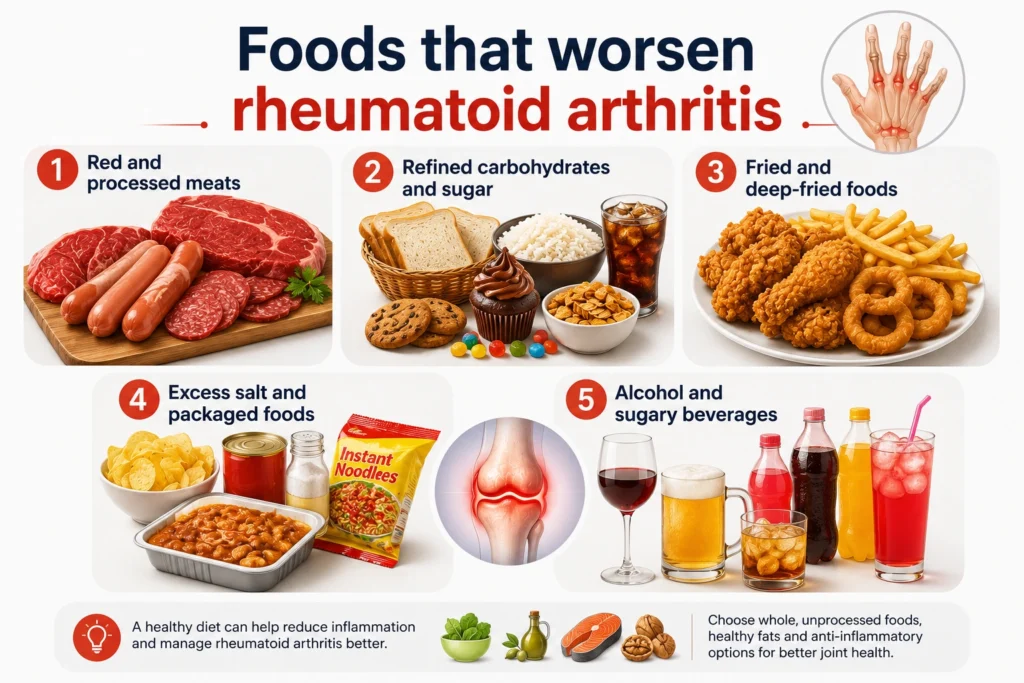
Rheumatologists and nutrition researchers consistently flag a handful of food categories as common culprits. If you’re living with rheumatoid arthritis, these are worth limiting.
1. Red and processed meats: Studies indicate red meat and processed meat, sausages, salami, and packaged cold cuts are linked to higher levels of circulating inflammatory markers. For someone managing joint symptoms, frequent consumption may correlate with more frequent flare-ups. Experts suggest swapping in fatty fish like salmon or mackerel a few times a week instead.
2. Refined carbohydrates and sugar: White bread, pastries, sugary drinks, and packaged snacks cause rapid blood sugar spikes. Research suggests this spike-and-crash cycle can increase inflammatory compounds in the body, a pattern particularly unhelpful for patients trying to keep swelling under control. Reading ingredient labels for hidden sugar is a small habit with an outsized payoff.
3. Fried and deep-fried foods: Fried foods are typically high in trans fats and advanced glycation end products, both associated with elevated inflammation. Doctors recommend limiting fried snacks as part of any serious arthritis diet plan, since the effect tends to compound with regular consumption rather than the occasional indulgence.
4. Excess salt and packaged foods: High sodium intake doesn’t just affect blood pressure; emerging research links excess salt to immune system changes that may worsen autoimmune activity. Packaged and ultra-processed foods are usually the biggest hidden source, often well above what the label suggests once portion sizes are accounted for.
5. Alcohol and sugary beverages: Alcohol can interfere with certain medications used to treat rheumatoid arthritis and may increase gut inflammation, which is increasingly linked to joint symptoms. Doctors generally advise moderation or avoidance, especially during active flares, when the body is already under inflammatory stress.
These five foods are commonly linked to worsening rheumatoid arthritis. Reducing them may help lower inflammation and improve symptoms over time. For expert arthritis care, diagnosis, and treatment, consult the best hospital in Noida.
Why this matters for long-term joint health
Rheumatoid arthritis isn’t just about occasional discomfort; untreated inflammation over years can lead to joint damage, reduced mobility, and a lower quality of life. According to specialists, patients who combine medical treatment with an anti-inflammatory diet often report fewer flare-ups and better day-to-day function.
This doesn’t mean diet alone controls rheumatoid arthritis. But it does mean food choices are a modifiable factor, something entirely within a patient’s control, unlike genetics or the underlying autoimmune trigger itself. That distinction matters, especially for patients who feel like they have little say in how their rheumatoid arthritis unfolds day to day.
Who should pay closer attention, suffering from rheumatoid arthritis
If you fall into any of these categories, small dietary shifts can offer noticeable relief alongside your existing rheumatoid arthritis treatment plan. Even patients who feel their symptoms are well controlled often find that diet becomes more important, not less, once medication has brought the worst flares under control.
Certain groups should be especially mindful of their diet when managing rheumatoid arthritis:
- Patients recently diagnosed and still building a long-term management plan
- Those experiencing frequent or unpredictable flares.
- Patients who are overweight, since excess weight adds mechanical stress to joints and increases inflammatory load.
- Anyone noticing symptoms worsen after specific meals, a pattern worth tracking in a simple food diary.
- Patients over 40, an age group where general joint wear and inflammatory arthritis symptoms can compound.
What you should do next
Build a smarter plate: A practical arthritis diet plan doesn’t need to be extreme. Focus on swapping, not eliminating: replace red meat with fish rich in omega-3s, choose whole grains over refined ones, and cook with olive oil instead of deep frying. Leafy greens, berries, nuts, and turmeric are commonly recommended additions for their anti-inflammatory properties, and most patients can work them into meals without a complete overhaul of their existing routine.
Move, thoughtfully: Alongside diet, some of the best exercises for rheumatoid arthritis patients include swimming, walking, and gentle yoga. Low-impact movement keeps joints flexible without adding stress, and doctors often recommend it as a core part of long-term disease management. Even ten to fifteen minutes daily can make a measurable difference over time. Physiotherapists working with Rheumatoid arthritis patients often emphasize consistency over intensity, a short daily routine tends to outperform occasional, strenuous workouts.
Know when to see a specialist: Understanding when to see a rheumatologist for joint pain matters as much as diet. If you notice persistent morning stiffness lasting more than 30 minutes, swelling in multiple joints, or fatigue that doesn’t improve with rest, it’s time for a professional evaluation rather than continued self-management.
Get the right diagnosis and care team: If you’re searching for an arthritis specialist in Delhi NCR, look for a rheumatologist who can combine medication, physiotherapy, and nutritional guidance into one coordinated plan. For residents exploring rheumatoid arthritis treatment in Noida, Rama Hospital, recognised as one of the best hospitals in Noida, offers experienced rheumatology and orthopedic teams equipped to manage both early-stage and advanced cases. Patients researching the best orthopedics in Noida for related joint concerns will also find integrated diagnostic and rehabilitation support under one roof.
Frequently Asked Questions (FAQs)
1. Can certain foods make rheumatoid arthritis symptoms worse?
Yes. Some foods can increase inflammation in the body, potentially worsening rheumatoid arthritis symptoms such as joint pain, stiffness, and swelling.
2. Which foods should rheumatoid arthritis patients avoid?
Foods commonly linked to increased inflammation include processed foods, sugary drinks, refined carbohydrates, fried foods, and excessive red or processed meat.
3. Does sugar affect rheumatoid arthritis?
Yes. High sugar intake may trigger inflammatory responses in the body and can contribute to increased joint discomfort and disease activity in some people with rheumatoid arthritis.
4. Are there foods that help reduce inflammation in rheumatoid arthritis?
Yes. Anti-inflammatory foods such as fatty fish, fruits, vegetables, whole grains, nuts, seeds, and olive oil may help support overall joint health and reduce inflammation.
5. Can changing my diet cure rheumatoid arthritis?
No. Diet alone cannot cure rheumatoid arthritis, but healthy food choices can help manage symptoms, support treatment, and improve overall quality of life when combined with medical care.
Conclusion
The key takeaway is simple: rheumatoid arthritis is best managed with medication, healthy eating, and regular movement. Reducing red meat, sugar, fried foods, salt, and alcohol can help lower inflammation.
If symptoms like joint pain, stiffness, or swelling persist, consult the best hospital for arthritis treatment in Noida for proper diagnosis and care.
If joint pain, stiffness, or swelling is affecting your daily life, don’t wait it out. Speak with a qualified rheumatologist or orthopedic specialist who can build a treatment plan suited to your specific stage of the condition. Awareness and timely action, paired with the right care team, can make a meaningful difference in how you live with rheumatoid arthritis.