
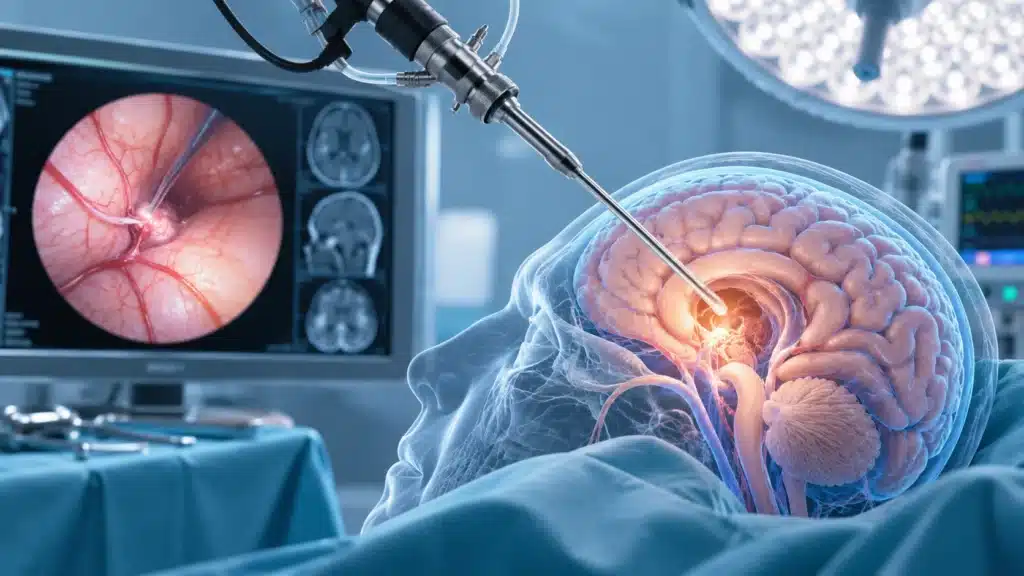
Endoscopic brain surgery is a modern, minimally invasive neurosurgical technique that allows surgeons to operate inside the brain through very small openings using a thin tube with a camera. This approach is different from traditional open brain surgery, which requires a larger incision and removal of a bigger piece of skull. In endoscopic surgery, the surgeon uses a small camera called an endoscope to see inside the brain on a high-definition monitor and perform the procedure with specialized instruments.
This type of surgery is used for specific conditions such as fluid buildup in the brain, certain tumors, cysts, pituitary gland problems, and some skull base disorders. Because the incisions are small and the approach is more targeted, patients often experience less pain, shorter hospital stays, and faster recovery compared to open surgery. However, it is not suitable for every brain condition. The decision depends on the type of problem, its location, and the patient’s overall health.
Endoscopic brain surgery, also called neuroendoscopy, is a surgical technique that uses a thin, flexible or rigid tube with a light and camera to access areas inside the brain through small openings. The camera sends live images to a monitor, allowing the surgeon to see the surgical area clearly without needing a large incision.
The endoscope is inserted through a small hole in the skull or through natural openings such as the nose in some cases. Specialized instruments are passed alongside or through the endoscope to remove tissue, drain fluid, or repair structures. The surgeon works while watching the magnified images on the screen.
This approach is particularly useful for conditions located deep inside the brain or in areas that are difficult to reach with traditional surgery. It allows for more precise work with less disturbance to surrounding brain tissue.
Endoscopic brain surgery is not used for all brain conditions. It is most commonly used for specific problems where the minimally invasive approach offers clear advantages.
These conditions often involve fluid spaces, cysts, or tumors that can be accessed through natural corridors or small openings. The endoscope provides a clear view of these areas without needing to move or damage large amounts of brain tissue. This makes the surgery safer and recovery faster for suitable patients.
The procedure is performed under general anesthesia, meaning the patient is asleep and feels no pain during the surgery. The exact steps depend on the condition being treated and the approach used.
The length of surgery varies depending on the condition. Simple procedures may take 1 to 2 hours, while more complex surgeries may take 3 to 4 hours or longer. The neurosurgeon will give an estimate based on the individual case.
Endoscopic brain surgery offers several advantages over traditional open surgery for suitable conditions.
Less tissue damage means the brain has less swelling and trauma to recover from. Smaller incisions reduce the risk of wound problems. Shorter hospital stays mean patients can return home sooner and resume daily life faster. For many patients, these benefits make a significant difference in their overall experience.
Like any brain surgery, endoscopic brain surgery carries some risks. The exact risks depend on the condition, the approach, and the patient’s health.
The brain is a very delicate organ with many critical structures packed closely together. Even with advanced techniques, there is always some risk when operating in this area. However, experienced neurosurgeons take many precautions to minimize these risks. The benefits usually outweigh the risks for patients who are good candidates for this surgery.
Recovery varies depending on the type of procedure and the patient’s condition. Most patients recover faster than with open surgery, but careful follow-up is still important.
Proper aftercare is essential for good outcomes after endoscopic brain surgery.
Not every brain condition can be treated with endoscopic surgery. The neurosurgeon will recommend this approach only when it is safe and likely to give good results.
Endoscopic brain surgery requires specialized training, advanced equipment, and a skilled neurosurgical team. A hospital with experience in this technique can provide safer and more effective care.
Yes, it is generally safe when performed by experienced neurosurgeons on suitable patients. Like any brain surgery, it carries some risks, but the minimally invasive approach often reduces complications and speeds up recovery for appropriate conditions.
The duration varies depending on the condition being treated. Simple procedures may take 1 to 2 hours, while more complex surgeries can take 3 to 4 hours or longer. The neurosurgeon will provide an estimate based on the individual case.
Scarring is usually minimal. For transnasal surgery, there is no visible external scar. For transcranial approaches, the incision is small and often hidden in the hairline. Most patients have very little visible scarring after healing.
Many patients stay in the hospital for 1 to 3 days after endoscopic brain surgery. Some may need a longer stay if the procedure was complex or if there are complications. The neurosurgeon will advise based on the individual recovery.
Return to work depends on the type of surgery and the nature of the job. Light desk work may be possible within 2 to 4 weeks. Heavy physical work may take 4 to 6 weeks or longer. The surgeon will give specific guidance based on recovery progress.
No, not all brain tumors are suitable for endoscopic removal. The approach depends on the tumor size, location, and type. Some tumors require open surgery for safe and complete removal. The neurosurgeon will recommend the best approach for each case.
Warning signs include severe headache, fever, worsening weakness, vision changes, confusion, seizures, or fluid leaking from the nose or incision. If any of these occur, medical attention should be sought immediately for evaluation and management.
Endoscopic brain surgery is an advanced, minimally invasive option for treating specific brain conditions such as hydrocephalus, pituitary tumors, cysts, and certain skull base disorders. It offers benefits such as smaller incisions, less tissue damage, reduced pain, shorter hospital stays, and faster recovery compared to traditional open surgery. However, it is not suitable for every brain problem and requires careful patient selection.
The most important steps are proper diagnosis, expert surgical planning, skilled execution, and careful post-operative care. For patients with conditions that can be treated endoscopically, this approach can provide excellent outcomes with less disruption to daily life. With the right medical team and follow-up, patients can recover well and return to their normal activities.
Rama Hospital can provide expert evaluation, advanced endoscopic brain surgery, and comprehensive care from diagnosis through recovery and long-term follow-up for patients who need this specialized treatment.



Twenty-four brain tumours (12 ventricular, 12 cystic cerebral or cerebellar tumours) were operated on for biopsy, evacuation of cyst, resection or removal of the cyst wall and/or laser irradiation of solid tumour or the inner cyst wall of cystic tumours.
No rows found.