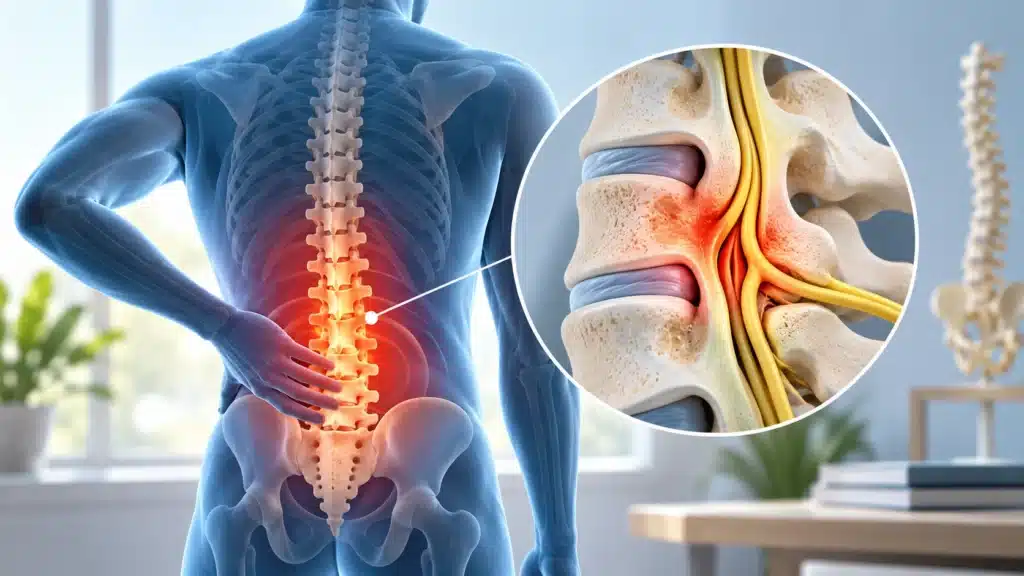
Spinal stenosis is a condition in which the spaces within the spine become narrow. This narrowing can put pressure on the spinal cord or the nerves that travel through the spine. It most often affects the lower back, called lumbar stenosis, or the neck, called cervical stenosis. Some people have mild narrowing and feel only occasional discomfort. Others develop significant pressure on the nerves, leading to pain, numbness, weakness, or difficulty walking.
The condition usually develops slowly over time, often as part of the aging process. Many people first notice symptoms in their fifties or sixties, but it can also occur earlier in people with certain spine conditions or previous injuries. Spinal stenosis is not always dangerous, but when nerve compression becomes severe, it can affect mobility, balance, and quality of life.
What is Spinal Stenosis?
Spinal stenosis is the narrowing of the spinal canal or the openings where nerves exit the spine. The spinal canal is the hollow space inside the spine that holds the spinal cord and nerve roots. When this space becomes narrow, the nerves can get compressed or irritated.
The narrowing can happen in different parts of the spine. The most common locations are the lower back and the neck. In the lower back, it often causes pain, heaviness, or numbness in the legs. In the neck, it can cause symptoms in the arms, hands, or even affect balance and walking.
Spinal stenosis is often related to age-related changes in the spine. Over time, discs lose height, joints become arthritic, ligaments thicken, and bone spurs may form. All of these changes can reduce the space available for nerves. In some people, the narrowing is mild and causes few problems. In others, it leads to significant symptoms that need treatment.
Types of Spinal Stenosis
Spinal stenosis can be classified based on the location in the spine and the underlying cause.
Based on location
- Lumbar spinal stenosis, which affects the lower back and often causes leg symptoms.
- Cervical spinal stenosis, which affects the neck and can cause arm symptoms or spinal cord compression.
- Thoracic spinal stenosis, which affects the mid-back and is less common.
- Foraminal stenosis, which is narrowing of the openings where individual nerves exit the spine.
- Central canal stenosis, which is narrowing of the main spinal canal.
Based on cause
- Degenerative spinal stenosis, which is the most common type and happens due to age-related wear and tear.
- Congenital spinal stenosis, which is present from birth due to a naturally narrow spinal canal.
- Acquired spinal stenosis, which develops due to conditions such as arthritis, disc herniation, trauma, or previous spine surgery.
- Combined stenosis, where more than one factor contributes to narrowing.
Based on severity
- Mild stenosis, where there is some narrowing but symptoms may be minimal.
- Moderate stenosis, where nerve compression is more noticeable and symptoms are more frequent.
- Severe stenosis, where there is significant narrowing and clear nerve or spinal cord involvement.
Causes of Spinal Stenosis
Spinal stenosis has multiple possible causes. In most adults, it is related to gradual changes in the spine over time.
Common causes include:
- Age-related wear and tear of the spine.
- Osteoarthritis of the facet joints in the spine.
- Thickening of ligaments that support the spine.
- Bulging or herniated discs pressing into the canal.
- Bone spurs forming around the joints and discs.
- Previous spine injury or trauma.
- Previous spine surgery leading to scar tissue or changes.
- Congenitally narrow spinal canal.
- Conditions such as rheumatoid arthritis affecting the spine.
- Rarely, tumors or infections affecting the spinal area.
Why narrowing happens over time: As people age, the discs between the vertebrae lose water and height. This reduces the space between bones. The joints in the spine may develop arthritis and form extra bone. Ligaments may become thick and stiff. All these changes slowly reduce the available space for nerves. In some people, this process leads to symptoms. In others, it remains silent.
Risk Factors for Spinal Stenosis
Some people are more likely to develop spinal stenosis than others.
Higher-risk groups
- Adults over the age of fifty.
- People with a history of back or neck problems.
- Individuals with osteoarthritis or rheumatoid arthritis.
- People who have had spine injury or surgery.
- Those with a congenitally narrow spinal canal.
- Smokers, as smoking affects disc and bone health.
- People with jobs involving heavy lifting or repetitive spine strain.
- Individuals with poor posture over many years.
- People with obesity, which increases load on the spine.
- Those with a family history of spine degeneration.
Why risk increases in these groups
- Aging naturally changes disc and joint structure.
- Arthritis increases bone spur formation and joint thickening.
- Injury or surgery can alter spine alignment and space.
- Smoking reduces blood supply to discs and bones.
- Extra body weight increases pressure on the lower spine.
- Repetitive strain accelerates wear and tear.
Symptoms of Spinal Stenosis
Symptoms depend on where the narrowing is located and how much pressure is on the nerves or spinal cord.
Symptoms of lumbar spinal stenosis
- Pain, cramping, or heaviness in the legs when standing or walking.
- Numbness or tingling in the legs or feet.
- Weakness in the legs.
- Relief of symptoms when sitting or bending forward.
- Difficulty walking long distances.
- Lower back pain in some cases.
- Feeling of tiredness or heaviness in the thighs or calves.
Symptoms of cervical spinal stenosis
- Neck pain or stiffness.
- Pain, numbness, or tingling in the arms or hands.
- Weakness in the arms or hands.
- Difficulty with fine motor tasks such as buttoning clothes.
- Balance problems or unsteady walking.
- Heaviness or clumsiness in the legs in more severe cases.
- In advanced cases, bowel or bladder changes.
Warning signs that need medical attention
- Progressive weakness in the legs or arms.
- Increasing difficulty walking or standing.
- Loss of balance or frequent falls.
- Numbness in the groin or inner thighs.
- New bowel or bladder problems.
- Severe pain not relieved by rest or medicines.
Spinal Stenosis in Different Age Groups
Spinal stenosis can affect people of different ages, but the pattern may vary.
In middle-aged adults
- Often related to early degenerative changes.
- Symptoms may start as occasional leg or arm discomfort.
- May be mistaken for simple back or neck strain.
In older adults
- More likely to have significant narrowing due to long-term wear.
- Symptoms may affect walking distance and daily activities.
- May coexist with other age-related spine conditions.
In younger adults
- Less common but can occur with congenital narrowing or previous injury.
- May be related to disc problems or trauma.
- Requires careful evaluation to rule out other causes.
How is Spinal Stenosis Diagnosed?
Diagnosis is based on symptoms, physical examination, and imaging tests. Since many spine conditions can cause similar symptoms, proper evaluation is important.
Diagnostic steps
- Detailed history of pain, numbness, weakness, and walking ability.
- Review of posture, activities, and previous spine problems.
- Neurological examination to check strength, reflexes, sensation, and balance.
- Assessment of walking pattern and endurance.
- Imaging tests to visualize the spine and nerves.
Common tests that may be done
- X-ray of the spine to assess bone alignment and arthritis.
- MRI of the spine to see discs, nerves, ligaments, and canal narrowing.
- CT scan if MRI is not possible or to assess bone detail.
- CT myelogram in selected cases to evaluate nerve compression.
- Nerve conduction studies if there is uncertainty about nerve involvement.
- Blood tests if infection or inflammatory disease is suspected.
Why diagnosis matters: Many conditions can mimic spinal stenosis, such as disc herniation, peripheral nerve problems, vascular disease, or hip arthritis. Accurate diagnosis ensures the right treatment plan and avoids unnecessary procedures.
Treatment for Spinal Stenosis
Treatment depends on the location, severity, symptoms, and impact on daily life. Many people improve with non-surgical care. Surgery is considered when symptoms are severe or progressive.
Treatment for mild to moderate stenosis
- Activity modification to avoid positions that worsen symptoms.
- Physiotherapy to improve strength, flexibility, and posture.
- Pain relief medicines as advised by a doctor.
- Anti-inflammatory medicines for short-term relief.
- Nerve pain medicines if numbness or tingling is prominent.
- Epidural steroid injections in selected cases to reduce inflammation.
- Use of walking aids if balance is affected.
Treatment for severe or progressive stenosis
- Specialist evaluation by a spine surgeon or neurosurgeon.
- Consideration of surgical options if nerve compression is significant.
- Pre-operative optimization of health conditions.
- Post-operative rehabilitation for recovery.
1. Physiotherapy and exercise
Physiotherapy plays a key role in managing spinal stenosis.
- Exercises to strengthen core and back muscles.
- Stretching to improve flexibility.
- Posture training to reduce strain on the spine.
- Gait training to improve walking pattern.
- Advice on safe movement and daily activities.
2. Medicines
Medicines are used to control pain and inflammation.
- Pain relievers for short-term symptom control.
- Anti-inflammatory drugs to reduce swelling around nerves.
- Nerve pain medicines for numbness, tingling, or burning.
- Muscle relaxants if muscle spasm is present.
- All medicines should be taken under medical supervision.
3. Injections
In selected patients, injections may help reduce inflammation around the nerves.
- Epidural steroid injections into the space around the nerves.
- Facet joint injections for arthritis-related pain.
- Nerve root blocks for targeted relief.
- Injections are usually part of a broader treatment plan.
4. Surgery
Surgery is considered when symptoms are severe, progressive, or affecting quality of life despite other treatments.
- Decompression surgery to create more space for nerves.
- Laminectomy to remove part of the bone pressing on nerves.
- Foraminotomy to widen the nerve exit openings.
- Spinal fusion in selected cases to stabilize the spine.
- Disc removal or bone spur removal if they are causing compression.
5. Supportive care
Supportive care helps patients manage symptoms and maintain function.
- Use of walking aids if needed.
- Home modifications to reduce fall risk.
- Pain management strategies.
- Emotional support for chronic pain or mobility issues.
- Regular follow-up to monitor progression.
Recovery After Treatment
Recovery depends on the type of treatment, the severity of stenosis, and the patient’s overall health.
Recovery after non-surgical treatment
- Gradual improvement in pain and walking ability.
- Better tolerance for daily activities.
- Continued physiotherapy to maintain strength and flexibility.
- Periodic review to adjust the plan as needed.
Recovery after surgery
- Hospital stay for a few days depending on the procedure.
- Gradual increase in walking and activity.
- Wound care and pain management in the early phase.
- Structured physiotherapy for strength and mobility.
- Follow-up imaging and clinical review as advised.
Rehabilitation support
- Physical therapy for walking, balance, and strength.
- Occupational therapy for daily tasks if needed.
- Advice on posture, lifting, and safe movement.
- Support for returning to work or normal activities.
- Long-term exercise plan to maintain spine health.
Possible Complications
Spinal stenosis can lead to complications if left untreated or if nerve compression becomes severe.
Complications of untreated stenosis
- Progressive weakness in legs or arms.
- Increasing difficulty walking or standing.
- Loss of balance and higher fall risk.
- Reduced independence in daily activities.
- Chronic pain affecting sleep and mood.
- In severe cervical cases, spinal cord damage.
Complications after surgery
- Infection at the surgical site.
- Bleeding or blood clots.
- Nerve injury, though rare.
- Persistent or recurrent symptoms.
- Need for further surgery in some cases.
- Stiffness or reduced mobility in the operated area.
Why complications happen: Nerves are sensitive to prolonged compression. If pressure is not relieved in time, nerve function may not fully recover. Surgery carries standard risks, which are minimized with careful planning and experienced surgical care.
When Should You See a Doctor?
Medical evaluation is important for people with persistent spine-related symptoms.
- Leg pain or heaviness when walking that improves with rest.
- Numbness or tingling in legs, feet, arms, or hands.
- Weakness in limbs affecting daily tasks.
- Neck or back pain with radiating symptoms.
- Difficulty walking or balance problems.
- Symptoms that are getting worse over time.
Prevention of Spinal Stenosis
Not all cases can be prevented, but risk can be reduced.
- Maintain a healthy weight to reduce spine load.
- Practice good posture while sitting, standing, and lifting.
- Do regular exercise to strengthen core and back muscles.
- Avoid smoking, which affects disc and bone health.
- Use proper techniques for lifting heavy objects.
- Take breaks during prolonged sitting or standing.
- Manage arthritis and other spine conditions early.
- Seek early care for persistent back or neck pain.
Why Choose Rama Hospital for Spinal Stenosis Treatment?
Spinal stenosis is a complex condition that requires expert evaluation, accurate imaging, and tailored treatment. A hospital with experienced spine surgeons, neurosurgeons, physiotherapists, and pain specialists can make a major difference in outcomes.
- Expert assessment by spine and neuro specialists.
- Advanced imaging for precise diagnosis.
- Non-surgical and surgical treatment options under one roof.
- Structured physiotherapy and rehabilitation.
- Emergency care for severe nerve compression.
- Long-term follow-up and support.
Frequently Asked Questions (FAQs)
Is spinal stenosis the same as a slipped disc?
No, spinal stenosis and slipped disc are different conditions. A slipped disc involves a disc pushing on a nerve, while stenosis involves narrowing of the spinal canal or nerve openings. Both can cause similar symptoms but need different evaluation.
Can spinal stenosis be cured without surgery?
Many people with mild to moderate stenosis improve with non-surgical treatment such as physiotherapy, medicines, and lifestyle changes. Surgery is considered when symptoms are severe, progressive, or not responding to other care.
What are the warning signs of severe spinal stenosis?
Warning signs include progressive weakness, increasing difficulty walking, loss of balance, numbness in the groin area, or new bowel or bladder problems. These symptoms need prompt medical evaluation.
How is spinal stenosis diagnosed?
Diagnosis is based on symptoms, neurological examination, and imaging tests such as MRI, CT scan, or X-ray. These tests help visualize the spine, discs, nerves, and degree of narrowing.
Can spinal stenosis get worse over time?
Yes, in many cases spinal stenosis progresses slowly due to ongoing wear and tear. Early management can help control symptoms and maintain function for longer.
What is the recovery time after spine surgery for stenosis?
Recovery time varies depending on the procedure and the patient. Many people start walking within a day or two and gradually increase activity over weeks. Full recovery may take several weeks to months with physiotherapy.
Can spinal stenosis come back after surgery?
In some cases, symptoms can recur due to changes at other levels of the spine or scar tissue formation. Regular follow-up, exercise, and spine care can help reduce this risk.
Conclusion
Spinal stenosis is a common spine condition that can significantly affect mobility, comfort, and quality of life if not managed properly. It often develops gradually due to age-related changes in the spine, but early recognition and treatment can make a major difference. Many patients improve with non-surgical care, while others benefit from surgery when nerve compression is severe.
The most important steps are proper diagnosis, tailored treatment, consistent physiotherapy, and long-term spine care. For patients with persistent back or neck pain, leg or arm symptoms, walking difficulty, or balance problems, a specialist evaluation can help identify the cause and guide the right plan. With the right care, patients can reduce symptoms, maintain mobility, and protect their spine health.
Rama Hospital can help evaluate spinal stenosis, identify the level and severity of nerve compression, and provide a clear treatment plan that supports pain relief, improved function, and better quality of life.