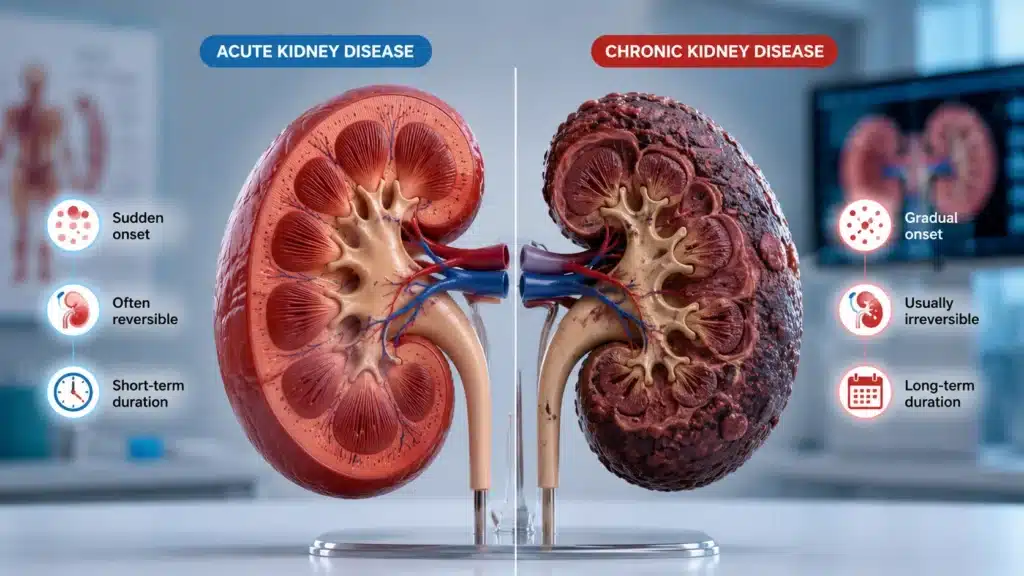
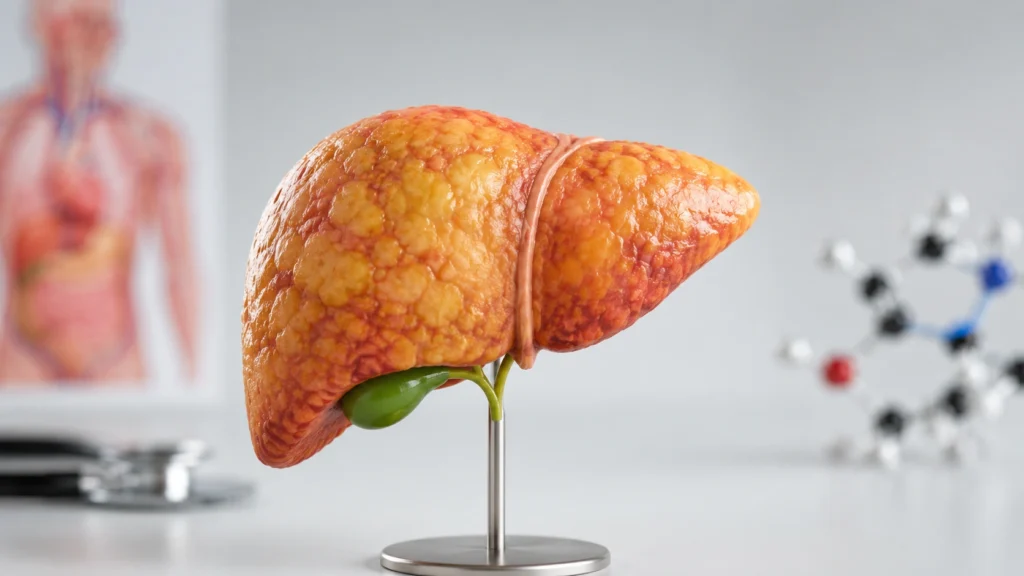
Fatty liver disease is one of the most common liver conditions seen today, and yet many people do not realize they have it until it is found incidentally during a scan or a routine blood test. In the early stages, it may cause no symptoms at all. That is exactly why it can stay unnoticed for years while fat continues to accumulate in the liver and inflammation slowly begins to damage liver cells.
The condition now falls under a broader medical term called steatotic liver disease, but in everyday clinical use many people still refer to it as fatty liver disease, especially when discussing NAFLD and NASH. NAFLD stands for non-alcoholic fatty liver disease, meaning fat buildup in the liver not primarily caused by alcohol. NASH stands for non-alcoholic steatohepatitis, which is a more serious form where the liver is not only fatty but also inflamed and injured. If NASH continues untreated, it can progress to fibrosis, cirrhosis, liver failure, and even liver cancer.
What makes fatty liver disease especially important is that it is closely linked with modern lifestyle factors such as obesity, type 2 diabetes, insulin resistance, high cholesterol, sedentary habits, and unhealthy dietary patterns. It is also linked to metabolic syndrome, which means the disease is often part of a bigger health problem rather than an isolated liver issue. For many patients, fatty liver is a warning sign that the body is under metabolic stress.
Fatty liver disease happens when excess fat builds up in liver cells. A small amount of fat in the liver is normal. The problem begins when fat accumulation becomes excessive and starts affecting liver function and structure. In the beginning, this may happen quietly, without any obvious symptoms. Over time, however, the fat can trigger inflammation and scarring.
NAFLD is the common term used when fat builds up in the liver in people who drink little or no alcohol. It is strongly associated with obesity, diabetes, poor diet, and abnormal blood lipids. NASH is the more advanced stage in which fat buildup is accompanied by liver inflammation and injury. This distinction is important because not every patient with fatty liver has the same disease severity. Some people remain stable for years, while others progress to serious liver damage.
A useful way to understand fatty liver is to think of it as a spectrum:
Fatty liver disease is not just a liver problem. It is often a sign of metabolic imbalance throughout the body. That is why treatment should focus not only on the liver, but also on weight, blood sugar, cholesterol, and overall lifestyle.
Fatty liver disease is usually discussed in two main forms, but the condition can progress through several stages.
It is important to remember that fatty liver disease does not always progress in a straight line. Some people remain stable for years, while others worsen more quickly due to diabetes, obesity, smoking, or poor metabolic control.
Fatty liver disease is most commonly seen in people with metabolic risk factors. It affects adults of all ages, and increasingly even younger people are being diagnosed because of rising obesity and insulin resistance.
People at higher risk include:
Fatty liver disease can also occur in people who are not obviously overweight. This is sometimes called “lean fatty liver.” In such cases, visceral fat, insulin resistance, poor muscle mass, or genetic risk may still be present.
In Indian populations, fatty liver disease is particularly important because metabolic syndrome and diabetes are common, and many patients may not appear severely overweight by Western standards. That means doctors need to think about liver health even in people who do not look markedly obese.
Fatty liver disease is caused by a combination of metabolic, hormonal, lifestyle, and sometimes genetic factors. The liver plays a central role in processing fat, sugar, and energy, so when the body’s metabolism is disturbed, the liver often becomes affected.
Common causes and contributors include:
The main mechanism behind fatty liver is that the body either produces too much fat, sends too much fat to the liver, or fails to properly burn fat. The liver then becomes overloaded. If this continues, inflammatory pathways may become active and NASH may develop.
Important point: not every person with fatty liver has the same risk of progression. The biggest predictors of worsening disease are diabetes, obesity, persistent inflammation, and fibrosis already being present. This is why evaluation is not just about finding fat; it is about finding whether the liver has started to scar.
One of the reasons fatty liver disease is missed is that it often causes no clear symptoms in the early stage. Many patients feel normal and only discover it when a scan or blood test shows abnormalities. However, as the condition progresses, symptoms can appear.
Because early fatty liver can be silent, patients should not wait for symptoms before getting evaluated if they have risk factors such as diabetes, obesity, or abnormal blood sugar. In NASH and advanced liver disease, symptoms can become more noticeable:
Diagnosis is based on a combination of history, examination, blood tests, and imaging. Sometimes further testing is needed to assess the degree of inflammation or scarring.
In some cases, a liver biopsy may be recommended. This is not needed for every patient, but it can be useful if doctors need to confirm NASH or determine the degree of fibrosis more precisely. It may be considered when imaging and blood tests are not enough to clarify disease severity.
A major challenge in fatty liver diagnosis is that symptoms do not reliably reflect severity. A person may feel well but still have inflammation or fibrosis. That is why proper testing matters, especially in patients with diabetes, obesity, or persistent liver enzyme elevation.
Keywords: fatty liver diagnosis, ultrasound fatty liver, FibroScan liver, elevated ALT AST, how to detect NASH
Not everyone with fatty liver disease progresses through all these stages. With timely diagnosis, weight management, a healthy diet, regular exercise, and proper medical care, many people can stop or even reverse early-stage disease before serious liver damage occurs.
At this stage, excess fat begins to build up in the liver cells. There may be little or no inflammation, and many people do not experience any symptoms.
What to know:
At this stage, fat accumulation starts causing inflammation in the liver. This condition is known as Non-Alcoholic Steatohepatitis (NASH).
What to know:
Ongoing inflammation causes the liver to develop scar tissue. This stage is called fibrosis.
What to know:
At this stage, extensive scarring affects the liver’s ability to function properly.
What to know:
Advanced cirrhosis can eventually lead to liver failure or significantly increase the risk of liver cancer.
What to know:
Treatment depends on the stage of disease and the underlying cause. In most patients, the first and most effective treatment is lifestyle modification. If metabolic problems are present, they must also be managed carefully.
Weight loss is one of the most effective ways to reduce liver fat. Even moderate weight reduction can improve liver enzyme levels and reduce inflammation.
Helpful points:
Diet is central to fatty liver treatment. A liver-friendly diet usually works best when it is realistic and long-term. The goal is not temporary restriction, but a sustainable eating pattern that reduces insulin resistance and supports weight management.
Patients should:
Exercise works best when done regularly. Both aerobic activity and strength-building exercises can support liver health. The combination of movement and dietary changes is often more effective than either alone.
Physical activity helps reduce liver fat and improve insulin sensitivity even if weight loss is slow.
Good options include:
Since fatty liver is closely linked to metabolic disease, proper treatment of diabetes, triglycerides, and cholesterol is essential.
If blood sugar remains poorly controlled, fatty liver often progresses faster. That is why liver care and diabetes care should go hand in hand.
This may include:
At present, there is no single universal medicine that cures fatty liver disease for every patient. However, in selected patients, doctors may prescribe medicines to address diabetes, obesity, or liver inflammation.
Examples may include:
The exact medicine depends on the patient’s full medical profile. Self-medication should be avoided because the liver is sensitive and different cases require different plans.
If fibrosis, cirrhosis, or complications are present, management becomes more specialized.
This may include:
Even though NAFLD means non-alcoholic fatty liver disease, alcohol intake can still worsen liver damage. Patients with fatty liver are usually advised to minimize or avoid alcohol depending on severity and doctor guidance.
Poor sleep, stress, and unhealthy routines can worsen metabolic health. Better sleep and stress reduction support long-term weight and glucose control, which indirectly helps the liver.
In many early cases, yes, fatty liver can improve significantly and sometimes even normalize if the underlying metabolic cause is treated. The liver has an excellent ability to recover if the damage is not too advanced.
Better outcomes are possible when:
Once advanced fibrosis or cirrhosis develops, full reversal becomes more difficult. That is why early intervention matters so much. Fatty liver should not be treated as a harmless scan finding. It should be treated as a warning sign.
Treating fatty liver early can prevent serious liver and metabolic complications.Early treatment also helps patients take control of metabolic disease before it affects other organs such as the heart and kidneys.
Benefits include:
Fatty liver disease often requires more than a casual dietary suggestion. It needs a proper medical evaluation, a clear diagnosis, and a structured treatment plan that considers liver health, diabetes, weight, cholesterol, and long-term risk.
Rama Hospital offers:
For patients, this matters because fatty liver is often part of a bigger metabolic issue. Treating the liver alone is not enough if diabetes, obesity, and cholesterol are not addressed at the same time.
You should seek medical evaluation if:
It can be. Early fatty liver may be manageable, but NASH, fibrosis, and cirrhosis are serious conditions that need medical attention.
Yes. NAFLD specifically refers to fatty liver that is not primarily caused by alcohol.
No. Some people only have simple fat accumulation, while others develop inflammation and scarring.
Early fatty liver can often improve significantly, especially with weight loss, exercise, and better metabolic control. Advanced disease is harder to reverse.
Yes. It is very common, especially in people with diabetes, obesity, and metabolic syndrome.
No. Many patients can be evaluated with blood tests and imaging. A biopsy is needed only in selected cases.
Some people feel a dull discomfort or heaviness on the right side of the abdomen, but many have no pain.
Exercise is very important, but it works best along with diet control, weight management, and treatment of diabetes or cholesterol problems.
Fatty liver disease, including NAFLD and NASH, is one of the most important metabolic liver conditions seen today. It often develops silently, but if ignored, it can progress from simple fat accumulation to inflammation, fibrosis, cirrhosis, and even liver cancer. The good news is that early stages can often be controlled and improved with the right treatment.
The most effective approach is not just treating the liver image or the blood test number. It is treating the whole metabolic picture, weight, sugar, cholesterol, diet, exercise, and follow-up. When fatty liver is found early and managed properly, the liver can often recover and serious complications can be prevented.

Non-alcoholic fatty liver disease (NAFLD) is a common condition where fat builds up in your liver. It's often linked to being overweight and can usually be treated with healthy lifestyle changes.
Metabolic dysfunction-associated steatotic liver disease (MASLD), formerly called nonalcoholic fatty liver disease (NAFLD), is a liver condition that affects people with excess weight, obesity or other metabolic conditions, such as type 2 diabetes, high blood pressure or high cholesterol.
No rows found.